Latest story
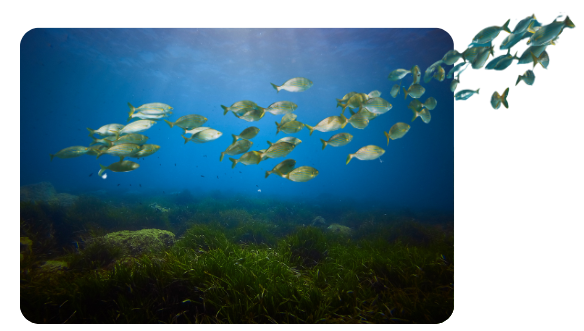
Antarctic krill use 'hotspots' for spawning and nursery of their young
New research, published today in PLOS ONE and led by PML, has shown how Antarctic krill (Euphausia superba), a key species in the Southern Ocean food web, choose different areas of the ocean at the various stages of their life cycle. This understanding of their distribution and movement is essential for conservation of this important food source, which forms the main diet for animals such as whales, seals and penguins.
Other recent news stories

PML and PML Applications earn Health and Safety seal of approval
22 July 2019Continuing PML and PML Applications’ pursuit of excellent standards of health and safety awareness and practice, the Group has just been awarded cer...

UK Environmental Prediction collaboration delivering new research on high resolution interactions between our atmosphere, land and oceans
18 July 2019More than 50 researchers from across a wide range of organisations and disciplines gathered in late June for a UK Environmental Prediction (UKEP) work...

A New Chief Executive for PML Group
15 July 2019The Board of Trustees is pleased to announce the appointment of Professor Icarus Allen as the new Chief Executive of both Plymouth Marine Laboratory, ...

Cooperation to tackle plastic pollution
09 July 2019PML researchers will be contributing to a new research project aiming to inspire international action to tackle marine plastic pollution.

PML scientists investigating in the Arctic
05 July 2019Several PML scientists were on board the UK Natural Environment Research Council research ship RRS James Clark Ross, as it departed Tromsø in Nor...

Tender Opportunity: New buoy platform to facilitate trials and validation of innovative technologies
02 July 2019PML have operated a highly successful scientific data buoy programme within the context of the Western Channel Observatory for over ten years and are ...

The future of the Antarctic Peninsula
02 July 2019A briefing note published today by the Grantham Institute looks at the expected impacts of 1.5°C of global warming above pre-industrial levels on the...

Smart Sound Plymouth to support next generation of marine technologies
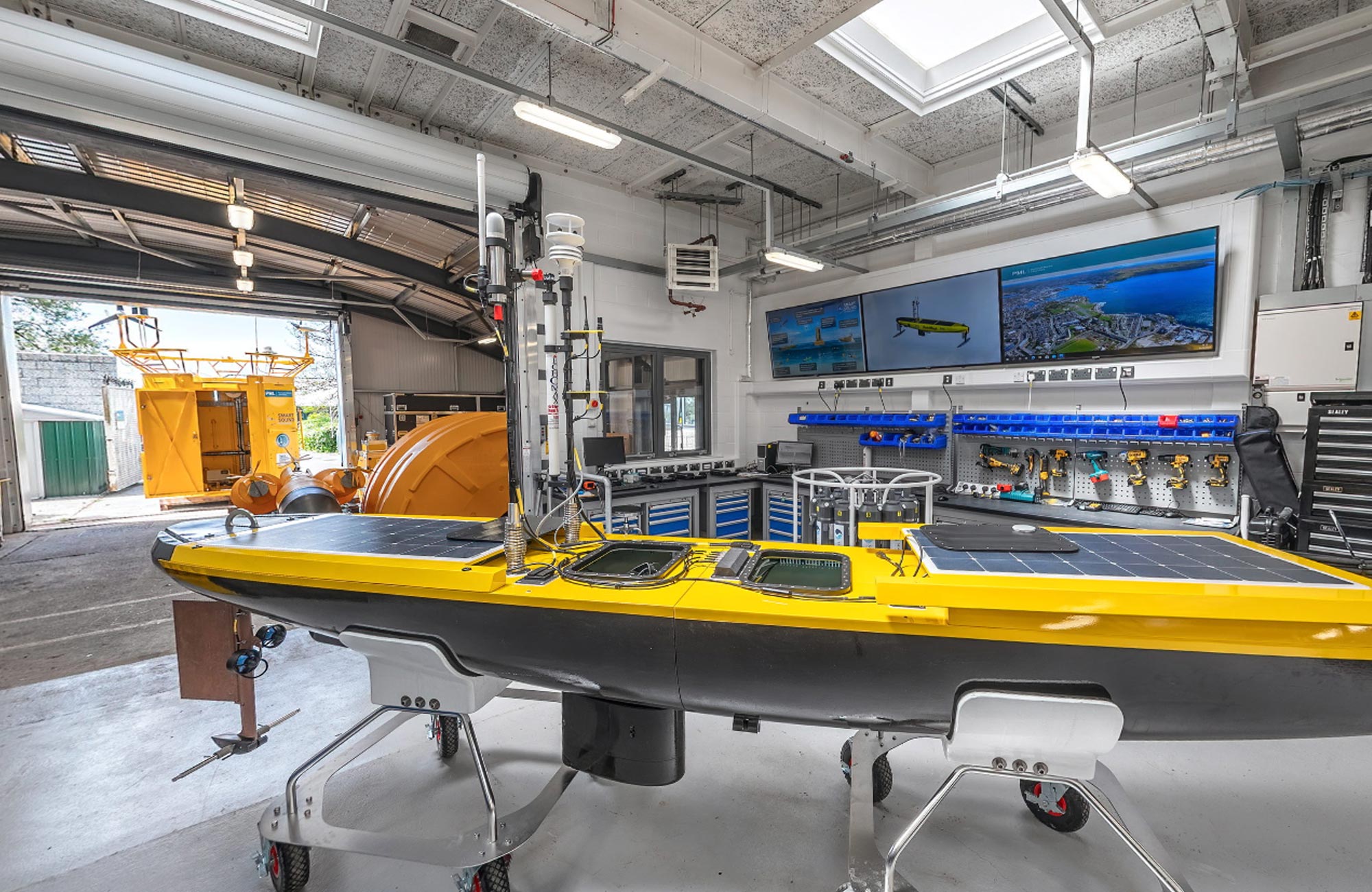
21 June 2019The Marine Business Technology Centre (MBTC) has officially launched Smart Sound Plymouth, a proving area for designing, testing and developing cuttin...

Choosy copepods avoid microplastic-shaped algae
13 June 2019With concerns around the presence of microplastics in the environment growing, two new research papers from Plymouth Marine Laboratory (PML) and partn...

Prey patches increase seabird competition
05 June 2019A new study involving remote sensing research from Plymouth Marine Laboratory suggests that in areas of the sea where prey are clumped into “patches...

Collaboration to stop idling coaches
29 May 2019In November 2018, several PML scientists attended the AccessLab workshop in Plymouth. AccessLab is a new public engagement format that aims to improve...

Seaweed helps to trap carbon dioxide from the atmosphere
23 May 2019New research led by scientists from Plymouth Marine Laboratory shows, for the first time, the important role that the connectivity between macroalgae ...

Plan Plastic gives PML 'Mussel Power'
16 May 2019PML researchers have been awarded funding towards an innovative microplastics project through Plan Plastic: The Million Pound Challenge, a £1 million...

Seaweeds can attract friends and keep away enemies
14 May 2019Two biologists from Plymouth Marine Laboratory (UK) and the GEOMAR Helmholtz Centre for Ocean Research Kiel (Germany) have shown for the first time th...

Focus on diver safety for pilot app
14 May 2019e-shape (EuroGEOSS Showcases: Applications Powered by Europe), a new project coordinated by ARMINES and funded under the European Union’s Horizon 20...

Once-in-a-decade review on observing sea states
07 May 2019“Sea states”, or wave conditions, have been observed for centuries in ships’ logs and other historical documents. Now new technologies allow for...

PML researchers educating from the Arctic
01 May 2019AXA XL Arctic Live is launched for the sixth year running, livestreaming scientists’ field work on microplastics and ocean acidification into classr...

Identifying plastic hotspots from space
25 April 2019Scientists at Plymouth Marine Laboratory (PML) are using Earth observation satellites to detect patches of marine debris, using a new method that may ...

Satellite service re-commissioned
10 April 2019This week the Natural Environment Research Council (NERC) re-commissioned a Plymouth Marine Laboratory-led service, which provides processed and analy...
Current Events
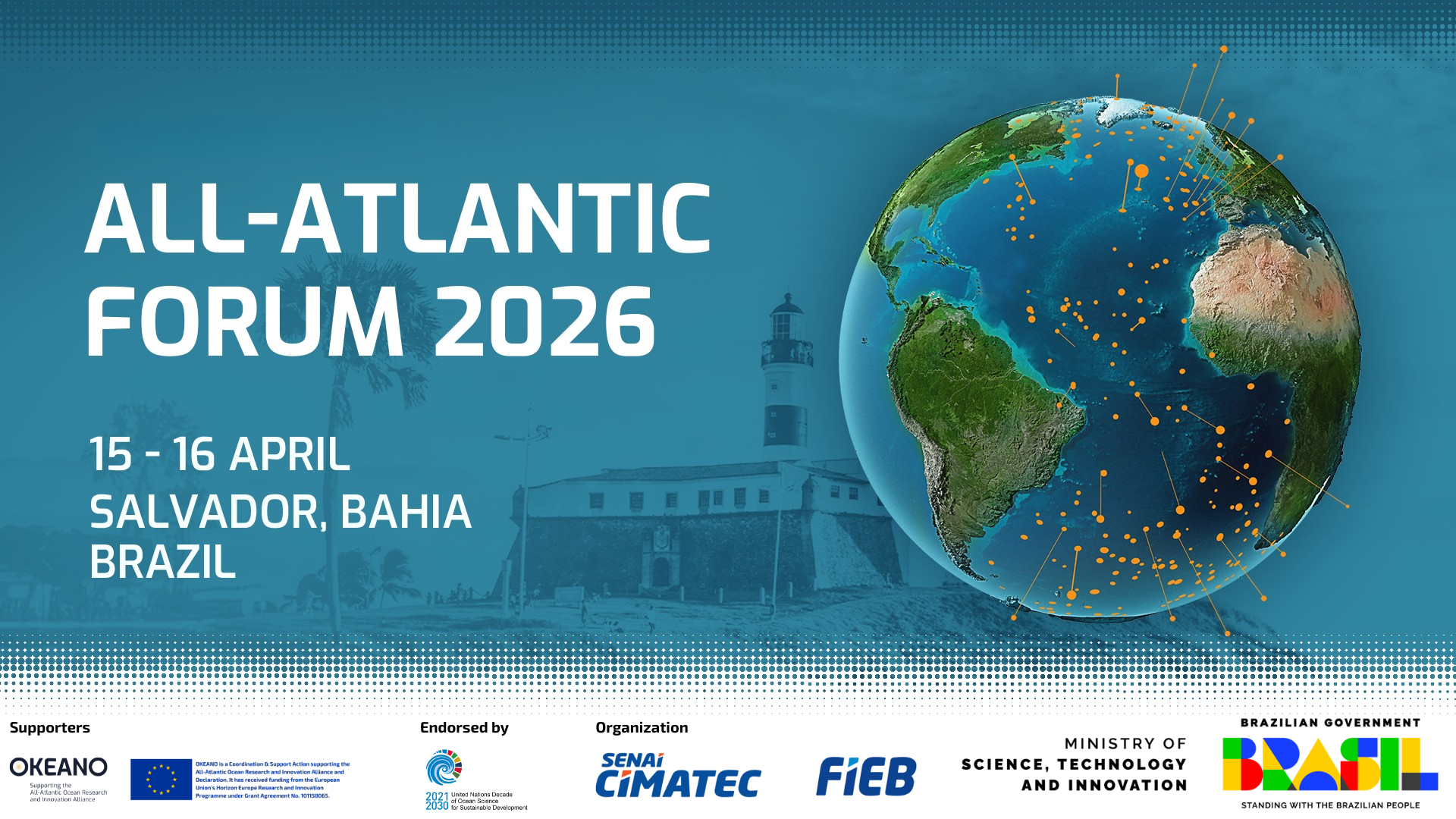
2026 All-Atlantic Forum
15 April 2026
Upcoming Events
South West Marine Ecosystems Conference 2026
23 April 2026
SXSW London: South by Southwest London
1 June 2026
NERC Tech Forum 2026
2 June 2026
Subscribe to our newsletter
Stay Up To Date
Subscribe to our newsletter for information on our latest research, upcoming events and seminars and more.
Join our newsletter