With an increasing global population and a drive towards green growth the exploitation of marine resources in key areas such as food production and renewable energy are inevitable. Key to the sustainable exploitation of the marine environment is our ability to develop smarter monitoring, provide expert interpretation of data and deliver policy relevant science.
PML is advancing the capability of marine observing systems to provide cost-effective and timely measurements of key environmental variables that are crucial for understanding and responding to environmental change.
Critical to the ocean economy is the sustainability and productivity of the oceans which will require smarter monitoring, modelling and data-driven management. Through development and adoption of new technologies, automation and citizen science we are lowering the cost of environmental observation. This means we can record past and future change at an unprecedented scale and by making this information widely available we can improve global resilience to environmental change.
The United Nations Decade of Ocean Science for Sustainable Development details the requirement for scientists to work with industry to develop new technologies aligned with sustainable development priorities. These priorities will require novel technologies to deliver cost effective marine data capture that is critical to delivering a complete ocean observing system. As a frontrunner in developing new marine technologies PML exercises its responsibility towards global capacity building, improving data literacy and filling data gaps.
We have strong relationships with an extensive range of commercial partners, which are considered crucial for the advancement of technology development within PML. PML chairs the Future Autonomous at Sea technologies (FAST) cluster, which is the largest marine autonomy cluster in the UK and has membership spanning the south west. This triple-helix cluster is largely comprised of industry partners complimented by leading academic organisations and government departments. The cluster exists to deliver advanced marine autonomy across numerous sectors including, offshore renewable energy, science, aquaculture and defence. The FAST cluster is also actively engaged with regulators such as the Maritime and Coastguard Agency (MCA) to work develop suitable regulations for the operation of autonomous vessels.
The Western Channel Observatory (WCO) exemplifies PML’s combined strengths in advanced in situ smart monitoring; world leading remote sensing and ecosystem modelling. The WCO also forms the backbone of Smart Sound Plymouth, which is the UK’s platform for advanced technology development, led by PML.
-
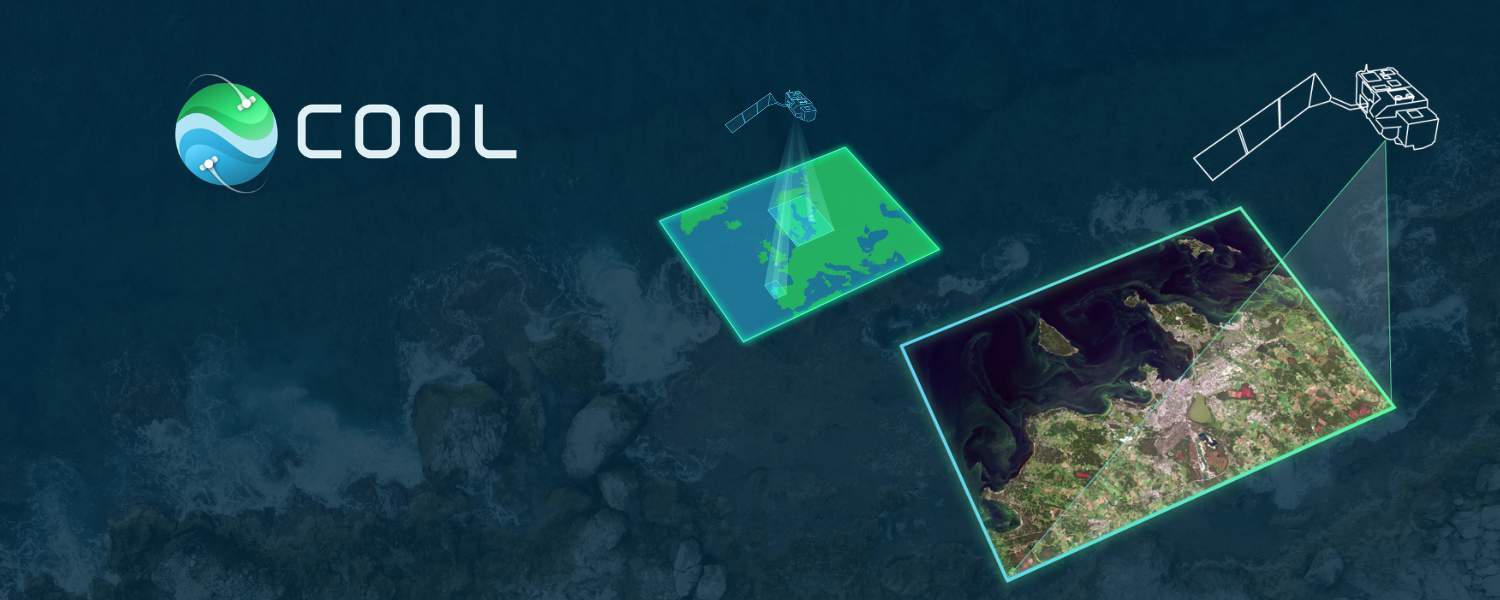 Carbon from earth Observation between Ocean and Land (COOL)
The COOL (Carbon from Earth Observation between Ocean and Land) project is a European Space Agency (ESA)-funded initiative focused on…
-
 Satellite-based observations of Carbon in the Ocean: Pools, Fluxes and Exchanges (SCOPE)
In the Satellite-based observations of Carbon in the Ocean: Pools fluxes and Exchange (SCOPE) project, funded by the European Space…
-
 Deep Vision: AI-enabled Mapping of Vulnerable Marine Ecosystems in the Atlantic
Co-led by Plymouth Marine Laboratory and the University of Plymouth, this project uses artificial intelligence and high-resolution seabed data to…
-
 Ocean ICU: Improving Carbon Understanding
The Horizon EU OceanICU is a five year project that seeks to gain a new understanding of the biological carbon…
-
 Monitoring Integrated Digital Support Tool – for CO2 and hypersaline brine monitoring applied to UK
In MIDST-UK, an open source, user friendly, pre-operational Decision Support Tool (DST) will be extended to also included brine release…
-
 Smart AUVs for detection and quantification of greenhouse gas seepage in the oceans
SmartAUVs will dramatically improve the monitoring capabilities of AUVs, by applying artificial intelligence (AI) in concert with specialized signal processing…
-
 AgZero+ Towards sustainable, climate-neutral farming
Plymouth Marine Laboratory (PML) is a partner in a major five-year £13.8 million research programme, named “AgZero+’, to support the…
-
 Automated, in situ Plankton Imaging and Classification System (APICS)
The Automated, in situ Plankton Imaging and Classification System (APICS) will radically improve the understanding of how environmental changes are…
-
 ACTOM Decision Support Tool
The ACTOM Decision Support Tool enables operators of offshore geological carbon storage sites to plan effective environmental monitoring, whilst minimizing…
-
 Managing the Environmental Sustainability of the Offshore Energy Transition (MOET)
MOET will assess the environmental sustainability of offshore wind, blue and green hydrogen, and carbon capture and storage for selected…
PML leads Smart Sound Plymouth
Smart Sound Plymouth is Britain’s platform for innovative marine technology development and is led by Dr James Fishwick from PML. It is Britain’s premier proving area for designing, testing and developing cutting edge products and services for the marine sector, and is ideally suited for building and supporting the next generation of advanced marine technologies.
PML is a founding board member of Ocean Futures
Ocean Futures is a global centre of excellence for the testing, development and manufacture of autonomy, digital and clean ocean technologies for the rapidly growing global ocean economy, as a key pillar of the country’s ambition to be a science and innovation superpower, with activity focussed on:
- Autonomy – leading the demonstration and integration of marine autonomous systems for applications in defence, offshore renewable energy, aquaculture and emerging ocean economy application, estimated to be a £103bn market by 2030.
- Digital Oceans – transforming our understanding of the ocean environment and safeguarding future maritime operations with integrated digital marine communications.
- Maritime Net Zero– leading the transition to safe and secure maritime operations that will embrace a variety of alternative energy sources bespoke to vessel type and operation.
People who work in this area





 Professor James Fishwick
Head of Smart Sound Plymouth and Head of Operations and Technology, Western Channel Observatory
Professor James Fishwick
Head of Smart Sound Plymouth and Head of Operations and Technology, Western Channel Observatory