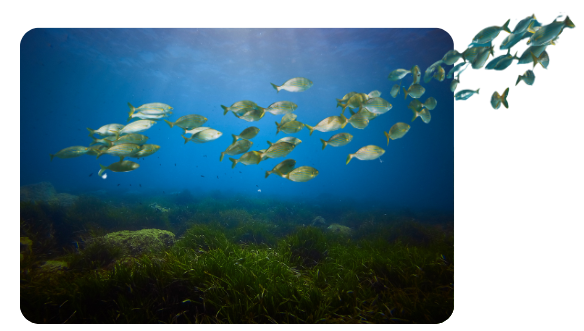
Big data to protect marine biodiversity
Marine ecosystems are changing rapidly. Yet our ability to monitor biodiversity across vast and dynamic oceans remains limited. At Plymouth Marine Laboratory, we combine big data, artificial intelligence, and autonomous technologies to transform how marine biodiversity is observed, understood, and protected – delivering the evidence needed for effective ocean management and policy.
Our focus
Using AI and big data to understand, monitor and protect marine life at scale

The Challenge
The Ocean is changing at an unprecedented rate
Our oceans are under unprecedented pressure from climate change, pollution, and overexploitation. Yet our ability to track these changes remains scattered and inefficient.
Ocean ecosystems are complex, connected, and constantly changing. Traditional monitoring methods:
-
Are often limited in scale and frequency
-
Struggle to capture real-time ecosystem change
-
Cannot fully represent biodiversity across regions and depths
Without robust, continuous data, it is difficult to:
-
Detect ecosystem change early
-
Design effective Marine Protected Areas (MPAs)
-
Measure the success of conservation actions

PML is committed to transforming how we observe, understand, and protect ocean life, enabling science and society to detect change earlier, act faster, and manage ecosystems more effectively.
We’re transforming fragmented, reactive biodiversity monitoring into an integrated, automated, and trusted system that empowers protection and sustainable use of marine ecosystems.
The result?
Science and society can detect change earlier, respond faster, and manage marine ecosystems more effectively.
Our Approach
We deliver trusted biodiversity intelligence through three integrated solutions

Autonomous & AI-enabled monitoring
Advanced imaging, acoustic sensors, and expert-validated AI, underpinned by long term high quality traditional methods, could deliver scalable, cost-effective ecosystem assessments.
Our research edges us closer to automating monitoring by comparing new with traditional methods, to maintain the rigour of trusted science.

Environmental DNA (eDNA) analysis
eDNA tools are redefining how we see life in the ocean, uncovering hidden biodiversity, interactions and ecosystem function.
We are advancing next-generation ocean monitoring to deliver deeper, more actionable insights into marine life.

Biodiversity from space
Earth observation and satellite data track ecosystem changes across scales, from local sites to global oceans.
We’re proving remote sensing can reliably inform marine protection decisions.
Our Impact
From ocean data to ocean protection
Our work delivers real-world benefits for ocean protection and sustainability.
Marine protected area designations in UK offshore waters directly informed by WCO long-term baseline data.
Earlier detection of harmful algal bloom precursors vs conventional sampling, protecting aquaculture operations.
Accessing PML-derived satellite biodiversity indicators via OBIS and GBIF global conservation portals.
Coverage highlighting how long-term marine observations are helping scientists understand climate impacts on South West marine ecosystems.
Research from the Western Channel Observatory is informing next-generation climate models through advances in plankton science.
Our scientists took our new Imaging FlowCytobot down to the local Millbay Marina for a test of the equipment in real sea conditions.
PML Highlights
See our science in action
 Project
DEcentrAlised Learning for automated image analysis and biodiversity monitoring (DEAL)
DEAL will create an application that allows owners of biological image data to participate in decentralised, collaborative networks, where they can leverage the data and expertise of all participants to obtain better, higher efficacy classification results for their data.
Explore project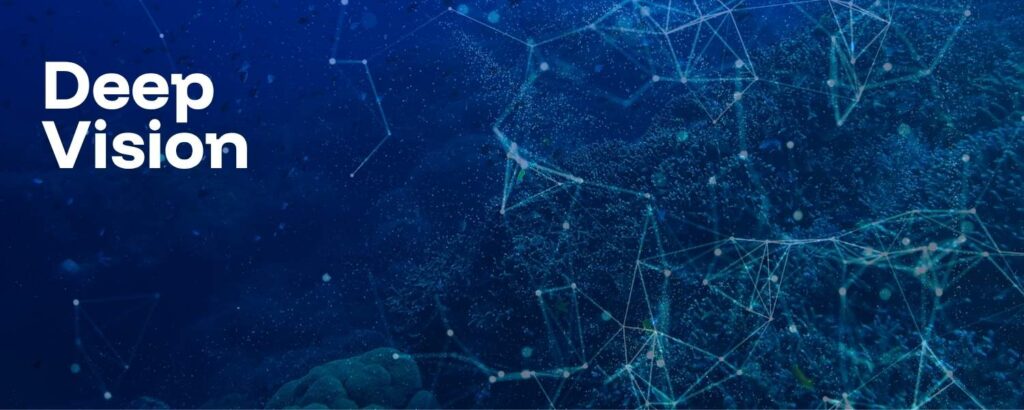 Project
Deep Vision: AI-enabled Mapping of Vulnerable Marine Ecosystems in the Atlantic
Co-led by Plymouth Marine Laboratory and the University of Plymouth, this project uses artificial intelligence and high-resolution seabed data to map vulnerable marine ecosystems across the Atlantic Basin. The resulting evidence supports the design of legal protections for deep-sea biodiversity, including on the high seas.
Explore project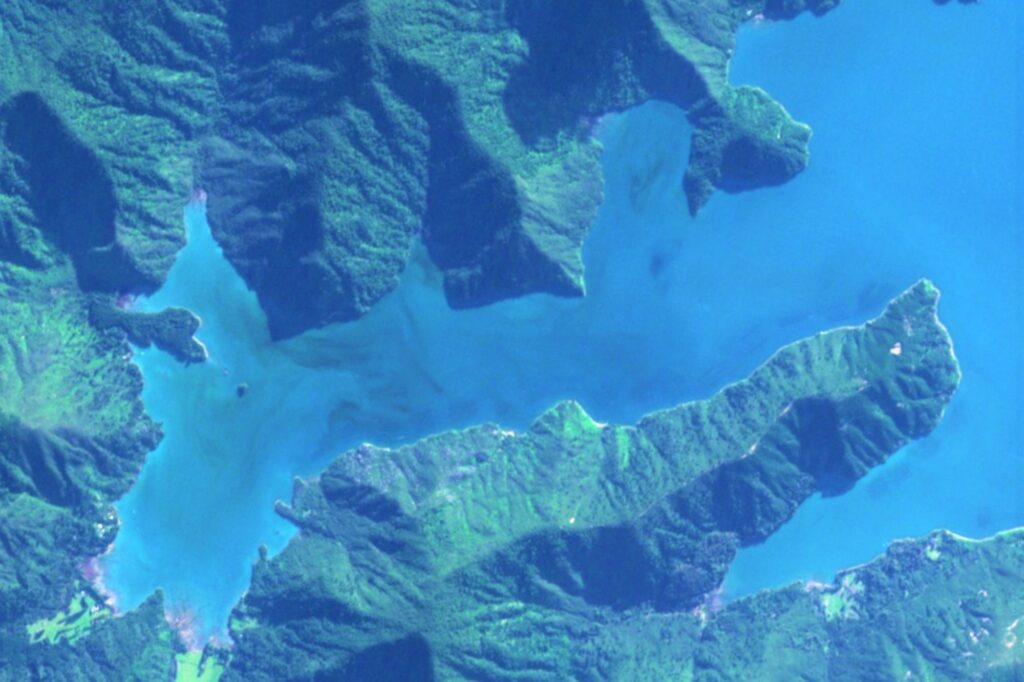 News
News
Joining forces on harmful algae: PML leads satellite project with NZ partner
As South Australia confronts one of its most damaging harmful algal blooms on record, a new UK–New Zealand research project led by Plymouth Marine Laboratory (PML) will boost monitoring of phytoplankton that produce toxins, early-warning systems and coastal resilience across the Southern Hemisphere.
Explore news Project
Automated, in situ Plankton Imaging and Classification System (APICS)
The Automated, in situ Plankton Imaging and Classification System (APICS) will radically improve the understanding of how environmental changes are affecting plankton, the microscopic organisms at the foundation of the marine food chain.
Explore project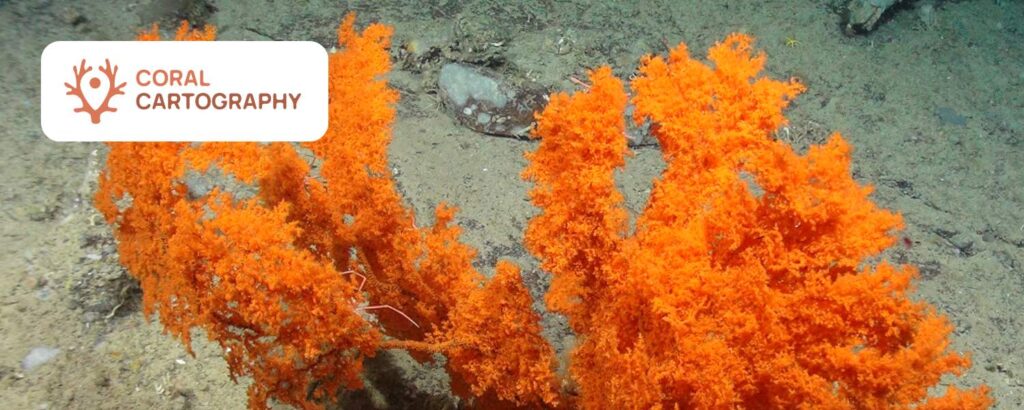 Project
Coral Cartography: Mapping Atlantic Cold-Water Corals to support Area Based Management
Coral Cartography uses deep-sea imagery to map the distribution and density of cold-water corals across the Atlantic Ocean. By combining marine ecology, environmental data and AI-enabled analysis, the project delivers new evidence to support the protection and sustainable management of vulnerable deep-sea ecosystems.
Explore project Project
Processes Influencing Carbon Cycling: Observations of the Lower limb of the Antarctic Overturning (PICCOLO)
The vast, remote seas which surround the continent of Antarctica are collectively known as the Southern Ocean. This region with its severe environment of mountainous seas, winter darkness, strong winds, freezing temperatures and ice is unsurprisingly one of the least explored and under-observed parts of the global ocean. However, because of these extremes, it plays a large and still unquantified…
Explore projectScientific Leadership
Experts working in this area of research


Why PML?
Unmatched expertise and infrastructure
Our edge lies in unique integration: long-term ecological insight meets cutting-edge technology.
World-class observation
The Western Channel Observatory, one of the world's longest-running marine time series, provides gold-standard baselines for validating new technologies.
Cross-disciplinary excellence
We unite ecologists, molecular biologists, data scientists, and expert taxonomists with high-performance computing and big-data infrastructure (MAGEO).
Leadership in marine innovation
Through Smart Sound Plymouth and National Centre for Coastal Autonomy, we accelerate innovation from research to operational deployment.
Trusted science partner
As an independent, not-for-profit institute embedded in Plymouth's marine technology cluster, we deliver objective, data-driven insights alongside ESA, NASA, and NERC.
Who We Work With
Serving a diverse ecosystem of partners
We collaborate with governments, research organisations, industry, NGOs, and community partners to deliver impactful marine science and support sustainable ocean management.

Selected partners, collaborators, and funders across our projects and research.
Get In Touch
Ready to transform Ocean monitoring?
Whether you are looking to develop monitoring programmes, access data and modelling expertise, inform policy, support environmental management, or advance innovation in the blue economy, we can help.
Portfolio Lead
Dr James Clark
Head of Group - Environmental Intelligence