Biodiversity Loss
We're losing species faster than we can name them
About this challenge
Marine ecosystems are changing faster than we can discover and understand them. PML is transforming biodiversity monitoring from fragmented snapshots into continuous, trusted intelligence - harnessing AI, genomics, and satellite technology to help protect ocean life at the scale and speed that matters.
Ocean Monitored
Species at risk
Avg ocean warming
The Challenge
Why biodiversity loss matters for the Ocean
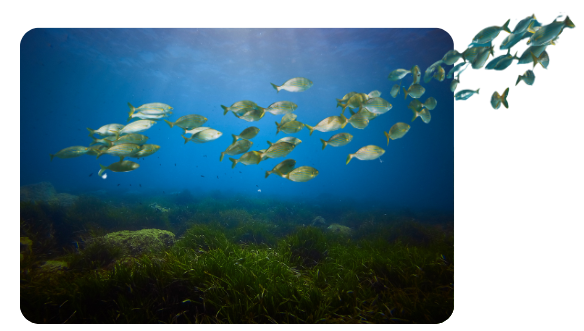
Ocean biodiversity underpins planetary health, climate stability, food security, and human wellbeing. Yet we're losing species faster than we can discover and understand them.
Climate change, pollution, overfishing, and habitat destruction are transforming marine ecosystems at every scale—from microscopic plankton to apex predators.
- Warming oceans forcing species migration
- Ocean acidification threatening calcifying organisms
- Plastic pollution entering food webs
- Overfishing depleting fish stocks
- Coastal development destroying habitats

PML are working to help stem marine biodiversity loss by conducting impactful, interdisciplinary research on:
- approaches for monitoring and quantifying the rate of change
- forecasting trends in the light of different drivers and management interventions
- quantifying the value of biodiversity to help inform solutions
PML aspires to maintain its world-leading reputation as a trusted voice on Biodiversity Loss and solutions to the problem.
Our Solutions
How PML is addressing biodiversity loss
We're transforming how the world monitors, understands, and protects marine biodiversity through cutting-edge science and technology integration.

Solutions
Big data to protect marine biodiversity
Marine ecosystems are changing rapidly. Yet our ability to monitor biodiversity across vast and dynamic oceans remains limited. At Plymouth Marine Laboratory, we combine big data, artificial intelligence, and autonomous technologies to transform how marine biodiversity is observed, understood, and protected – delivering the evidence needed for effective ocean management and policy.

Autonomous & AI-enabled monitoring
Advanced imaging, acoustic sensors, and expert-validated AI, underpinned by long term high quality traditional methods, could deliver scalable, cost-effective ecosystem assessments.
Our research edges us closer to automating monitoring by comparing new with traditional methods, to maintain the rigour of trusted science.
Autonomy, technology and digitisation
Environmental DNA (eDNA) analysis
eDNA tools are redefining how we see life in the ocean, uncovering hidden biodiversity, interactions and ecosystem function.
We are advancing next-generation ocean monitoring to deliver deeper, more actionable insights into marine life.
eDNA
Biodiversity from space
Earth observation and satellite data track ecosystem changes across scales, from local sites to global oceans.
We’re proving remote sensing can reliably inform marine protection decisions.
Marine Processes and ObservationsScience in Action
Featured news & projects
Our scientists are advancing understanding of Biodiversity Loss using the latest tools and techniques.





Experts working in biodiversity loss
Led by internationally recognised scientists combining ecology, technology and data science to deliver actionable biodiversity intelligence.


Get In Touch
Want to work on biodiversity loss with us?
Whether you're tracking MPA effectiveness, assessing environmental impact, or contributing to global biodiversity goals, we can help you see the ocean with new clarity.
Ocean Challenge lead details
Professor Kerry Howell
Ocean Challenge Lead: Biodiversity Loss