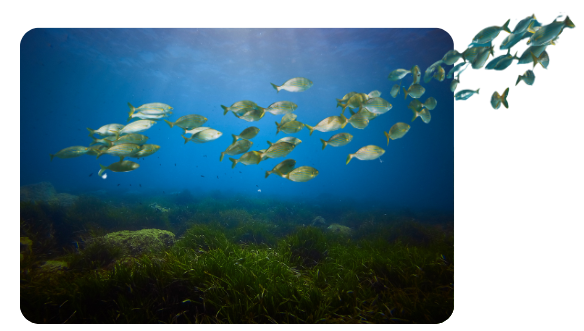
Managing water quality from catchment to coast
PML delivers integrated, science-driven solutions to protect water quality, natural capital and ecosystem services across the water continuum, from upstream catchments and lakes, through rivers, lagoons and estuaries, to coastal seas. We combine socio-economic insight with advanced observation and ecosystem modelling to provide tailored, evidence-based support for sustainable water management.
Download our leaflet to find out more about our overall water sector services
Our focus
PML delivers science-driven solutions to monitor and protect water quality, natural capital, and ecosystem services across the catchment-to-coast continuum.
The Challenge
Water quality is facing increasing pressures from human activity
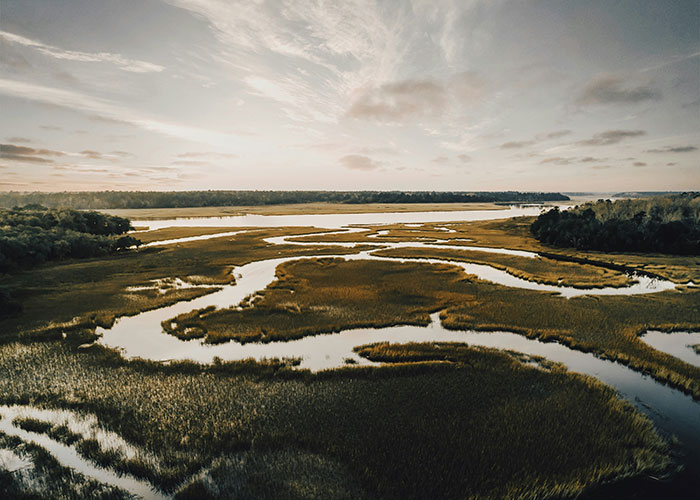
Global livelihoods rely on ecosystem services from inland and coastal water bodies: more than half the human population live adjacent to a body of freshwater or the sea. Human activities impact the integrity of water resources, the health of organisms depending on them, and the sustainability of the services they provide, often harming nature and risking economic sustainability.
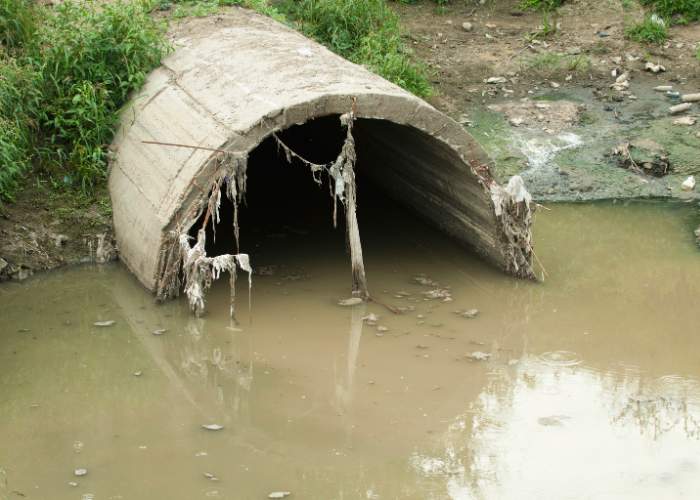
The compound pressures of pollution, water use and climate change on inland and coastal water bodies place increasing demands on the public actors, agencies and industries that share responsibility to maintain the integrity of these connected water systems. Each catchment represents a unique hydrological network, land use, and set of meteorological conditions, alongside varying management context, often in a fragmented decision-making context.
Changing hydrological conditions, urbanisation and extreme weather events place ever-increasing demands on our ability to observe, predict and mitigate impacts on water quality.
Maintaining healthy water bodies in an economically manner is essential to secure the provision of drinking water, aquaculture, sewerage works, and recreational water use.
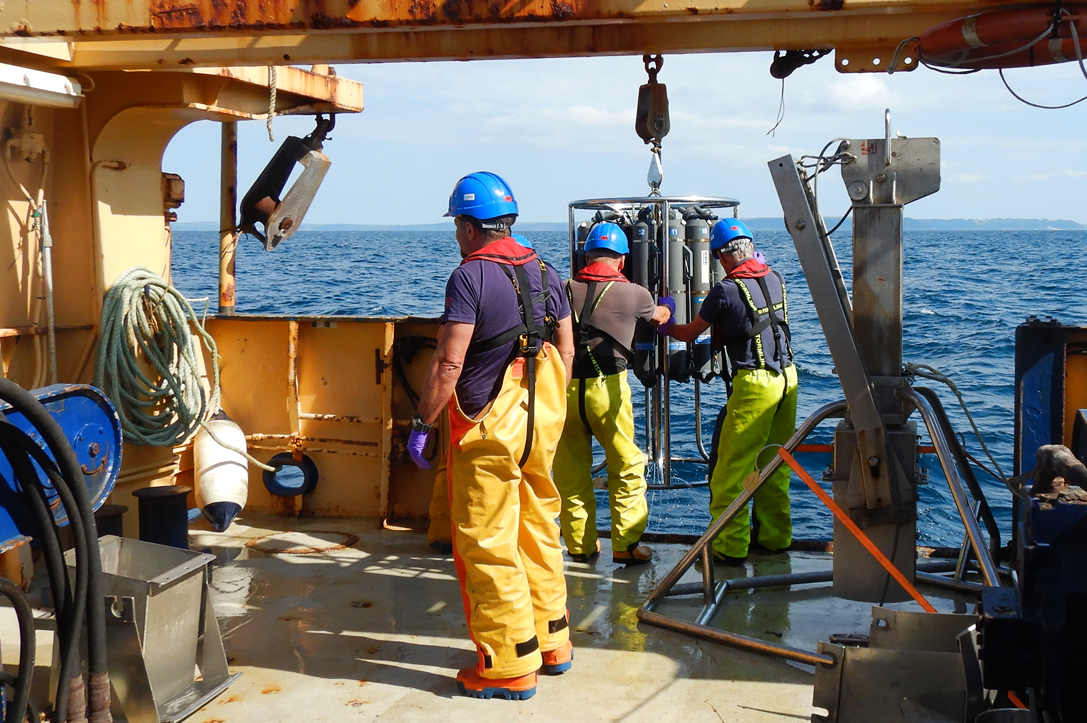
PML are driving the science-based management of catchments and the water bodies contained within them, to prevent, manage and mitigate against pollution.
We integrate remote and in situ observation, ecosystem modelling, socio-economic and behavioural analysis for the protection of inland and coastal water bodies via policy and nature-based solutions.
We recognise there is no one-size-fits-all solution and sustained impact is achieved locally, through co-design of solutions with inclusive communities to achieve fundamental societal benefits: a water-smart society, and the sustainable exploitation and enjoyment of natural capital assets.
At the same time, our methods are scalable and transferable, and our goal is a change towards more effective, integrated policy measures, efficient and non-damaging land and water use, and sustainable ecosystem services that benefit people and nature from source to sea, locally and globally.
Our Approach
Integrated, inter-disciplinary solutions – what do we offer?

Observation and model-based mitigation
On the interface of observation, modelling, and remediation our solutions build on observation time-series, high-frequency measurements, and advanced laboratory analysis, quantifying nutrient pollution leading to eutrophication and deoxygenation.
- We have a long track-record studying the ecotoxicological impacts and proliferation of plastics and bio-based alternatives.
- We use satellites, drones, and ships to characterize ecosystems, observing trends and events (phytoplankton blooms, plumes) in ambient water quality of lakes, rivers, and estuaries and out to the open ocean.
- We model ecosystem dynamics and the impacts of pollution on human and animal health, down to production of shellfish and their potential for bioremediation in the context of natural capital assessment. Our models can provide short-term forecasting and extrapolate to future climate scenarios.

Impact assessment and adoption processes
We analyse:
- socio-economic impacts of ecosystem services, including their cultural value and contribution to health and wellbeing, to improve decision-making.
- the economic impact of management scenarios, from improving farming practices or ecosystem restoration.
- pollution mitigation options through policy change or nature-based solutions, on the value of those ecosystem services, through valuation, the landscape of beneficiaries and benefits, and the finance and investment mechanisms that would make them sustainable.
We use inclusive approaches and robust methods to understand economic value and social preferences when developing interventions, environmental standards, or certifications, and we look at the behavioural context to identify motivations and trade-offs of stakeholders towards improved practices, compensation schemes, incentives or investments.
Our Impact
From water data to water protection
Our work translates science into real-world impact, at the scale of individual catchments, national regulatory frameworks and global observation networks.
Plastic pollution is widely recognised as a global environmental crisis. Over 400 million tonnes of plastic are produced annually, with a significant portion polluting the marine environment. Beyond environmental damage, plastic-related chemicals pose risks to human health, and plastic pollution contributes to economic losses, food insecurity, and social inequality. Tackling this issue requires addressing plastic production at its source and ensuring new and recycled plastics are truly sustainable.
Scientists are using advanced tools including satellites, drones, sensors, and AI to monitor water quality in Plymouth Sound and the western English Channel. The Vis4Sea project tracks pollution from sources such as agriculture, sewage, flooding, and historic mining to better understand impacts on marine ecosystems. Led by Plymouth Marine Laboratory with international partners including CSIRO AquaWatch, the project develops real-time mapping of contaminants to support improved coastal management and environmental protection.
Discover how scientists and farmers are working together to better understand and reduce the impact of agriculture on rivers, coastal waters, and the ocean. These educational videos, produced for the ProBleu project and featuring researchers from the AgZero+ project, explore the connections between farming, pollution, water quality, and marine ecosystems — highlighting practical solutions for a more sustainable future.
Light pollution is widespread and expanding. But the difference between the intensity and cycles of natural and unnatural light has to this point been understudied. Quantifying this would allow a better understanding of the impact of expansive urbanised coastlines on the ecology of marine ecosystems.
PML’s pioneering plastics research underpinned UK legislation banning microplastic beads from wash-off cosmetics, preventing 4,000 fewer tonnes of plastic from entering oceans annually.
PML research was fundamental to the National Ecosystem Assessment, influencing the UK’s Natural Environment White Paper and 25 Year Environment Plan.
PML Highlights
See our science in action
 Project
ProBleu: Promoting ocean and water literacy in school communities
ProBleu aims to mobilise and engage students, school communities, and the wider community across the EU and associated countries to enhance understanding, stewardship, and literacy about oceans and waters, with a focus on restoring them by 2030 and growing the Network of European Blue Schools.
Explore project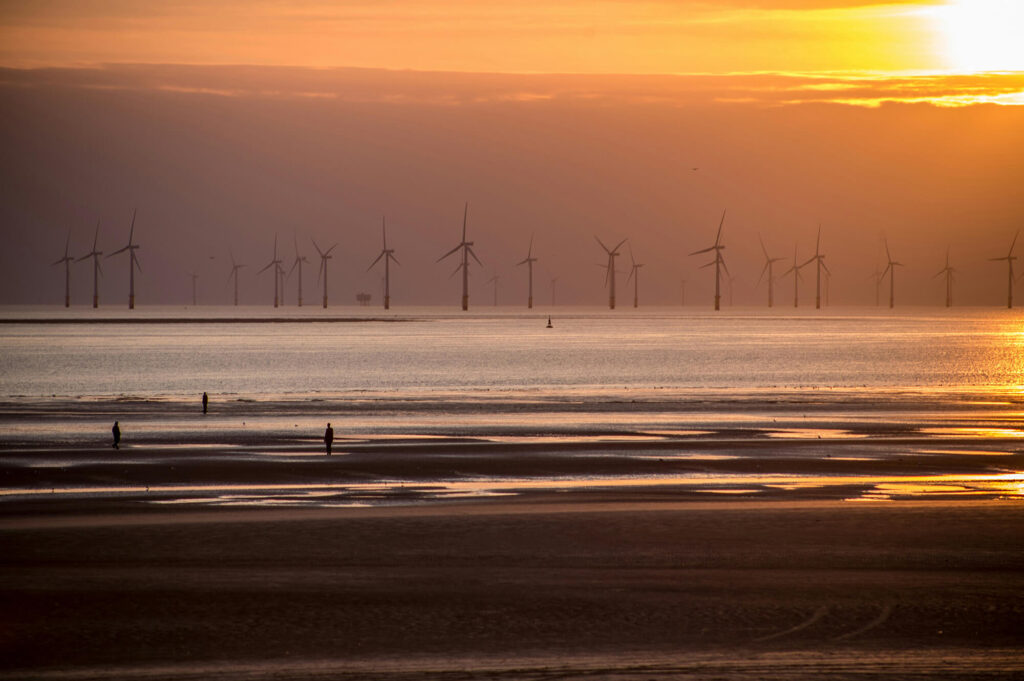 News
News
Advancing nature-positive offshore wind: review calls for improved impact assessment, monitoring and mitigation
A new review, published in Nature Reviews Biodiversity and led by Plymouth Marine Laboratory, synthesises current knowledge of offshore wind farm impacts across their entire life cycle. The study highlights both direct and indirect ecological effects and calls for stronger regional and international coordination, to ensure consistent assessment, monitoring and mitigation of offshore wind impacts. This work will help set…
Explore news Project
AgZero+ Towards sustainable, climate-neutral farming
Plymouth Marine Laboratory (PML) is a partner in a major five-year £13.8 million research programme, named “AgZero+’, to support the UK’s transition towards home-grown food production that is sustainable, carbon-neutral and has a positive effect on nature.
Explore project News
News
PML awarded funding to develop state-of-the-art digital twin for harmful algal bloom monitoring
Through the Twinning Capability for the Natural Environment (TWINE) programme, PML has been successful in a funding bid that aims to significantly improve current predictive capability of harmful algal blooms (HABs).
Explore news Project
Removing marine microplastics with mussel power
Removing marine microplastics with mussel power is a one-year feasibility study funded by Waitrose Plan Plastic to develop an ecological solution to microplastic pollution.
Explore project Project
Water-Associated infectious Diseases in India: digital Management tools (WADIM)
WADIM aims to develop a multi-layered digital tool to map sanitation conditions and occurrence of disease and changes therein, especially in the event of flooding due to monsoon rainfall or natural disasters.
Explore projectScientific Leadership
Experts working in this area of research

Portfolio Lead – Managing water quality from catchment to coast
Professor Stefan Simis

















Why PML?
Unmatched expertise and infrastructure
Our capabilities span the full spectrum of tools needed to understand, monitor, model and manage water quality, from polar oceans to farm fields.
Marine and freshwater observation
Decades of continuous field observation and time-series measurements across UK, European and global water bodies, combining in situ measurements, autonomous platforms and long-term satellite archives.
Cross-disciplinary scientific excellence
A team spanning marine ecology, biogeochemistry, physical oceanography, environmental social science and economics, enabling genuinely integrated solutions.
Leadership in marine technology
Pioneers in eDNA analysis, autonomous monitoring platforms, drone-based remote sensing and citizen science tools for water quality intelligence.
Trusted science partner
A long track record of working with Defra, the Environment Agency, Natural England, SEPA, the European Space Agency and international development partners, translating science into policy and practice.
Who We Work With
Serving a diverse ecosystem of partners
We are committed to co-designing solutions with the full range of stakeholders, from government agencies and water utilities to NGOs, farmers and international development banks.

Selected partners, collaborators, and funders across our projects and research.
Get In Touch
Ready to transform water quality management?
Speak to our team about how we can support your catchment challenge, monitoring programme, or policy objective.
Portfolio Lead
Professor Stefan Simis
Earth Observation Scientist (inland/coastal waters)