Project
Carbon from earth Observation between Ocean and Land (COOL)
The COOL (Carbon from Earth Observation between Ocean and Land) project is a European Space Agency (ESA)-funded initiative focused on improving how we observe and understand the carbon cycle in coastal waters using satellite data.
Coastal oceans play a critical role in regulating climate and supporting marine ecosystems, yet they remain difficult to monitor from space. This is due to their complex optical properties and the rapid, small-scale changes that occur where land and ocean meet. Despite covering only around 10% of the global ocean, these regions are responsible for a disproportionately large share of ocean productivity and carbon storage.
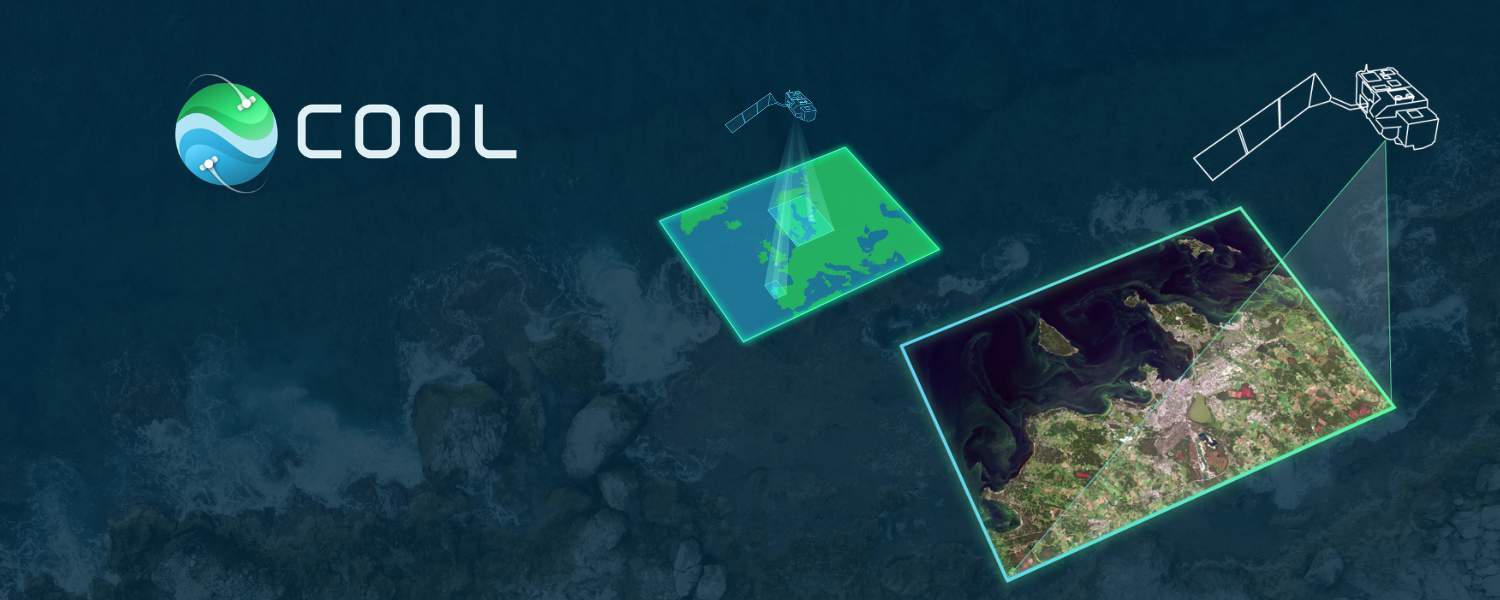
COOL addresses this challenge by developing new Earth Observation (EO) algorithms and high-resolution satellite products tailored specifically for coastal environments. The project focuses on key carbon components, including particulate and dissolved organic carbon, inorganic carbon, and primary production, alongside supporting indicators such as chlorophyll-a and suspended particulate matter.
Using Sentinel-2 and Sentinel-3 satellite data, COOL is generating datasets with the spatial and temporal detail needed to capture the dynamic processes that drive carbon cycling in coastal zones. These datasets will be used to improve scientific understanding, validate models, and support more accurate predictions of how coastal systems respond to environmental change.
The project focuses on contrasting coastal regions, including the Baltic Sea and the Iberian upwelling system, to test and demonstrate its methods across different environmental conditions.
By advancing satellite-based monitoring of coastal carbon, COOL aims to support global carbon assessments, strengthen climate modelling, and inform sustainable management of coastal environments. Ultimately, the project contributes to a better understanding of the ocean’s role in the Earth system and supports efforts to address climate change.