Project
Phytodiverse: Advancing Ocean Biodiversity Science from Space
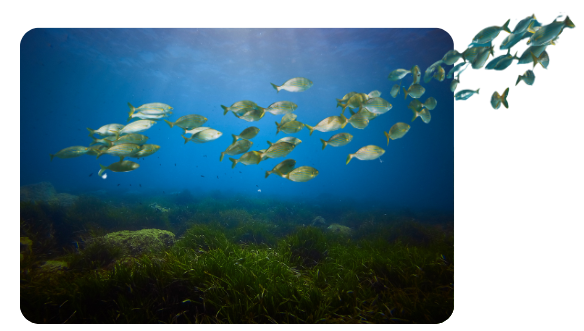
Phytoplankton form the foundation of marine ecosystems, driving ocean food webs through the production of organic carbon via photosynthesis. Their diversity plays a critical role in shaping marine biodiversity patterns and ecosystem function. With the emergence of hyperspectral satellite missions, there is now unprecedented potential to observe and quantify this diversity from space.
Phytodiverse addresses a key scientific challenge: translating complex satellite data into reliable, policy-relevant biodiversity indicators. While hyperspectral observations offer transformative capabilities, their full potential can only be realised through robust algorithm development supported by extensive in-situ data. Phytodiverse bridges this gap by integrating satellite remote sensing, ecological modelling, and field observations, in alignment with wider European Commission-funded initiatives.
The project follows a four-pillar methodology.
- First, it combines multispectral data from ESA Sentinel-2 and Sentinel-3 with hyperspectral observations from PACE to produce enhanced remote sensing reflectance products.
- Second, it advances biodiversity models that treat phytoplankton diversity as an Essential Ocean Variable, using community composition algorithms and species distribution modelling approaches.
- Third, it generates Essential Biodiversity Variables describing community structure and ecosystem function, including functional traits such as pigment composition, cell size, and phenology.
- Finally, it derives change indicators that quantify spatial and temporal trends in phytoplankton communities, supporting integration into global biodiversity monitoring frameworks.
Key innovations include hyperspectral data fusion techniques that improve spatial resolution while maintaining spectral fidelity, functional trait-based analyses that move beyond traditional chlorophyll measurements, and rigorous uncertainty quantification through validation against in-situ data and multiple modelling approaches.
Phytodiverse applies its methods across three science case studies.
- In the North East Atlantic open ocean, it examines long-term changes in plankton community structure and climate-driven ecosystem dynamics.
- In the Northern Adriatic coastal system, it investigates how environmental variability influences bloom diversity in complex coastal waters.
- In the Arctic, it tracks how rapid warming is reshaping phytoplankton diversity and ecosystem function in polar regions.
Together, these science cases demonstrate how satellite-derived products can be transformed into meaningful indicators of ocean health. The project supports the development of a coordinated European approach to biodiversity monitoring, contributing to future EC–ESA collaboration and global ocean observation systems. By linking phytoplankton diversity to climate-driven change, Phytodiverse provides critical evidence to inform environmental policy and improve understanding of marine ecosystem resilience in a changing world.