Story | 14 July 2026
From mudflats to markets: research reveals strong economic case for investing in marine nature recovery
Findings from the Sea The Value project are presented in this latest report, suggesting that by applying a ‘natural capital assessment’ approach, there is genuine potential for marine nature restoration to attract ‘blue’ finance.
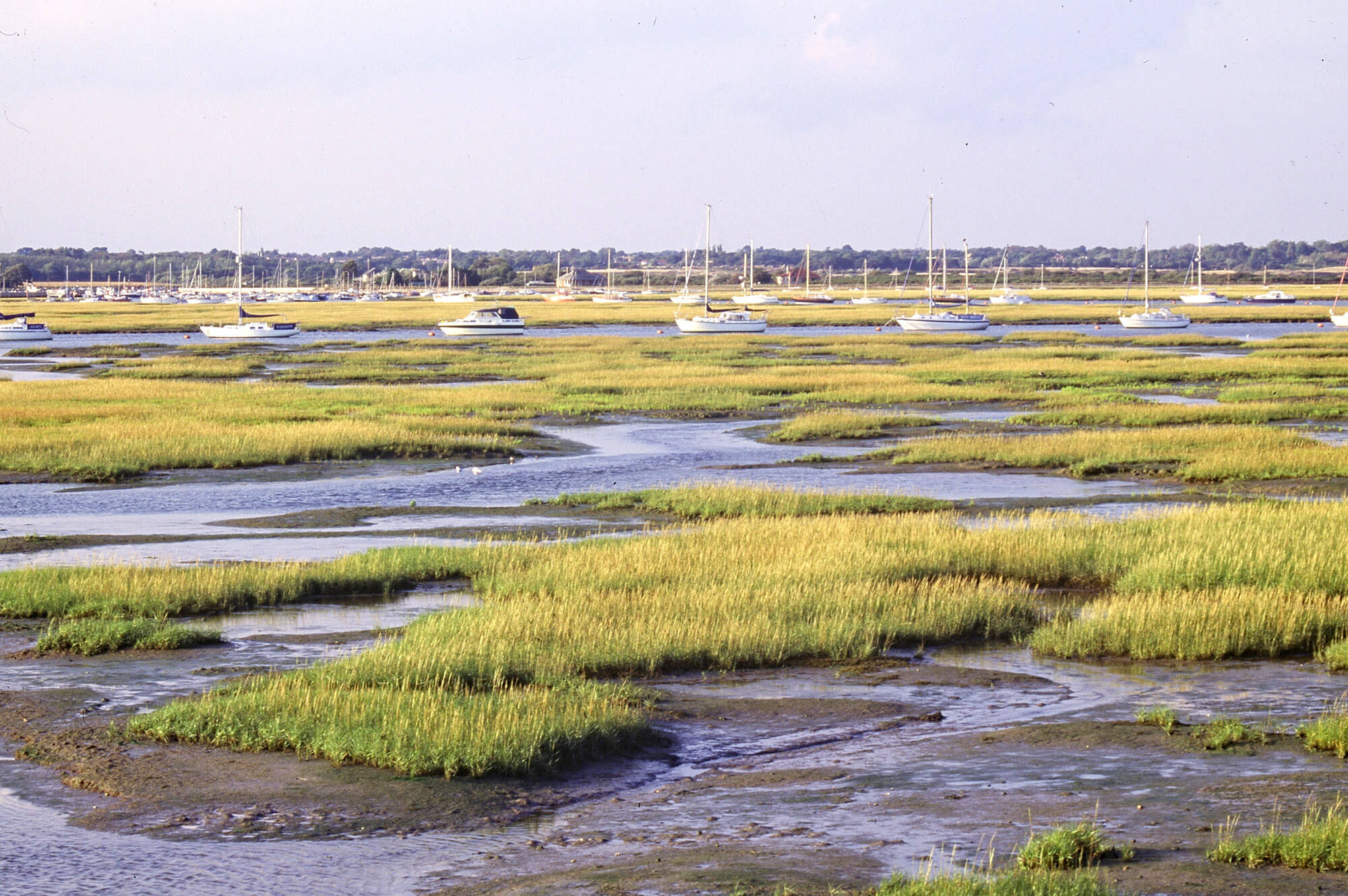
Lymington, Keyhaven Marshes, Solent Maritime SA. Natural England, CC BY-NC-ND 2.0
Research is showing a rapid decline in biodiversity and according to the WWF Living Planet Report in 2024, monitored wildlife populations have fallen by an average of 73% since 1970 around the globe.
According to the 2023 State of Nature assessment, the UK has been reported to be one of the most nature-depleted countries in the world. Only 14% of ecologically-important habitats are in good condition and large areas of the UK seafloor do not meet the level of ‘Good Environmental Status’ because of habitat disturbance.
Despite this concerning state of affairs, nature is rarely central to public or private decision-making, largely because the economic value of marine ecosystems is poorly understood, under-evidenced and hard to communicate to investors.
Sea The Value was a 3-year collaborative research project, led by Plymouth Marine Laboratory (PML), that linked marine ecology, economics and social science to support biodiversity recovery through better valuation and green finance.
The project aimed to transform the application of economics, moving from the historical norm of economic growth driving environmental decline, to a situation where economic understanding is applied to better protect biodiversity and the multitude of benefits which it provides.
The work was carried out in two different case study sites in the UK: the Cromarty Firth in Scotland and the Solent in England. One aspect in which they differed was the amount of ecological data, with more data available from the well-researched Solent.
The aim of project’s final report is to showcase to readers how a ‘natural capital assessment’ can be carried out and how this approach can be used to improve understanding of the economics of biodiversity of an area, so that sound decision making around natural capital is enabled and financial markets can be created for ecosystem services.
The report reveals:
Habitat condition matters enormously for value
Fieldwork in the Solent showed that the quality and biodiversity of seagrass, saltmarsh, oyster beds and mudflats directly shapes their ability to sequester carbon and remove nutrients. Most existing valuations ignore this, leading to significant underestimation of uncertainty in nature investment.
Communities are a very valuable resource
Participatory mapping workshops successfully engaged local stakeholders, who know their area extremely well, in identifying what nature provides and to whom. These maps informed planning and restoration decisions and were shared with schools, councils and museums.
Marine restoration can be economically viable but more research is needed
In the Solent, restoration scenarios produced an estimated central net benefit of around £90 million in present value terms, combining biodiversity gains (approx. £170m) and carbon regulation (approx. £50m) against restoration costs (approx. £130m). However, the range was enormous, from a net loss of £210m to a gain of over £1 billion, reflecting ecological and economic uncertainty. This uncertainty reflects both variations in how restored habitats recover and function over time, and uncertainty in estimating the future value of environmental benefits.
Bundling ecosystem services improves viability
Selling carbon, nutrient removal and biodiversity benefits together (bundling/stacking) spreads risk and improves the financial case for restoration, making it more attractive to investors than single-service approaches like carbon-only credits.
Overall, this research demonstrates that the ‘natural capital approach’ can be combined with detailed economic hypotheses and data, to inform the choice of restoration activities in coastal habitats that best support the needs of local stakeholders.
Additionally, the project helped foster deep interdisciplinary connections within the team and with projects partners, including government, NGOs and industry, and thorough four workshops the team shared expertise, empowering 24 coastal managers with practical skills.
Dr Stefanie Broszeit, lead author of the report and Senior Marine Ecosystem Services Scientist at Plymouth Marine Laboratory, said:
“Sea The Value was a real success and, for us as researchers, a very engaging project. A particular highlight for me was the mapping work carried out with local communities at both case study sites. This gave us important insights into the values people place on their local coastal habitats, and brought these values to the fore.”
“From this project we conclude that there is real potential for marine nature restoration to attract ‘green’, or rather ‘blue’, finance especially if: ecological data quality is high; economic valuation methods account for uncertainty; communities are engaged, and collaborative governance structures are established to manage multi-year funding across multiple delivery partners.”
“We wanted this report to be useful for readers who are thinking about how they might advance nature recovery in their own areas – what skills they might need and what practical steps they could take. Rather than setting out strict guidelines, we share our approach to encourage people to reflect on what they can do in their own contexts”.
Sea The Value activities included workshops with the Coastal Partnership Network (CPN), where the team worked through their key findings with interested parties from the CPN.
All materials, along with recordings from some of these sessions, are available on the Sea The Value website >>
Sea The Value was led by Prof. Nicola Beaumont, who was Head of Science for Sea and Society at PML during this project. Research partners that contributed to this report were PML, eftec, University of Portsmouth, Daryl Burdon Ltd, University of Aberdeen, Coastal Partnership Network and the Moray Firth Coastal Partnership.