Publication
AMT 31 Cruise Report
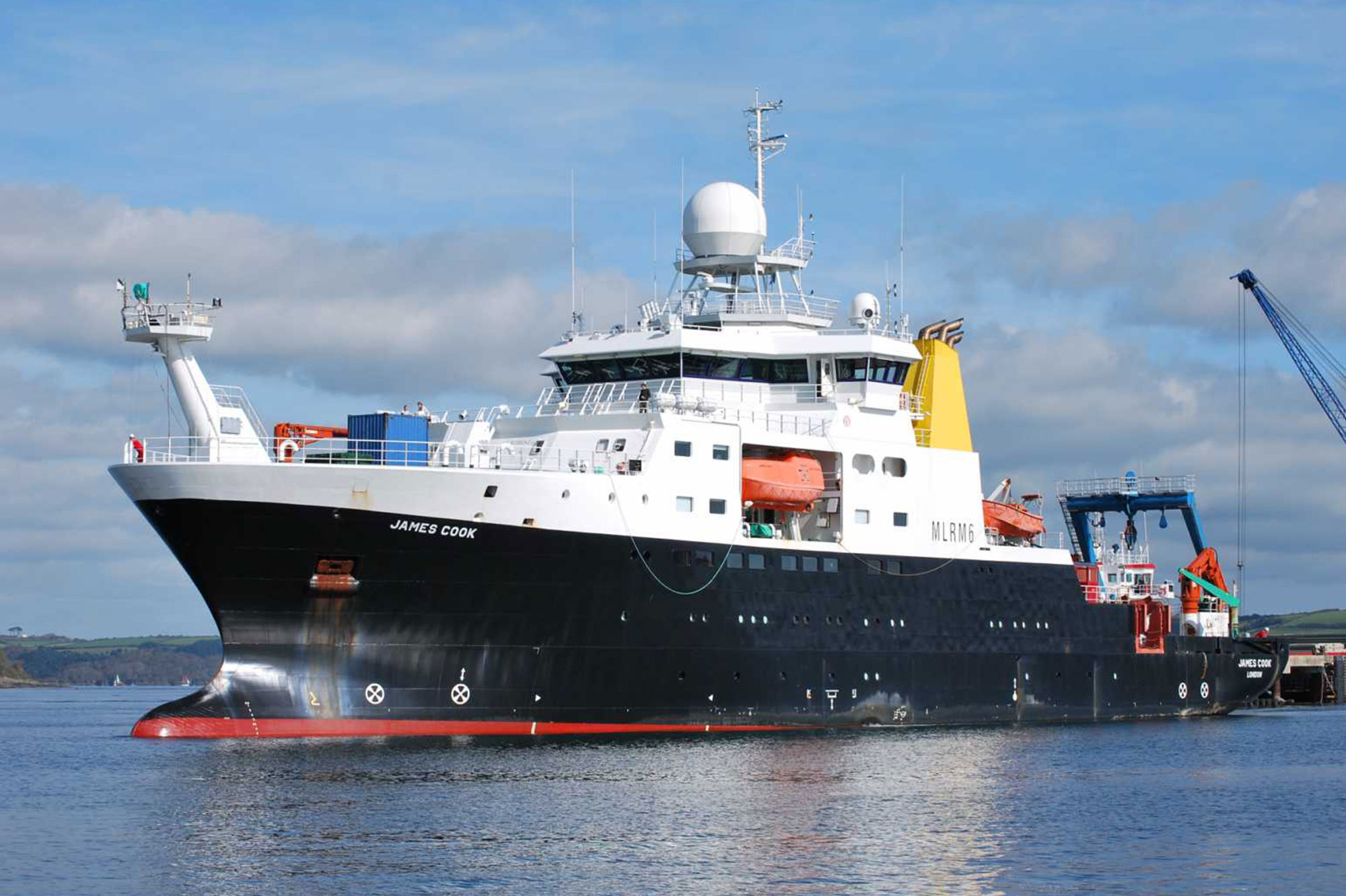
AMT’s oceanography training programme continued with opportunities provided by POGO in the sponsorship of a research fellow from Brazil. The whole of the scientific complement would like to extend their gratitude to Captain John and his officers and crew who supported our activities throughout with dedication and extreme professionalism. Our thanks are also extended to Mark Maltby from NMF. who ensured the delivery of all scientific activities. My particular thanks to Andy Rees and Meryl Hopper who assisted in the pre-cruise logistics. AMT is a multidisciplinary program which undertakes biological, chemical and physical oceanographic research during an annual voyage throughout the Atlantic Ocean.
AMT objectives have evolved to enable the maintenance of a continuous set of observations, whilst addressing global issues that are raised throughout the most recent IPCC assessment and UK environmental strategy.
AMT objectives are to:
(1) quantify the nature and causes of ecological and biogeochemical variability in planktonic ecosystems;
(2) quantify the effects of this variability on nutrient cycling, on biogenic export and on air-sea exchange of climate active gases;
(3) construct a multi-decadal, multidisciplinary ocean time-series which is integrated within a wider “Pole-to-pole” observatory concept;
(4) provide essential sea-truth validation for current and next generation satellite missions;
(5) provide essential data for global ecosystem model development and validation and;
(6) provide a valuable, highly sought after training arena for the next generation of UK and International oceanographers.
Download this publication
Please enter your details below to access the publication.
The information you provide will be used to gain a greater understanding of our audience. Your details will be kept securely and in accordance with our Privacy Policy.
Cite this publication
Tilstone, GH. 2025. AMT31 Cruise Report. PML Publishing