Story | 14 August 2026
As Arctic sea ice melts, it can produce clouds that can reduce warming – but what happens next for the climate?
A new study provides the first real-world evidence of how melting sea ice can boost cloud-seeding particles in the Arctic. But whether more clouds could help cool the region – or trap heat – remains uncertain.
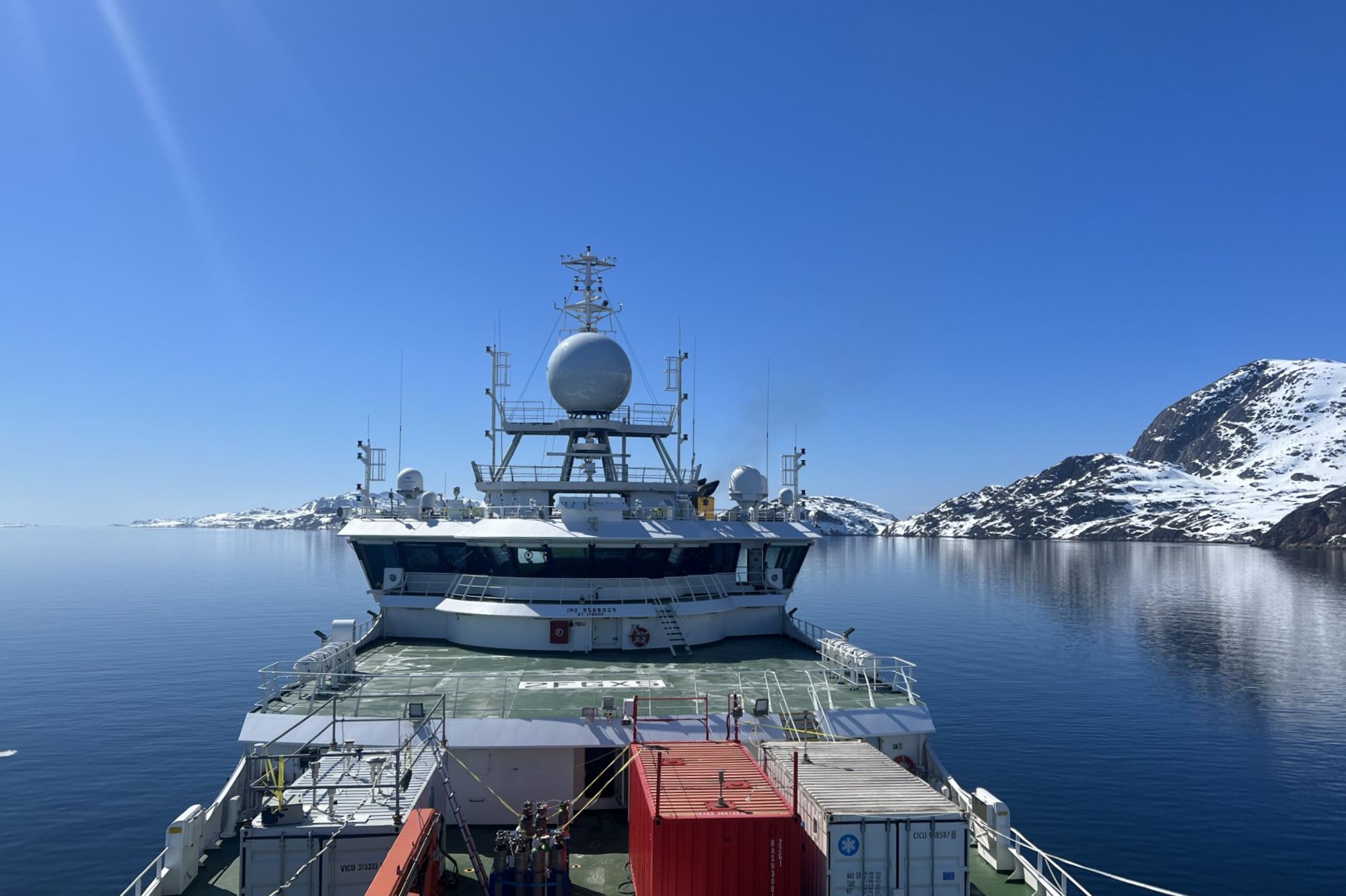
Image: PML scientists joined the research expedition in 2022 that led to the discovery of the mechanism that increases the number of cloud-forming particles in the Arctic atmosphere. Image credit: PML’s Dr Loren Temple.
Like many parts of the world, the Arctic experiences distinct seasons.
During the Arctic spring and summer, rising temperatures cause sea ice to melt, reaching its smallest area – known as its minimum extent – before freezing begins again during its autumn and winter months.
But Arctic sea ice is changing. As Earth’s atmosphere and ocean continue to warm, seasonal melting of sea ice increases, and, since satellite records began in 1979, the area covered by sea ice at the summer minimum has declined by around 12.2% per decade.
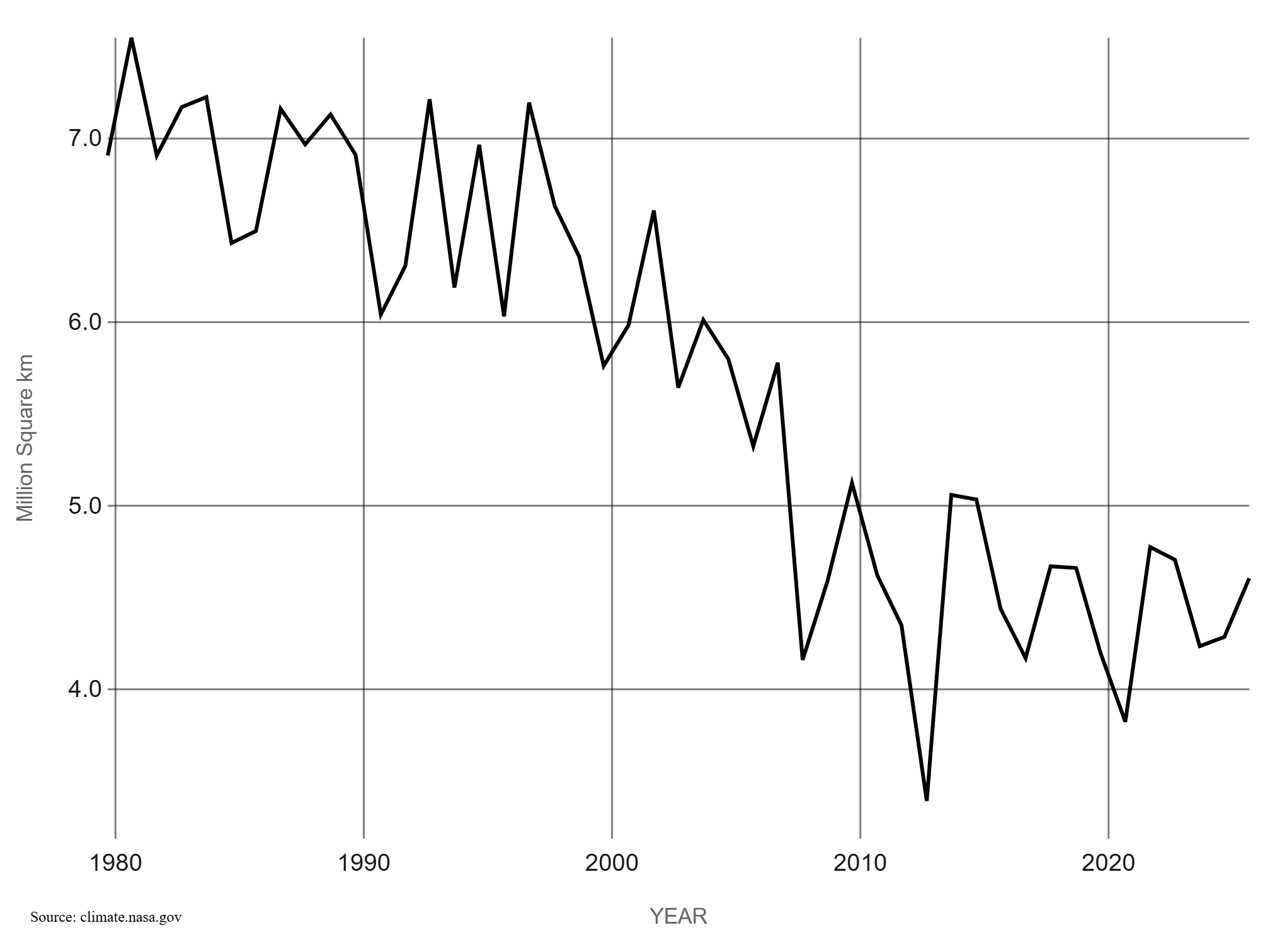
Graph above: Measurements of summer Arctic sea ice extent each year show a shrinkage of 12.2% per decade due to warmer temperatures. Source: NSIDC / NASA
The loss of sea ice doesn’t just change the frozen landscape, however. It can also alter the chemistry of the ocean and atmosphere above it – with potential consequences for clouds and climate.
Did you know? Arctic sea ice contains vital nutrients like nitrogen, iron, silicates, phosphates, and dissolved organic carbon – all trapped inside tiny brine channels. During the Arctic Spring and Summer months, melting ice seeds the upper ocean layer with accumulated food and elements, driving higher productivity.
A new, international study, led by the University of Birmingham and involving a team of scientists from PML, has uncovered a mysterious natural process, that until now, had only been demonstrated through laboratory experiments.
Researchers collected data during an expedition onboard the RSS Discovery across Greenland and the Davis Strait in May and June of 2022.
They discovered that when Arctic sea ice melts and meets the open ocean, something happens: marine life and sunlight interact with the seawater to release a chemical mixture that increases the number of cloud-forming particles in the atmosphere.
The strongest effects came from the marginal ice zone, the narrow band where open ocean meets melting sea ice and where marine algae are at their most productive. During one event there, the number of cloud-seeding particles rose from roughly 50 to 1,500 per cubic centimetre.
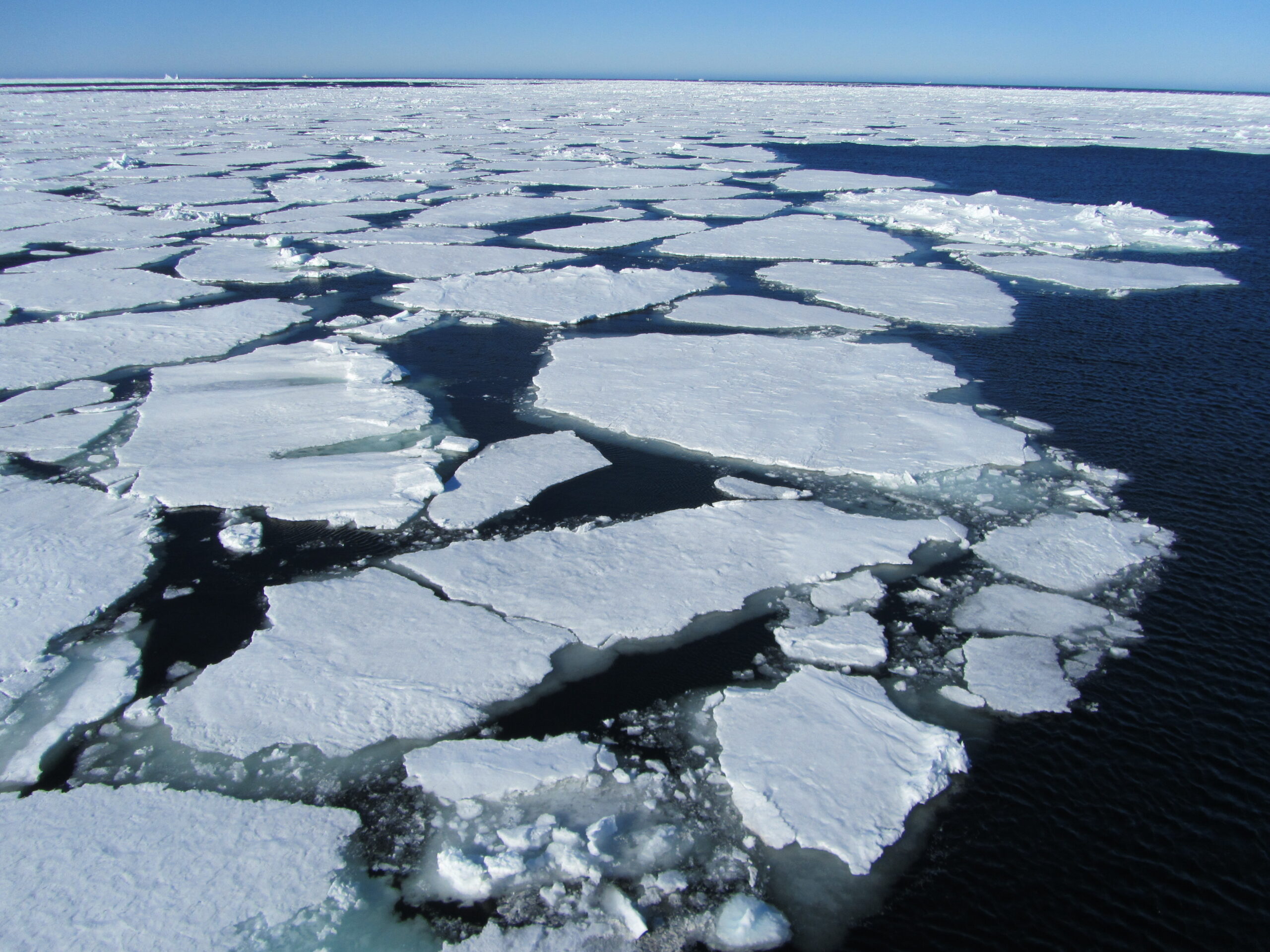
Image caption: The study found that the strongest effects came from the marginal ice zone, the narrow band where open ocean meets melting sea ice. That band is widening as Arctic sea ice retreats. Image credit: Dr Gavin Tilstone – PML.
Researchers discovered that new particles were forming on more than 80% of sunny days, showing that the process is common in this part of the Arctic.
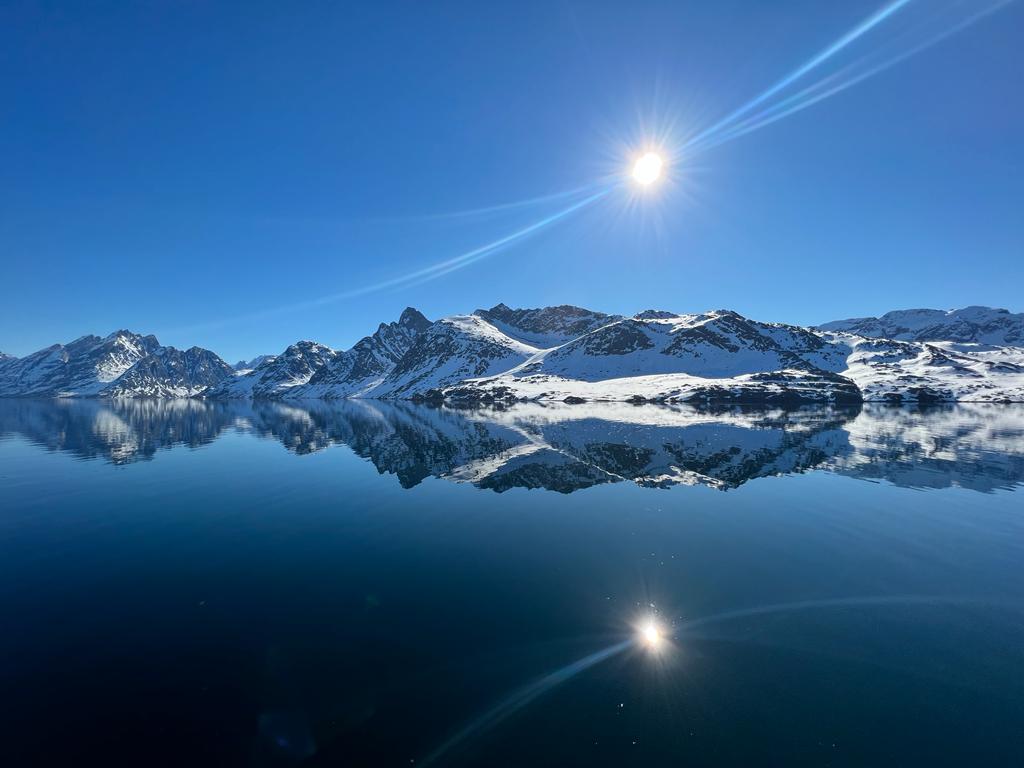
Image: Researchers found that new particles were forming on more than 80% of sunny days. Image credit: Dr Loren Temple.
Their formation is driven by compounds that are emitted into the air and chemically transformed under sunlight, which include a combination of:
- Iodine compounds released from the ocean, sea ice, and coastal areas
- Dimethylsulfide from marine plants and algae
- Organic compounds released naturally from the ocean or land
The discovery is important for our climate, as clouds play a role in determining how much heat is retained or reflected on Earth.
More clouds, or thicker clouds, could reflect sunlight back into space, which could help cool the open ocean, thereby helping to mitigate warming. But equally, these clouds can also trap outgoing heat, which, especially when above reflective surfaces like snow or ice, could actually cause surface warming and further ice melt.
PML scientists played an important role in bringing this scientific discovery to light, with each contributing specialist expertise to collect and interpret different aspects of the data.
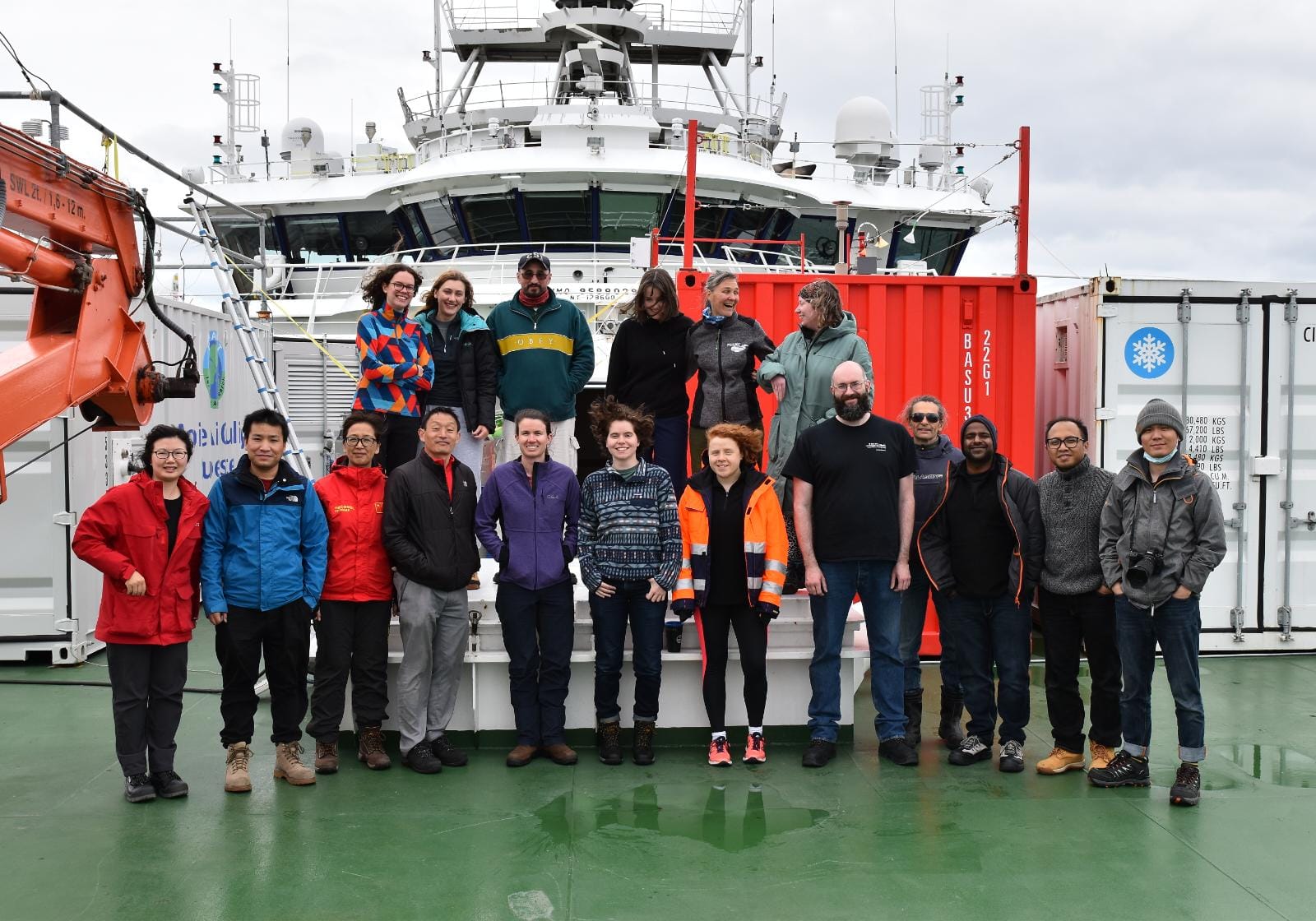
Image: The researchers pictured on board the RRS Discovery. Top row, second from left is PML’s Dr Loren Temple, and bottom row, fourth from the right is PML’s Dr Gavin Tilstone.
Dr Gavin Tilstone, Bio-optical oceanographer at PML, collected optical measurements of chlorophyll-a during the expedition, commonly used as an indicator of the number of microalgae in a body of water. He said:
“Gases released by marine organisms, particularly marine microalgae – commonly known as phytoplankton – can be an important source of aerosols that cause cloud formation.”
“To improve our understanding of the role that these microscopic plants play in the Arctic, it is crucial to quantify how much of these gases and aerosols are produced by them.”
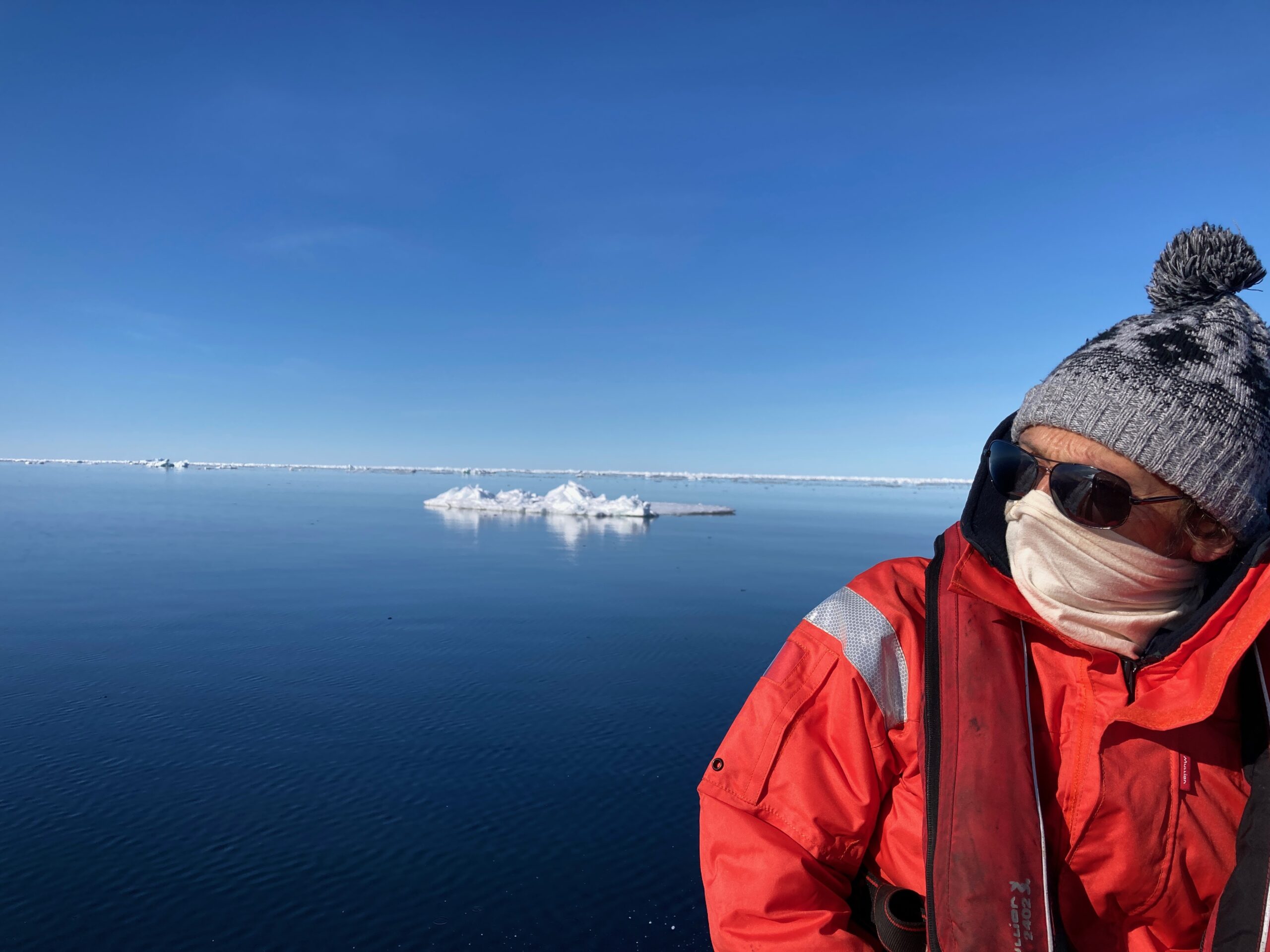
Image: PML’s Dr Gavin Tilstone wrapped up during the expedition onboard the RRS Discovery, 2022.
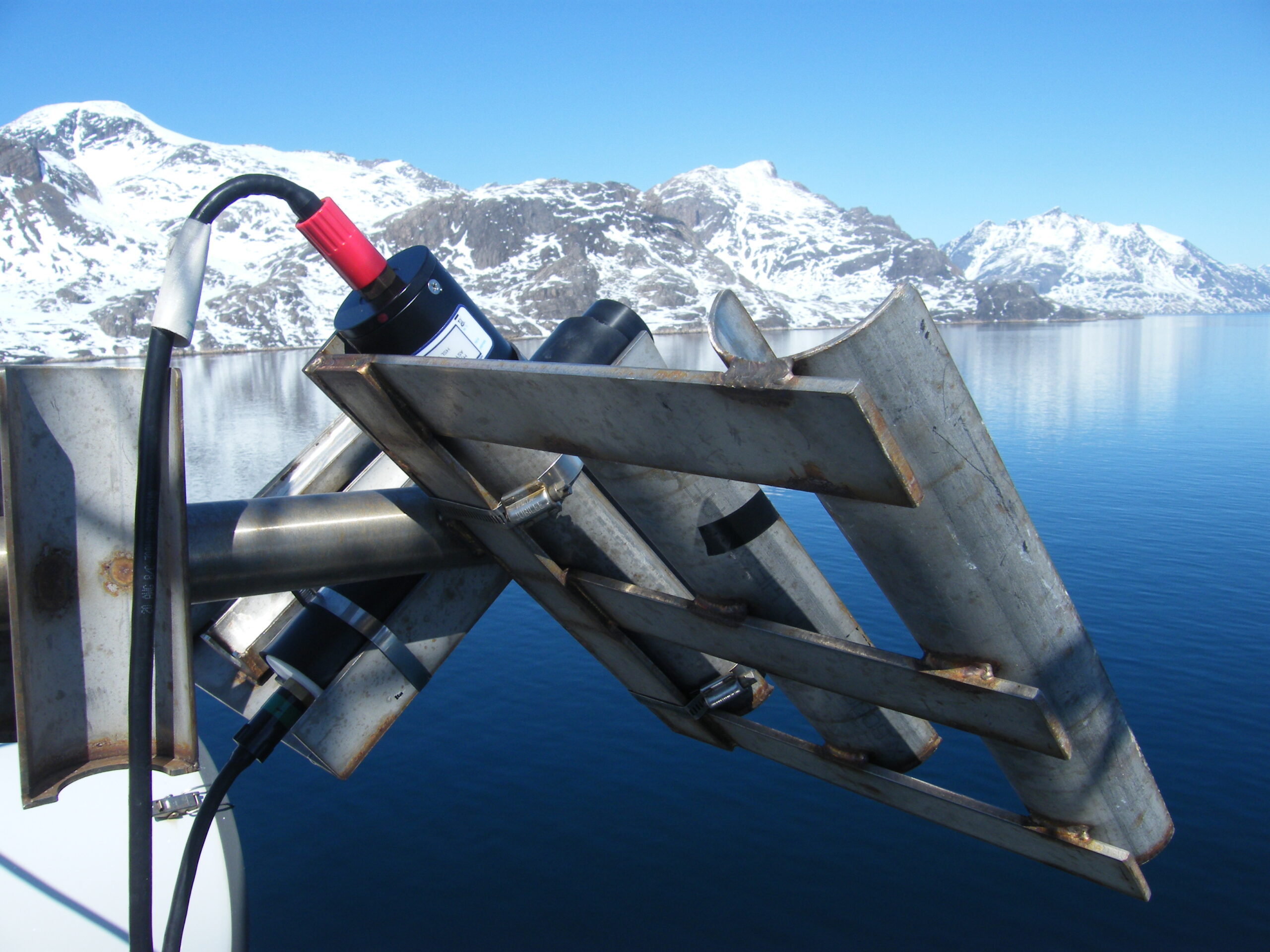
Image: PML’s optical radiometer system that measures reflected light from the ocean which gives an indication of what particles and phytoplankton types are in the water.
Dr Thomas Jordan, Earth Observation Scientist at PML, and a specialist in ocean optics, then interpreted the optical chlorophyll-a (Chl-a) data that was collected by Dr Tilstone on the cruise. Dr Jordan said:
“The marginal ice zone is one of the most biologically active parts of the Arctic. As sea ice melts, conditions become favourable for phytoplankton blooms. Our chlorophyll measurements helped us understand where these algae were most abundant, allowing the team to investigate how these biologically active waters may contribute to the atmospheric processes responsible for forming cloud-seeding particles.”
Dr Loren Temple, Atmosphere-Ocean Scientist at PML, was also onboard and supported the expedition by measuring atmospheric sulfur dioxide (SO₂) – an important precursor in the formation of new atmospheric particles – using a highly sensitive instrument she developed and built herself. She said:
“The Arctic is an important region to study, as it is warming significantly faster than anywhere else on the planet.”
“The concentration of particles in the atmosphere which can seed cloud formation play a role in this warming, as they influence cloud albedo. However, these particles are poorly replicated by climate models, largely due to a lack of understanding of precursor sources and growth mechanisms.”
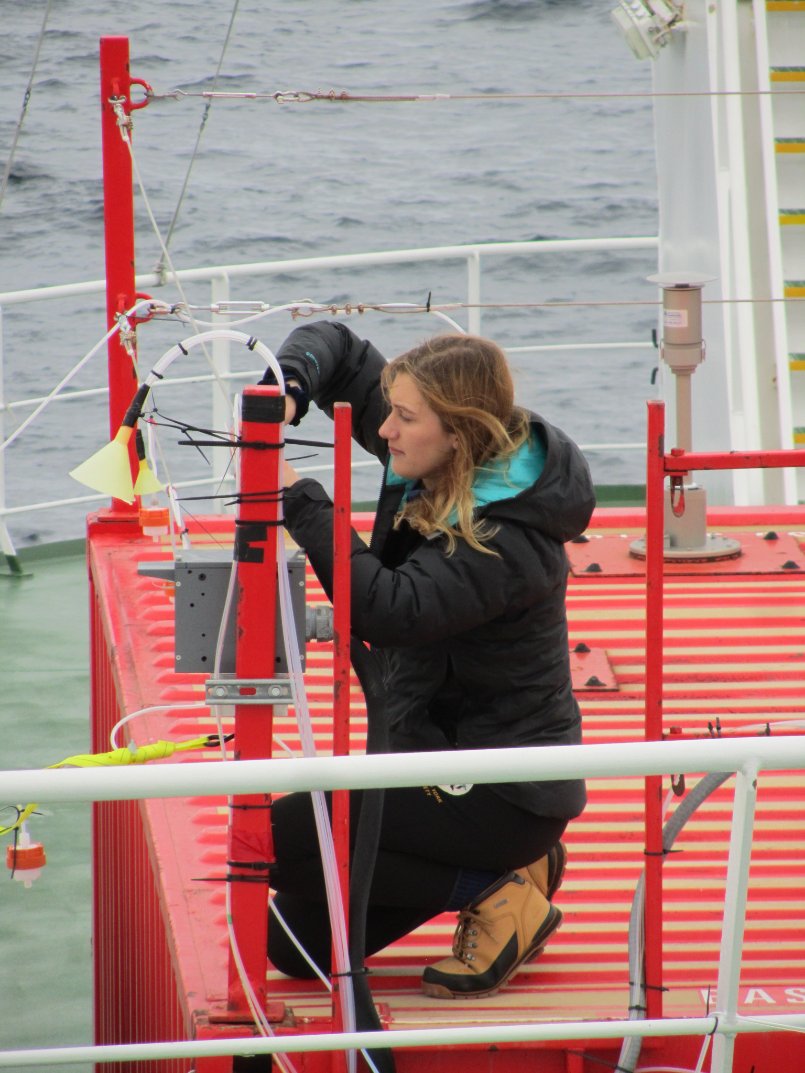
Image: PML’s Dr Loren Temple adjusting an inlet on board the research expedition in 2022.
“This study has found real-world evidence for a mechanism of particle formation from seawater and melting sea ice emissions, which enhance the concentration of these cloud-seeding particles in the atmosphere and hence impact climate.”
“The mechanism of particle formation involves the atmospheric species iodine oxoacids and sulfuric acid. During the ship-based campaign, I measured sulfur dioxide, the precursor to sulfuric acid, which is present in low concentrations in the Arctic atmosphere and is largely derived from marine phytoplankton emissions. To do this, I used the University of York’s highly sensitive laser-based instrument which I developed during my PhD as commercial techniques lack the necessary sensitivity to detect trace levels of sulfur dioxide.”

Image: Dr Temple custom-built this laser-induced fluorescence instrument that was more sensitive to collecting measurements of sulfur dioxide than any others commercially available. She developed the instrument during her PhD, and it is still being used in research expeditions today.
PML’s Dr Mingxi Yang, Chemical Oceanographer at PML, provided high-quality wind measurements during the expedition, helping the team understand the movement of air masses and trace where gases released from the ocean and marginal ice zone may have travelled. This helped researchers interpret atmospheric measurements, including the sulfur dioxide measured by Dr Temple.
“We’ve known for a long time that the formation of clouds requires aerosols – small particles in the atmosphere. But the sources of aerosols over remote regions such as the Arctic are poorly understood. Are the aerosols produced locally from gases released from marine life, or are they transported to the Arctic from elsewhere?
“This study revealed that both sulfur and iodine gases emitted from seawater and the marginal ice zone contribute to the formation of new particles, while condensation of marine organic gases helps those particles grow larger. It’s a powerful example of atmosphere-ocean interaction.”
As global temperatures continue to rise and Arctic sea ice retreats, there is increasing pressure to understand these climate processes. Lead author, Professor Zongbo Shi, of the University of Birmingham, underlined its significance:
“Our discovery is important because these new particles can influence clouds, which play a critical role in determining how much heat is retained or reflected. More clouds or thicker clouds in the warming season could potentially accelerate ice melt while cooling down the open ocean.
“The Arctic has warmed more than three times faster than the global average over the past 40 years, making it one of the most sensitive regions on Earth to climate change. Understanding how natural emissions influence clouds is critical for predicting climate changes in this region. Our discovery will help climate models to improve understanding of how climate change is affecting the Arctic and how the region itself influences global climate.”