Story
Eroding peatlands influence the Falkland Islands coastal ecosystem
10 January 2026
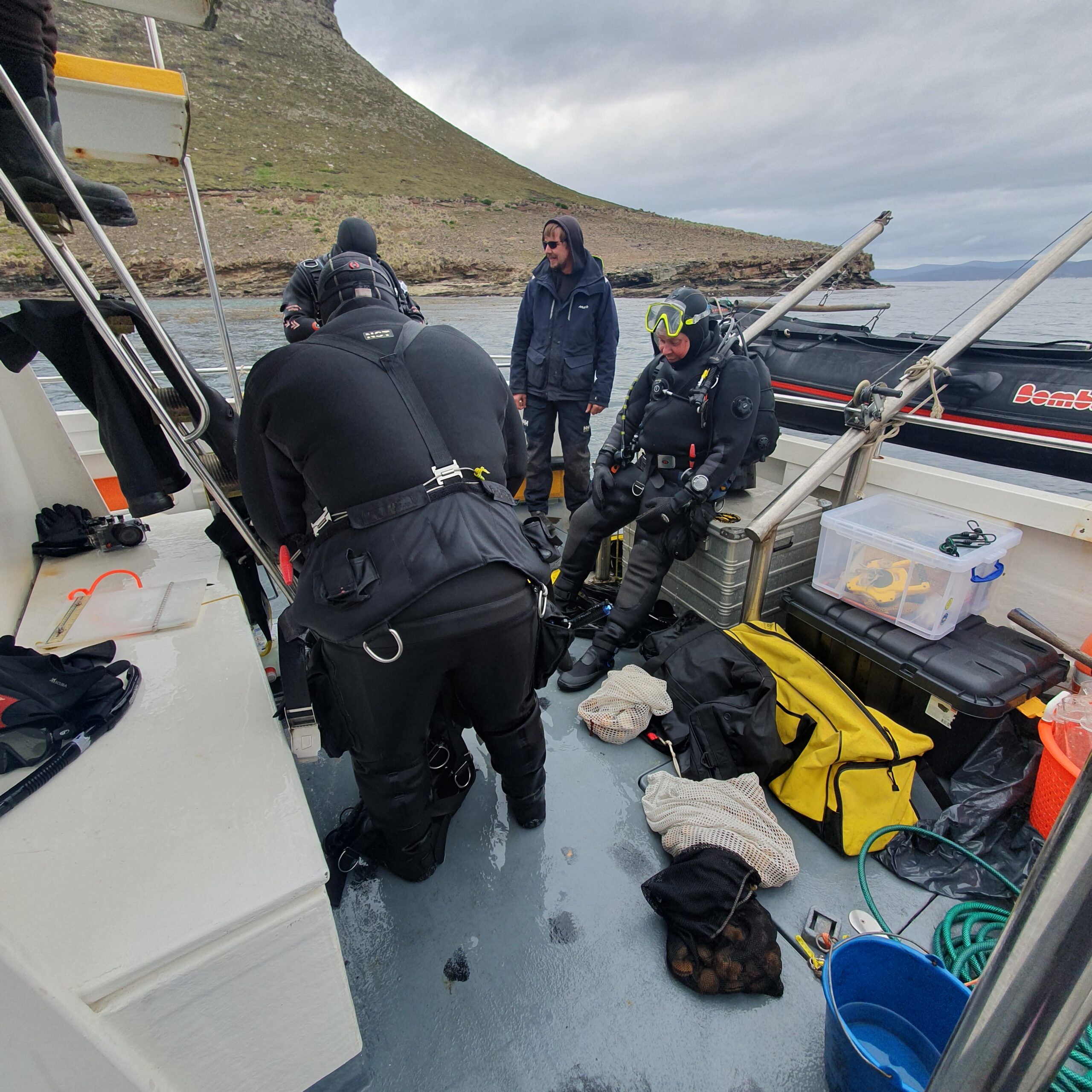
PML scientists have recently returned from the Falklands after a 2 week mission to collect data on the impact of eroded peat on the local marine environment.
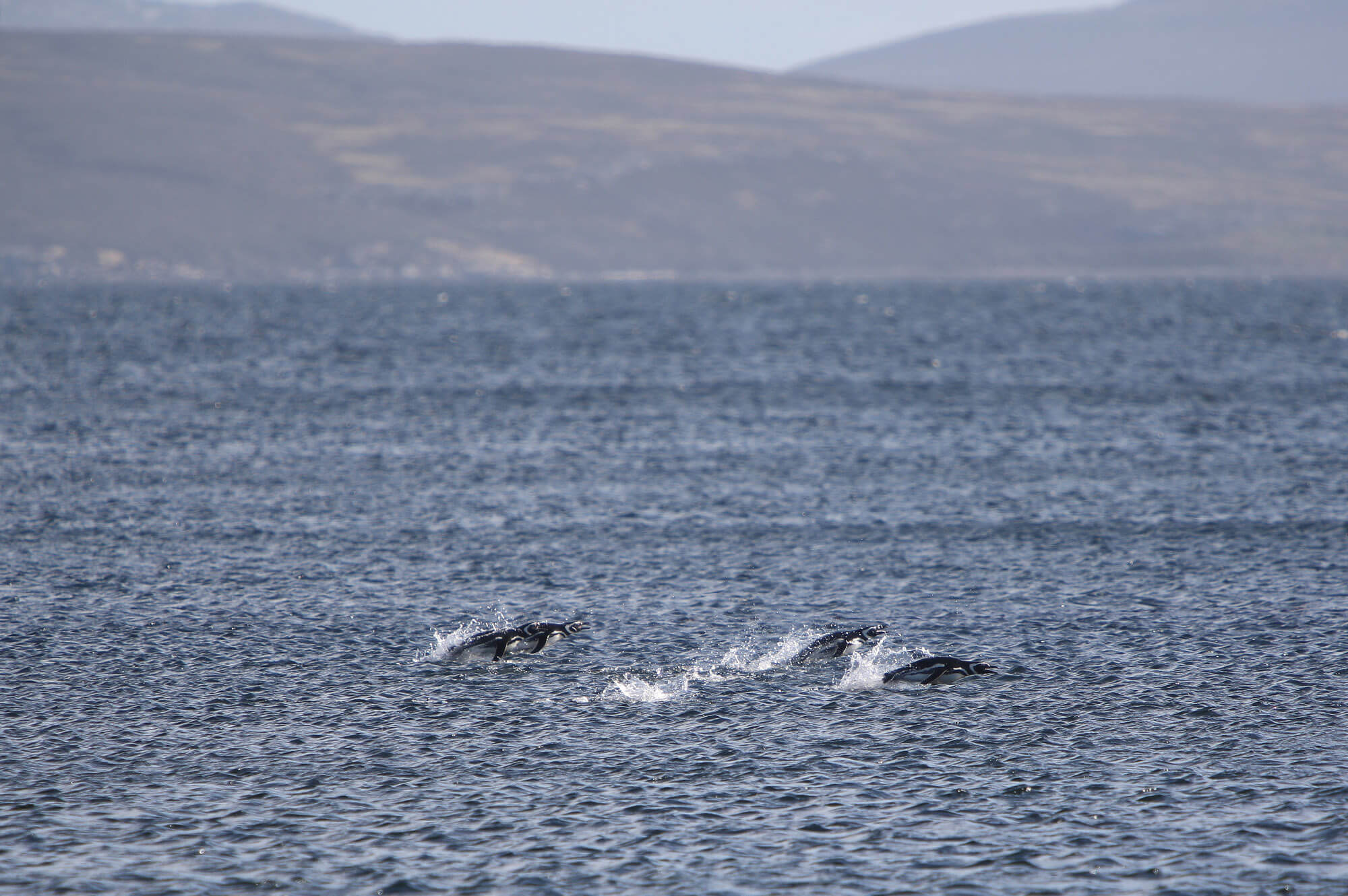
Penguins swimming off the coast of the Falkland Islands. Image by Ian Brown
The Falkland Islands possess some of the richest peatlands in the world which play an important role in carbon storage and biodiversity, and in the support of a unique but vulnerable ecosystem. However, a number of pressures, which include over-grazing and wildfires, have combined to reduce vegetative cover making surface soils exposed to the eroding forces of wind and rain.
In recent years, anecdotal evidence suggests that this already windy region is experiencing strengthening wind fields, increasing numbers of wildfires and a reduction in annual rainfall, which may be combining factors in the erosion of surface peat layers.
It is becoming apparent that not only do these multiple stressors degrade carbon stores and terrestrial ecosystems but the eroded peat is finding its way into local coastal areas where it has been found to accumulate on the seabed, often in significant amounts.
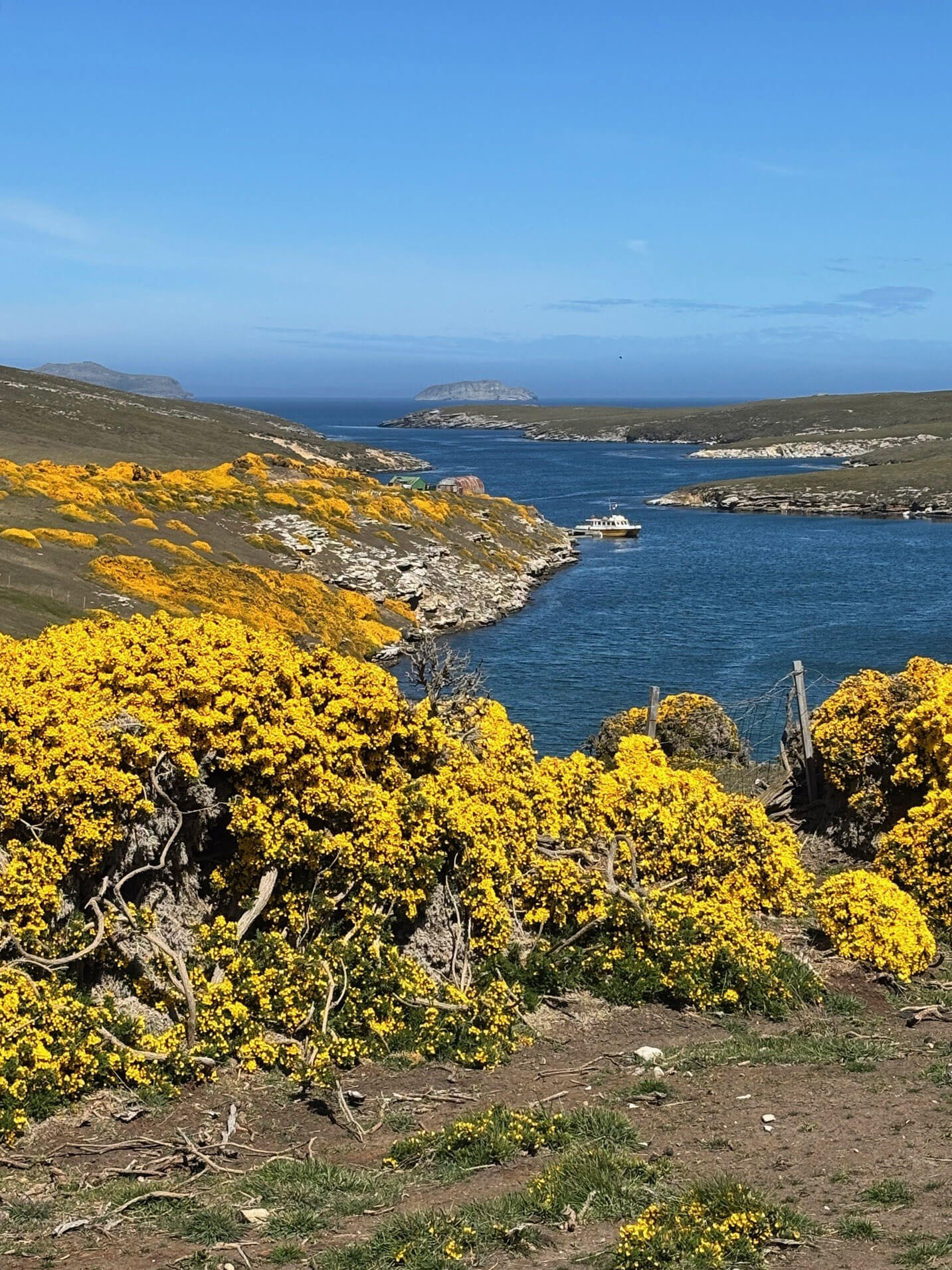
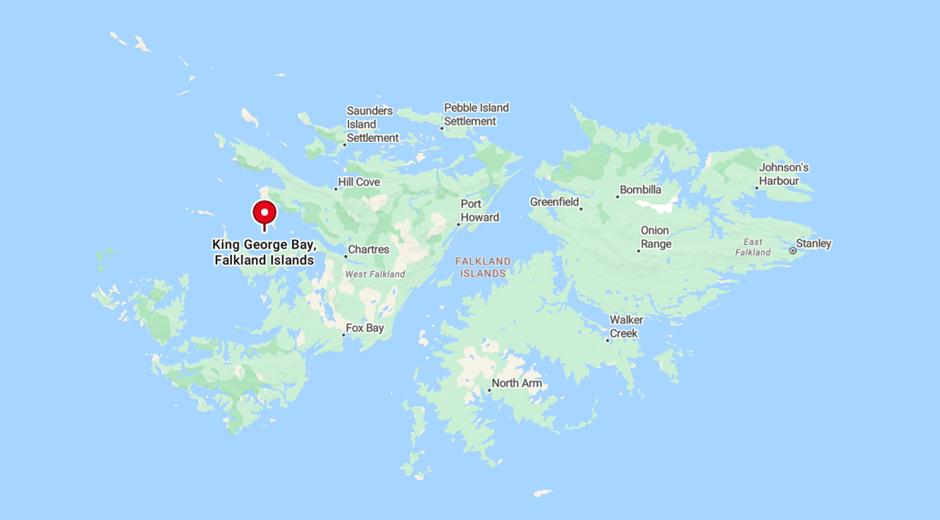
The Antarctic Research Trust are actively re-planting Tussock Grass and other native plant species on Hummock Island, which had previously been overgrazed for several decades. The loss of peatland soils has been quite substantial with over one third of this 303 hectare island experiencing some degree of erosion, with resulting deposits of peat accumulating on the seabed surrounding Hummock Island and other areas throughout King George Bay.
Our experimental data from a pilot study in waters of East Falkland, involving teams from Plymouth Marine Laboratory, the South Atlantic Environmental Research Institute (SAERI) and the Shallow Marine Surveys Group, indicated that the eroded peat may be increasing the carbon and nitrogen content of natural sediments by up to 10 times.
This in turn has the potential to stimulate microbial activity leading to oxygen depletion and an increased release of greenhouse gases (carbon dioxide, methane and nitrous oxide) as well as further modification of dissolved nutrients. Each of these changes having the potential to alter ecosystem function in its own right.
During our recent expedition we have increased the number of observations made in order to better understand the implications of this carbon and nitrogen enrichment of these pristine coastal waters.
Prof. Andy Rees, expedition leader and Ocean Challenge Leader for Marine Pollution at Plymouth Marine Laboratory, said:
“The Falkland Islands are considered as a pristine environment with only limited anthropogenic stressors acting to degrade the condition of their marine waters, however, the loss of this rich organic material from the islands to the sea has the potential for a large-scale impact on local ecosystems and also on the release of greenhouse gases to the atmosphere.”
“Through my discussions with Dr. Paul Brickle, the Chief Executive of SAERI, I learned of the concern surrounding the erosion of Falkland peatlands and its deposition on the seabed of many coastal areas. Paul’s team have previously recorded an overall reduction in biodiversity associated with these peat impacted sediments, and in particular, noted the absence of filter feeding organisms, especially impact filter-feeders, such as sponges and sea squirts (ascidians), and also barnacles and filter-feeding polychaete worms.”
“It seemed to me very likely that not only would this peaty material smother areas of the seabed, with detrimental impacts on flora and fauna, but it would likely be having significant impacts on seawater chemistry and biogeochemical cycling. Our current studies will hopefully indicate the degree to which ecosystem processes are being altered. In the future we hope to further investigate the geographical extent of this loss of peatland soils to adjacent marine waters”.
The mission sampling water and sediment cores around Hummock Island in King George Bay, West Falkland was achieved with funding from the UK Natural Environment Research Council and the Antarctic Research Trust. Stay tuned on our website and social media channels for upcoming updates on what the data reveals.