Story
PML Science that made the headlines in 2025
28 December 2025
As 2025 draws to a close, we reflect on some of the science from the lab that made the headlines this year.

It has been a busy year at PML with major projects, publications and activity from across our science areas covered by the media. Some of the highlights have included:

Ocean Acidification: Another Planetary Boundary Crossed:
Damage to coral reefs, loss of habitats and a threat to survival for shell-building marine creatures are among the impacts already being felt across the Ocean from ocean acidification. Until now, ocean acidification had not been deemed to have crossed its “planetary boundary” however a major new study, led by PML’s Professor Helen Findlay, found that this “boundary” – in effect a safety limit – was actually reached around five years ago.
Published to coincide with the UN Ocean Conference in Nice, this work made headlines for its clear evidence that ocean chemistry has already breached planetary boundaries, reshaping how scientists and policymakers view the urgency of climate mitigation.
Access the full paper: ‘Ocean Acidification: Another Planetary Boundary Crossed’ >>
Covered by: The Guardian, ITV, Yahoo News, World Economic Forum, Oceanographic Magazine, and many more.
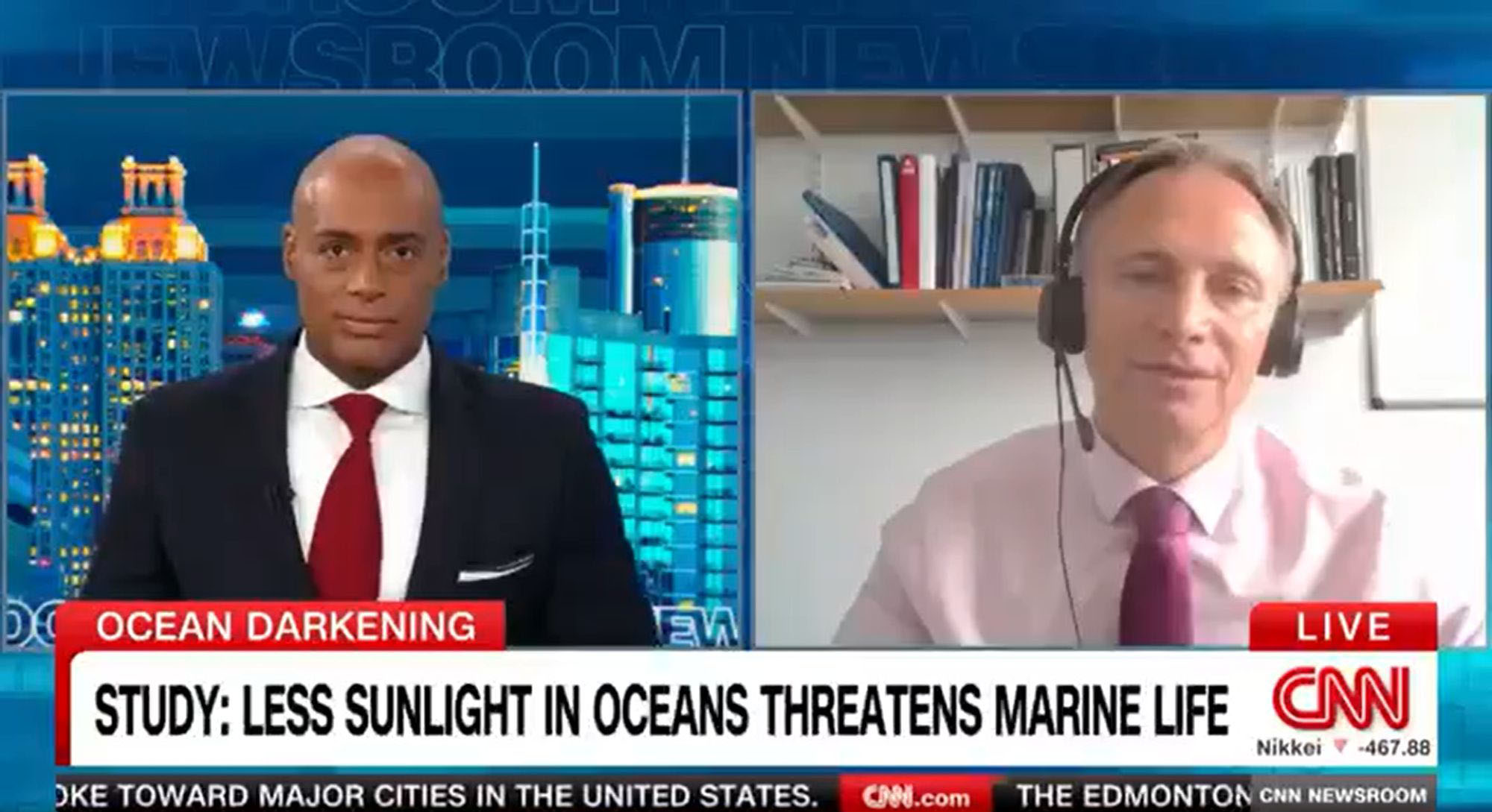
Ocean Darkening Threatens Marine Life:
In another global-scale climate discovery, PML co-led research that revealed over 20% of the world’s oceans have darkened over the past two decades.
It was the first global-scale assessment of long-term changes in the ocean’s photic zone; the sunlit upper layer of the Ocean that supports over 90% of marine life, and underpins key planetary processes such as oxygen production and carbon cycling.
The wide media coverage reflected how this previously overlooked phenomenon could affect oxygen production, fisheries and the ocean’s role in carbon cycling.
Credit to Professor Tim Smyth and Dr Thomas Davies for co-leading this first large-scale assessment of ocean darkening, bringing vital visibility to a rapidly emerging threat.
Access the full paper: ‘Darkening of the Global Ocean’ >>
Covered by: BBC, World Economic Forum, Guardian, Daily Express, and many more.
SeaCURE: UK Project Begins Sucking Carbon Out of the Sea:
Could carbon removal from the sea help tackle climate change? PML scientists and colleagues from the University of Exeter made headlines this year with the groundbreaking SeaCURE project pilot plant becoming operative in Weymouth, Dorset.
The ocean currently absorbs around 25% of the carbon dioxide (CO₂) – the most prolific greenhouse gas – emitted each year by humans. SeaCURE’s approach seeks to enhance this capacity further by extracting CO₂ from seawater, thereby enabling further absorption of atmospheric CO₂. The project’s novel approach and potential implications for climate mitigation made it a standout science story of 2025.
Credit to the collaborative team including PML researchers, University of Exeter, Brunel University London and industry partner Eliquo Hydrok for launching this innovative step in climate technology testing.
Covered by: CNN, Times of India, BBC, New Scientist, and more.
Microplastics Pose a Human Health Risk in More Ways Than One:
This late-year publication drew attention by moving beyond environmental impacts to highlight the potential human health risks of microplastics. Research showed that microplastic particles, already known to be ubiquitous in the natural world, can also host pathogenic and antimicrobial-resistant bacteria – raising concerns about health implications from tiny plastics not just as pollutants, but as carriers of harmful microbes. The findings sparked conversations across science and public forums on how plastics impact both ecosystems and people.
Congratulations to lead researcher Dr Emily Stevenson and co-authors, including PML’s Dr Matthew Cole and Prof. Pennie Lindeque, for advancing understanding of the complex risks posed by microplastics.
Covered by: ScienceAlert, Yahoo News, Microbiologist, and many more.
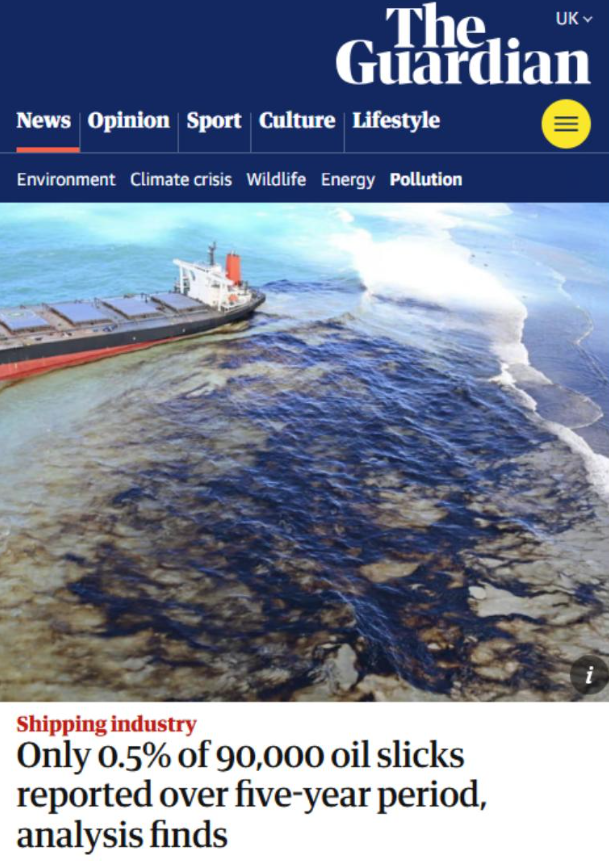
Only 0.5% of 90,000 Oil Slicks Reported Over Five-Year Period:
An eye-opening analysis led by Dr Elizabeth C. Atwood revealed that just a tiny fraction (0.5%) of oil slicks visible from satellite data were ever reported to authorities – underscoring a vast gap in tracking and enforcement of ocean pollution laws. This story made headlines for exposing how routine, unreported oil discharges are likely far more widespread than official records suggest, with serious implications for marine ecosystems and regulatory systems.
Well done to Dr Atwood for bringing this critical issue to the forefront of environmental reporting and policymaker attention.