Story
Rethinking single-use plastics: PML joins trailblazing consortium to eliminate plastic from disposable coffee cups
17 February 2026
It is estimated that up to 500 billion single-use coffee cups are discarded worldwide each year – and most are lined with plastic.
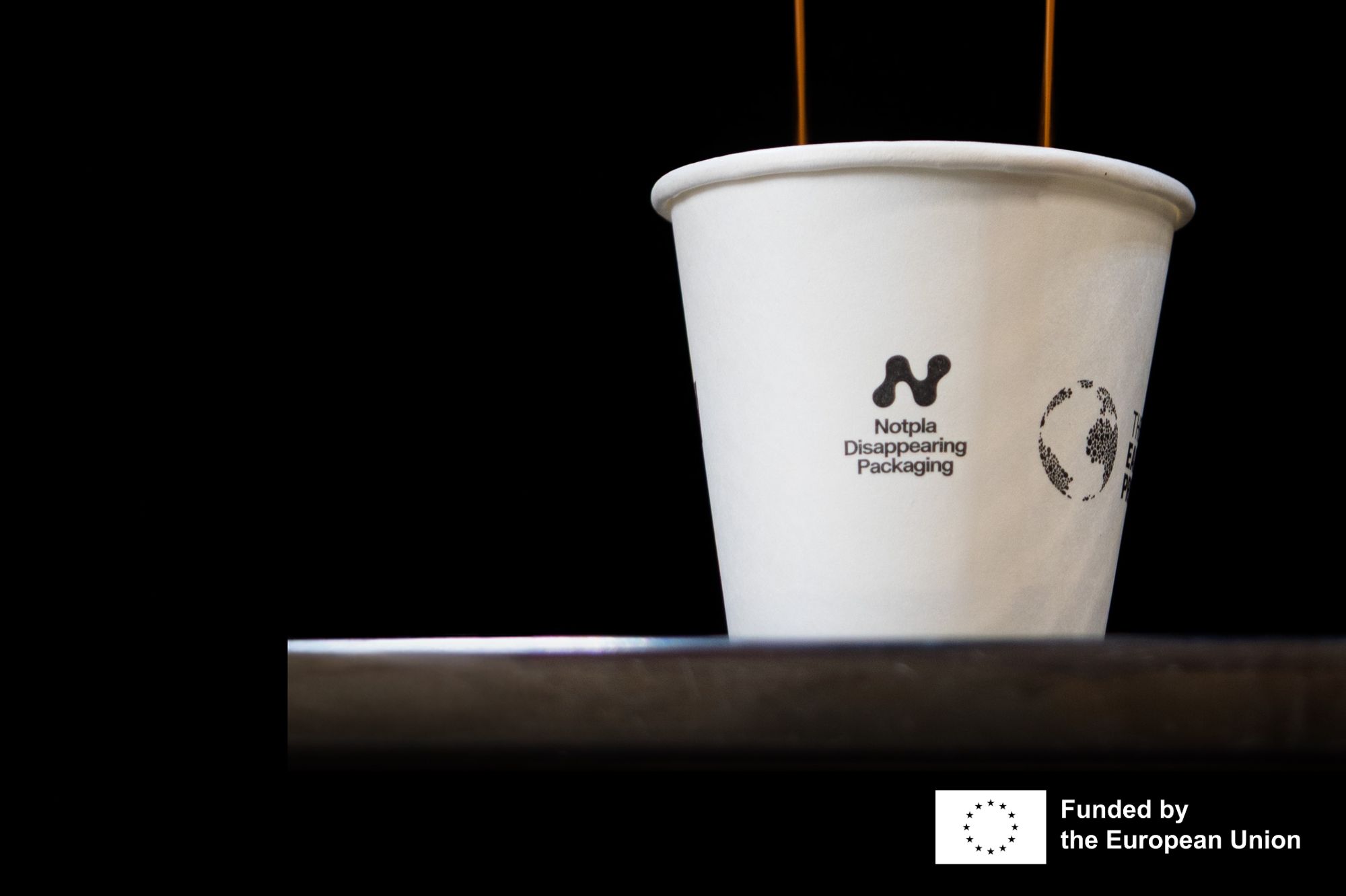
Image credit: Notpla
Despite appearing to be made from paper or cardboard alone, most disposable coffee cups are lined with plastic or bioplastics to contain liquids. This plastic liner makes these cups difficult to recycle and a significant contributor to plastic pollution.
In reality, fewer than 1% of disposable cups are recycled, with the majority ending up in landfill – or finding their way into the environment.
Recognising the scale and urgency of the problem, sustainable materials innovator Notpla – pioneers of sustainable, seaweed-based alternatives to single-use plastics and winners of the 2022 Earthshot Prize – have secured €4 million in Horizon Europe funding to lead a three-year research and development programme to create a market-ready coffee cup with a fully natural, home-compostable coating, designed to perform without relying on plastic.
The project brings together science, industry and innovation – with PML one of 14 project partners spanning materials science, feedstock sourcing and raw material supply, coatings and paper manufacturing, foodservice, academia, and end-of-life expertise.
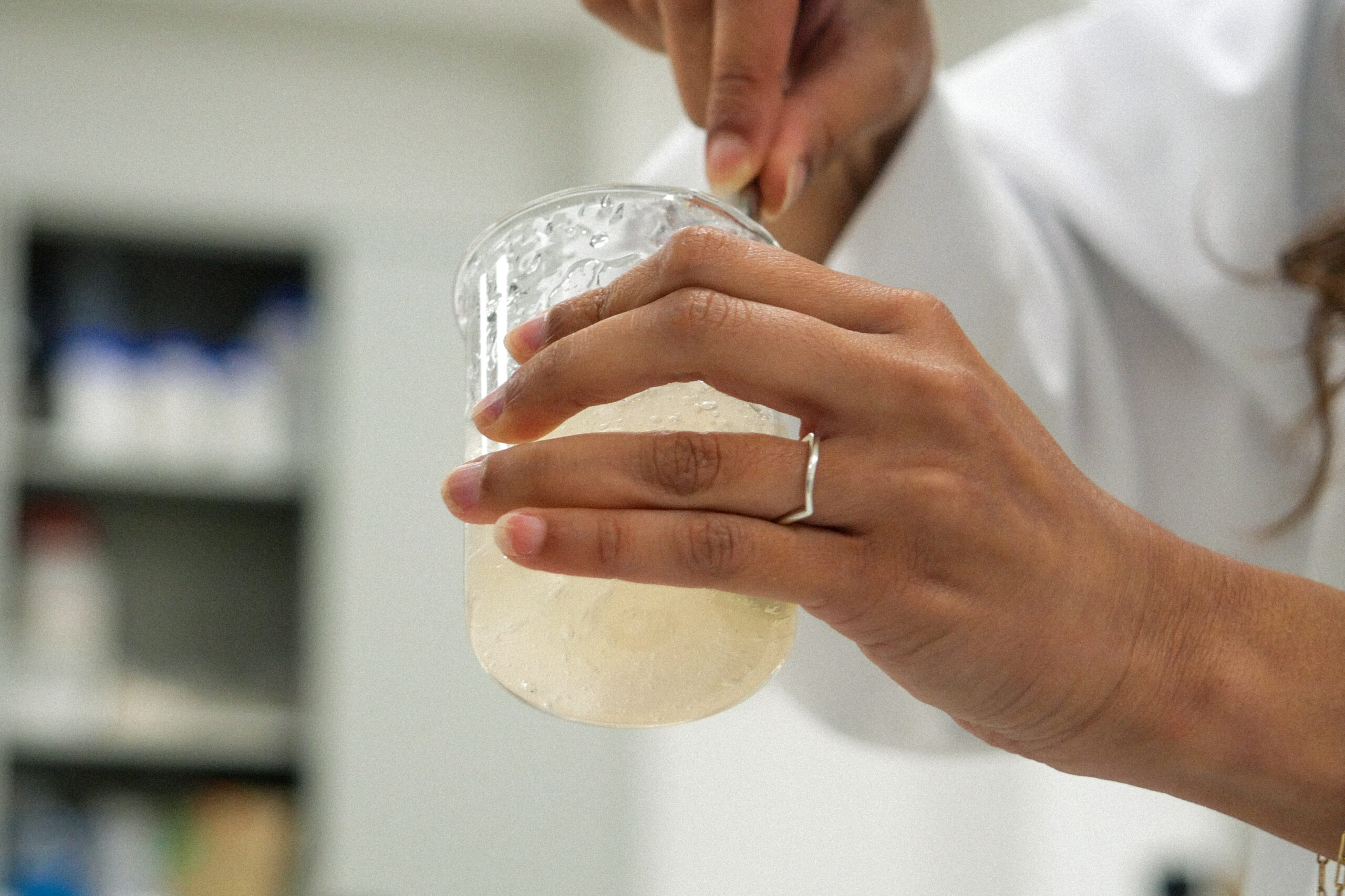
Image credit: Notpla
As an independent marine science institute, PML will contribute scientific research to understand how different cup materials degrade across real-world environments, including marine, coastal and terrestrial systems, and under a range of environmental conditions across the world.
Unfortunately, whether intended or not, litter such as used disposable cups can enter the environment. PML will therefore investigate to what extent traditional and novel coffee cup linings degrade under natural conditions, and determine whether they may cause unintended environmental impacts.
PML’s project lead, Dr Matthew Cole, Senior Marine Ecologist and Ecotoxicologist, explains:
“With up to 500 billion coffee cups used globally every year, it is of little surprise that we find so many of them littering the natural environment. As it stands, the vast majority of single-use cups contain hidden layers of plastic, further fuelling the huge global problem of plastic pollution.”
“In this EU Horizon-funded project, our team will be bringing expertise in environmental pollution: to test the fate and toxicity of traditional disposable cups, and these new cups made with natural coatings.”
Supporting the project, and ensuring that solutions developed in the laboratory stand up to the complexity of real-world conditions, are also PML’s plastics experts Dr Rachel Coppock and Professor Penelope Lindeque.
Marine Ecologist Dr Rachel Coppock emphasises the need to consider end-of-life impacts of single-use products – right from the design stage:
“We’re hugely excited at PML to be part of a solutions-focused project, involved right from the start, where we can think about the impacts at the end of the useful life of the coffee cups.”
Professor Lindeque – a world-leading marine scientist in the causes, effects and solutions of microplastics – and PML’s Head of Group: Marine Ecology and Society, said:
“At Plymouth Marine Laboratory, we have been researching the sources, fate and impacts of microplastics on marine ecosystems for over 15 years. One of the fundamental challenges with plastic pollution is that most products were never designed with their end-of-life in mind – there is no real ‘away’ for plastic, and once released it can persist in the environment for decades. This project is genuinely exciting because it tackles the problem at its source. Working with Notpla and the wider consortium allows us to bring environmental science into the design process, helping to ensure that new materials are not only high-performing, but also truly compostable and safe for ecosystems at the end of their life.”
By focusing on upstream design – replacing plastic coatings entirely rather than improving recycling of problematic products – the project reflects a growing shift towards prevention-based approaches to plastic and microplastic pollution.
For PML, the project aligns closely with its mission to deliver evidence-based science that informs sustainable solutions, protects ecosystems, and supports healthier relationships between society and the ocean.
The project launched in October 2025 and will run for three years, with phased research, testing and validation. Findings from PML’s environmental assessments will help guide material development and inform future policy, standards and product design.
Related information
Partners: Notpla, CEAMSA, Tomapaint, AIMPLAS, Polytechs, RAIZ, Walki, Compass Group, University of Ferrara, University College London, Plymouth Marine Laboratory, Linköping University, Plastic Punch, Funditec.
Funding: The project is funded by the European Union under Horizon Europe and is managed by the European Research Executive Agency (REA). Funded by the European Union. Views and opinions expressed are however those of the author(s) only and do not necessarily reflect those of the European Union or the granting authority.

The project officially launched in October 2025 and will run for three years, with phased development, testing and validation throughout. While it is still early days, Notpla and its partners will be sharing progress as the research evolves.