Project
Valmas: Valuing Marine Artificial Structures
Project Funder: UKRI - United Kingdom Research and Innovation and INSITE Industry Consortium
Principal Investigator: Dr Stephen Watson
Other Participants: Prof Ana Queiros, Dr Claire Szostek, Andrew Edwards-Jones, Christine Pascoe, Daniel Clewley, Elizabeth Talbot, Dr Gennadi Lessin, Dr Karen Tait, Louise McNeill, Luz Rodriguez-Vargas, Prof Matthew Palmer, Dr Molly James, Muchamad Al Azhar, Dr Saskia Rühl, Dr Sevrine Sailley, Dr Tom Mansfield
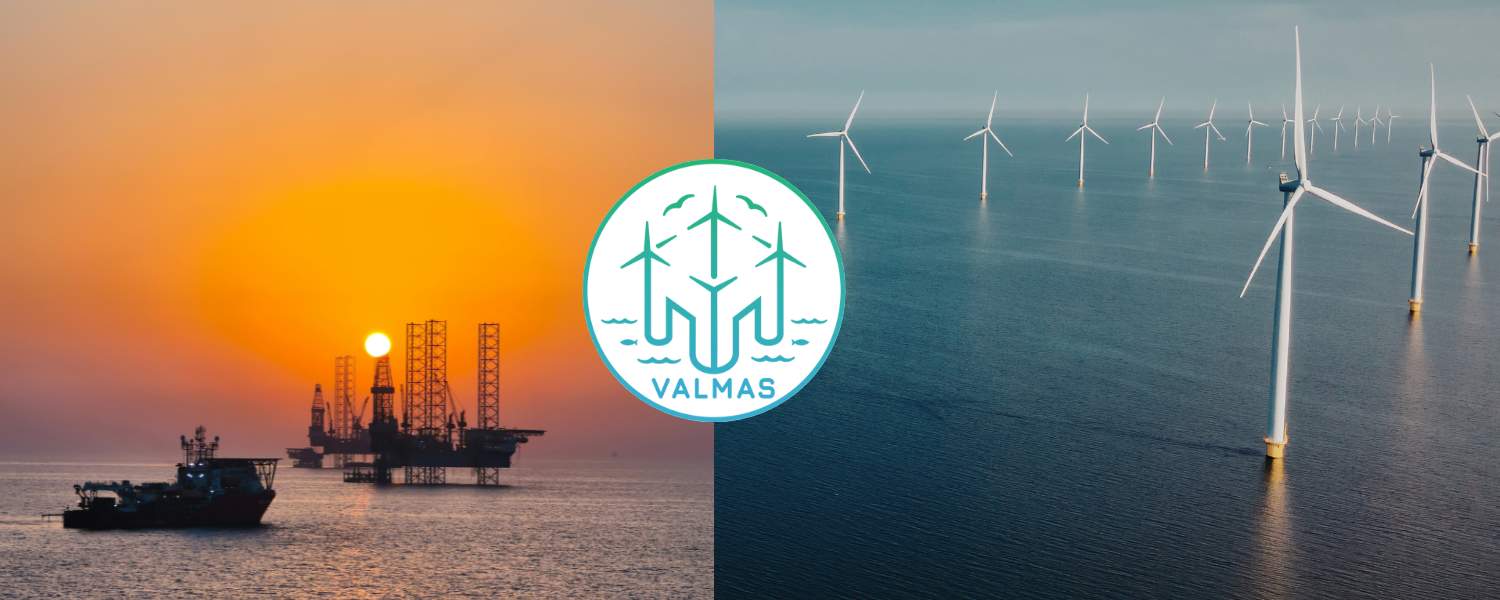
VALMAS is a £5.6 million UK research programme that examines how marine artificial structures, such as offshore wind turbines and oil and gas platforms, interact with marine ecosystems and society. Plymouth Marine Laboratory is a key project partner, with Dr Steve Watson as Deputy Project Lead, contributing evidence and tools to support sustainable offshore energy development.
Project overview
The rapid expansion of offshore energy infrastructure presents both opportunities and challenges for the marine environment. Structures such as offshore wind turbines, oil and gas platforms, cables and associated installations are increasingly common features of the UK’s seas, yet their ecological, social and economic impacts are not fully understood.
VALMAS (Valuing Marine Artificial Structures) is a major UK research programme that brings together scientists, industry, regulators and policymakers to improve how marine artificial structures are assessed, valued and managed. The project aims to generate the evidence needed to guide decision-making across the full lifecycle of offshore infrastructure, supporting a sustainable and responsible offshore energy transition.
Plymouth Marine Laboratory is a core partner in VALMAS, contributing interdisciplinary expertise in marine science, environmental valuation and policy-relevant research. Steve Watson, serves as Deputy Project Lead, ensuring strong scientific integration and impact across the programme.
Project aims
VALMAS aims to support the UK’s offshore energy future by:
- Improving understanding of the ecological, social and economic impacts of marine artificial structures.
- Developing tools and frameworks to assess the benefits and risks of offshore infrastructure.
- Supporting evidence-based decision-making for design, deployment, operation and decommissioning of offshore structures.
How the project works
Interdisciplinary research across sectors
The project combines marine ecology, environmental economics, social science and engineering to assess how artificial structures interact with marine ecosystems and human activities.
Valuation of ecosystem and societal effects
VALMAS examines both positive and negative effects of offshore structures, including habitat provision, biodiversity change, fisheries interactions, and socio-economic impacts. This holistic approach enables balanced assessments that reflect real-world trade-offs.
Decision-support tools and guidance
Research outputs are translated into practical tools, models and guidance designed for regulators, industry and policymakers. These outputs support strategic planning and help ensure offshore energy development aligns with environmental and societal objectives.
PML’s contribution
Plymouth Marine Laboratory provides expertise in marine ecosystems, environmental assessment and policy-facing science. PML researchers contribute to evaluating the ecological effects of artificial structures and to developing integrated frameworks that link environmental change with societal and economic considerations.
As Deputy Project Lead, Steve Watson plays a central role in shaping the scientific direction of VALMAS and strengthening connections between research, policy and practice. PML also supports stakeholder engagement to ensure that project outputs are relevant, accessible and impactful.
Impact and outcomes
VALMAS delivers critical evidence to support the sustainable development of offshore energy in UK waters. Key outcomes include:
- Improved understanding of how marine artificial structures affect ecosystems and ecosystem services.
- Tools and guidance to inform marine planning, consenting and decommissioning decisions.
- Evidence to support balanced policies that enable offshore energy growth while protecting marine biodiversity.
By providing a robust, interdisciplinary evidence base, VALMAS helps ensure that the UK’s offshore energy transition is environmentally responsible, socially informed and economically sound.
Subscribe to our newsletter
Stay Up To Date
Subscribe to our newsletter for information on our latest research, upcoming events and seminars and more.
Join our newsletter