Story
Ocean Action at COP30: Progress Made Despite Fossil Fuel Shortcomings
01 December 2025
PML delegates reflect on the outcomes of the Climate Change Conference in Brazil
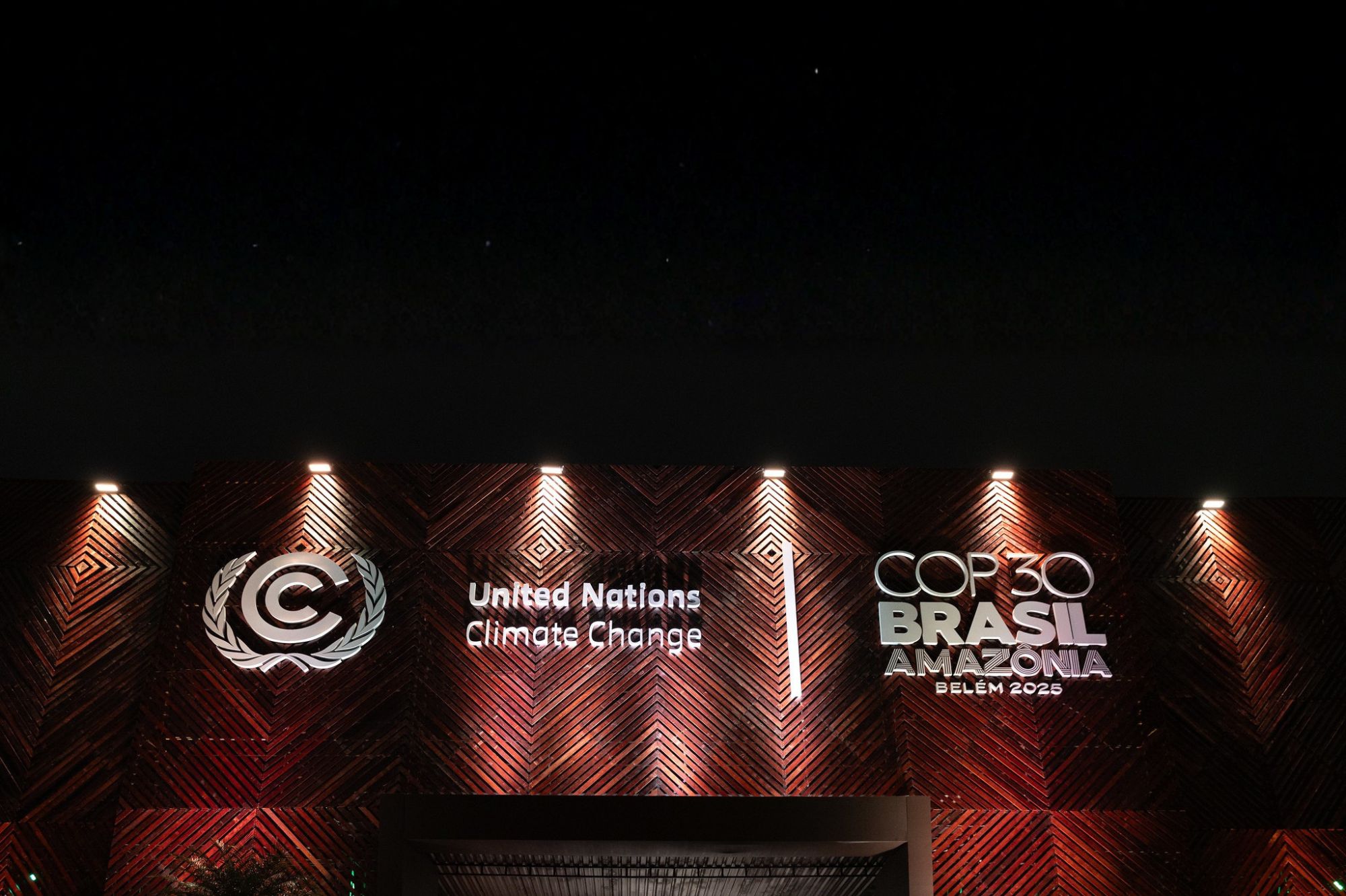
Following two weeks of intense negotiations, the UN Climate Change Conference COP30 in Belém, Brazil, concluded on 22 November. Taking place ten years after the Paris Agreement, COP30 came at a critical juncture for global climate cooperation. Member States agreed to scale up climate finance and accelerate implementation of the Paris Agreement, however, the absence of a clear commitment to phase out fossil fuels left a critical gap in global climate action.
The summit drew over 56,000 delegates from nearly 200 nations, including Plymouth Marine Laboratory (PML) delegates, making it the second most attended COP in history.
 Image: PML’s International Office team Prof Matt Frost and Thecla Keizer pictured in Belém, Brazil where the COP30 took place
Ocean and Climate: A Vital Connection
The Ocean has greatly slowed the pace of climate change, but at a cost: warming, acidification, oxygen loss, rising sea levels and shifting circulation patterns threaten marine ecosystems and livelihoods. These changes risk jeopardising the Ocean’s ability to indirectly support all life on Earth.
Professor Matt Frost, Head of PMLs International Office, who led the PML delegation in Belem, stated:
“The Ocean is not just a victim of climate change – it is one of our greatest allies in tackling it. From carbon sequestration to coastal protection, ocean-based solutions offer nations a powerful way to cut emissions and adapt to a changing climate. But time is short. We must urgently further integrate the Ocean into global climate governance to ensure its health and sustainability, not only for marine ecosystems but for the billions of people who depend on it.
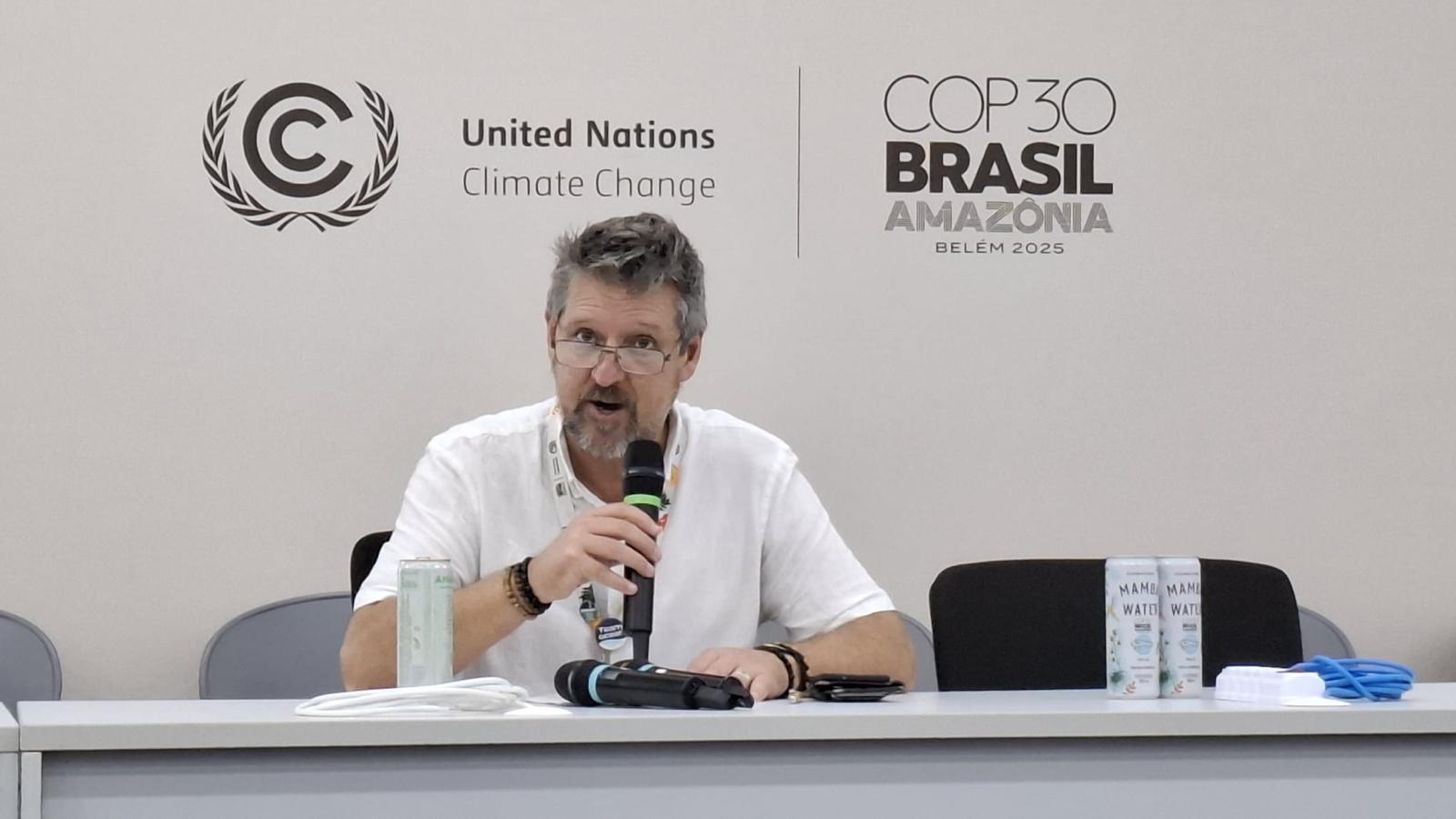 Image: Prof Matt Frost moderated and spoke at multiple events during the conference.
Ocean at COP30: Growing Momentum for Action
Despite growing recognition, the Ocean still lacks formal representation in UN climate negotiations.
Professor Frost adds: “Much of the global Ocean lies beyond national jurisdiction, leaving it without a clear voice. It was therefore good to see COP30 mark a step forward in recognizing the ocean as a critical pillar in addressing the climate crisis. Across the Action Agenda, high-level speeches and ministerial interventions emphasised the Ocean’s role in climate mitigation and adaptation, while Parties reported an increase in Ocean-based climate action in their National Climate Action Plans (or NDCs as they are formally known).”
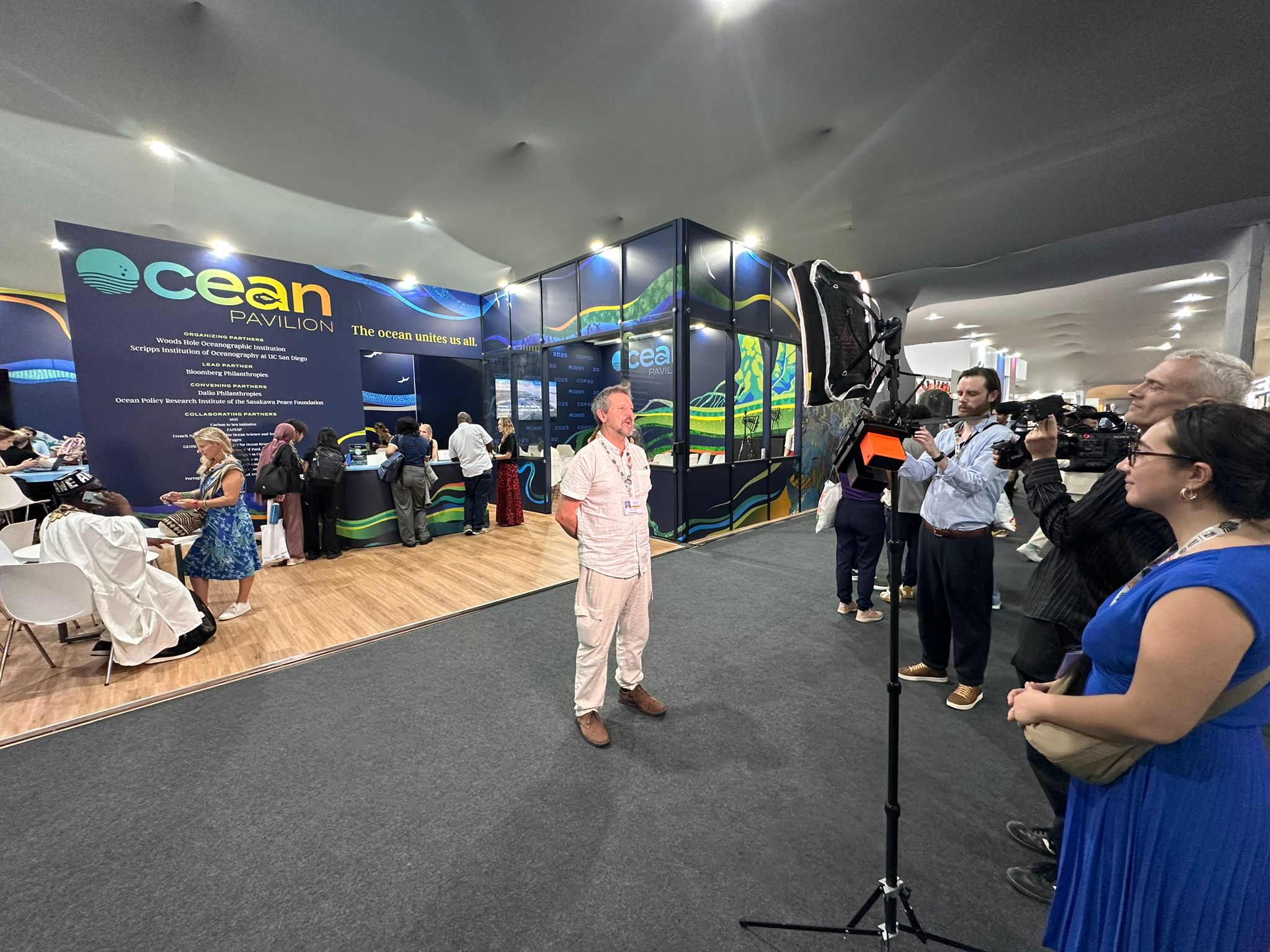
Image: Prof Matt Frost being interviewed during COP30.
This included the Climate Summit on 6 and 7 November, where world-leaders gathered to kick off the COP30, and the UN Secretary-General António Guterres called for measures including enhancing coastal protection, restoration of coral reefs, seagrass and mangroves, tackling pollution, expanding effectively-managed marine protected areas (including by rapidly implementing the High Seas Treaty), and delivering “30 by 30” – protecting 30% of land and ocean by 2030.
Professor Ana Queiros, Climate Change Lead at PML, and who spoke at COP30 on topics such as blue carbon and “climate-smart” ocean governance for nature and people, said:
“Climate change is here and we must now take urgent action to ensure the way we manage the ocean protects ocean life and livelihoods – not just on our coasts but further afield. Action at the Ocean-climate nexus requires a deeper commitment to consider the environmental, economic and social consequences of how and where humans use the ocean, in ways that are fair and equitable, and support not just economic growth, but also a path for clean energy, protecting biodiversity and human lives. At PML, we continue to work towards solutions to the climate emergency (such as protecting blue carbon ecosystems), from local to the international sphere, to ensure ocean life and livelihoods have a seat at the table, in support of a sustainable future for all.”

Image: Prof Ana Queiros joined remotely via multiple sessions.
Ocean-based climate solutions featured prominently throughout COP30, with PML actively involved in 15 events, contributing science and policy papers, joining roundtables and meetings, hosting an exhibition booth, and co-organizing the COP30 Virtual Ocean Pavilion, which attracted around 2,500 global participants.
Thecla Keizer, PML’s UNFCCC COP30 Coordinator, and Co-organizer of the COP30 Virtual Ocean Pavilion – which attracted around 2,500 registrations from across the world – said:
“For PML, participating in UN Climate Change Conferences is important. These meetings are where global decisions are made, and the Ocean must have a voice at that table. Our science demonstrates the Ocean’s critical role in regulating climate and providing solutions—from carbon storage to coastal resilience. By engaging directly, we ensure that evidence-based insights shape policy, accelerate ocean-based climate action, and secure a sustainable future for both people and planet.”
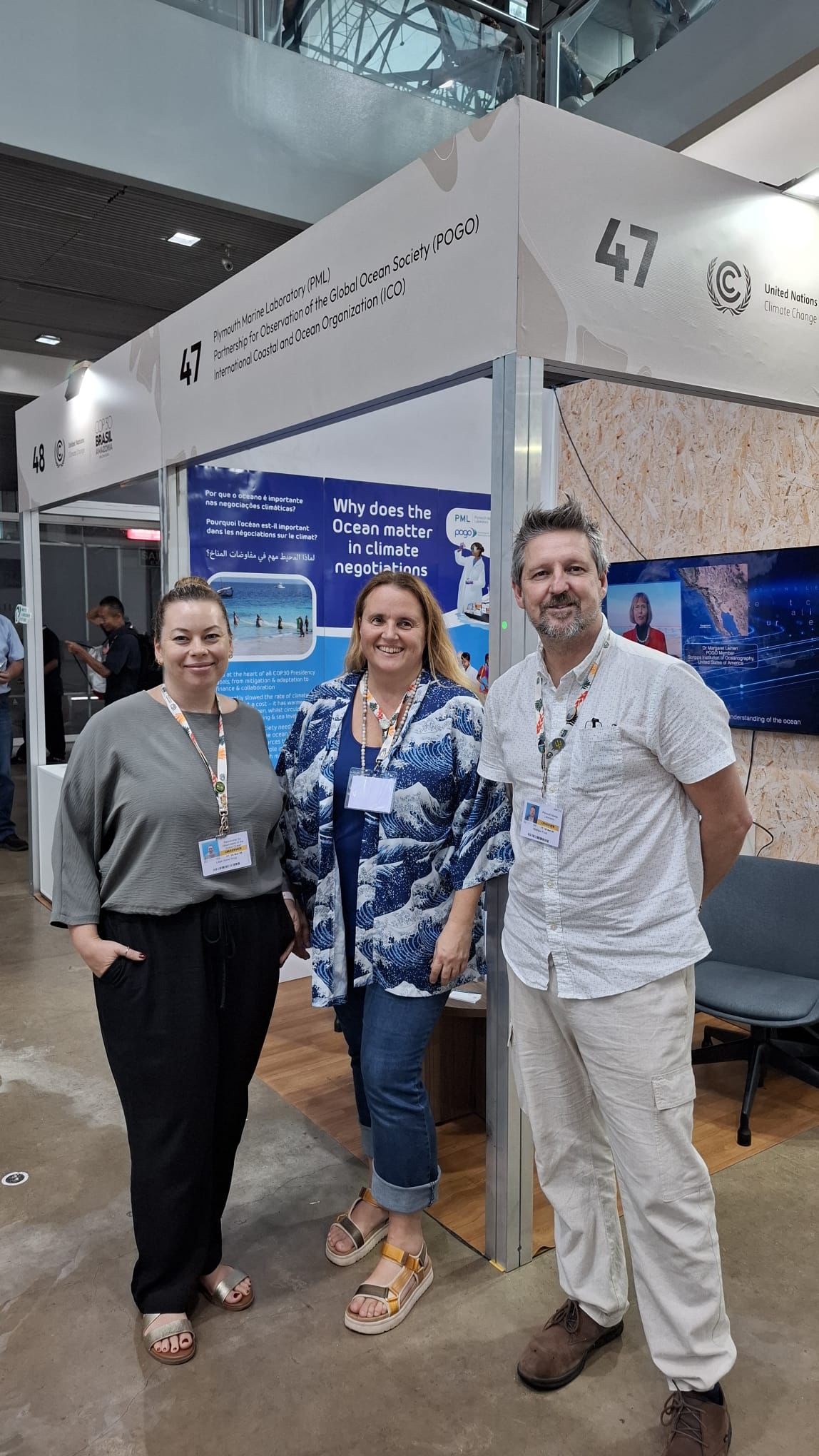
Image: PML’s International Office team, Thecla Keizer (middle) and Prof Matt Frost (right) pictured at the COP30 PML booth, showcasing why the ocean matters in climate negotiations.
Examples of Ocean action at COP30 include:
- Blue NDC Acceleration:17 new countries joined the Blue NDC Challenge, with over 60 now integrating ocean-based climate action into their 2025 national climate plans (NDCs) plans.
- Brazil and France announced the transition of the Challenge into a Blue NDC Implementation Taskforce: unveiled during a high-level ministerial meeting at COP30, led by Brazil and France, signalling a shift from commitment toward delivery.
- The Blue Package Roadmap:led by the Marrakech Partnership Ocean & Coastal Zones, the Climate High Level Champions Team and Brazil’s Ministry of Environment and Climate Change. This translates the Ocean Breakthroughs of which PML is a supportive organization, into concrete action to scale up ocean-based solutions for climate, nature and people.
- The Ocean Breakthroughs Dashboard launch:a global tool tracking delivery of ocean climate action and in support of the Blue Package Roadmap
- One Ocean Partnership:Announced the ambitious goals to mobilize USD 20 billion, restore 20 million hectares of blue ecosystems, and create 20 million blue jobs worldwide.
- Brazil joins the High-Level Panel for a Sustainable Ocean Economy:this unique initiative of 19 world leaders is driving momentum for a sustainable ocean economy. With joining Brazil committed to sustainably manage all 3.68 million km² of its waters by 2030. PML’s Professor Matt Frost plays a key role as Co-Lead for the Ocean Panel Expert Group.
- Building on the Global Initiative for information integrity on Climate Change: COP30 elevated for the first time the issue of climate change information integrity. Alongside calls to keep the 1.5°C target alive and limit overshoot, Parties broadly rallied behind the Intergovernmental Panel on Climate Change (IPCC), PML experts often have lead author roles in the IPCC Assessment and Special reports
- Indicators to measure collective progress toward the Global Goal on Adaptation (GGA):The 59 indicators include six which focus on ecosystems and biodiversity. Importantly, the text encourages countries to disaggregate indicators by ecosystem types, explicitly referencing the ocean and coasts. This represents a win for the ocean community, opening the door to more consistent monitoring of ocean resilience as reported by the Ocean and Climate Platform of which PML is a member.
- Brazil will join the United Nations Global Seaweed Initiative (UNGSI): this commitment reinforces the nation’s dedication to sustainable practices in seaweed production and commercialization (algaculture), expanding the inclusion of small-scale producers and fostering international cooperation across sustainability, science, trade, and innovation.
The launch of the “Belém Declaration” by Colombia at COP30, a parallel process calling for a roadmap to phase out fossil fuels intended to strengthen UNFCCC outcomes, did send an important signal that there is growing consensus on ending fossil fuel dependency.
Professor Helen Findlay, Senior researcher at PML who also spoke at COP30 on protection of the Arctic Ocean and cryosphere, said:
“Transitioning away from fossil fuels is vital, but it cannot happen in isolation. Ocean-based solutions—such as restoring blue carbon ecosystems, advancing offshore renewable energy, and scaling sustainable aquaculture – are essential in addition to the energy transition efforts. Together, they offer a pathway to cut emissions, build resilience, and protect biodiversity. The ROCA report recently published, which I and other PML colleagues were delighted co-author, highlights that integrating ocean action into climate strategies can deliver up to 35% of the emissions reductions needed by 2050. Ignoring this opportunity would mean leaving one of our most powerful climate allies on the sidelines.”
Professor Findlay also contributed to the 2025 State of the Cryosphere Report launched at COP30, which found that global food security and species survival are at risk from accelerating ice loss. She said of the report:
“Our polar oceans are undergoing massive disruptions that will change these environments at a very basic level, from corrosive waters to the slowdown of ocean currents that will last hundreds or thousands of years. These changes have huge consequences for the rest of the planet and of course, us humans who rely on these important systems. Halting carbon emissions is the only way to stop this.”
Watch now: Prof Helen Findlay discusses Arctic cryosphere change at COP30
Looking ahead
Colombia and the Netherlands announced that they will co-host the first international conference on transitioning away from fossil fuels from 28-29 April 2026, in the Colombian city of Santa Marta.
Turkey will host COP31 in Antalya in 2026, with pre-COP meetings on a Pacific island. Australia’s Climate Minister Chris Bowen will serve as COP31 President. Australia has long announced its ambition to have a focus on the challenges faced by Pacific Small Islands and Developing States who have been driving the ocean-climate agenda for years now.
The Government of Brazil, together with CAIXA, carried out the offset of 130 thousand tonnes of CO₂ generated by the activities of the COP30, with the offset recognized by the UN through the Voluntary Cancellation Certificate.
“COP30 moved forward the fight against the climate crisis despite unprecedented geopolitical tensions. However, the path to the 1.5°C remains fraught with uncertainties and the lack of a fossil fuel phase-out commitment remains a major concern. When it comes to ocean-based climate action, there are opportunities and actionable steps ahead such as before the next Global Stocktake in 2028 with the Blue NDC Implementation Taskforce driving political will and societal action through the Blue Package,” concludes Professor Frost.
To find out more about the UNFCCC and COP30 please visit: https://unfccc.int/cop30 and to explore PML’s activities please visit: PML at the UN Climate Change Meeting COP30