Story
PML in Canada: Championing science-backed decision-making at the World Ocean Summit
07 March 2026
Scientists from PML were among the expert panellists at the event this week in Montreal

The 13th annual World Ocean Summit (4-5th March) arrived at what the hosts – Economist Impact – described as a turning point for the Ocean. With the High Seas Biodiversity Treaty ratified, the WTO Fisheries Subsidies Agreement set to reshape seafood supply chains, new (PML-led) science warning that humanity has breached the planetary boundary on ocean acidification, the question, they said, is no longer why to act – but how.
Despite a general sense of optimism in progress being made, it was Vidar Helgesen, Executive Secretary of UNESCO-IOC, who asserted during the opening panel (on the UN Ocean Decade) that “the ocean crisis is deepening by the hour, but the political momentum is not what it was when this started.” It was a candid, if sobering, framing – and it helped set the tone for two days of discussions that brought together government representatives, industry, finance and science, to discuss topics including sustainable ocean management, climate resilience, regulation and barriers to investment.
For Plymouth Marine Laboratory (PML) – which had two scientists on panels, two honorary fellows and a trustee in attendance – the summit was an opportunity to showcase new initiatives and champion the importance of scientific evidence in underpinning decision-making.
Mapping the Unknown: The Launch of Deep Vision
To coincide with the summit, the PML and University of Plymouth-led Deep Vision project, which has been funded through the Bezos Earth Fund’s AI for Climate and Nature Grand Challenge, was formally launched.
The project addresses a long-standing bottleneck in marine science: the vast, largely unanalysed archive of deep-sea video footage that has accumulated over two decades of manual and robotic exploration. A single dive can take a human analyst many months to process. Deep Vision will deploy cutting-edge artificial intelligence to work through this backlog at a scale and speed previously unimaginable, while simultaneously analysing newly-captured imagery in a consistent, standardised way.
The practical goal is the creation of the first comprehensive maps of vulnerable marine ecosystems (VMEs) across the Atlantic Ocean – foundational evidence for the protection of the high seas, and a direct enabler for the implementation of the recently-adopted High Seas Biodiversity Treaty (BBNJ), which provides a legal framework to protect 30% of the world’s oceans by 2030.
Professor Kerry Howell, who leads on biodiversity loss at PML and presented the project as part of the panel on the equitable implementation of the “30×30” pledge, framed the initiative in terms of the urgent need for decision-enabling science.
“Without knowing where these ecosystems exist, we cannot effectively prioritise areas for protection. Deep Vision is designed to close that gap,” she said.
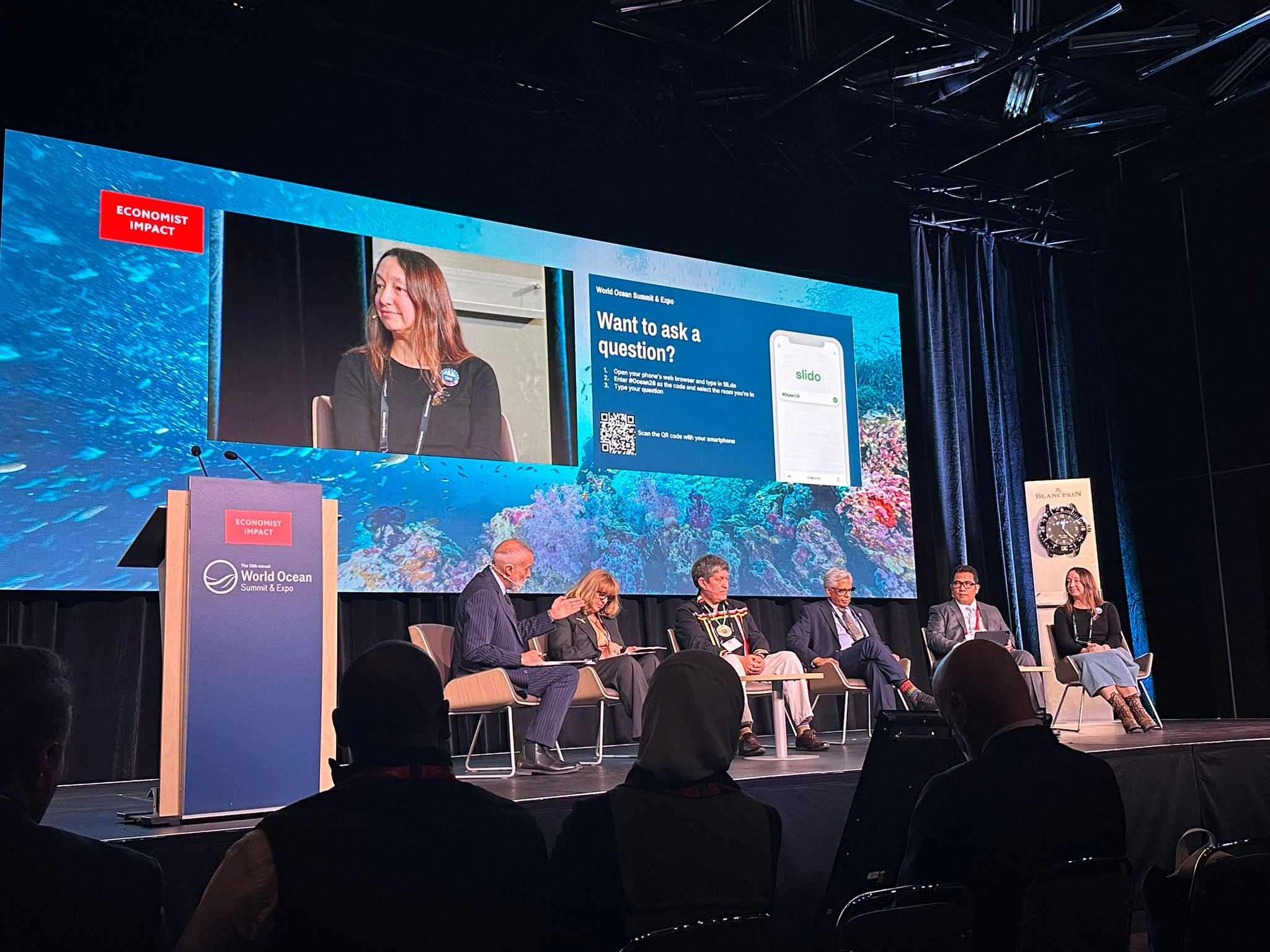
Image: PML’s Professor Kerry Howell speaking on the panel
Protecting 30% of the Ocean – and Doing It Fairly
The “30×30” panel – which asked how the pledge can be delivered credibly also featured Dr Kilaparti Ramakrishna of the Woods Hole Oceanographic Institution, an honorary fellow of PML.
“We should treat MPAs as critical infrastructure,” he said, urging delegates to think about marine protection not as a conservation cost but as a foundational investment.
Similarly, Astrid Schomaker, Executive Secretary of the Convention on Biological Diversity, reinforced the point from a business perspective – that MPAs represent genuine opportunities for technology and enterprise, rather than regulatory constraints.
In the same session, Ken Paul of the Wolastoqey Nation, represented a First Nations perspective, calling for meaningful investment in indigenous-led scientific models. He cautioned against an approach that treats local and indigenous communities as sources of knowledge to be extracted rather than as genuine partners in governance.
The point resonated through subsequent discussions: as the ocean economy scales up, the question of who benefits – and who bears the cost – is inescapable.
Blue Carbon: Promise, Patience and Precaution
On the second of the two panels featuring PML, Professor Helen Findlay brought her expertise in ocean acidification and marine carbon dioxide removal (mCDR) to bear on the subject of the role of blue carbon in climate finance.
The panel was asked how nature-based solutions, such as mangroves, seagrass or salt marshes, should be valued to reflect their role in climate mitigation and resilience, and, as marine carbon dioxide removal (mCDR) technologies proliferate, is the science and governance ready – or are the risks to ecosystems too high.
Professor Findlay was clear about the conditions for responsible progress:
“It’s vital we have a staged and gated approach to mCDR,” she said. “We need to balance the need to make progress with having a responsible approach to upscaling, in order to avoid unintended consequences.”
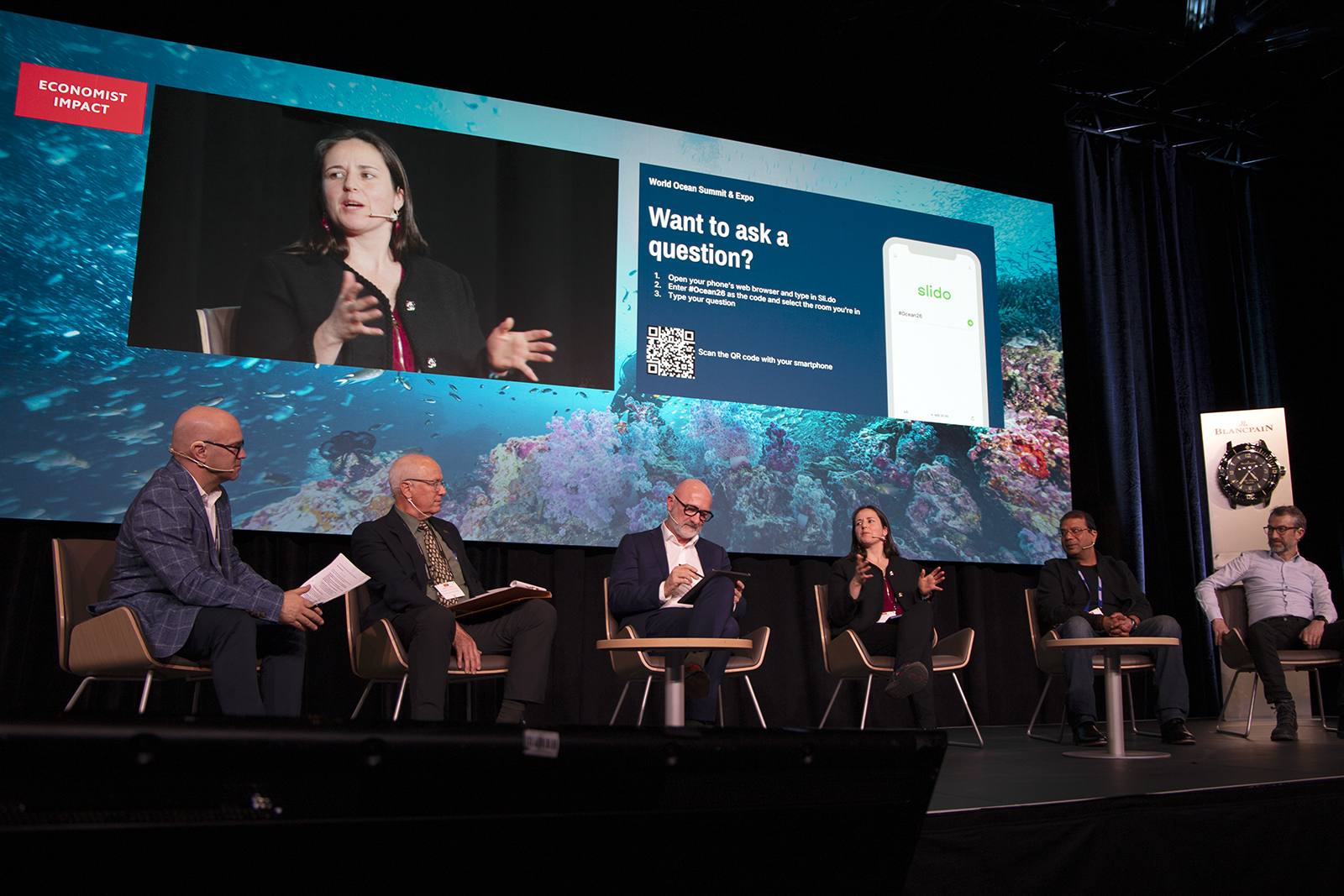
Image: PML’s Professor Helen Findlay speaking on the panel
She also stressed that mCDR would be ineffective unless accompanied by substantial emissions reductions – a reminder that carbon removal technologies are not a substitute for addressing the root causes of climate change.
PML Trustee Richard Bellerby, Chief Scientist at the Norwegian Institute for Water Research, added a governance dimension: that the gap between national policy, international regulation and local governance structures remains a significant obstacle, and effective governance is not merely a procedural nicety but a condition for efficiency and impact.
The Bigger Picture: Cooperation, Knowledge and the Long View
The summit underlined the indispensable need for global cooperation – across sectors, from governments and the private sector to scientific institutions, local communities and indigenous peoples. Speakers returned repeatedly to the importance of scaling up ocean observation and multilateral action, and to the principle that ocean knowledge – scientific, but also local and indigenous – must underpin decisions at every level.
Torsten Thiele, Founder of the Global Ocean Trust and a PML honorary fellow, also emphasised a key point to the investment community; that resilience is a critical challenge where a “huge opportunity” lies from a financial perspective.
There was, too, a note of realism about geopolitics. Governments come and go, and political momentum is fragile. The challenge for science and the broader Ocean community – is to ensure that the evidence base, and the relationships required to act on it, are durable enough to outlast the electoral cycle.
As the conference closed, it was perhaps the Summit’s opening remarks, from Francis Verreault-Paul, Chief of the Assembly of First Nations, Quebec-Labrador that remained most poignant. Offering a principle that cuts through the complexity of treaties, finance mechanisms and governance frameworks, he simply surmised:
“Take care of the water and it will take care of you.”
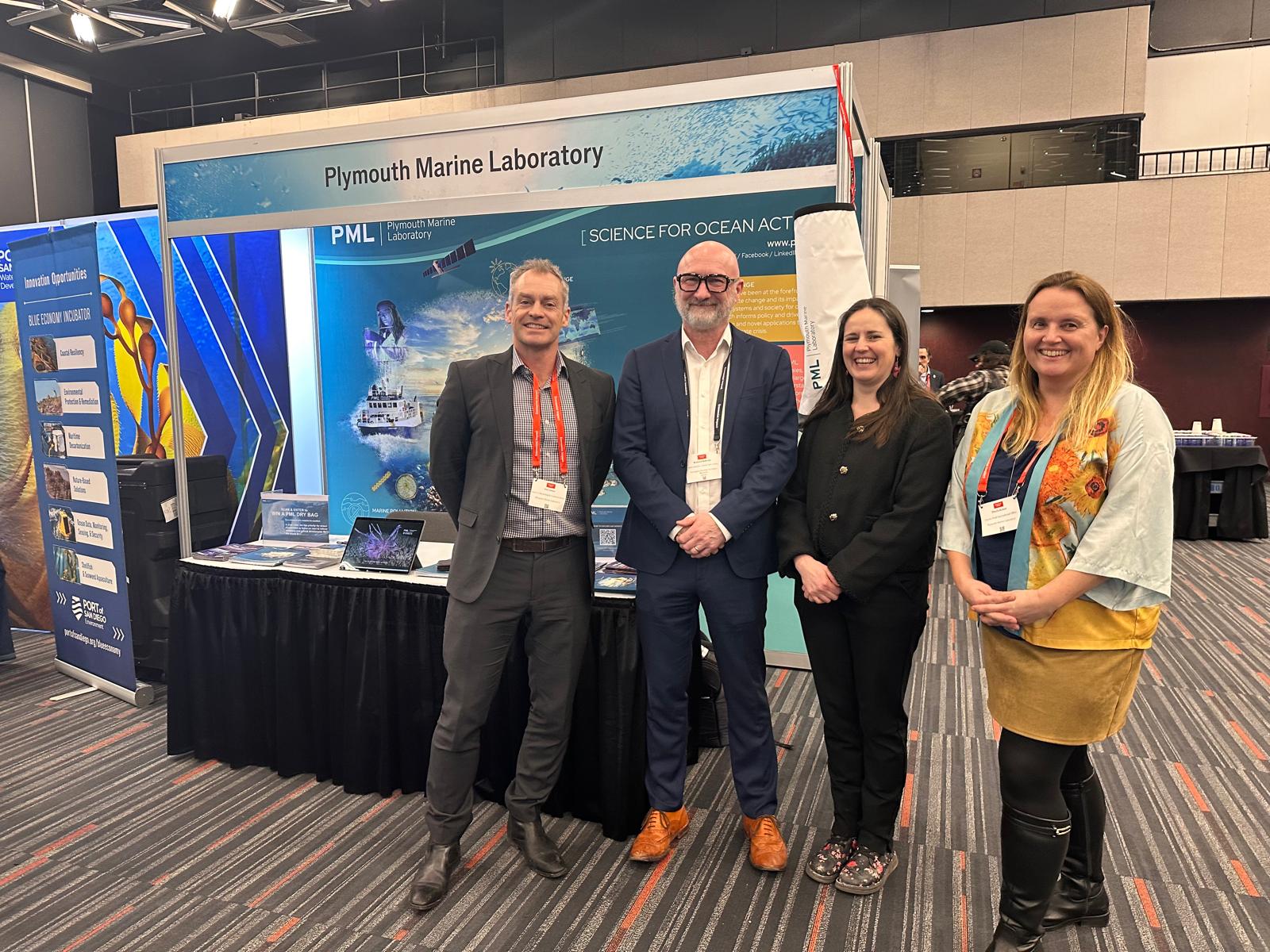
Image: at the PML exhibition stand: (from left to right) Dan Jones – Head of Marketing and Communications, Richard Bellerby – PML Trustee and Chief Scientist at the Norwegian Institute for Water Research, Professor Helen Findlay – Biological Oceanographer and Thecla Keizer – Deputy Head International Office & International Marketing and Business Development Executive.