Story
PML welcomes Defra’s Chief Scientific Advisor Professor Anjali Goswami FRS
23 March 2026
Plymouth Marine Laboratory (PML) were delighted to host a visit from Professor Anjali Goswami FRS – Chief Scientific Advisor and Director General for Science, Data and Analysis – of the UK Department for Environment, Food and Rural Affairs (Defra) earlier this month.
During the visit, Anjali had the opportunity to explore the laboratory’s world class marine science facilities and meet PML scientists to gain a deeper understanding of the breadth of research taking place across the organisation.
The visit began with an introduction from Professor Tim Smyth, PML’s Director of Science, who outlined the organisation’s new strategy and highlighted its three priority research areas: climate change, marine pollution and biodiversity loss – among the most pressing environmental challenges of our time.
Anjali was then given a tour of the laboratory by Professor Smyth, alongside Professor Matt Frost – Head of the International Office, Policy Officer Elin Meek, and Betheney Wills, the Defra PML Secondee.
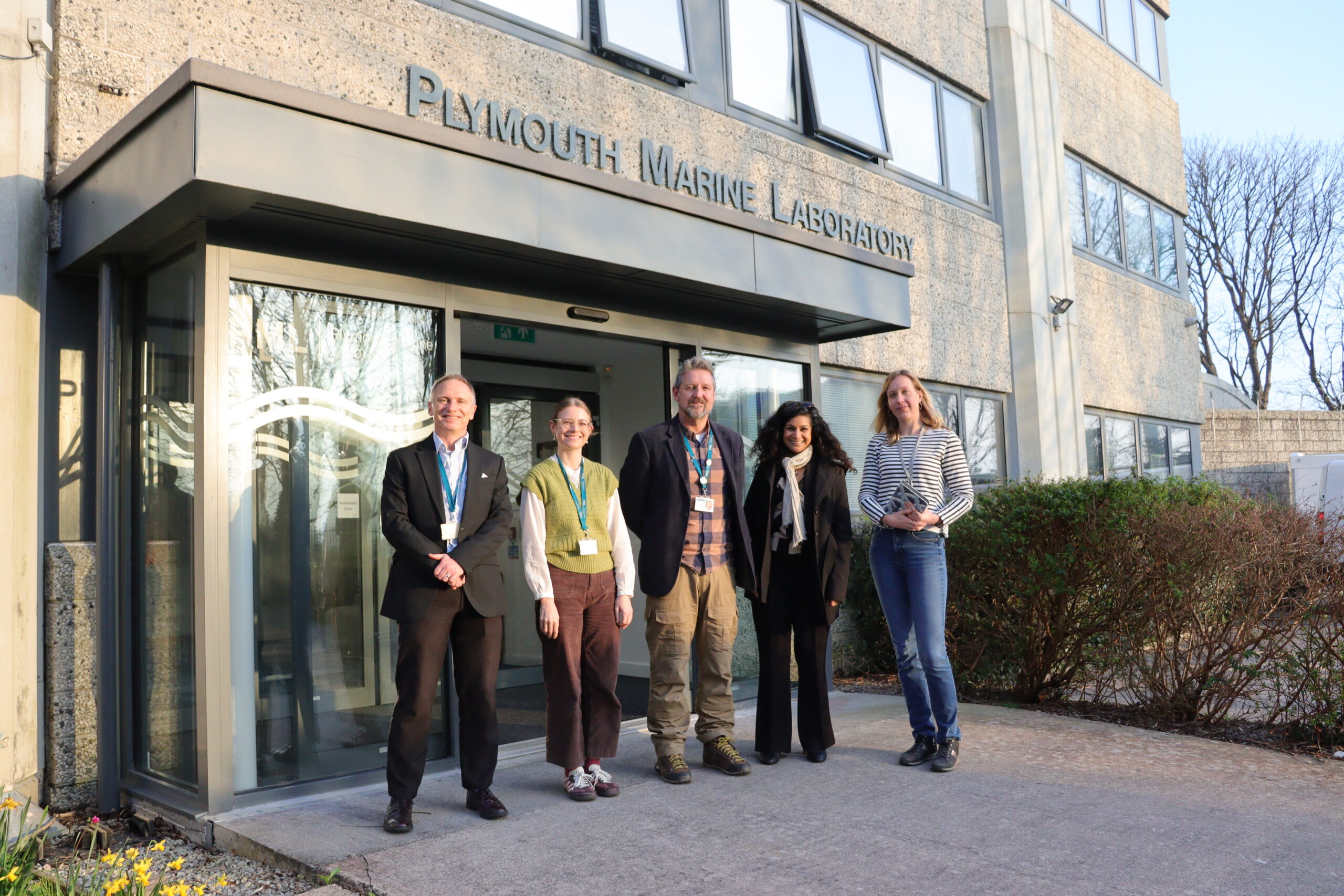
Above: (from left to right) PML’s Director of Science Professor Tim Smyth, Policy Officer Elin Meek, Head of the International Office Professor Matt Frost, Defra’s Chief Executive Advisor Professor Anjali Goswami, and Defra PML Secondee Betheney Wills.
The first stop was the Molecular Laboratory, where microbial ecologist Dr Karen Tait spoke about her research on environmental DNA* (eDNA) and its expanding role in environmental monitoring and assessment.
*eDNA stands for environmental DNA. It refers to any DNA found in the environment, such as skin cells, faecal matter, reproductive material, or even the bodies of smaller animals. Essentially, it’s DNA from any biological material that’s out in the environment.
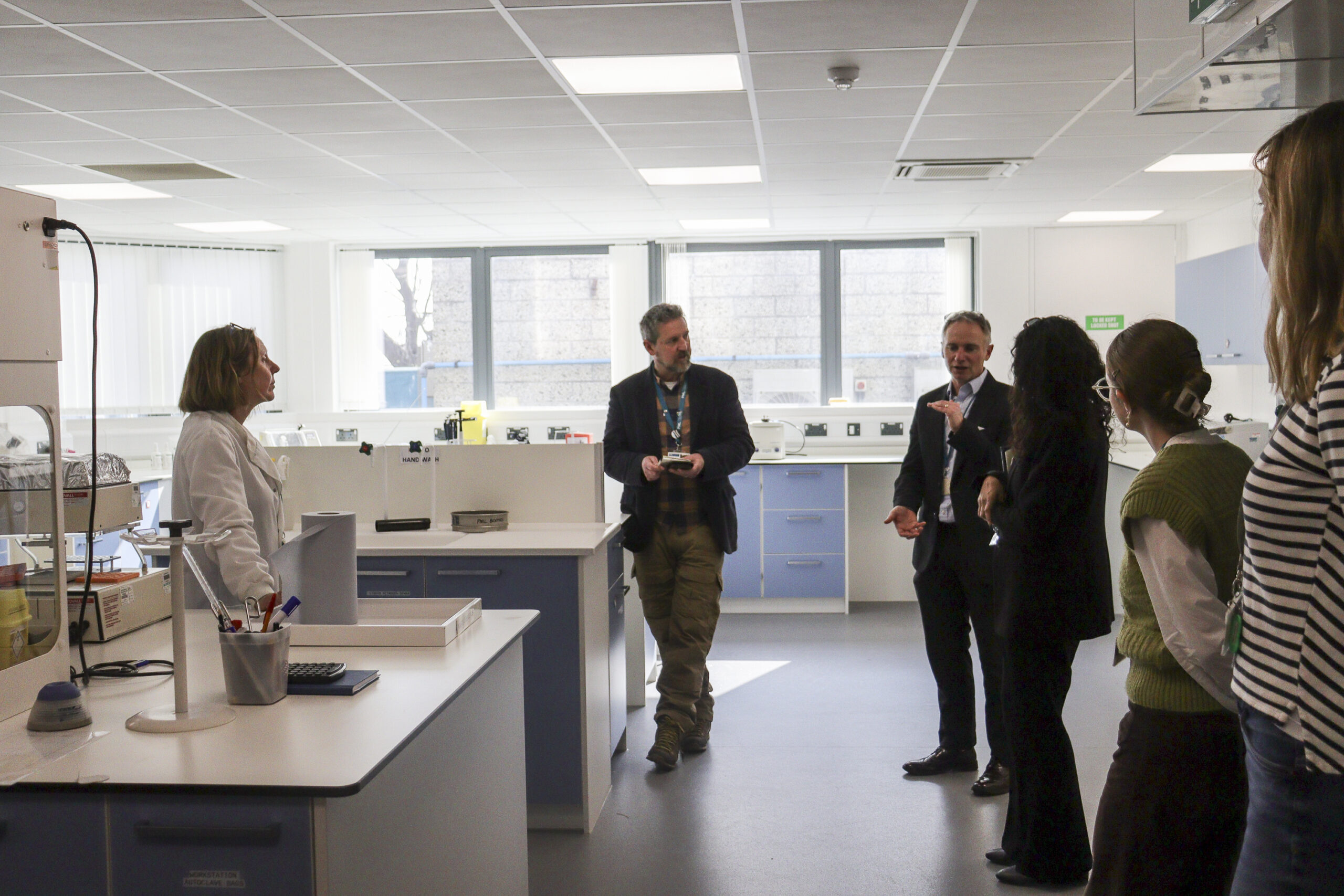
Image: PML’s Dr Karen Tait met with Professor Goswami in PML’s Molecular Laboratory, sharing more about her work on eDNA.
Dr Tait spoke about her work analysing traces of eDNA left behind in seawater to reveal which species are present – an entirely non‑invasive monitoring method that can detect marine life, including fish, without a single net being cast.
By comparing these eDNA signatures with decades of observations from the Western Channel Observatory – one of the world’s longest-running oceanographic and biodiversity time‑series situated in the western English Channel – Karen is uncovering how well modern molecular tools align with traditional monitoring. Her upcoming papers deepens this insight by examining how climatic warming is reshaping plankton dynamics, fish communities and the biodiversity pathways that connect them.
Next, moving to the issue of marine pollution, PML’s Senior Marine Ecologist and Ecotoxicologist Dr Matthew Cole spoke to Anjali about PML’s plastics research, including current work investigating tyre particles as an overlooked yet significant contributor to microplastic pollution in the marine environment.
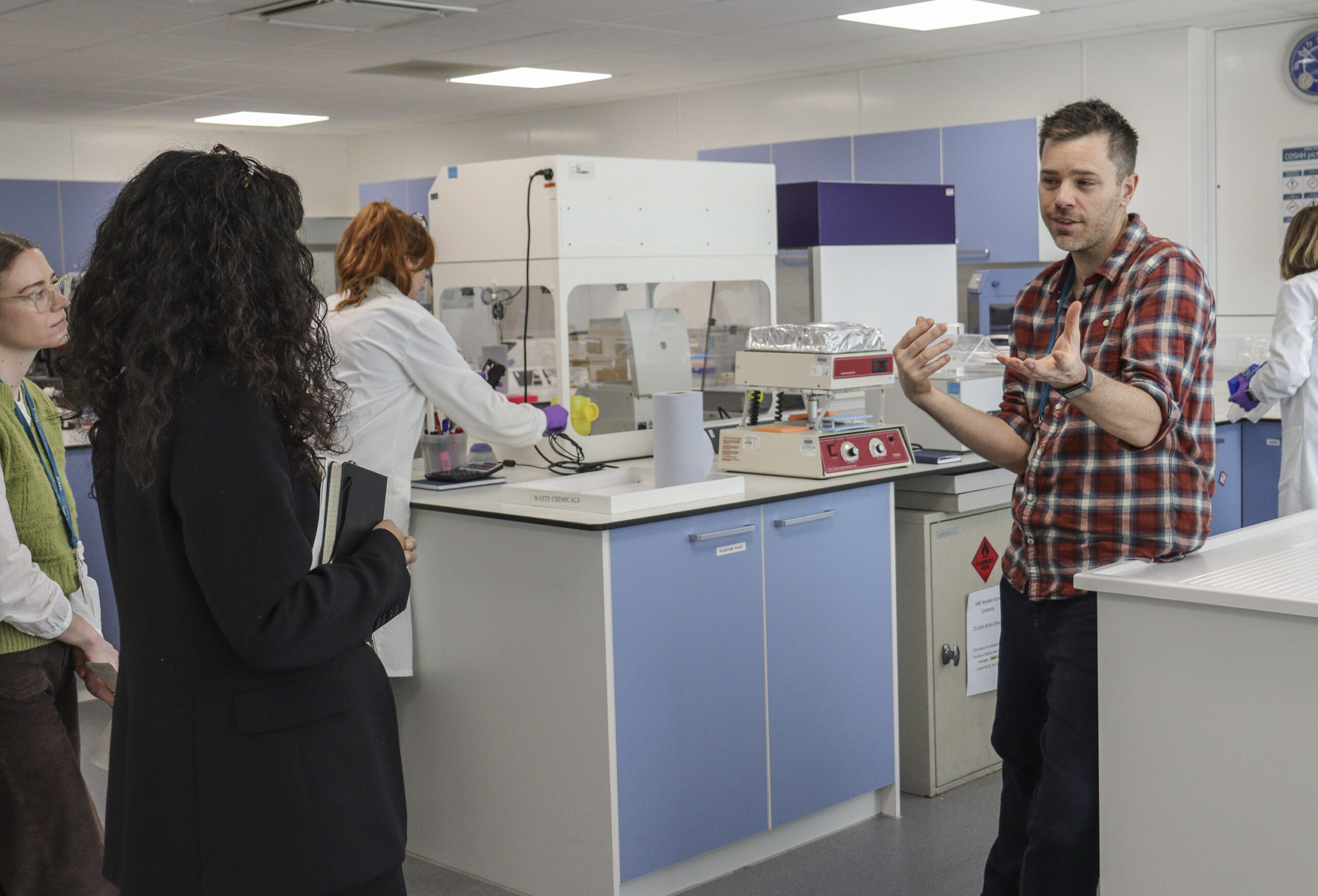
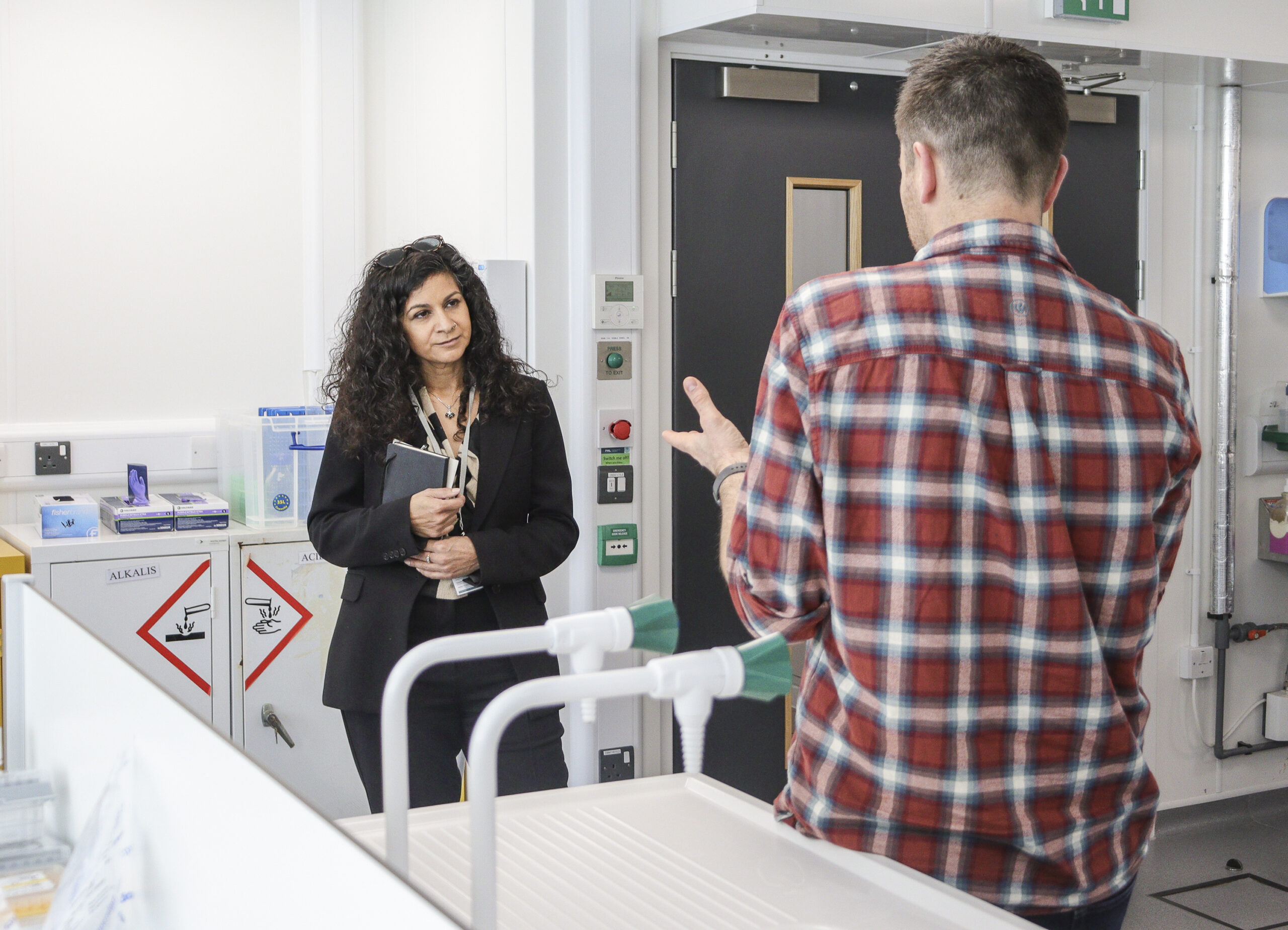
Images: Professor Goswami with Dr Matthew Cole, whose pioneering research was the first to identify the negative impact microplastics can have upon marine zooplankton and marine ecological processes.
Dr Cole also spoke about a brand-new project involving PML that aims to eliminate plastic from disposable coffee cups. It is estimated that up to 500 billion single-use coffee cups are discarded worldwide each year – and most are lined with plastic.
By focusing on upstream design – replacing plastic coatings entirely rather than improving recycling of problematic products – the project reflects a growing shift towards prevention-based approaches to plastic and microplastic pollution.
As the project lead from PML, Dr Cole, explained:
“With up to 500 billion coffee cups used globally every year, it is of little surprise that we find so many of them littering the natural environment. In this EU Horizon-funded project, our team will be bringing expertise in environmental pollution: to test the fate and toxicity of traditional disposable cups, and these new cups made with natural coatings.”
Moving into the offices, Dr David Moffat, Lead Artificial Intelligence Data Scientist at PML, presented the role of AI and machine learning in mapping and identifying deep-sea ecosystems, with a particular focus on the newly launched ‘Deep Vision’ project. Deep Vision will harness AI to unlock thousands of hours of seafloor imagery and map vulnerable marine ecosystems of the deep Atlantic, with the aim to transform future marine conservation through cutting-edge Vision Transformers and machine learning.
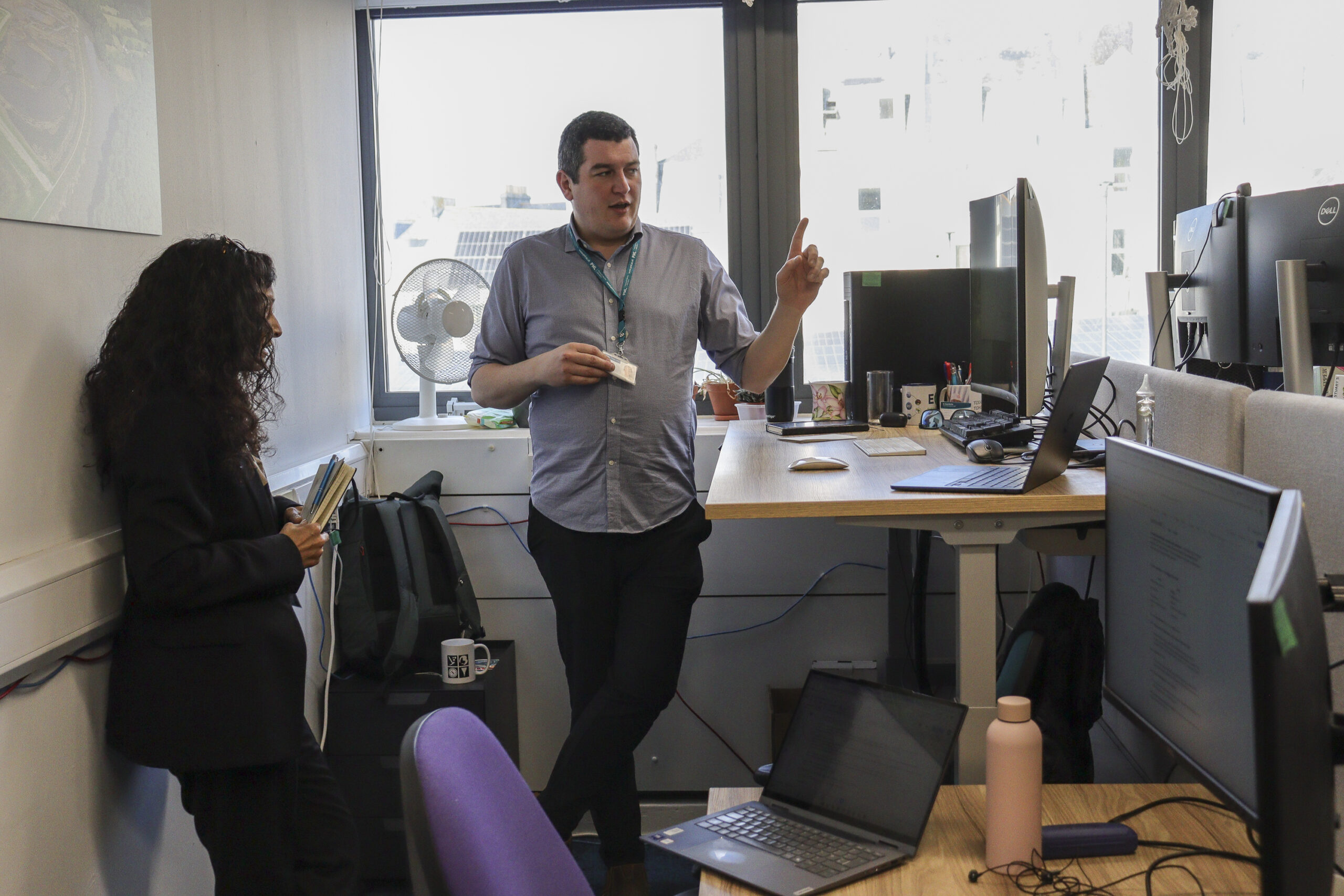
Image: Professor Goswami talking to PML’s Dr Dave Moffat
Next the group visited PML’s Smart Sound laboratory, the UK’s leading testing facility for marine autonomy, uncrewed systems and advanced ocean technology.
Professor James Fishwick showcased some of the latest advancements, including the Automated, in situ Plankton Imaging and Classification System (APICS), which will autonomously collect process and collect images of plankton in situ from a data buoy mooring site 6 miles south of Plymouth, using machine learning to classify those images.
APICS project lead Dr James Clark also shared how the advancements in technology and AI will radically improve the understanding of how environmental changes are affecting plankton, the microscopic organisms at the foundation of the marine food chain.
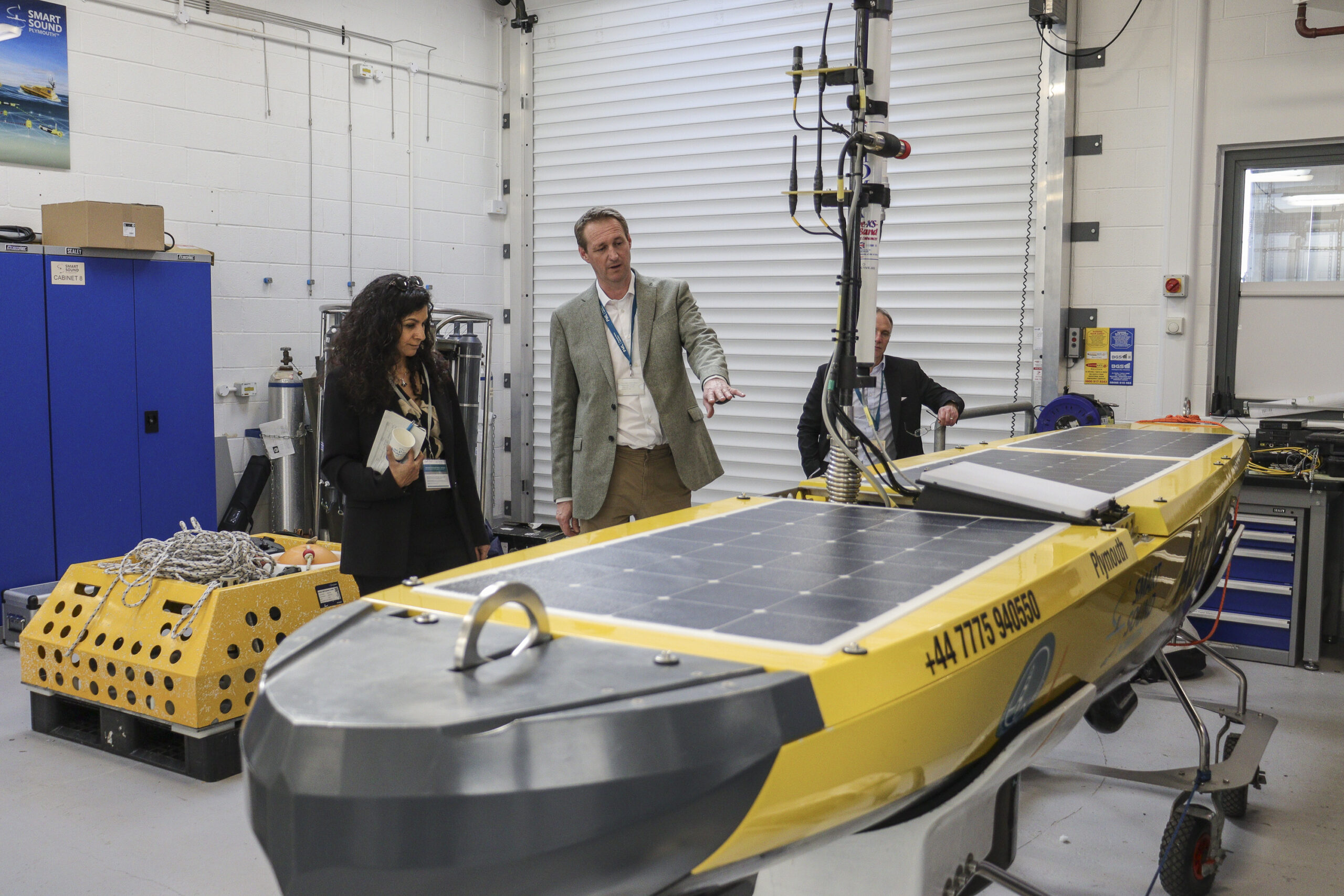
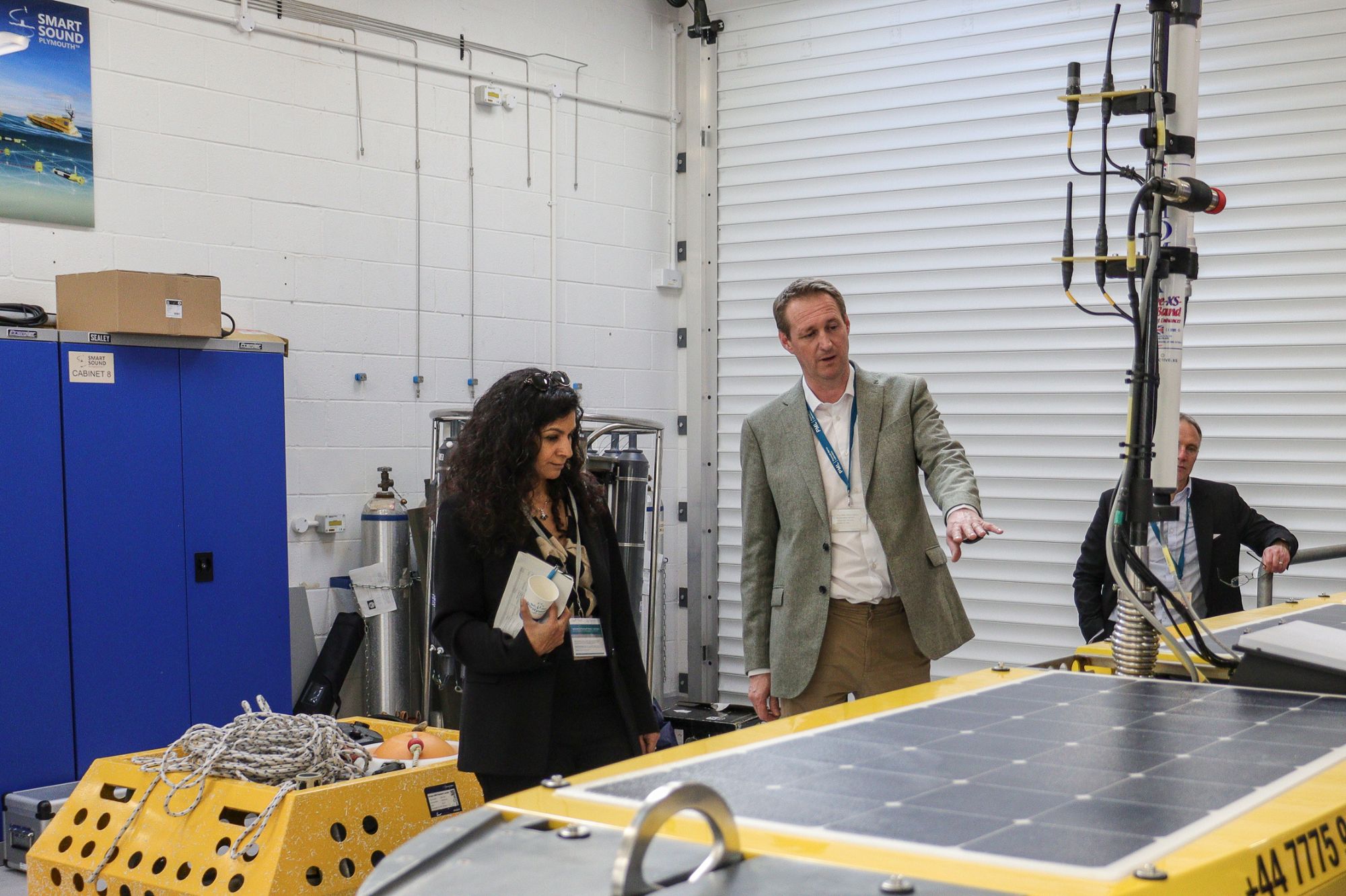
Image: Anjali with Professor James Fishwick with the PML ‘Pioneer’. The PML Pioneer is a five-metre AutoNaut uncrewed surface vessel (USV), propelled by wave motion and powered by three hundred-watt solar panels, that collects marine data autonomously with minimal human intervention.
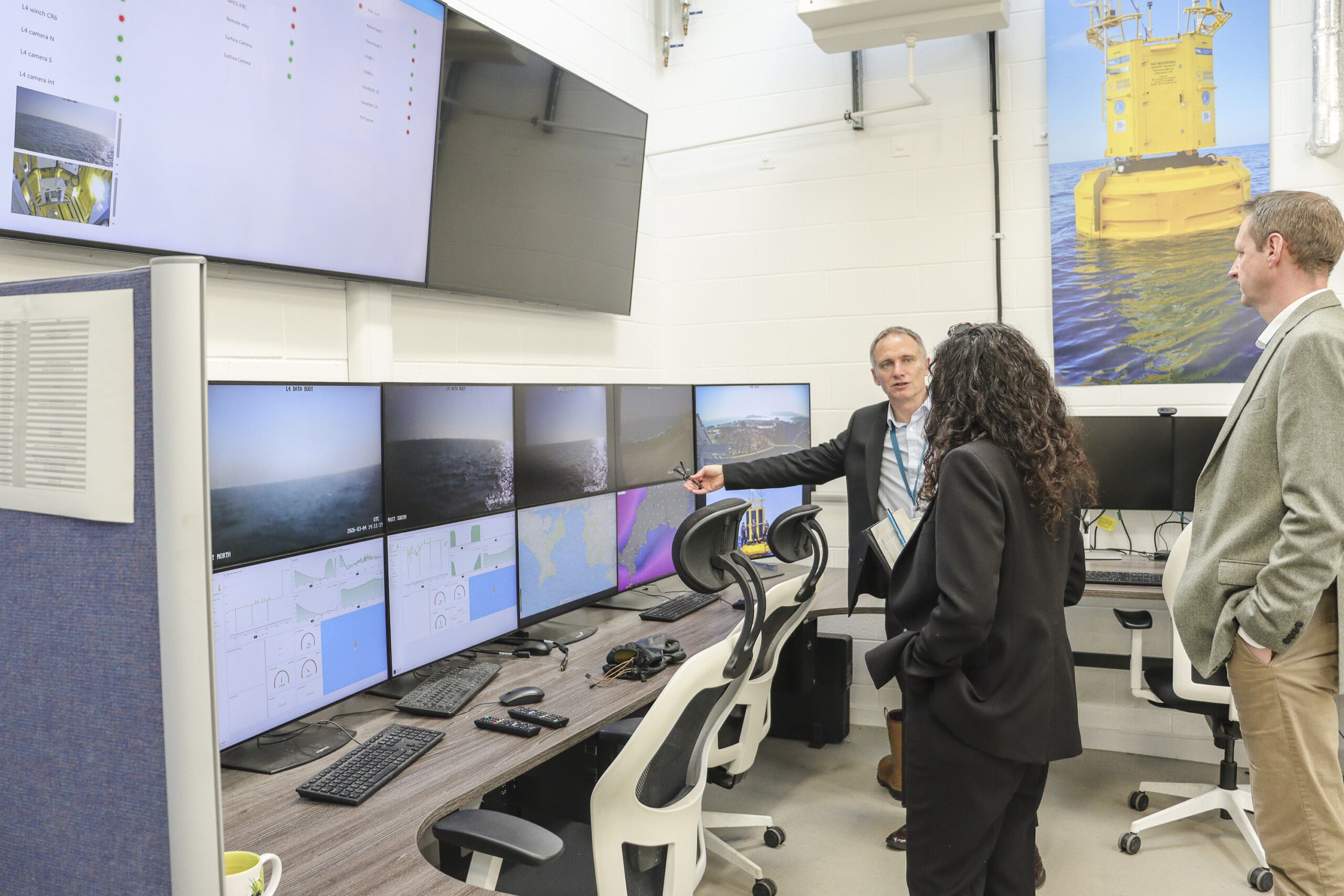
Image: Anjali with Tim and James by the Smart Sound laboratory monitors.
All of these technologies support PML’s long-term monitoring efforts through the Western Channel Observatory.
The tour continued with Professor Ana Queirós Ocean Challenge Lead – Climate Change, who presented PML’s work on climate-smart marine spatial planning and introduced the recently launched ASPACE decision-support tool, designed to help policymakers and decision makers reduce climate risks for the ocean, nature and people.
For the first time, those investing in nature, growing marine sectors, marine planning or conservation will be able to create, visualise and compare alternative spatial management scenarios to reduce climate risks from spatial management decisions and balance nature, economy and societal needs.
Building on climate discussions, Professor Tom Bell and Professor Jerry Blackford shared the latest research on climate mitigation strategies including marine carbon dioxide removal (mCDR) research, outlining how PML uses advanced modelling to assess the environmental implications and effectiveness of different carbon removal approaches, and the importance of real-world test sites, sharing lessons from the SeaCURE project.
Heidi Tillin, Applied Marine Environmental Scientist, then introduced PML’s social science research, including work on natural capital and ecosystem services that helps assess how human activities impact marine habitats and ecosystems.
Moving to PML’s work from the skies, Professor Shubha Sathyendranath MBE demonstrated how satellite data and Earth Observation (EO) technologies are being used to monitor water quality, the ocean carbon cycle, biodiversity, fisheries management, and even human health risks (WADIM).
Closer to home, Professor Andy Rees, Ocean Challenge Lead – Pollution, described PML’s Catchment-to-Coast research, which examines how pollution moves through river systems to the ocean, alongside the laboratory’s long-term monitoring of the Tamar Estuary (AgZero+).
Professor Angus Atkinson MBE focused on some of the smallest organisms in the ocean, discussing his research on Antarctic krill fisheries and the effects of climate change, explaining how scientific evidence supports international management and decision-making.
The tour then concluded with Head of the International Office, Professor Matt Frost showing how PML Science was supporting the delivery of global as well as national policy, and also initiatives such as the UN Ocean Decade. Matt then provided an overview of the large number of global (and national) partners with whom PML work.
Professor Anjali Goswami FRS said:
“It was a real pleasure to visit Plymouth Marine Laboratory and see first‑hand the breadth and quality of science taking place here. PML’s work demonstrates how innovative science, delivered across disciplines and at scale, can help us better understand complex environmental challenges and support more informed, joined‑up policy responses at both national and international levels.”
Professor Matt Frost Head of International Office said:
“Visits like this are incredibly valuable in strengthening the connection between science and policy. Bringing together expertise from across disciplines, PML is well placed to support evidence-based decision-making at both national and international levels. We look forward to continuing to work closely with Defra and partners to ensure that our science helps inform effective, joined-up responses to global ocean challenges.”
Director of Science Professor Tim Smyth said:
“It was a pleasure to welcome Professor Goswami to PML and to showcase the breadth of science taking place across the laboratory. From molecular approaches and long-term observations to artificial intelligence and climate modelling, our work is designed to address some of the most pressing environmental challenges of our time. Ensuring that this science is both robust and informs policy and decision-making is central to our mission.”