Story
What's the real economic value of blue ecosystems? New research reveals holistic benefits boost value by 10-100x
11 December 2025
The paper’s findings are crucial for decision-makers looking to nature-based solutions, to mainstream a holistic value of blue ecosystems beyond carbon
Led by Plymouth Marine Laboratory’s Dr Olivia Rendón, with co-authors Dr Dimitrios Kaloudis of PML Applications and Professor Nicola Beaumont [now of the National Oceanography Centre], the study demonstrates that when the full suite of ecosystem services provided by blue ecosystems is included, their monetary value increases by 10- to 100-fold beyond carbon sequestration alone.
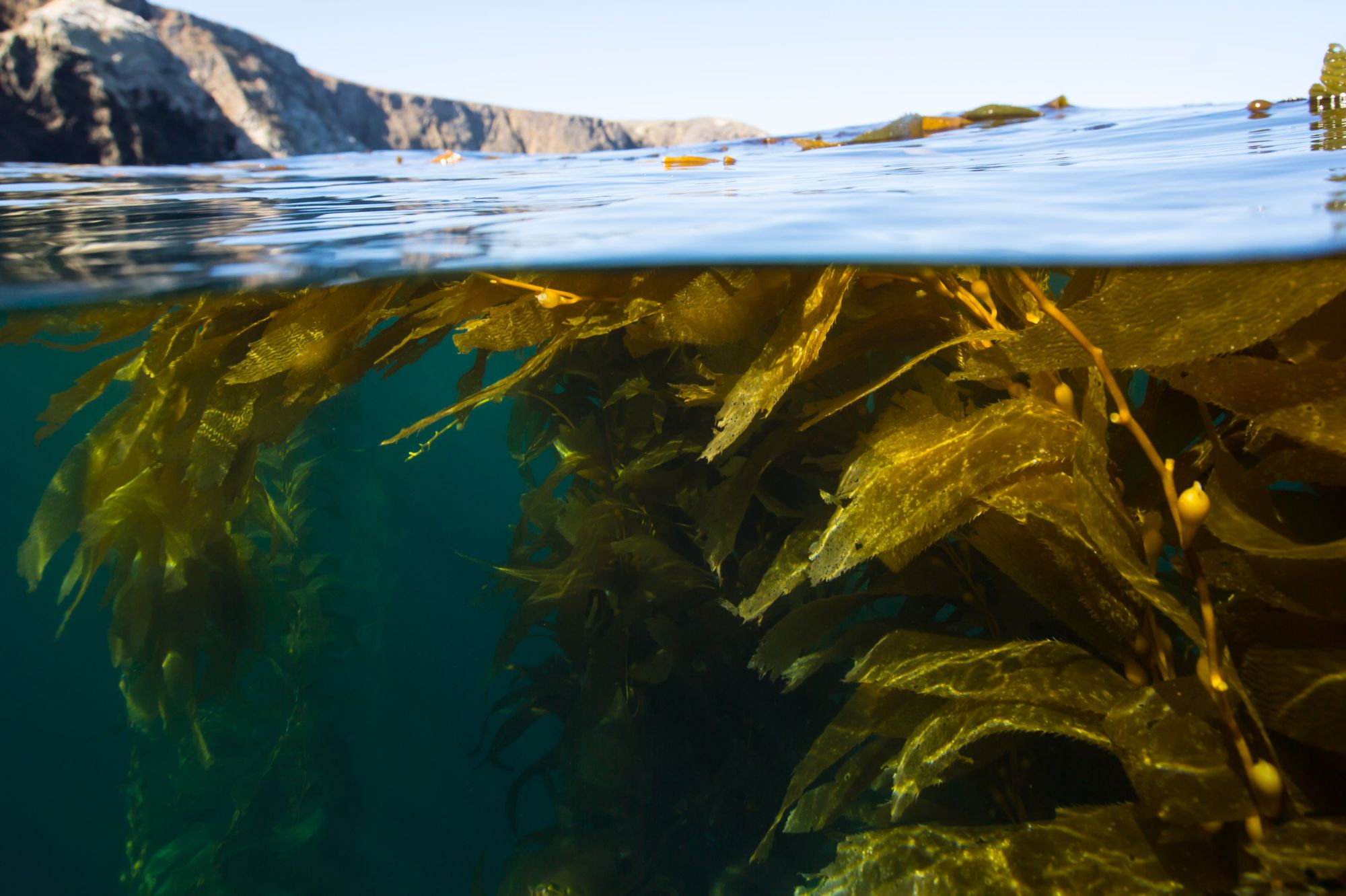
Blue carbon ecosystems – such as saltmarshes, seagrass meadows, kelp forests and mangroves – are widely recognised for their ability to capture and store carbon, and as such, have attracted global attention as nature-based solutions to climate mitigation strategies. But the new paper, titled ‘Co-benefits reveal the true value of blue ecosystems’, demonstrates that focusing on carbon alone substantially underestimates the true worth of these ecosystems.
The paper highlights that these habitats also provide critical co-benefits, from coastal protection and water quality regulation to nursery habitat and biodiversity support, which dramatically increase their total value and should be fully reflected in policy and investment decisions.

Image: “The bigger picture” – from erosion control to pollutant breakdown, these blue habitats provide a much greater benefit to society than carbon alone, and the authors note that there are further unquantified monetary benefits that these ecosystems provide.
To reveal the more accurate value of blue ecosystems, the research team carried out the first comprehensive review of all available monetary valuations of ecosystem services across saltmarsh, seagrass, kelp, maerl, and oyster habitats for the UK.
By assessing the full suite of ecosystem services, they found that including co-benefits increases estimated values dramatically:
- Saltmarsh value increases 10-fold when co-benefits are included
- Seagrass value increases 50-fold
- Oyster bed and kelp values increase by more than 100-fold
These co-benefits include coastal flood protection, biodiversity support, pollutant breakdown, nursery habitat, recreation, food provision, and many others – most of which are not always quantified in financial terms.
The study warns that current blue-carbon focused schemes significantly undervalue the full suite of benefits these ecosystems provide, making restoration and conservation projects appear less cost-effective than they truly are.
Lead author, PML’s Dr Olivia Rendón, said:
“Our study shows that when we look beyond the carbon sink benefits of blue ecosystems, the values increase by several orders of magnitude. If we want to unlock meaningful finance for restoration, we need to reflect the full suite of benefits these habitats provide – from flood protection, to cleaner water, and recreation.”
Case study: The Solent
To test real-world implications, the team applied their co-benefit valuations to Tthe Solent, one of the UK’s largest estuarine systems. The results showed:
- Saltmarsh restoration potential jumps from £841k (carbon only) to £96.9m (with co-benefits)
- Seagrass jumps from £524k to £189.8m
- Kelp jumps from £27k to over £15m
- Oyster beds jump from £62k to £36.6m
One of the strongest contributors was pollutant breakdown, which plays a major role in water quality, but there are discrepancies between the different valuation methodologies.
Despite the enormous value of blue ecosystems, the study also reveals large evidence and methodological gaps:
- Nearly half of all ecosystem services have no monetary valuation – especially true for cultural benefits like recreation, aesthetic value or heritage – meaning their overall economic contribution is significantly underestimated.
- Existing valuations vary widely in quality, with some methods – such as replacement cost used for pollutant breakdown – producing very high, variable values.
- Ecosystem condition is rarely accounted for: the majority of studies do not adjust values when blue ecosystems are degraded – even though poorer ecosystem condition means fewer benefits.
- Value transfers between regions can be unreliable: different species, environmental contexts and social settings can make transferred valuations inaccurate.
Dr Rendón added:
“While valuation gaps persist, it is clear that as more ecosystem services are incorporated, the estimated value of these ecosystems rises – strengthening their case for investment and improving their ability to compete with alternative uses of coastal and marine spaces.”
The authors provide six recommendations for improving valuation, including standardisation, more primary economic studies, and clearer methods for bundling/stacking co-benefits to avoid double-counting.
Dr Dimitrios Kaloudis, Manager of the Centre for Environmental Solutions at PML Applications, supported the study with literature searches, data extraction and manuscript writing. He said:
“At PML Applications, my role supports the development of natural capital, nature-based solutions and nature restoration projects among others. This work highlights the benefits in assessing nature conservation and restoration in a multi-dimensional, holistic manner. Gaps remain and we must address them to better understand the benefits of working with nature provides to humanity. However, clearly makes the case for more ambitious and better-funded restoration projects – ensuring these ecosystems can continue protecting coastlines, supporting biodiversity and productive fisheries, and storing carbon long into the future.”
Professor Nicola Beaumont, of the National Oceanography Centre, added:
“To restore blue ecosystems at scale, policymakers and investors need robust, decision-grade data. This work takes an essential step toward standardising valuation and making these ecosystems central to climate and biodiversity finance.”
Access the full study, ‘Co-benefits reveal the true value of blue ecosystems’ via ScienceDirect >>
Related information
This study was funded by Blue Marine Foundation (BLUE) and supported by the EU Horizon project C-BLUES (grant no. 101137844) and UK Research Councils under Natural Environment Research Council award NE/X002357/ 1-Sea the Value.
Citation:
Rendon, O.R., D. Kaloudis, N. J. Beaumont. 2025.
Co-benefits reveal the true value of blue ecosystems.
Cell Reports Sustainability 100582,
https://doi.org/10.1016/j.crsus.2025.100582.
(https://www.sciencedirect.com/science/article/pii/S2949790625002782)