Story | 01 May 2026
From Plymouth to Brazil: PML researchers join global SOLAS Summer School!
Early career scientists from PML joined a global cohort in Brazil to build skills, collaborations and knowledge to tackle climate challenges.
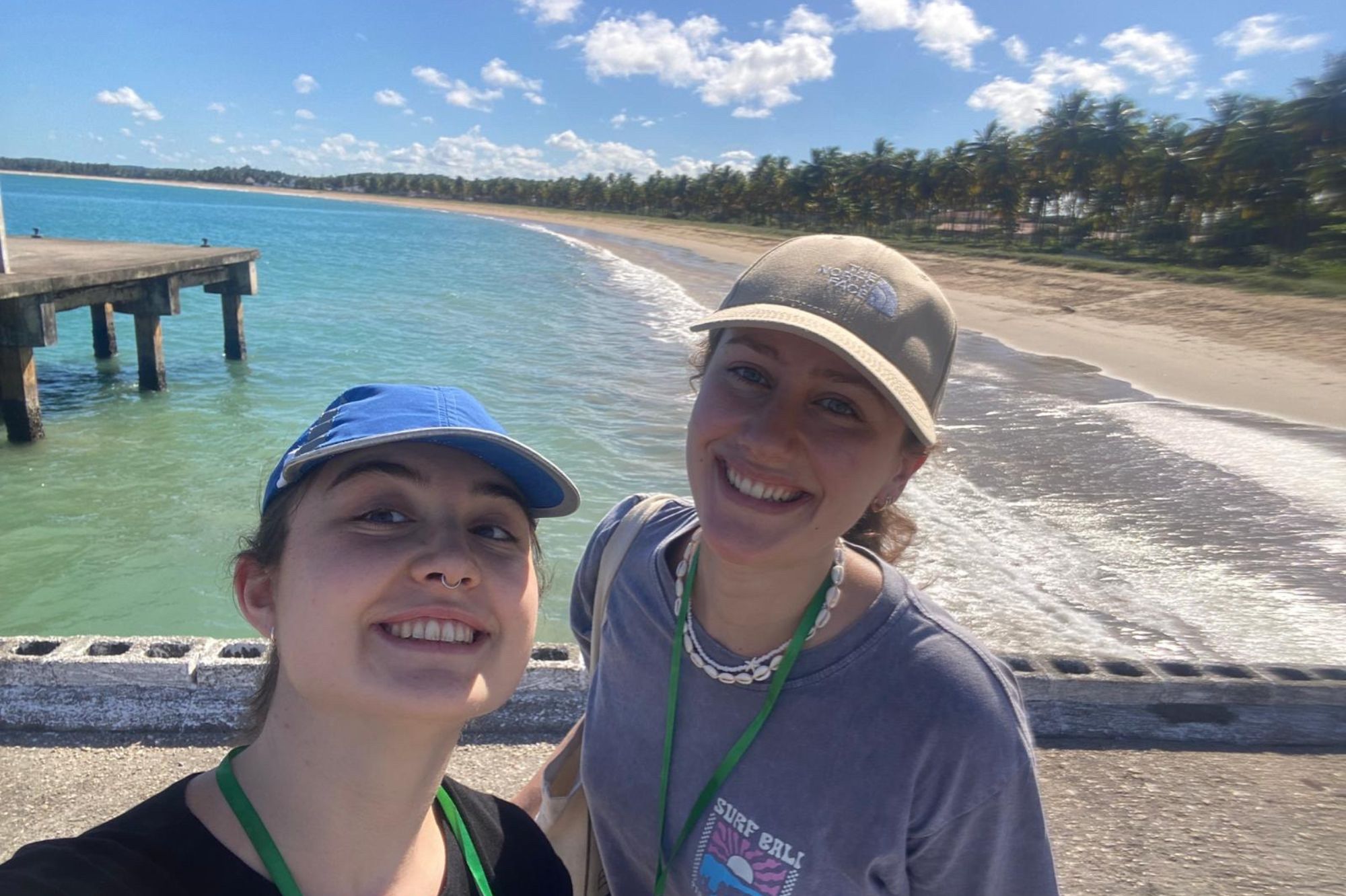
Image: Irene (left) with Loren (right) by the beach for a hands-on practical session at SOLAS Summer School.
Two Plymouth Marine Laboratory (PML) early career researchers (ECRs), Dr Loren Temple and PhD researcher Irene Monreal-Campos, have recently returned from the 10th Surface Ocean–Lower Atmosphere Study (SOLAS) Summer School, held in Tamandaré on Brazil’s east coast.
The three-week international programme brought together around 60 early career scientists and world-leading experts to explore the critical processes linking the ocean and the atmosphere.
Hosted at the Centro Nacional de Pesquisa e Conservação da Biodiversidade Marinha do Nordeste (CEPENE), a major marine research centre in northeastern Brazil, the Summer School provided an immersive and beautiful environment for interdisciplinary learning at the ocean–atmosphere interface.
SOLAS was established to strengthen collaboration between oceanographers and atmospheric scientists, encouraging a more integrated understanding of how these two environments interact. With the ocean covering over 70% of the Earth’s surface, processes occurring at the air–sea boundary influence weather, climate, biogeochemical cycles and human societies worldwide.
Participants were primarily PhD researchers and early career postdoctoral scientists, from across the globe. The Summer School offers ECRs the chance to develop their careers with support from senior scientists in the field – who can pass on their knowledge to the next-generation of climate scientists.
Over three intensive weeks, participants took part in:
- Expert-led lectures on air–sea exchange processes
- Hands-on practical sessions and data analysis
- Introductions to other disciplines, including Earth Observation science and social sciences
- Training in proposal writing, policy engagement and science communication
- Collaborative, student-led projects to tie their learnings into practice
For Loren, the experience highlighted the importance of bringing together scientists in atmospheric and ocean sciences:
“SOLAS was originally created to get atmospheric scientists and ocean scientists to speak to each other – and that connection is incredibly important. This summer school was about learning directly from leading global experts in both fields who really understand those links.”
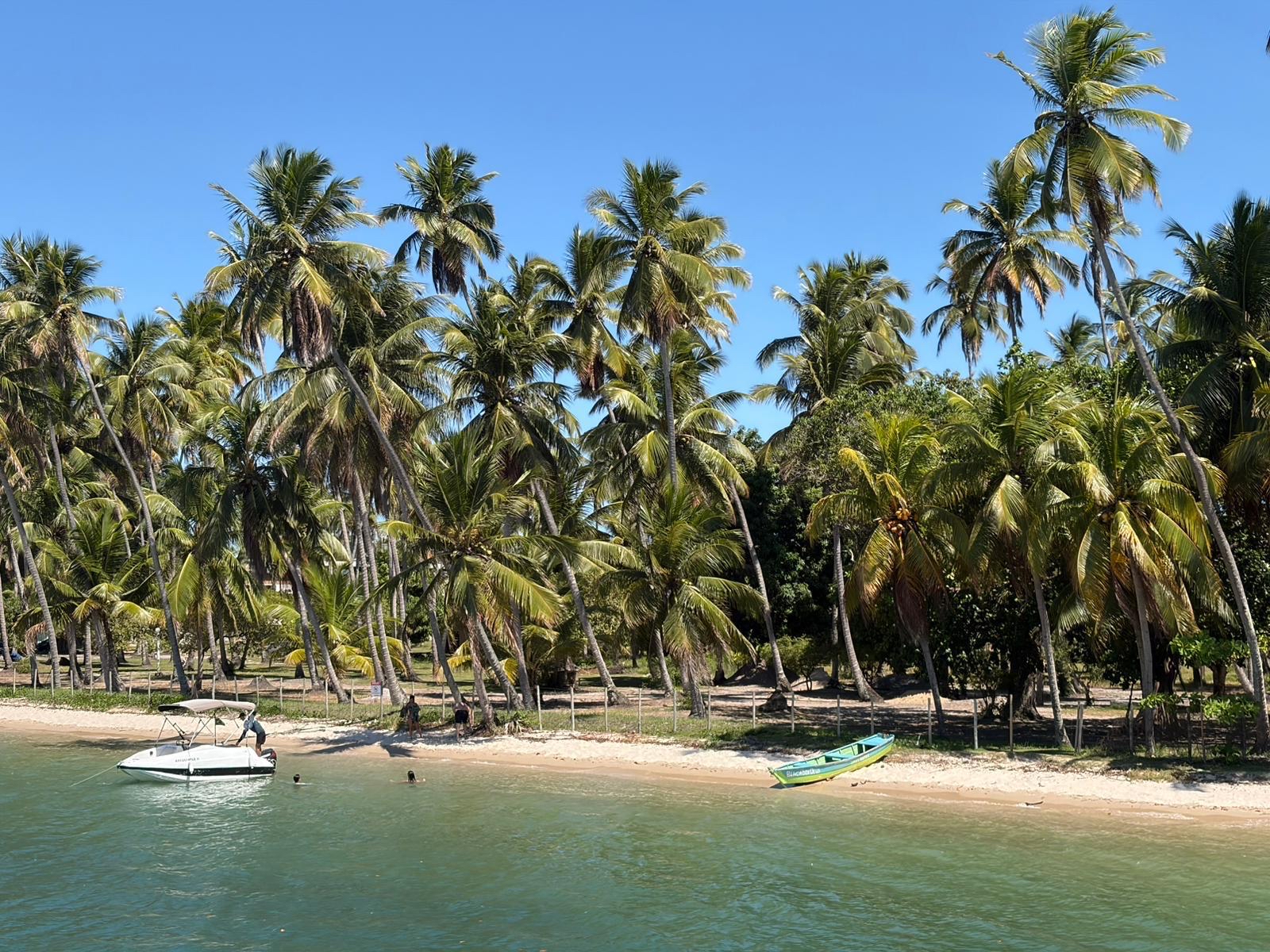
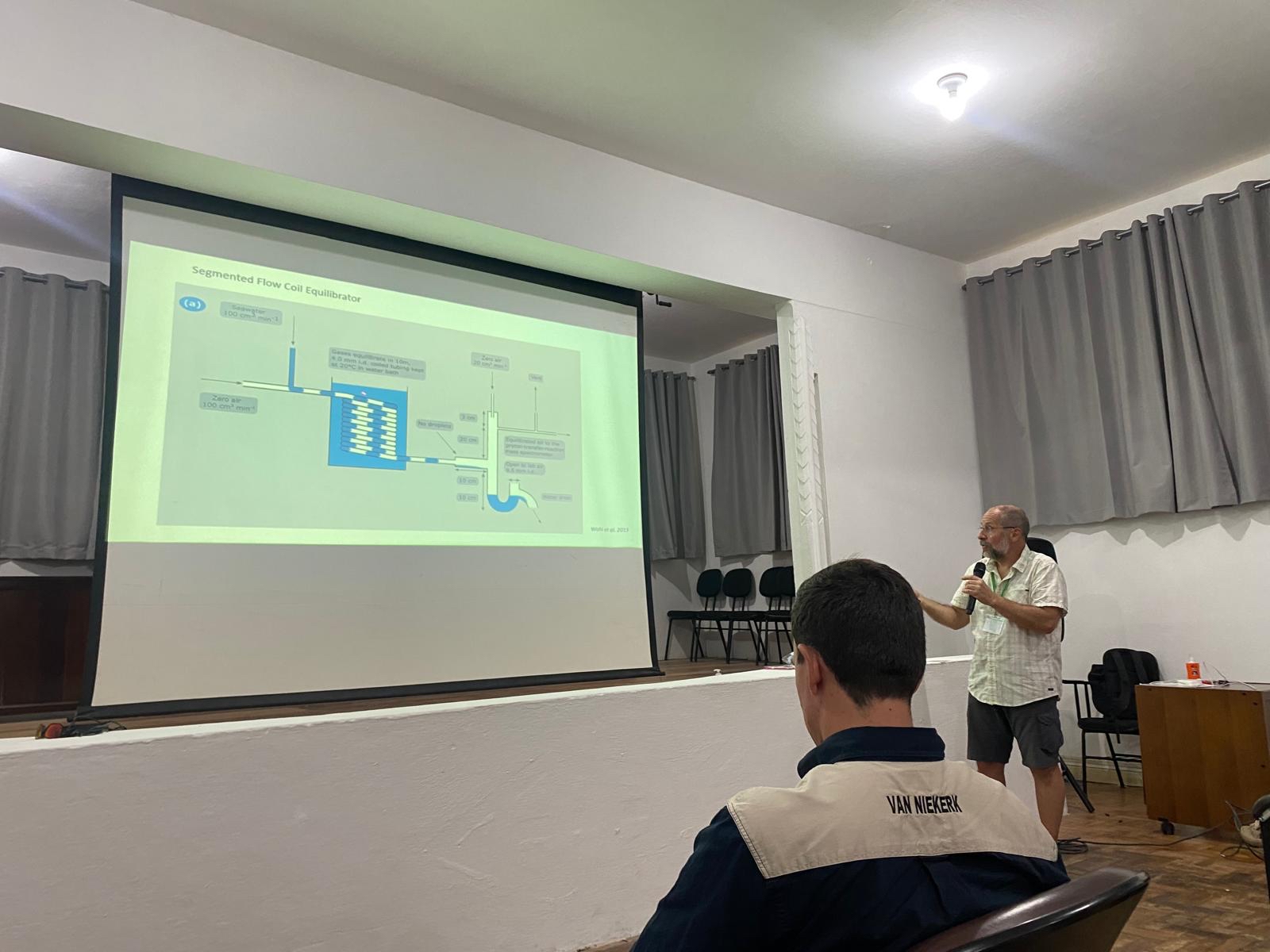
Images: From boardroom to beach – the summer school offered a variety of settings to learn about the air-sea exchange.
The pair spoke about some of their highlights over the three weeks, Irene said:
“For me, I loved the sessions with ESA (the European Space Agency), who showed us how to use their satellite products. It’s so helpful for us out at sea on research cruises; so, when we find an unusual measurement, we can check where it may have come from. It’s given me more confidence in using the tools, and I’ll now be using them for my PhD, so that’s been hugely valuable.”
“And, because we have so many scientists working in Earth Observation here at PML, I’ll feel more knowledgeable and confident in communicating with these scientists now that I have a stronger understanding of their field. It’ll help with future project collaborations for sure,” Irene added.
Loren said:
“For me, I loved learning about anything to do with the sea surface microlayer, where most of the action takes place in terms of the ocean absorbing and releasing different compounds. The microlayer is only like 1mm thick – it’s so thin – yet it plays this huge role in the air-sea exchange, and has this enormous role in our climate.”
“In addition to learning about this in the classroom, we took part in a hands-on session where we got to actually sample the microlayer, which is tricky because it’s such a delicate part of the ocean surface. It really brought the science to life,” Loren added.
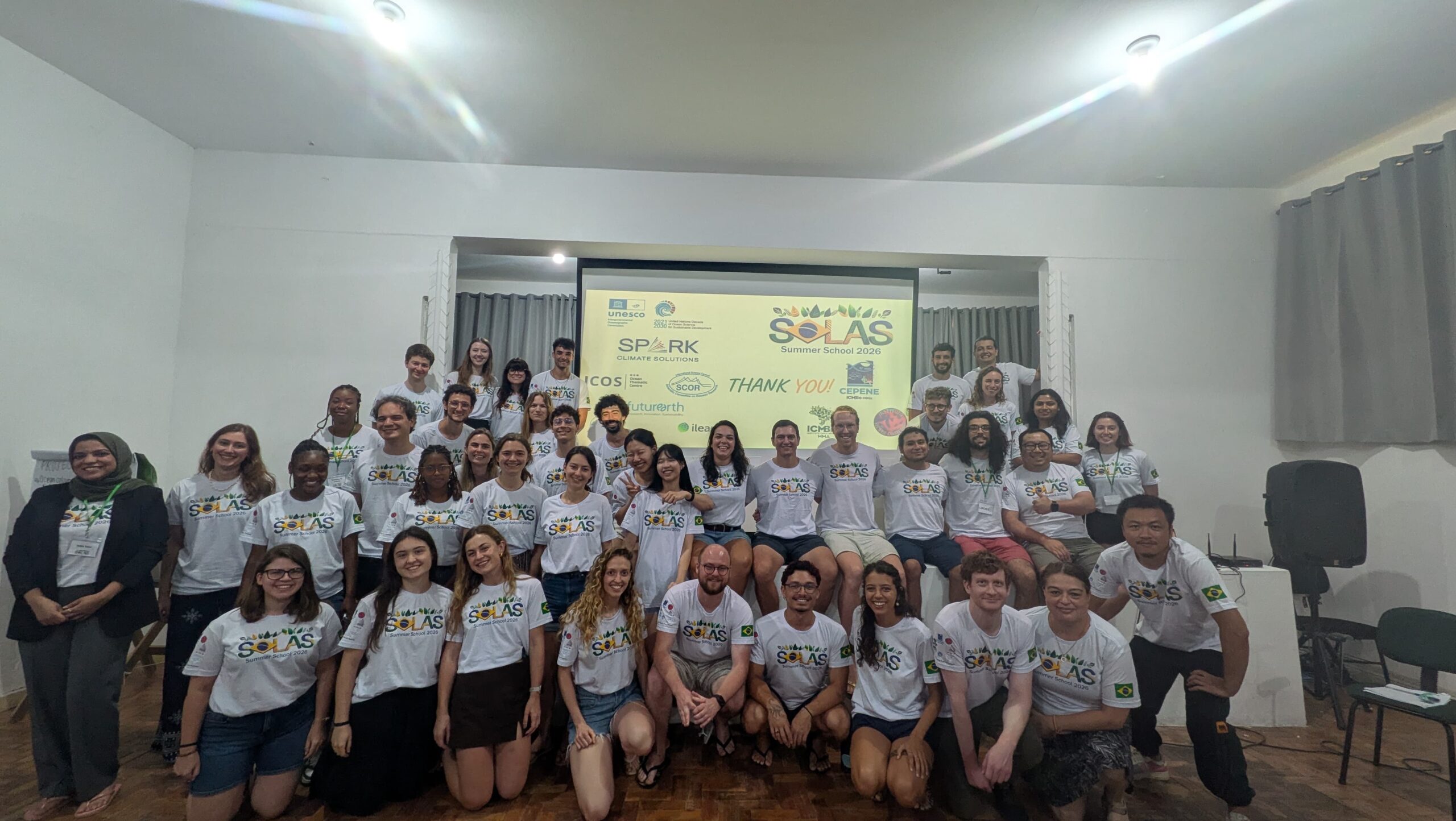
Image: Participants of this year’s SOLAS Summer School
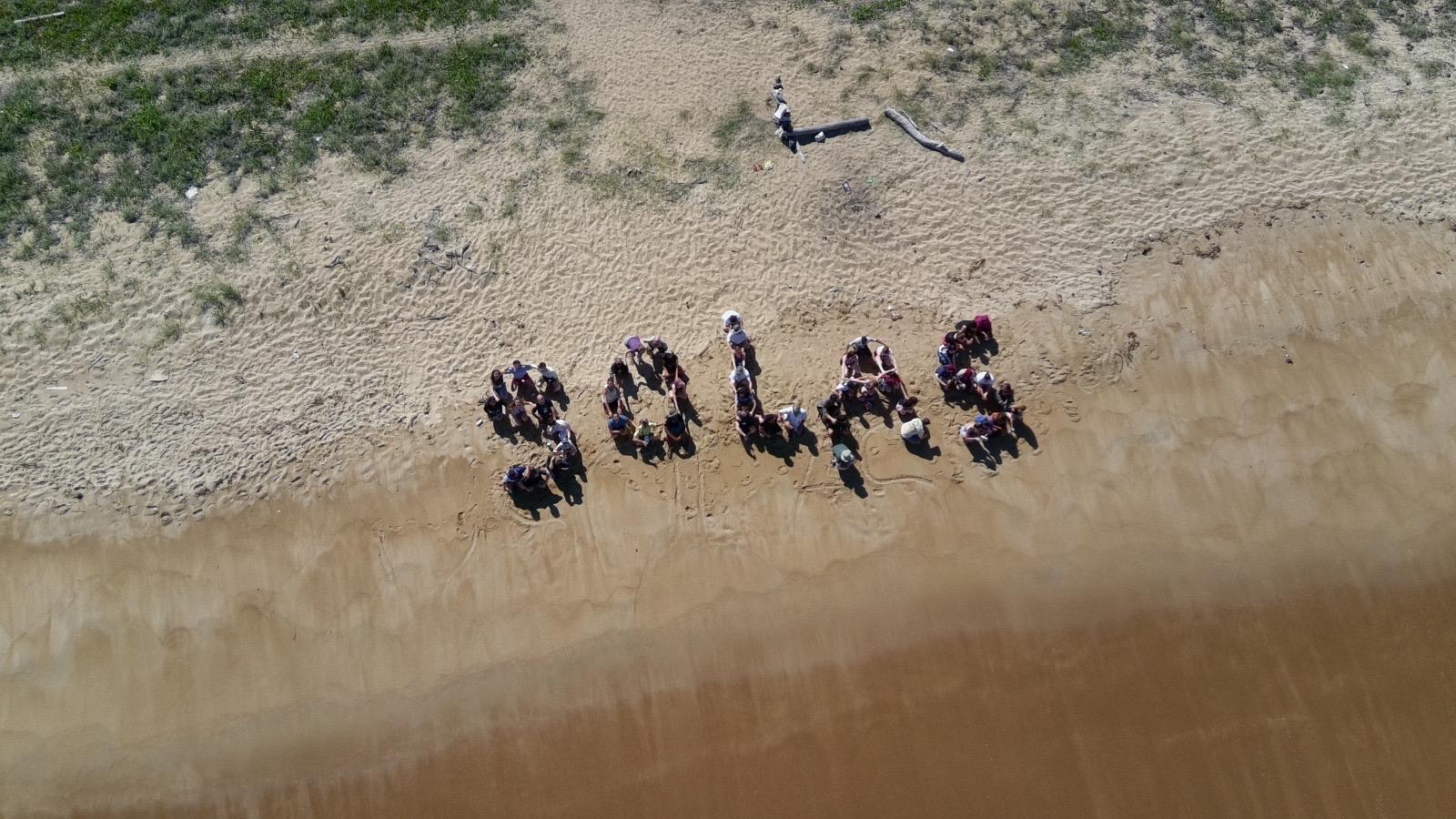
Image: Drone photo of the students spelling out ‘SOLAS’
Rather than traditional conference-style interactions, the summer school created space for open discussion, collaboration and peer learning.
“You’re learning from people who really know the field, but you’re also meeting peers you’ll likely grow alongside and collaborate on science throughout your career,” Loren said.
In fact, PML’s Head of Marine Processes and Observations, Professor Tom Bell also attended the school years ago, where he met long-term collaborator Dr Christa Marandino. Prof Bell said:
“Attending the SOLAS Summer School was a formative experience early in my career. It’s a unique environment where you build strong scientific foundations, but just as importantly, lasting relationships. I met Dr Christa Marandino there, and we’ve been collaborating ever since – it’s a great example of how these connections can shape your career over the long term.”

Image: Irene (left) and Loren (right) using a plankton net during hands on sessions.
Beyond technical training, the duo explained that one of the most valuable aspects of the SOLAS Summer School for them was the network it helps to build. Many past participants have gone on to become long‑term collaborators – and in some cases, leaders within the SOLAS community itself.
Irene said: “You meet people in such a friendly, informal environment, and spend three whole weeks together! It makes it much easier to reach out in the future for collaborations – it feels more like talking to friends as well as colleagues.”
This sense of community is a defining feature of SOLAS. Early career researchers leave not only with new skills, but with an international support network that can shape their scientific journeys for decades to come.
SOLAS Summer School Director Julie Dinasquet, who is also a researcher at Scripps Institution of Oceanography, said:
“The Summer School went far beyond my expectations, despite a complex international context that created significant challenges for organization and logistics, while also preventing some students and lecturers from joining us. The student cohort was amazing, bright, creative and always very engaged. It was very rewarding to see them bond so quickly, which is exactly what this program is designed for: to foster the next generation of SOLAS scientists and build a strong lasting friendship and community. We were constantly impressed and learned a lot from the students, and we are excited to continue working with this group as we launch the SOLAS mentoring program.”
For PML, involvement in initiatives like the SOLAS Summer School reflects the laboratory’s commitment to nurturing early career talent and contributing to global, interdisciplinary science.
The experience has already helped Loren and Irene think ahead – whether that’s developing collaborative research projects, writing future grant proposals, or contributing to international scientific programmes.
“Everything feels a bit closer now – like the path ahead is clearer because of the people we’ve met and what we’ve learned,” they said. As SOLAS looks towards the next decade of ocean–atmosphere research, the Summer School continues to play a crucial role in preparing the scientists who will help shape that future.