Story | 27 April 2026
PML hosts the South West Marine Ecosystems Annual Conference
This years’ conference, titled ‘Past & Future Change’, brought together marine researchers, conservationists, regulators and citizen scientists to share knowledge, strengthen collaborations and inform future monitoring and management of the South West marine environment.
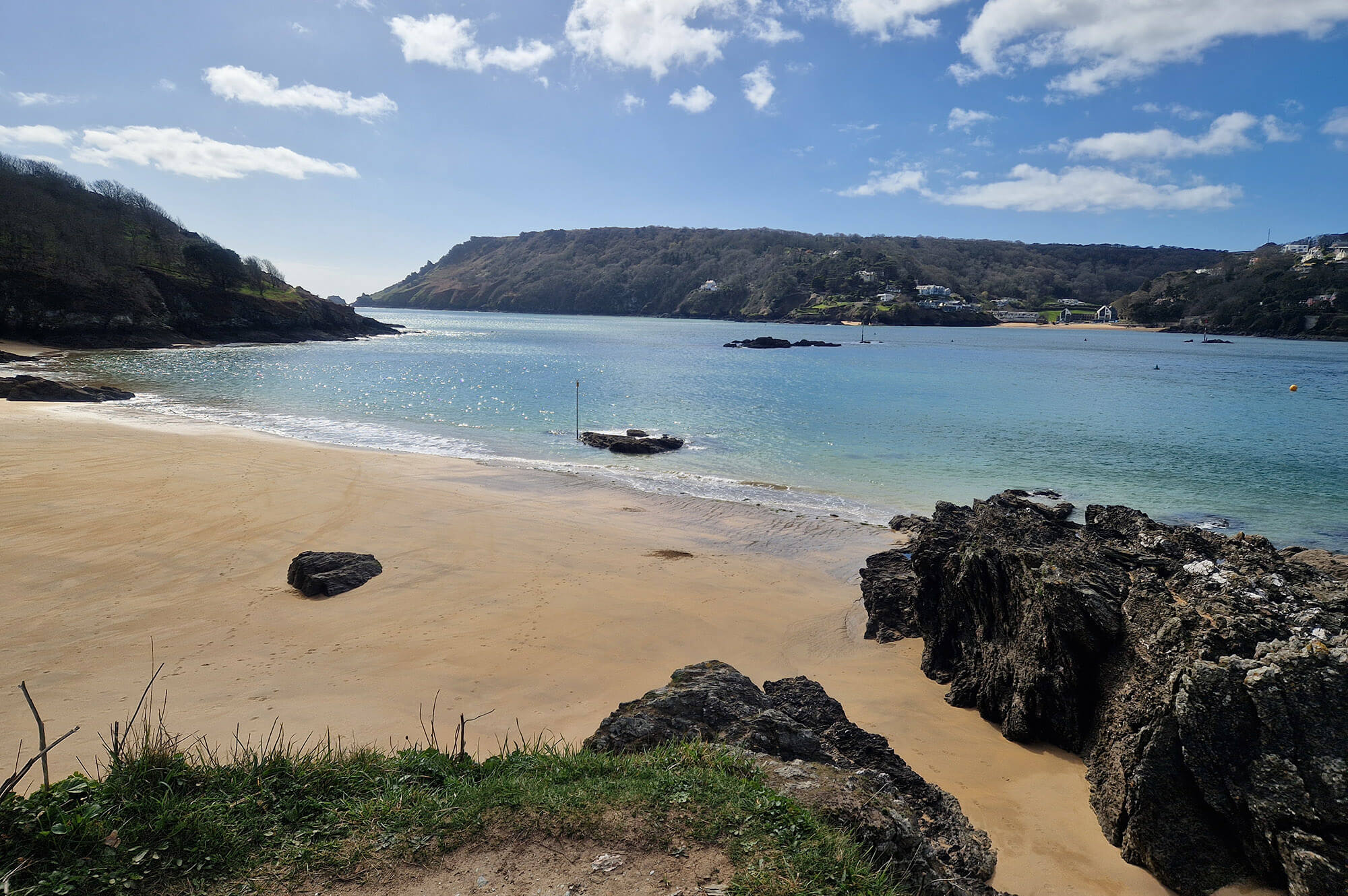
South West UK coastline
On Thursday 23rd April 2026 PML hosted the 19th South West Marine Ecosystems Annual Conference, which saw over 100 experts and enthusiasts come together to explore the changes being seen in the waters of the south west of England. The new format of part-conference/part workshop was unique in gathering so many different marine stakeholders to help create a comprehensive view of an entire marine ecosystem of a particular region.
The topics spanned sea surface to seabed, from oceanography right through to whales, with over 30 long time-series data from a very active network, including research institutes, charities and citizen-science projects.
The event started with a thorough review of over 35 major marine ecosystem changes that have taken place in the south-west over the 20th & 21st centuries. This covered oceanography as well as bacteria up to apex predators, and included gradual change, rapid system-shifts and periodic exceptional events.
The plenary presentation involved contributions from over 20 different experts, including five scientists from PML. This was followed by a detailed discussion of the points that arose, delving into climatic and more abrupt human causes, and linking multiple time-series data spanning all major components of the food web..
The main themes that emerged from the presentations were:
- Climate and oceanographic interactions and their effect on plankton, food webs and forage fish.
- Recent major changes to key species
- Diseases
- Recovery and restoration
- Human impacts: fishing and non-native species
- Human impacts: pollution – Tributyltin (TBT), oil, ocean acidification and plastics
PML’s Director or Science, Prof. Tim Smyth, provided information on the marine heatwaves that have been recorded in the English Channel for the last 3 years (2023, 2024 & 2025). These have been caused by long periods of strong sunshine and reduced windspeed over spring and summer, and milder temperatures during autumn and winter.
Prof. Angus Atkinson MBE, Senior Marine Ecologist at PML, presented a recent in-depth analysis of plankton data, from the L4 timeseries, for the last 30 years. The analysis revealed that there has been a decrease in summer phytoplankton, which is a sign of long-term warming, and the summer phytoplankton biomass has halved in 20 years. The data also shows an increasing dominance of small plankton, meroplankton and gelatinous filter feeders.
These changes raise questions about whether this altered base of the food web is still able to support fish, and if these changes representant a smooth decline or an abrupt regime shift.
Other interesting topics included: the increase in extreme storm events and associated impacts; the recent collapse of herring stock; overall increase in biomass of sardine, anchovy and sprat; the impact of plankton change on fish spawning success; the return of Atlantic Bluefin tuna; octopus blooms; disease in pink sea fans, sea grass, sea urchins and native oysters; the return of blue, thresher and porbeagle sharks, and the decline of mako sharks.
Each year the South West Marine Ecosystem programme produce an Annual Report on the past year’s observations, set in the context of longer-term changes. These include detailed chapters on oceanography and storms, plankton, the seashore and seabed, fish and turtles, coastal birds, seals, whales, dolphins and porpoises. Management chapters include fisheries, marine planning, marine protected areas, water pollution and plastics pollution, and this years’ edition will be published in Summer 2026.
Dr Bob Earll, Director of the South-West Marine Ecosystem (SWME) programme and conference organiser since 2008, said:
“The SWME Annual Conference is the highlight of my year, and for good reason. For over a decade, it has been the only event of its kind in the UK, uniting such a diverse range of regional marine stakeholders to share their knowledge, expertise and lived experience. The enthusiasm and generosity of everyone who gives their time to contribute never ceases to inspire our team. Over the coming months, we will bring all of that invaluable intelligence together into a comprehensive report on the state of the South West’s marine environment; a resource that truly reflects the collective understanding of our region’s coast and seas.”
Prof. Angus Atkinson MBE, Senior Marine Ecologist at PML and member of the Organising Committee for the SWME conference, commented:
“I thought the new experimental workshop format of the SWME was great and the highlight for me was the interactive horizon scan at the end. Based on the attendee list there were over 50 institutes/interest groups represented so the structured polling of over 100 people was a great way to gauge the wider feeling on the emerging human and environmental challenges facing the marine ecosystems of the South West UK.”
Dr Karen Tait, Microbial Ecologist at PML and attendee of the conference, remarked:
“The SWME annual conference is always a highlight. This year felt different: collectively, we presented evidence suggesting a widespread ecosystem regime shift over the past decade, moving away from long-term cyclical change and potentially signalling climate change impacts. The scientific focus now is on understanding this abrupt shift. A key takeaway from yesterday was the vital role of citizen science in helping document these changes. One quote that stayed with me: a Japanese proverb “If you want to catch a fish, plant a tree” a powerful reminder of how our native forests nourish estuarine and marine ecosystems.”
Bryony Squires, Plankton Apprentice at PML and attendee, added:
“Always an interesting day, chatted to so many people. I always love meeting and hearing presentations from people doing so many different things, but all because they have a passion for a particular species or area and they want to make a positive impact in some way. I enjoyed the new layout of the day, it meant we got to hear more people speak and gain a broader view of our SWME.”
Yann Caignec, Marine Heatwave Intern at PML and attendee, concluded:
“My favourite parts were the biologist information on the South-West habitats, as I have just arrived in the region so it was a great update for me. The part on the future expectations with a modelling point of view was very interesting too. During the discussion I found that the more important thing is how to communicate to non-scientific people and governments. In my opinion, it’s important to include people at the beginning of a conservation project to facilitate the social acceptance. Huge thanks for the event!”