Story | 05 June 2026
Five years of Marine Research Plymouth Alliance: driving global impact from the UK
This five–year anniversary underscores the strength and longevity of the partnership and its growing impact on both regional and international stages; demonstrating the power of collaboration in tackling some of the biggest challenges facing our ocean – discover what we’ve achieved together in that time.
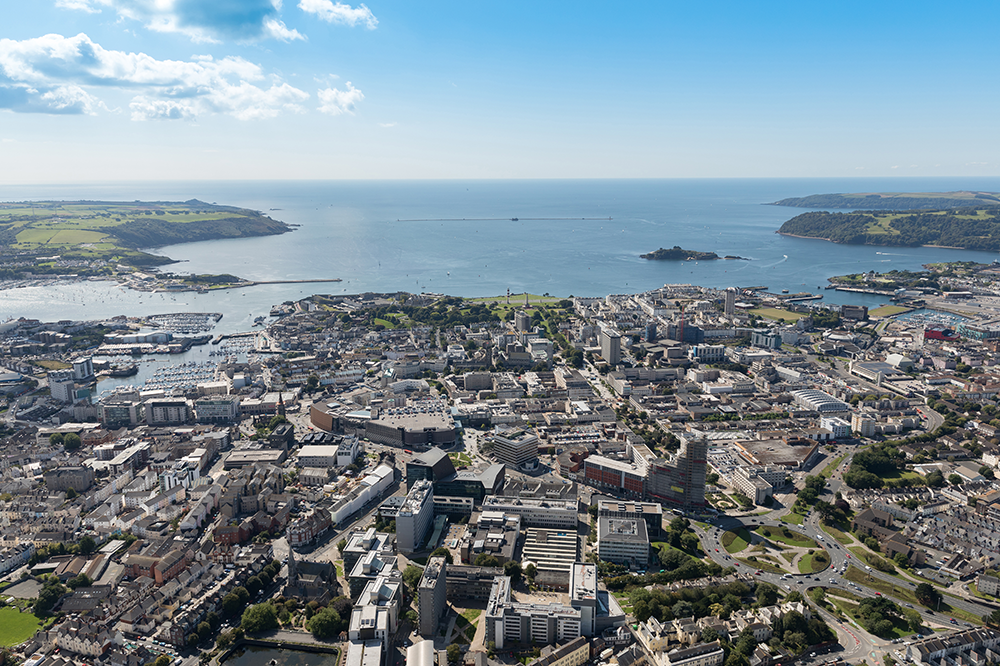
Bringing together the internationally renowned expertise of Plymouth Marine Laboratory (PML), the Marine Biological Association (MBA), and the University of Plymouth (UoP), the Alliance represents a unique concentration of scientific excellence.
Individually, each organisation has shaped our understanding of the ocean; collectively, they form the largest concentration of marine researchers in any UK city and a leading centre for cutting-edge science, innovation, and real-world solutions.
The Alliance was founded in 2021 with a shared vision: to harness the strength of the UK’s largest cluster of marine researchers and world-class facilities to deliver science for a sustainable future. This builds on a long-standing legacy of impact of Plymouth’s research – from a globally unique 123-year old marine timeseries – the longest near-continuous running in the world – of the ocean’s vital signs, to decades-long monitoring of plankton and pioneering work that first brought global attention to marine plastics and microplastics.
Over the five years of collaborating, Plymouth’s experts have been addressing some of the most pressing global challenges, from climate change and biodiversity loss to pollution and sustainable ocean management. Delivering impactful science, global leadership, and innovative solutions to pressing environmental challenges.
Who are we? Find out in this powerful new snapshot video of one of the world’s most significant clusters of marine research expertise:
Timeline: From groundbreaking science to global policy influence, here are some of the highlights from the Alliance’s first five years:
June 2021: The Marine Research Plymouth Alliance is founded on 8th June, World Ocean’s Day
October 2021: MRP holds its first ’Plymouth research dialogue series’, entitled: ‘What has the Ocean ever done for us?’. The research dialogue series are free seminars open for all to attend – to build a strong culture of communication and collaboration across the Plymouth marine science community.
November 2022: Research and policy experts from Plymouth actively participated in the UN Climate Change Meeting COP27 in Egypt.
October 2023: Plymouth scientists earn international accolade – the Blue Planet Prize for world-leading microplastics research
April 2024: UoP and PML launch the Global Ocean Artificial Light at Night Network (GOALANN) at the United Nations Ocean Decade Conference in Barcelona where the three MRP Alliance partners joint forces through various events and an exhibition stand.
September 2024: Researchers representing MRP contribute to the groundbreaking Plankton Manifesto – unveiled during the 79th session of the United Nations General Assembly in New York, emphasizing the critical importance of plankton in addressing the interlinked global crises of climate change, pollution, and biodiversity loss.
October 2024: MRP sees the beginning of two fully-funded PhD opportunities – with Stephanie Day, researching ‘How do organic nutrients sustain shelf sea productivity?’, and Amy Groundwater studying ‘Phytoplankton responses to Ocean Alkalinity Enhancement (OAE)’.
November 2024: MRP researchers secure funding for new projects to understand the impacts of floating wind farms on the marine environment.
January 2025: The artificial light pollution initiative founded by UoP and PML GOALANN is endorsed by the United Nations
January 2025: PML and the UoP bring the issue of artificial light pollution to Parliament
December 2025: MRP and colleagues release the groundbreaking octopus report, following investigations of the dramatic population bloom of the common octopus (Octopus vulgaris) witnessed off the southwest coast of the UK, which is having significant effects on fisheries and marine ecosystems.
February 2026: The three organisations come together for the 2026 Ocean Sciences Meeting (OSM) – one of the world’s largest gatherings of ocean scientists – showcasing Plymouth’s collective expertise through presentations, leadership roles, collaborative exhibits, and international partnerships.
May 2026: MRP researchers in the UK reveal how the distributions of two toxin-producing plankton groups linked to shellfish harvesting closures have shifted over the past six decades – with the changes closely aligned with climate-driven shifts in ocean conditions.
Plymouth Marine Laboratory’s Chief Executive, Professor Icarus Allen, said:
“Over the past five years, the Marine Research Plymouth Alliance has shown what is possible when world-leading organisations come together around a shared purpose. By combining our expertise, facilities and networks, we have been able to tackle complex ocean challenges that no single organisation could address alone. From climate change and biodiversity loss to sustainable ocean management, the Alliance has strengthened Plymouth’s position as a global centre for marine science and innovation.”
University of Plymouth, Deputy Vice-Chancellor, Research and Innovation, Professor Kevin Jones added:
“There are many places called Plymouth around the world, but ours is the original and – more importantly – ours is the only one with a global reputation for excellence in marine sciences. Each of our organisations conducts world-leading research – including some brilliant collaborations – and the critical mass of our collective expertise is unsurpassed. Our Alliance brings our voices together to amplify them and ensure cutting-edge science informs policy and decision-making at local, national, and international scales. As challenges to our oceans continue to evolve, this is an important partnership that puts Plymouth’s excellence on the map.”
Marine Biological Association’s Chief Executive, Professor Willie Wilson, said:
“The Marine Research Plymouth Alliance brings together centuries of collective expertise in understanding our ocean. Over the past five years, the partnership has enabled us to connect fundamental marine research with real-world impact, helping to improve our understanding of marine ecosystems while supporting solutions that benefit both people and the planet. We are proud of what has been achieved together and excited about the opportunities that lie ahead.”
Five years on from its formation, the Marine Research Plymouth Alliance continues to go from strength to strength, demonstrating the power of bringing together expertise across disciplines, institutions, and sectors. As the challenges facing our ocean grow ever more complex, the Alliance remains steadfast in its commitment to advancing world-leading marine science, informing evidence-based solutions, and contributing to a more sustainable future for our ocean—and the communities that depend on it.
Further info: http://www.marineresearchplymouth.ac.uk