Story | 05 June 2026
PML announces new Head of Group for Environmental Intelligence
It was announced this week that Dr James Clark has been appointed Head of Group for Environmental Intelligence at Plymouth Marine Laboratory.
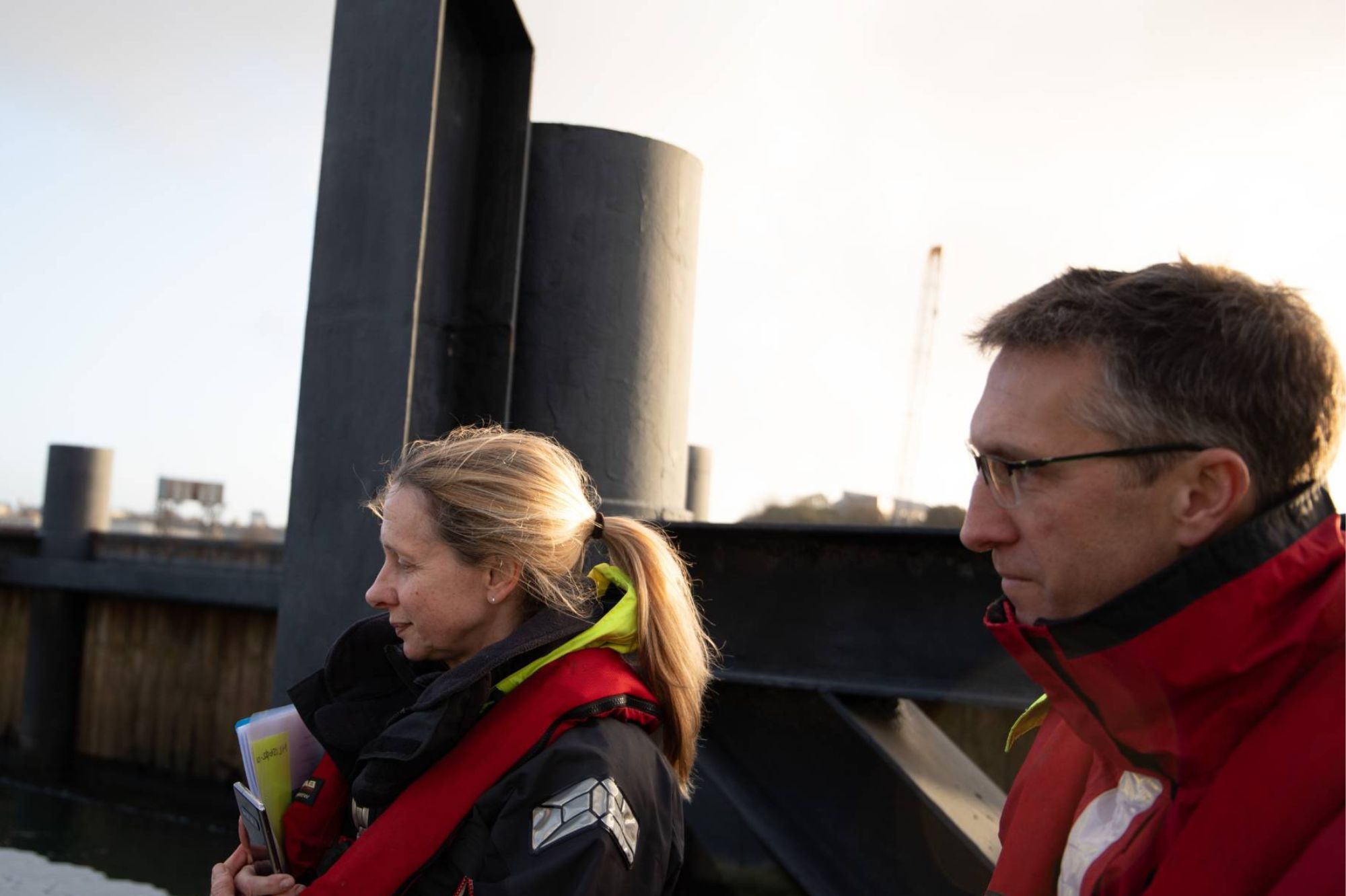
The Environmental Intelligence group brings together cutting-edge marine ecosystem modelling, marine autonomy, artificial intelligence and machine learning to deepen understanding of the ocean in a time of rapid environmental change.
By transforming complex and fast-evolving marine data into trusted, actionable intelligence, the team provides the evidence needed to support urgent decisions that help protect marine ecosystems and safeguard ocean health.
The new appointment was announced this week by Professor Tim Smyth, PML’s Director of Science, who congratulated Dr Clark on his new role, and said:
“Jim brings a wealth of scientific expertise, leadership experience and a strong track record of innovation across ecosystem modelling, environmental forecasting, artificial intelligence and ocean observations. Over the past decade, he has made significant contributions to PML’s science, leading pioneering research and developing new approaches that help us better understand and predict changes in the marine environment.”
“As environmental intelligence becomes increasingly important in addressing global environmental challenges, Jim’s interdisciplinary expertise, strategic vision and collaborative approach make him exceptionally well placed to lead the group into its next chapter.”
“…exceptionally well placed to lead the group”
Dr James Clark – who is affectionately known as ‘Jim’ at the laboratory – joined the laboratory in 2013 as a Marine Ecosystems Modeller.
Originally trained in astrophysics, Jim was drawn to environmental science by the opportunity to tackle some of society’s most important scientific questions.
Combining expertise in physics, biology and computing, Jim has built a research career at the intersection of data science and marine science, using big data and cutting-edge modelling approaches to reveal how ocean ecosystems function and respond to change.
Over the past 13 years at PML, his multidisciplinary research has spanned areas including; ecosystem modelling, marine pollution, ocean observations and environmental forecasting, and the application of artificial intelligence to environmental science.
Among his many interests, Jim is a keen developer of open-source scientific software and has made significant contributions to the development of multiple packages, including the European Regional Seas Ecosystem Model (ERSEM) and PyLag.
Both are widely used by the international research community and have supported multiple published studies, including investigations into the impact of climate change in regional seas, and the movement and fate of plastic in the ocean. Such work has helped advance the use of computer models to better understand and predict changes in marine systems.
Providing the data needed to tackle the plastic crisis
Jim is an internationally recognised expert in marine plastic pollution, leading the way in the development of cutting-edge ocean modelling techniques to track the movement of plastic through the marine environment and predict where it may accumulate under the influence of currents, winds and other environmental factors.
His early collaborative work on the impact of microplastics on marine invertebrates, and the role these organisms play in redistributing microplastic in the ocean, informed UK legislation banning the use of microplastic beads in wash-off cosmetics.
More recently, he has worked with social scientists and economists to better understand the social and economic costs of marine plastic pollution, including the conditions under which countries are incentivised to reduce plastic inputs into the ocean.
Building on this interdisciplinary approach, he led a landmark study combining ocean circulation modelling with economic analysis to explore how marine plastic moves between countries and how coordinated international action could help address the problem.
The study further demonstrated that pollution is a genuinely transboundary issue, meaning one country’s pollution can significantly affect others’ waters.
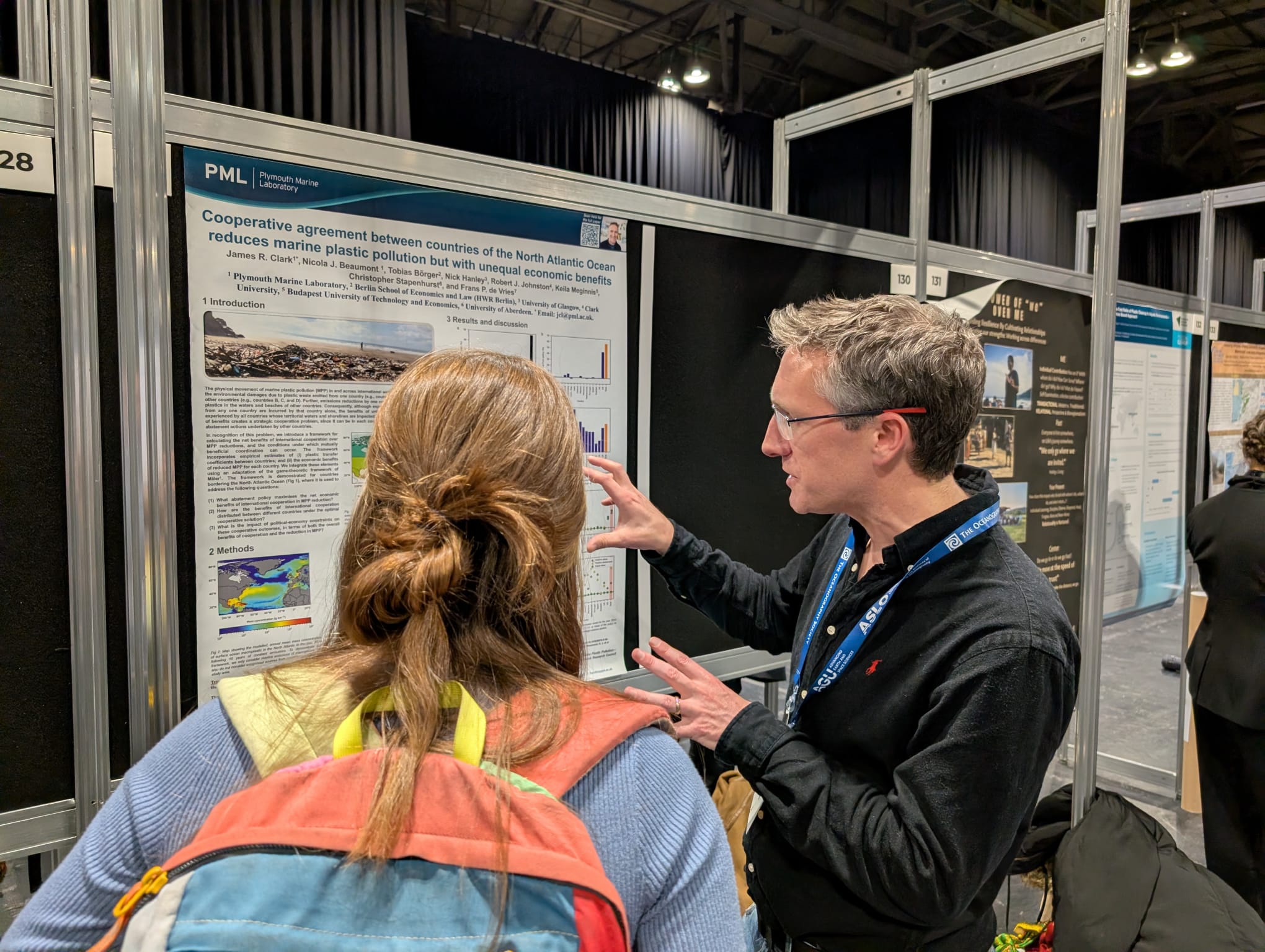
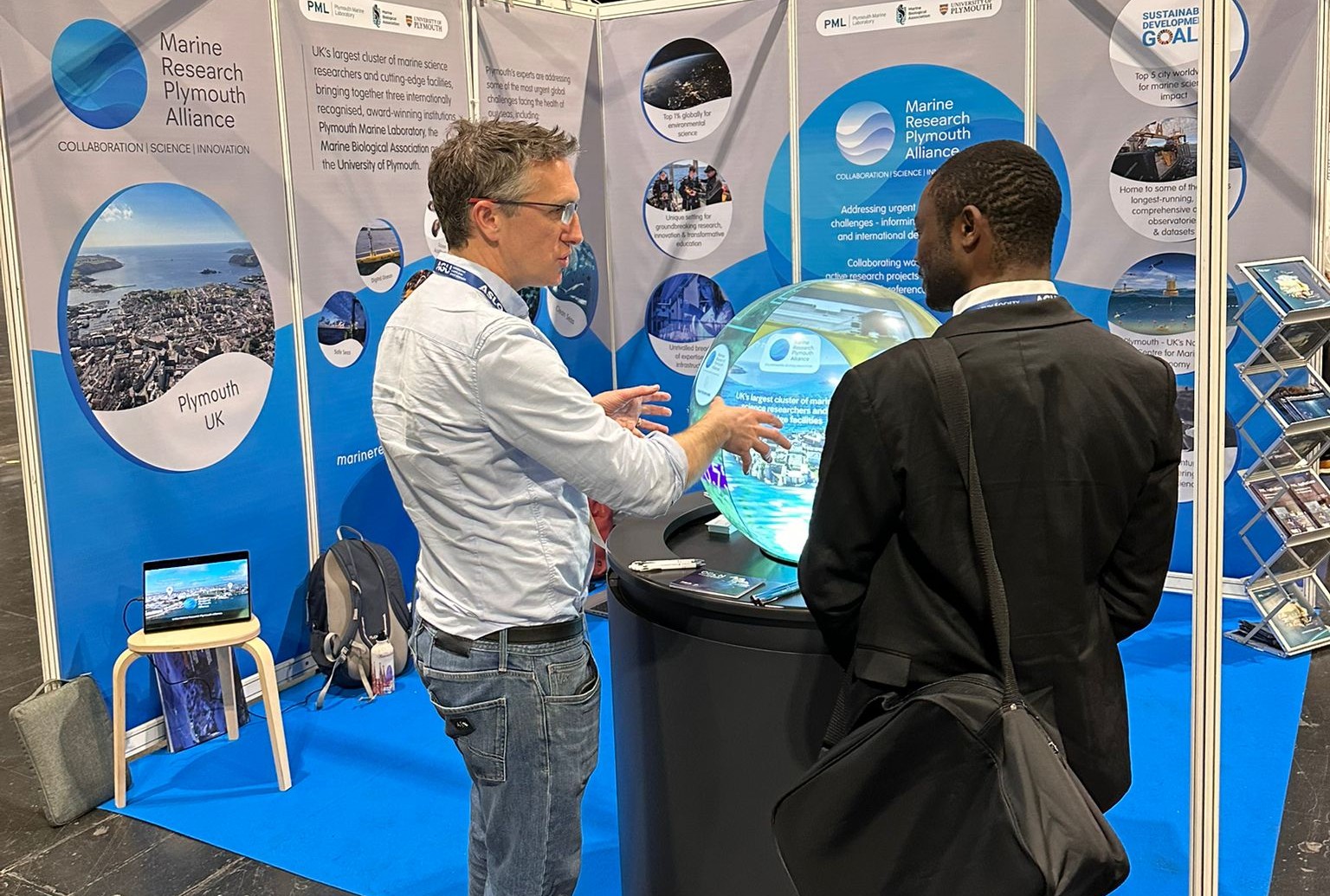
Image above: Dr Clark discussing his latest paper at the Ocean Sciences Meeting earlier this year, one of the world’s largest gatherings of ocean scientists, and image below, also taken at the Ocean Sciences Meeting.
He has also played a leading role at major international events, highlighting how emerging technologies and environmental observations can be integrated to develop solutions to plastic pollution, using science to strengthen policy and decision-making.
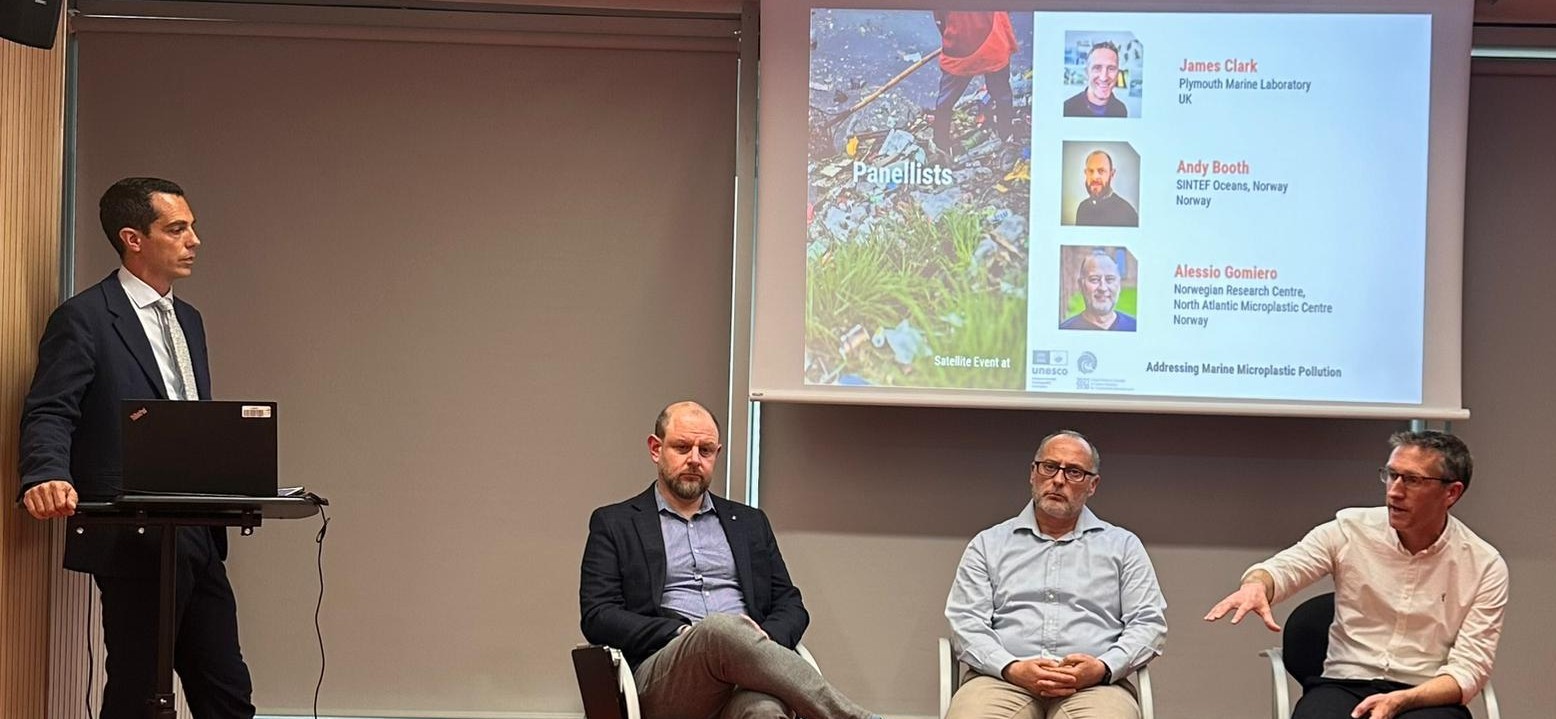
Image: Dr Clark (far right) speaking at the UN Ocean Decade Conference in Barcelona, regarding the complex issue of microplastics, which he has studied since 2014. During the conference he stated: “Microplastics are an incredible complex and challenging area of research. They can be hard to detect and it is often difficult to stop them entering the environment. Technology and innovation have a key role to play as we look for better mechanisms to stem the issue.” Read more, ‘How do we address the complex issue of microplastic pollution?’, here >>
At a critical juncture in the plastics treaty negotiations, Jim spoke at the Economist Impact’s Global Plastics Summit on the growing issue of plastic pollution for Small Island Developing States. He also developed clear, actionable proposals to help inform UN discussions on this growing global issue.
Small Island Developing States are disproportionately affected by “legacy” plastic pollution, where waste originating in other countries is transported by ocean currents and accumulates on their shores, with serious consequences for both local environments and economies.

Image: Dr Jim Clark (right) pictured with colleague Professor Richard Thompson of the University of Plymouth, at the Economist Impact’s Global Plastics Summit. Read more, ‘What happened at the Global Plastics Summit?’ >>
Artificial intelligence and ‘Big Data’
As a Senior Scientist at the laboratory, Jim has led and contributed to a wide range of projects that sit at the forefront of environmental intelligence.
Jim’s priority focus in recent years has been harnessing the power of AI and machine learning to understand how human activities are changing our ocean – and what that means for the ecosystems that depend on it.
Jim is the project lead for PML’s Automated Plankton Imaging and Classification System (APICS), which uses advanced autonomous sampling and imaging of plankton, and an autonomous classifier, to transform plankton monitoring.
Plankton underpin marine food webs and, despite their small size, ultimately support all life in the ocean. They are also key indicators of ecosystem change, and vital for us to monitor, now more than ever in a rapidly changing ocean.
Deployed in situ at PML’s L4 coastal station in the western English Channel – about six nautical miles south of Plymouth – APICS enables continuous, autonomous sampling and high-resolution imaging of plankton, never before possible through manual sampling.
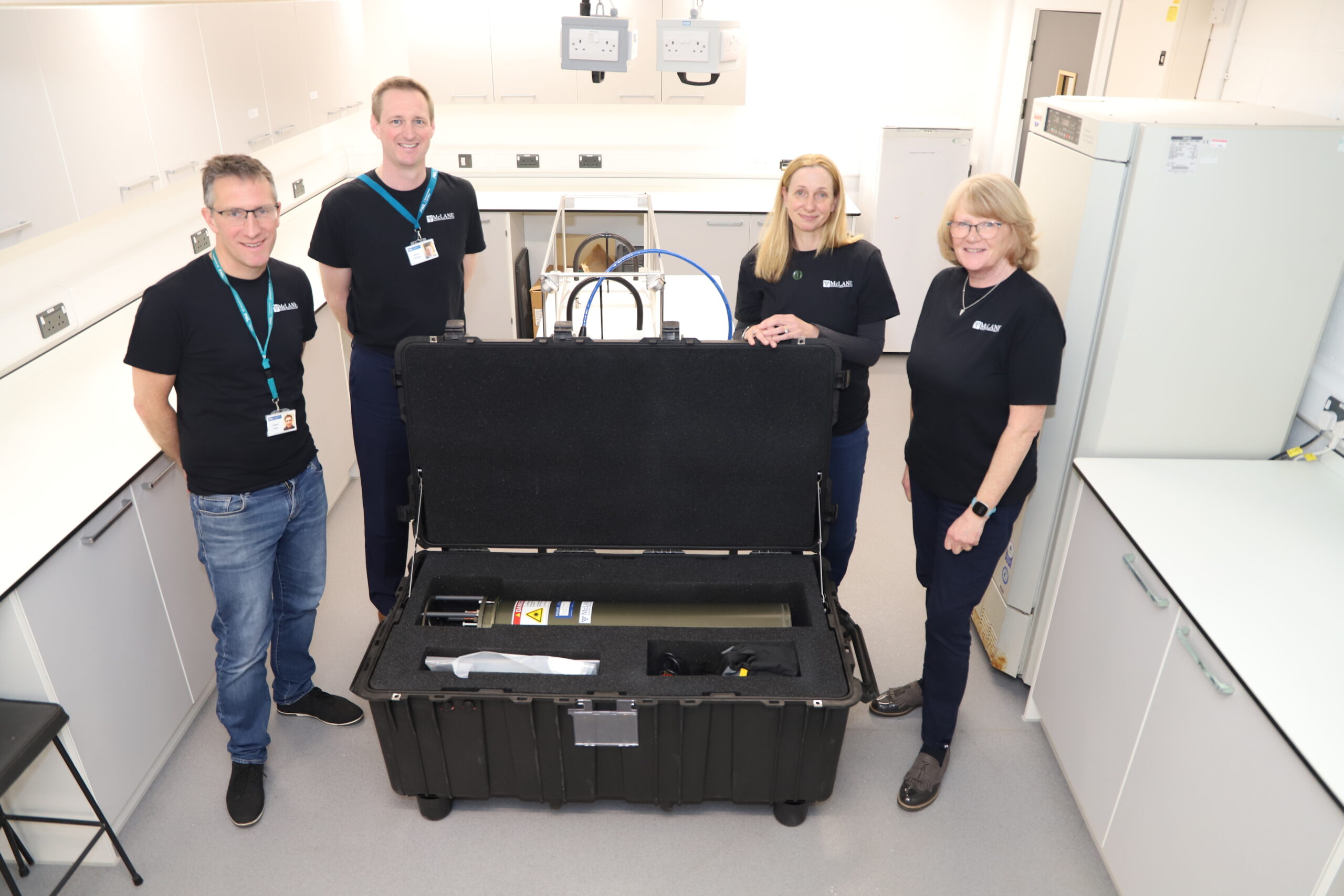
Image: (From left to right) Dr Clark pictured with the APICS team: Prof James Fishwick, Claire Widdicombe and Elaine Fileman alongside the Imaging FlowCytobot, which can autonomously generate millions of images of plankton directly from the ocean.
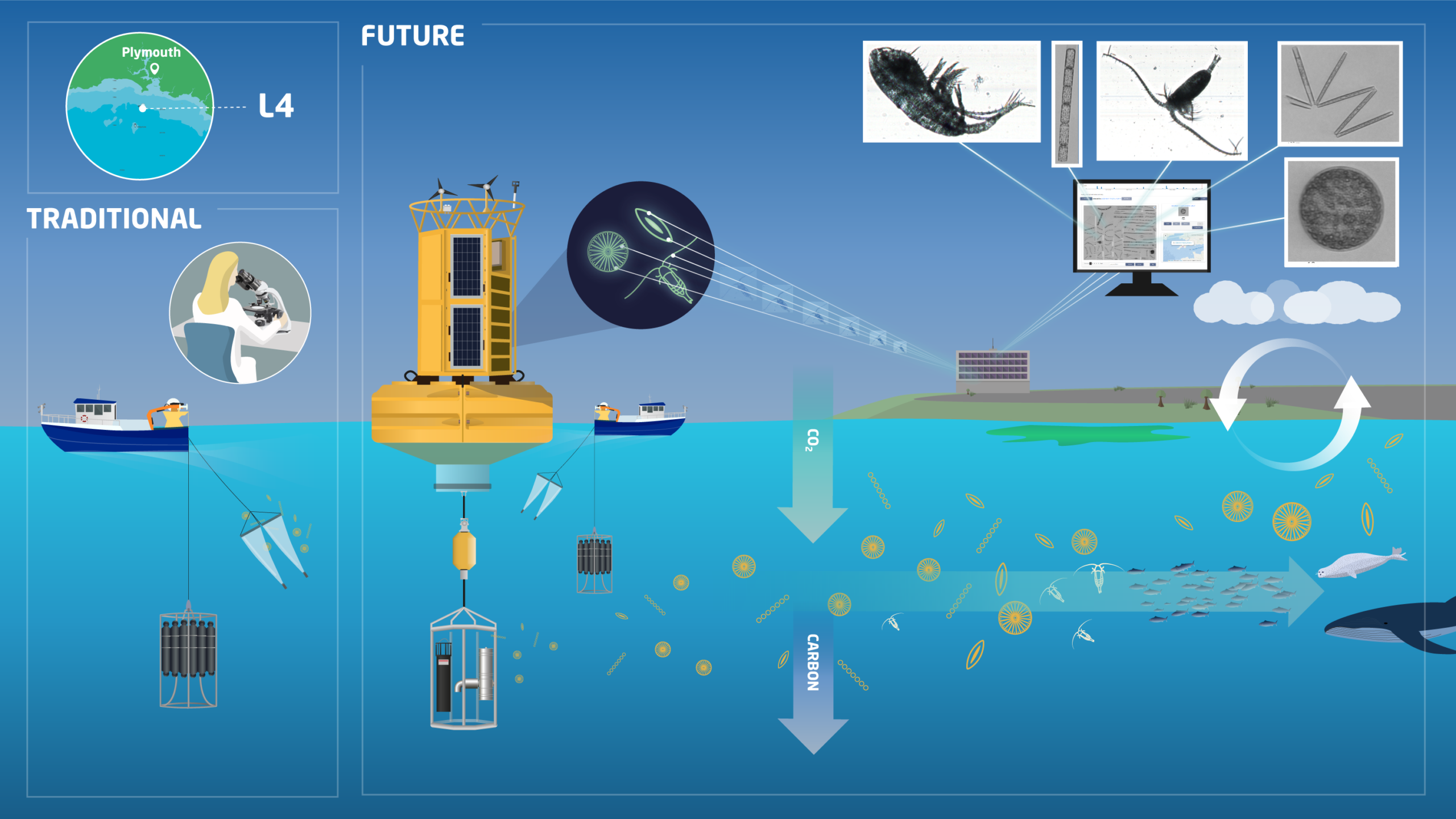
Image: Graphical illustration of the APICS technology.
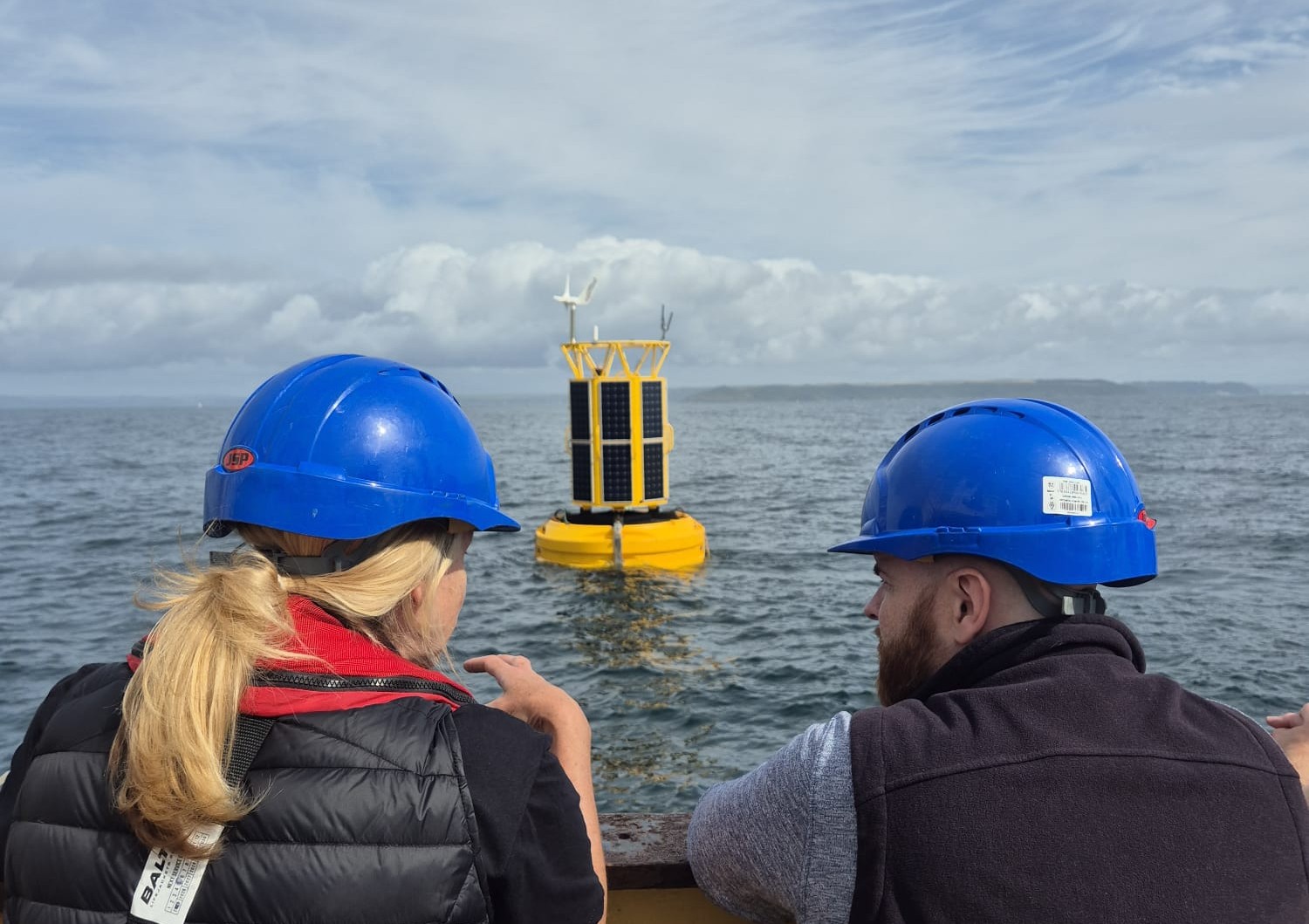
Image: The APICS buoy has been deployed at PML’s L4 monitoring station about 6 nautical miles south of Plymouth. It hosts two automated plankton imaging instruments that will allow scientists to monitor plankton from 10microns (0.01mm) to 10mm continuously. Images will be forwarded directly to our laboratory via an advanced high-speed communications network and automatically classified using associated machine learning software.
The project is generating unprecedented volumes of data, creating new opportunities to understand marine ecosystem dynamics and demonstrating the growing importance of environmental intelligence in ocean science.
Following the success of APICS, Jim secured further funding to lead the DEAL project (DEcentrAlised Learning for automated image analysis and biodiversity monitoring).
Marine biodiversity remains under-observed, with many monitoring methods still dependent on infrequent and costly ship-based sampling. DEAL aims to change that – by developing a decentralised, collaborative network to enable data owners to work together to build better, more accurate image classification systems. If successful, the approach could help unlock the full potential of marine imaging systems and support operational biodiversity monitoring at unprecedented scales.
Advancing the Copernicus Marine Service
Jim is also a core member of the New Copernicus Capability for Trophic Ocean Networks (NECCTON) project, which is co-funded Horizon Europe and Innovate UK.
NECCTON is designed to support the delivery of products that inform marine biodiversity conservation and food resources management, by fusing innovative ocean ecosystem models and new data. Find out more about the NECCTON project here >>
Jim is PML’s Principle Investigator for NECCTON and is overall lead of WP5 – Improving capability in lower trophic level modelling. WP5 comprises representatives from nine institutes across Europe, including researchers from all Copernicus Marine Service Operational Forecasting Centres. Under Jim’s leadership, the NECCTON WP5 team have developed a new set of products for the Copernicus Marine Service, which facilitate making improved links to Higher Trophic Levels models of fish and marine mammals.
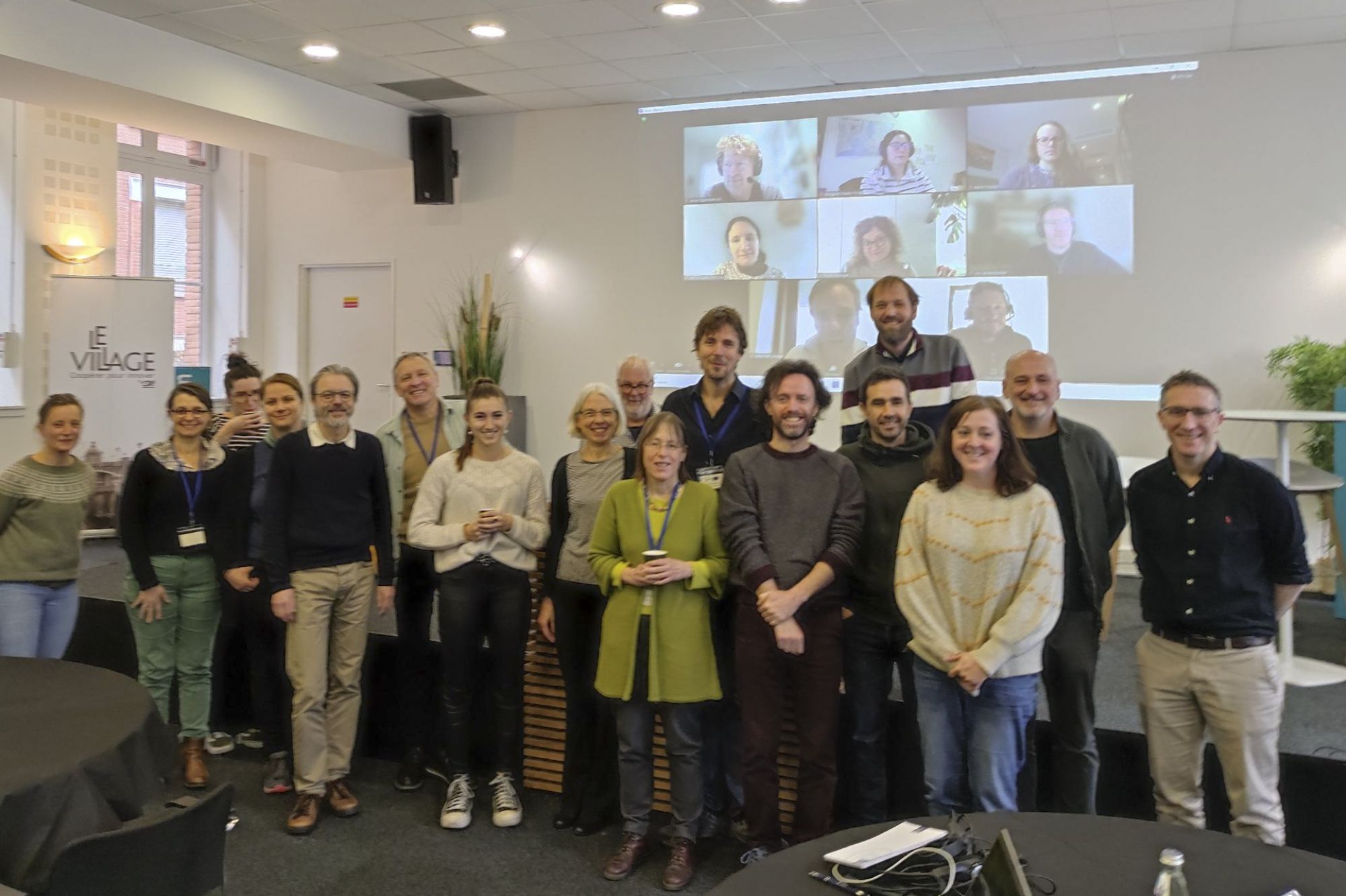
Image: Jim pictured with NECCTON colleagues for the launch of the project in Toulouse, February 2023.
The role of Head of Group: Environmental Intelligence
As Head of Group for Environmental Intelligence, Jim will lead a team working across environmental forecasting, ecosystem modelling, artificial intelligence, Earth observation and marine data science, helping to ensure that PML continues to deliver the scientific insight needed to address some of the world’s most pressing environmental challenges.
Reflecting on his appointment, Jim said:
“I am really excited by the opportunity to shape the future direction of the Environmental Intelligence group at PML. The team has an enormous amount of talent. I will be looking to harness that; to build stronger links between our team, external collaborators and funders; and to ensure our work is making a meaningful difference.”
Professor Tim Smyth, Director of Science at PML, added:
“I am looking forward to working closely with Jim as we continue to strengthen PML’s scientific excellence, grow our impact and deliver the innovative science needed to support a sustainable future for our ocean and planet. I am sure colleagues across PML will join me in congratulating Jim and in offering him their full support in his new role.”
Jim succeeds Prof. Matthew Palmer, who leaves PML this month to take up a new position at the University of Plymouth, we wish him all the best in his new role and look forward to continuing the collaboration.