Story | 30 June 2026
RESEARCH CRUISE: PML scientists chase mystery ocean gases cooling and "cleaning" our planet
As the need to understand our climate – and our future climate – becomes increasingly urgent, PML scientists set sail on a major research expedition to investigate how climate-active gases released from the ocean regulate our climate and cool our planet.
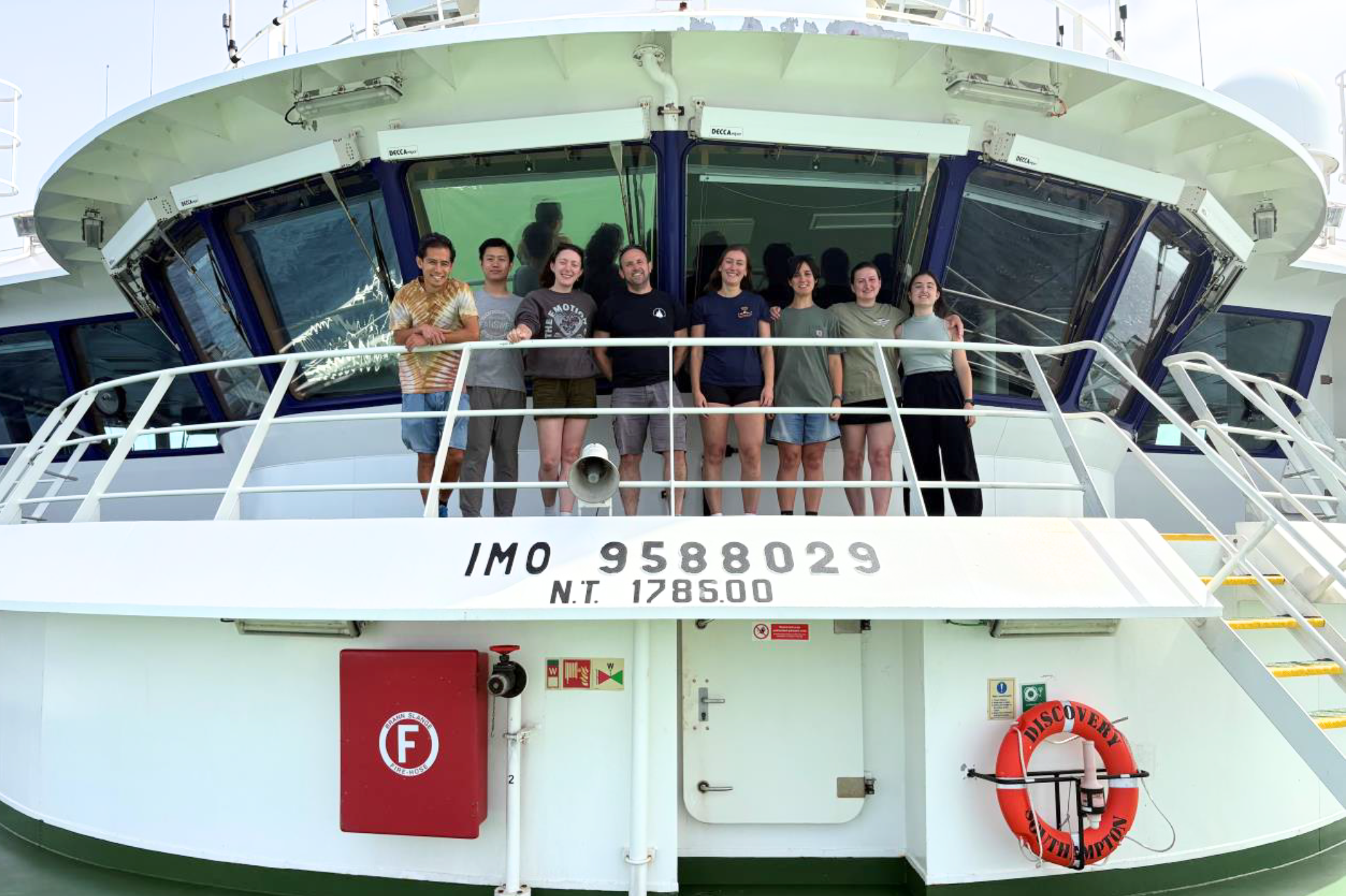
Image: PML’s team onboard the RRS Discovery – from left to right, Dr Ming-Xi Yang, Dr Zhen Zhou, Dr Frances Hopkins, Professor Tom Bell, Dr Loren Temple, Isabelle Whitehill, Charis Heaven, Irene Monreal-Campos.
The expedition, hosted on board the RRS Discovery, brings together researchers from across the UK and internationally as part of two major Natural Environment Research Council (NERC)-funded projects: COCO-VOC and CARES.
Together, these projects aim to improve understanding of how gases exchanged between the ocean and atmosphere influence key climate processes, which will improve climate models and help us better prepare for the future in a warming planet.
Researchers set sail from Southampton earlier this month, heading towards the subtropical upwelling region off Mauritania – a remarkable hotspot of ocean productivity. Here, seasonal trade winds drive cold, nutrient-rich waters from the deep to the surface, fuelling vast phytoplankton blooms that sustain extraordinary biodiversity.
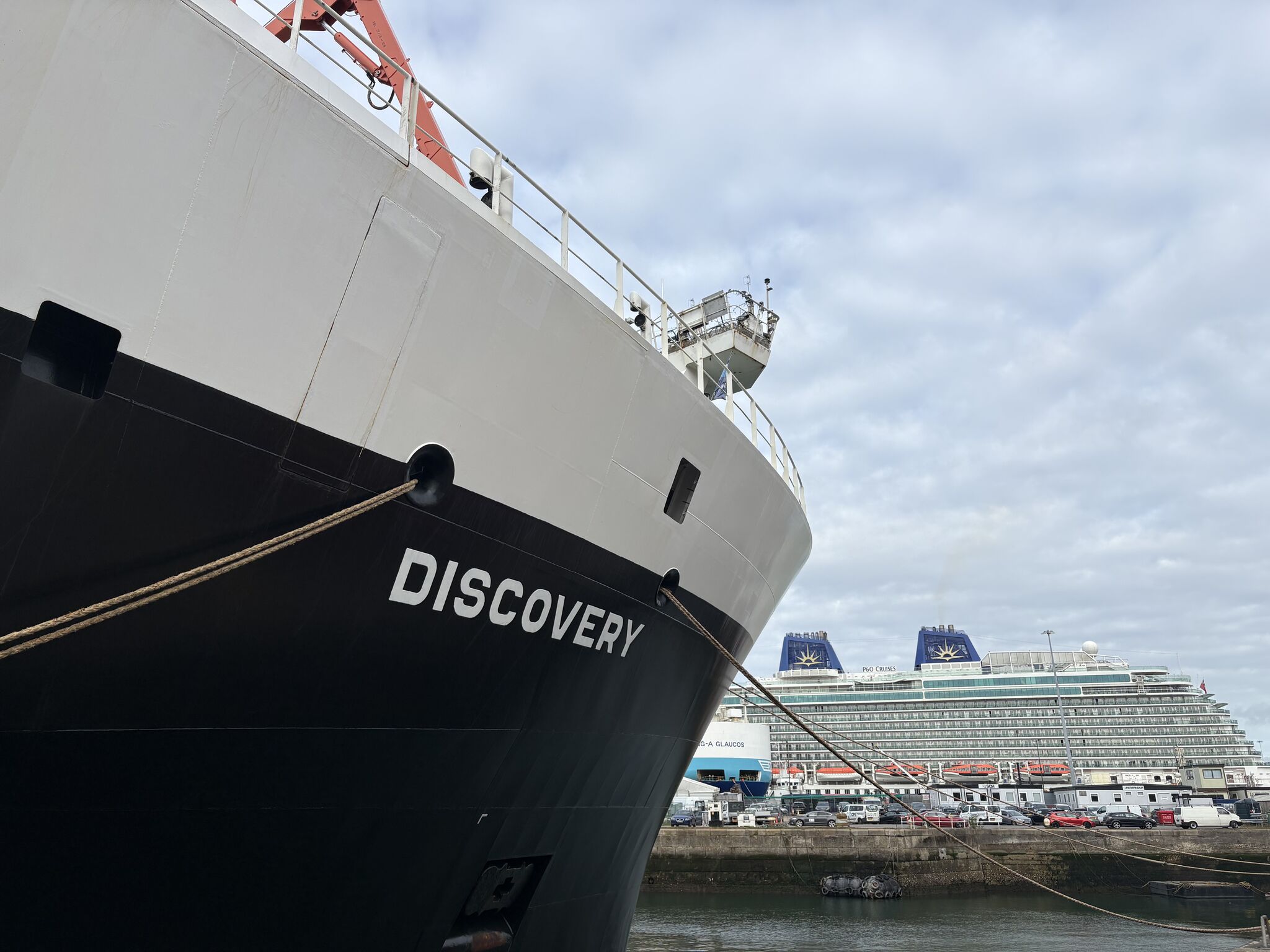
Image: Pictured docked in Southampton, the RRS Discovery is a 99-metre, state-of-the-art research vessel designed for work in remote and extreme ocean environments, equipped with advanced seabed mapping systems, powerful winches and cranes, and facilities for deploying autonomous and remotely operated vehicles.
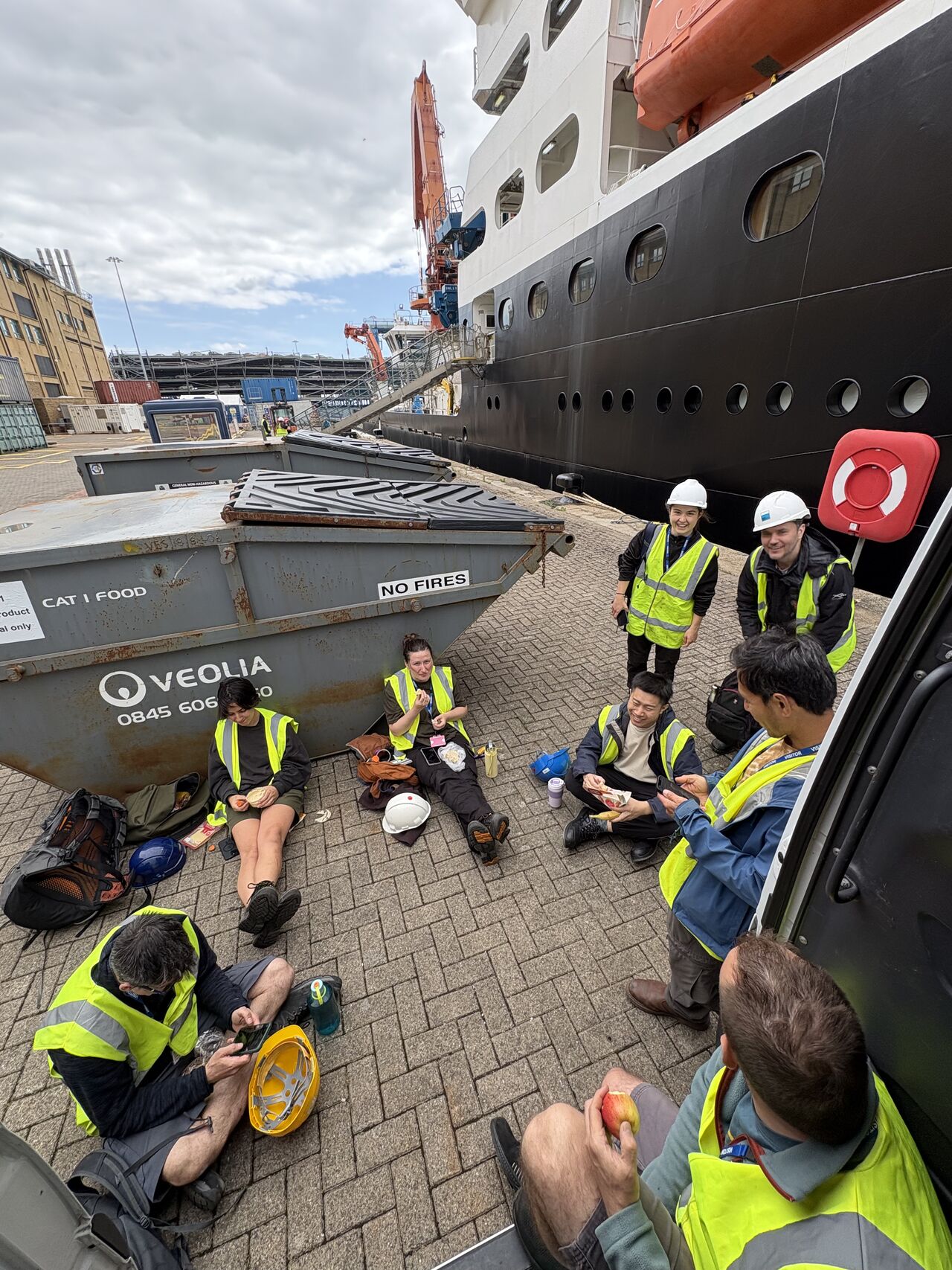
Image: “This was not in the scientist job description”: PML team and colleagues take a well-deserved rest after moving equipment on board the RRS Discovery. Dr Hopkins said: “The ship was full to the gunnels with cutting-edge analytical kit!”
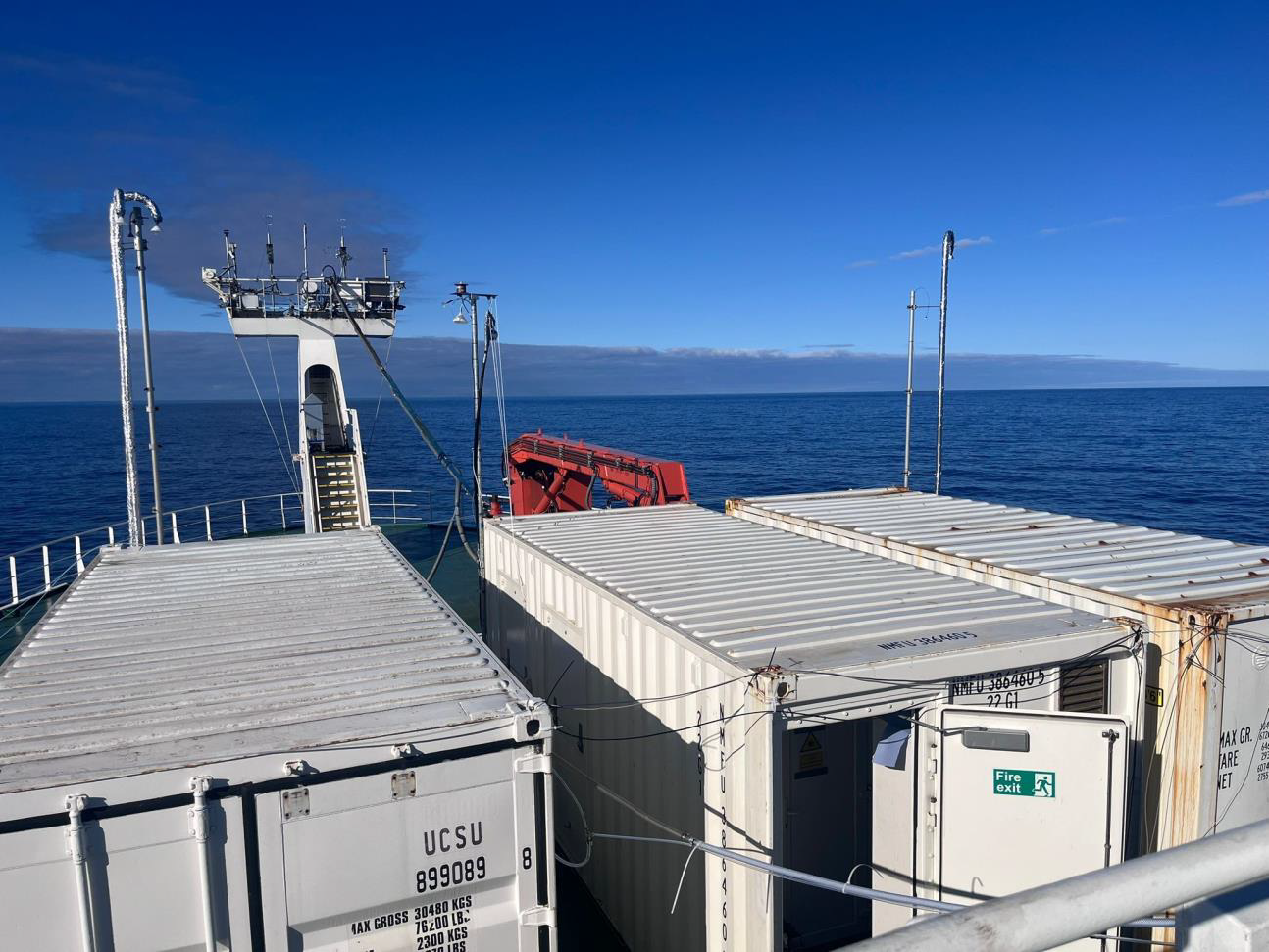
Image: Laboratory containers on the foredeck of RRS Discovery. These containers are fully loaded with an array of instruments, all continuously measuring the composition of the atmosphere, including both the gases and particles, as well as the reactivity of the atmosphere and oxidation products, providing scientists with a novel insight into the impacts of ocean emissions on the atmosphere in real-time.
Over several weeks at sea, the PML team – including Dr Ming-Xi Yang, Dr Frances Hopkins, Professor Tom Bell, Dr Loren Temple, Irene Monreal-Campos, Charis Heaven and Dr Zhen Zhou – alongside project colleagues, will collect detailed measurements from both the ocean and atmosphere.
The gases they are studying are largely invisible, but their influence is far-reaching. They help drive chemical reactions that remove pollutants from the atmosphere, contribute to cloud formation, and affect how the climate system functions. Yet scientists still have major gaps in their understanding of where these gases come from, how much the ocean releases, and how these processes may change in a warming world.
Read on to discover the mystery, and research, behind each project on this research cruise…
COCO-VOC
‘Closing the budget in marine atmospheric Oxidative Capacity through the quantification of Oceanic VOC emissions’ (COCO-VOC)
The COCO-VOC project is focused on volatile organic compounds (VOCs) – gases released naturally by marine organisms (but also through natural processes on land, and through human activities, too) that can influence atmospheric chemistry.
Did you know? Nearly half of the atmospheric oxidation of methane and other volatile organic compounds (VOCs) occurs over the global ocean.
These compounds contribute to the atmosphere’s ability to remove pollutants, affect cloud formation, and ultimately influence climate processes. However, scientists still do not fully understand where these gases originate, how much is released by the ocean, or how they vary across different marine environments.
COCO‑VOC will address this gap by combining cutting-edge field measurements taken along the Mauritanian upwelling, alongside laboratory studies and atmospheric modelling to quantify marine VOC emissions, track their transformation into aerosols, and assess their impact on atmospheric oxidative capacity, clouds, and climate.
By delivering a holistic understanding of reactive carbon cycling over the oceans, the project will significantly improve predictions of atmospheric chemistry, air quality, and climate – advancing efforts to better understand and protect the Earth’s environment.
Last year, the team also carried out the same measurements in the northeast Atlantic west of Ireland, where seasonal phytoplankton blooms provide a contrasting source of ocean-produced gases. By comparing this cooler, mid-latitude environment with the highly productive tropical waters near Cape Verde and Mauritania, scientists can better understand how ocean biology and changing conditions influence the release of climate-active gases across very different parts of the ocean.
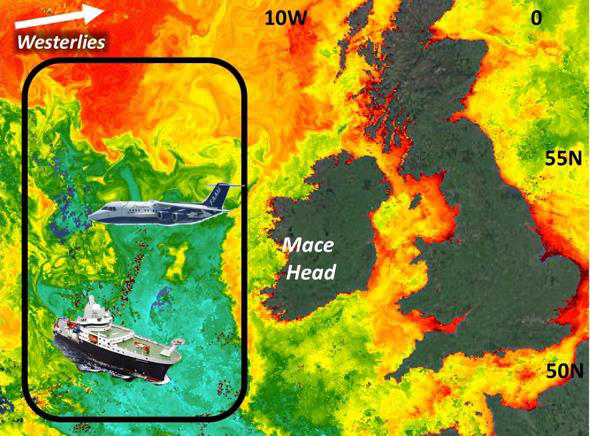
Map showing the fieldwork location off the West of Ireland taking place in May–June 2025.
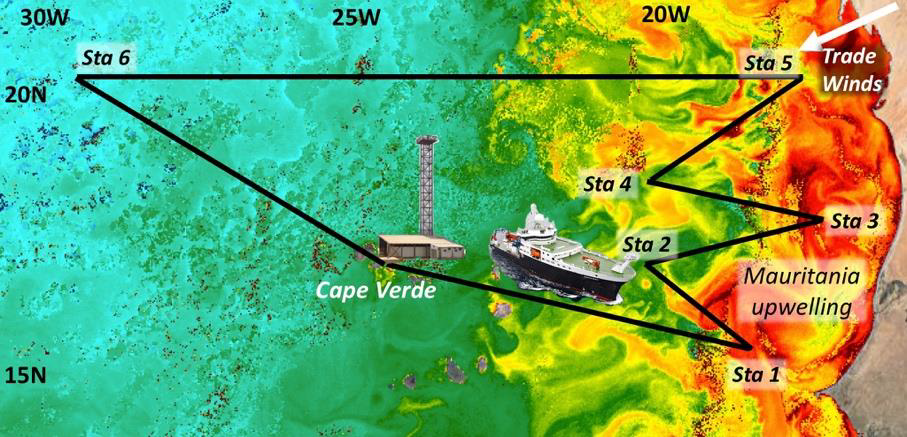
Map showing the fieldwork taking place in the subtropical upwelling region off Mauritania – June 2026.
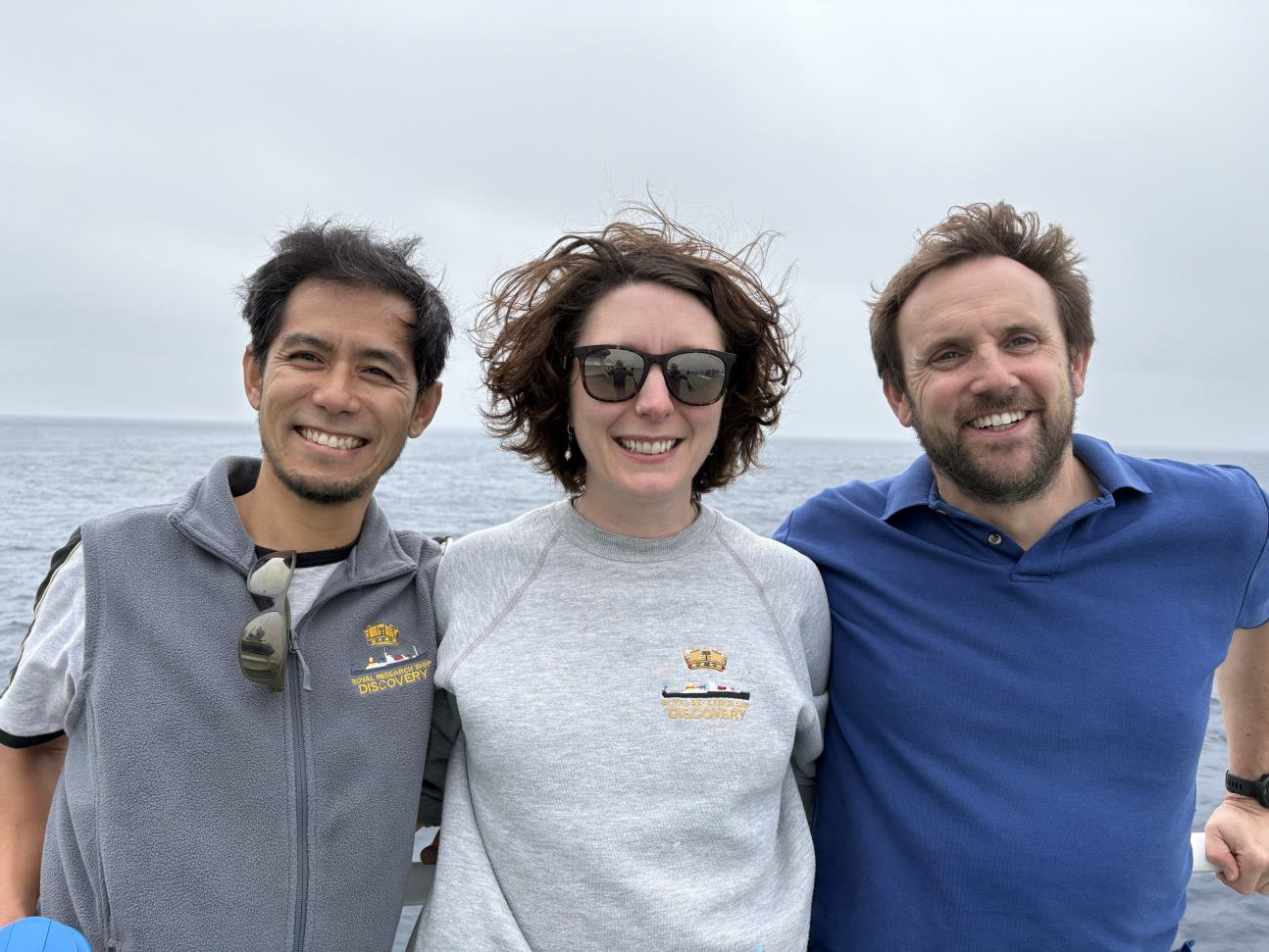
PML’s Dr Yang, Dr Hopkins and Prof Bell on the first COCO-VOC expedition last year.
COCO-VOC lead scientist, Dr Ming-Xi Yang, Chemical Oceanographer at PML, said:
“We know the ocean is a major source of gases that influence the atmosphere, but what’s still missing is a detailed understanding of how those emissions vary across different ocean systems. This expedition is about filling those gaps with direct measurements in some of the most important regions of the global ocean.”
CARES
‘ConstrAining the Role of the marine sulfur cycle in the Earth System’ (CARES)
Alongside COCO-VOC, the CARES project is investigating climate-active sulfur gases, including dimethyl sulfide (DMS) and methanethiol. These gases are produced by marine life, particularly microscopic organisms such as phytoplankton, and can influence atmospheric processes linked to cloud formation and climate regulation.
By combining observations from both projects, researchers hope to develop improved datasets that can be incorporated into climate models, helping to refine predictions of future climate change.
PML’s Dr Frances E. Hopkins, Marine Biogeochemist and DMS-expert, said:
“The ocean is a huge source of naturally produced gases that can have a surprisingly large impact on the atmosphere. These compounds are invisible, but they influence some of the processes that help shape our climate. Our goal is to better understand these connections and provide the data needed to represent them more accurately in models.”
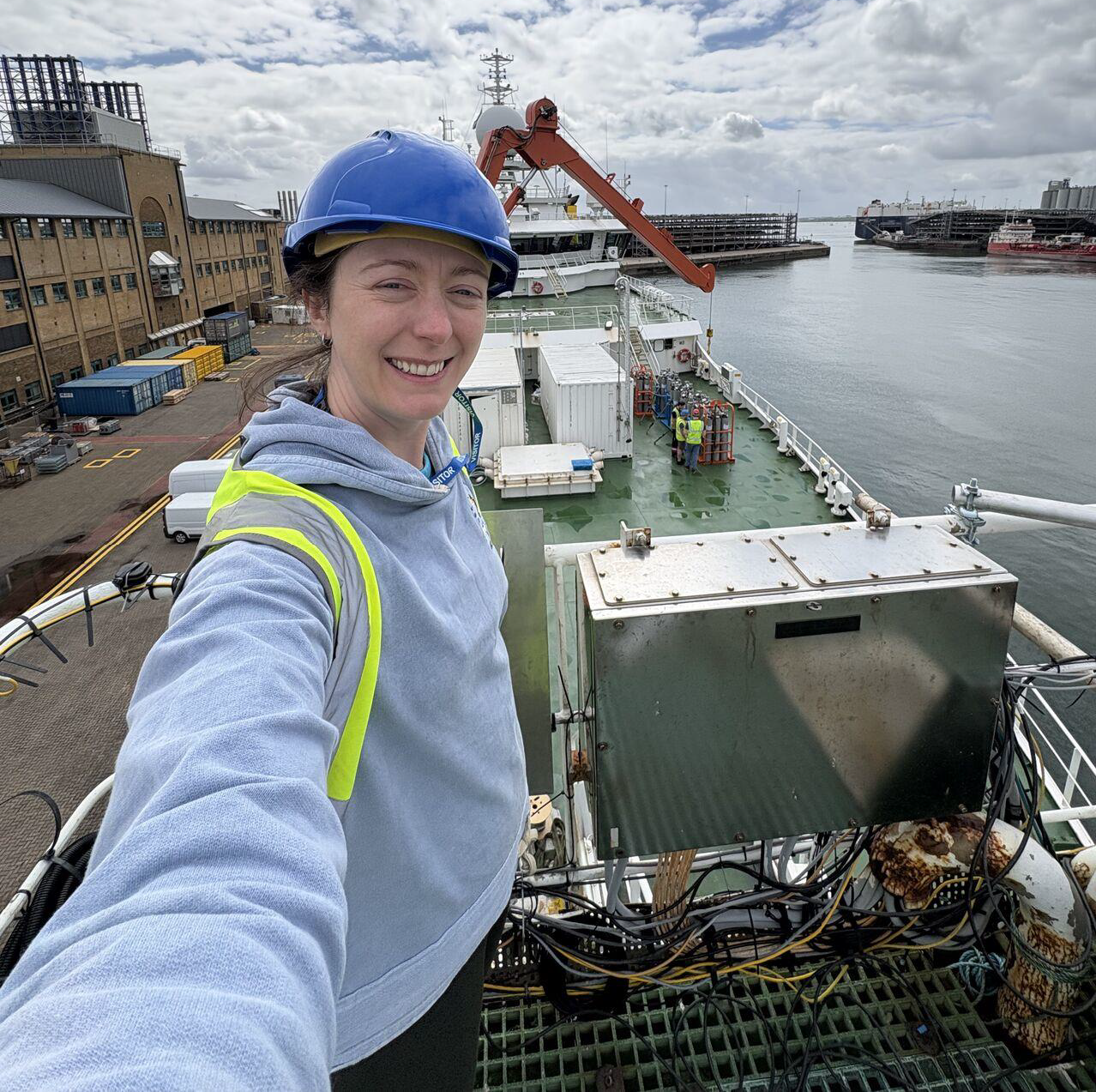
Image: Dr Hopkins on the foremast of the ship, where all of the inlets for sampling the atmosphere are located. This is also where PML’s ‘So-Rad’ sensors (Solar-tracking radiometry system) are installed – for hyperspectral measurements of Ocean Colour – installed by PML’s Dr Tom Jordan and Jani Pewter, working with Professor Stefan Simis.
Chasing blooms and sampling the ocean…
During the expedition, scientists are following changing ocean conditions – including areas where phytoplankton blooms occur – to investigate how biological activity influences gas production.
The team will use a suite of advanced equipment to collect measurements from both the ocean and atmosphere, including sampling the ocean’s surface “skin”, collecting seawater at different depths using CTD (Conductivity, Temperature and Depth) instruments, and even launching ‘weather balloons’. The vessel also has a wide range of specialist analytical equipment, allowing scientists to carry out laboratory experiments on board.
Early in the voyage, the team deployed biogeochemical Argo floats on behalf of Woods Hole Oceanographic Institution. These autonomous instruments will continue collecting valuable information about ocean conditions long after the ship has moved on, contributing to global efforts to monitor the changing ocean. Dr Hopkins said:
“I was able to live stream a float deployment to my two sons; when I explained that the first thing they do after they are released is descend to 1000 metres, my 7-year-old Fred asked why are they called ‘floats’, not ‘sinks’?”
The team then travelled through the subtropical North Atlantic, where they encountered clear, nutrient-poor waters before heading towards the highly productive upwelling system off Mauritania.
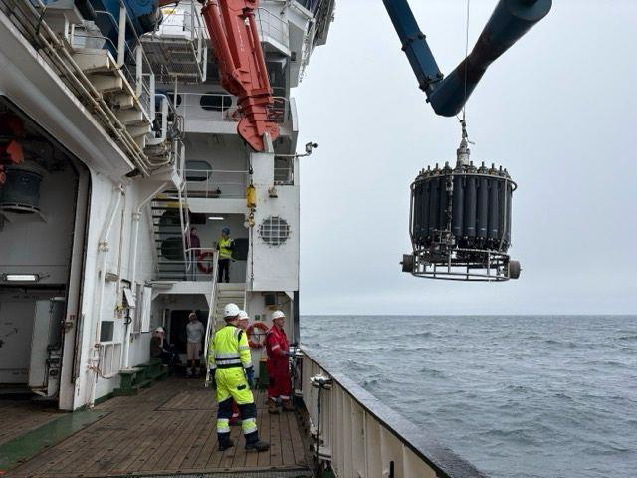
Image: CTD being lowered into the sea to collect seawater samples at different depths.
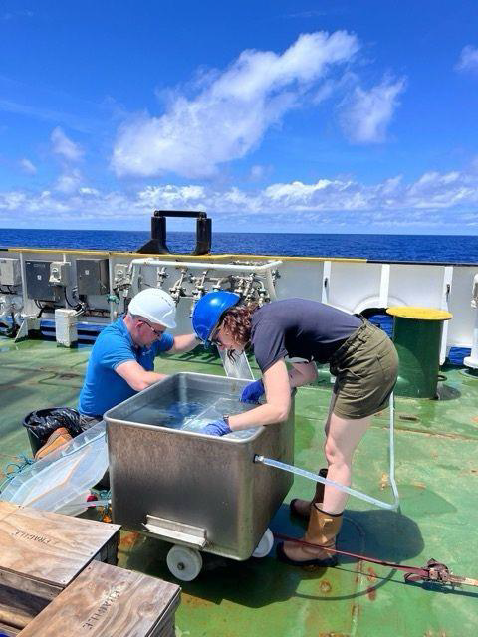
Image: Dr Hopkins and Dr Marvin Shaw from York University testing a new method for sampling the sea surface microlayer.
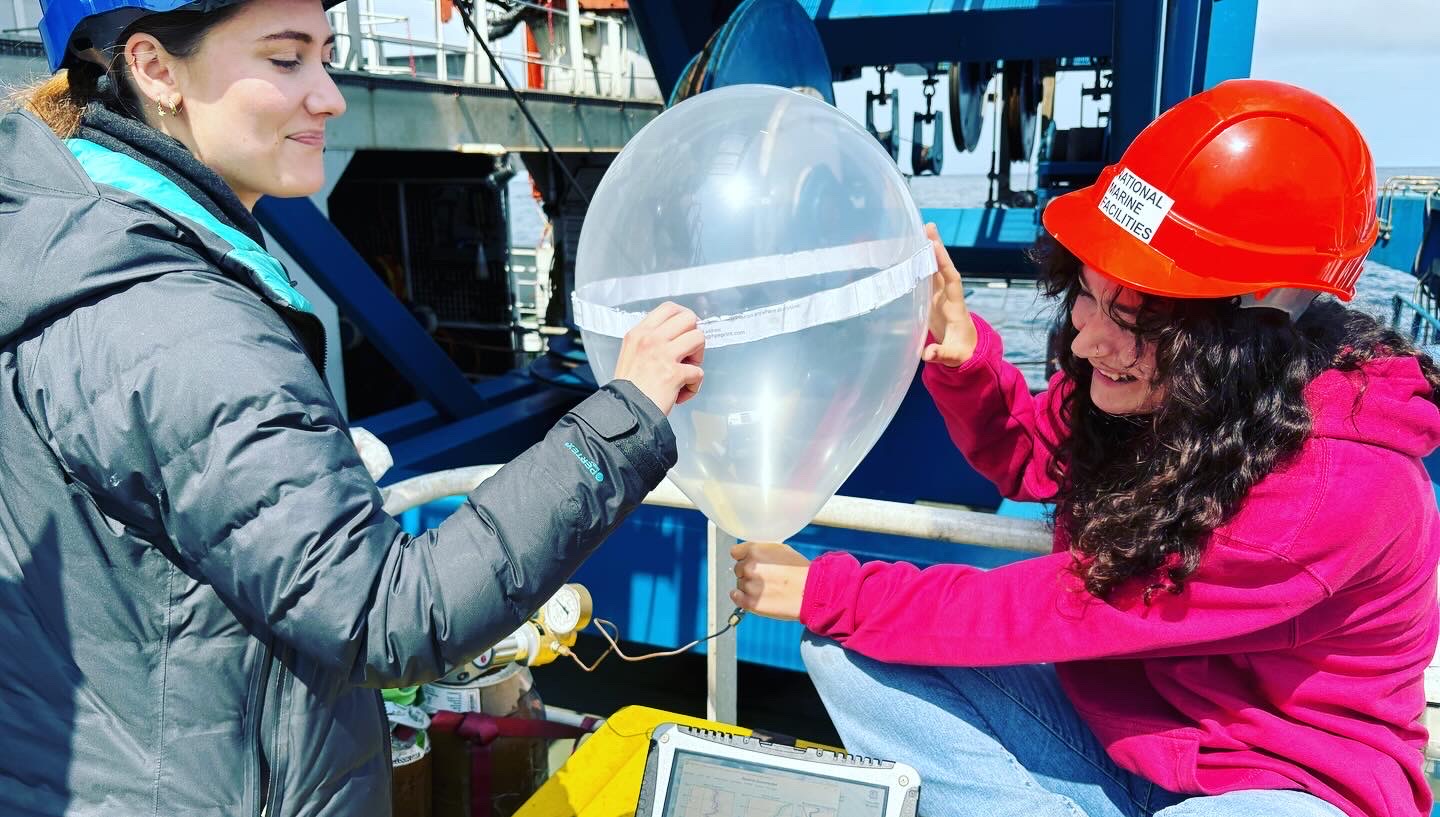
Image: Researchers deploy ‘weather balloons’. Dr Loren Temple, Atmosphere-Ocean Scientist at PML said: “We have been launching weather balloons from the ship, which measure air temperature, air pressure, humidity, wind speed and wind direction. This information allows us to determine the height of the boundary layer, the lowest layer of the atmosphere which is directly influenced by the Earth’s surface. It also helps us to interpret concentrations of atmospheric compounds measured by the various instruments on board.” Photo taken during last year’s research cruise.
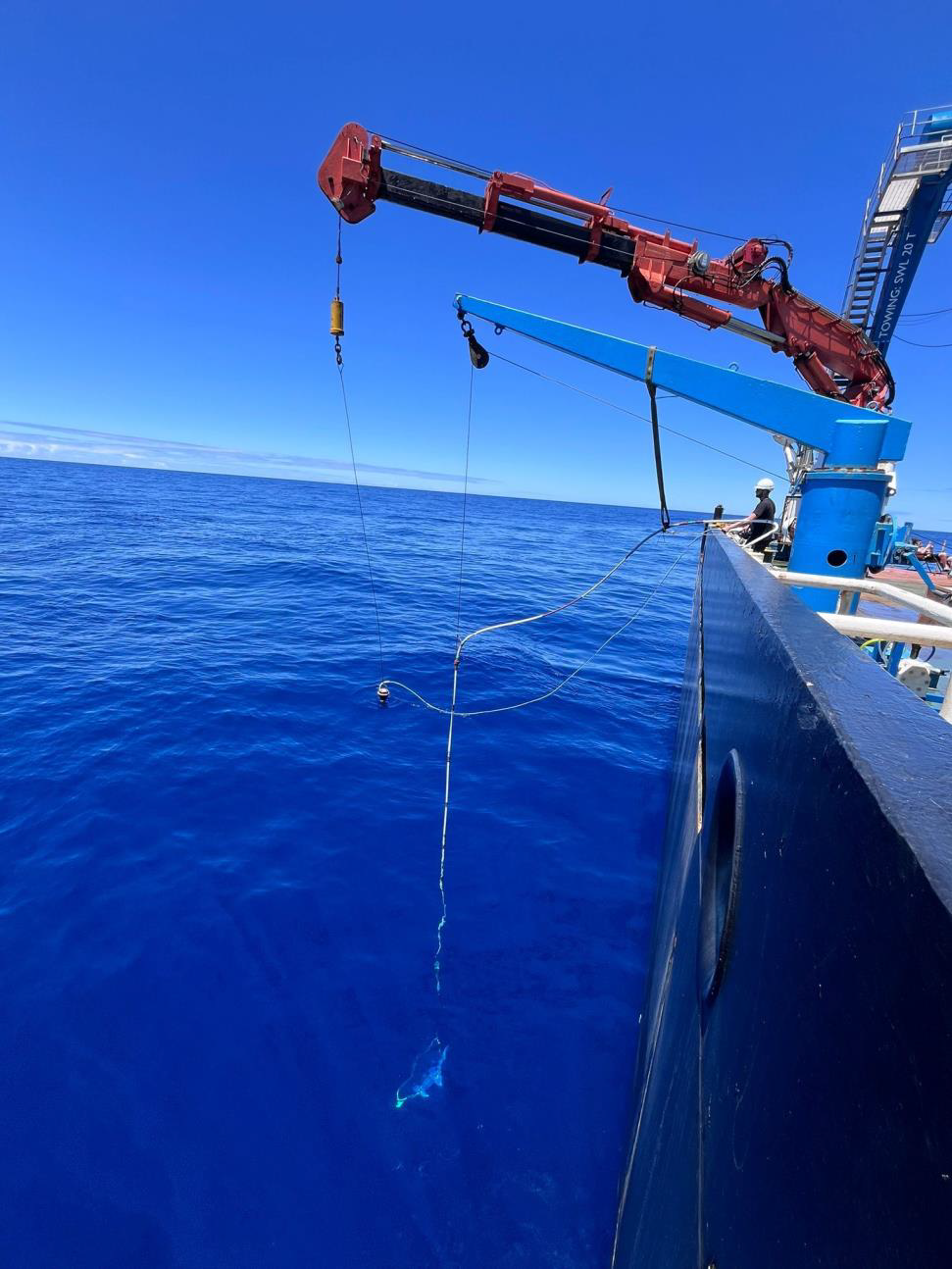
Image: Dr Hopkins said, “Deep blue oligotrophic waters – you can see two of the surface ocean samplers we are using. One is the towed fish (deeper in the water) which allows us to continuously sample from the top 3 – 5 m. The float is a near surface sampling buoy, which pumps seawater from the top 1m of the ocean. We are also interested in the sea surface microlayer, with daily sampling using a garratt screen to collect samples from the ocean’s skin.”
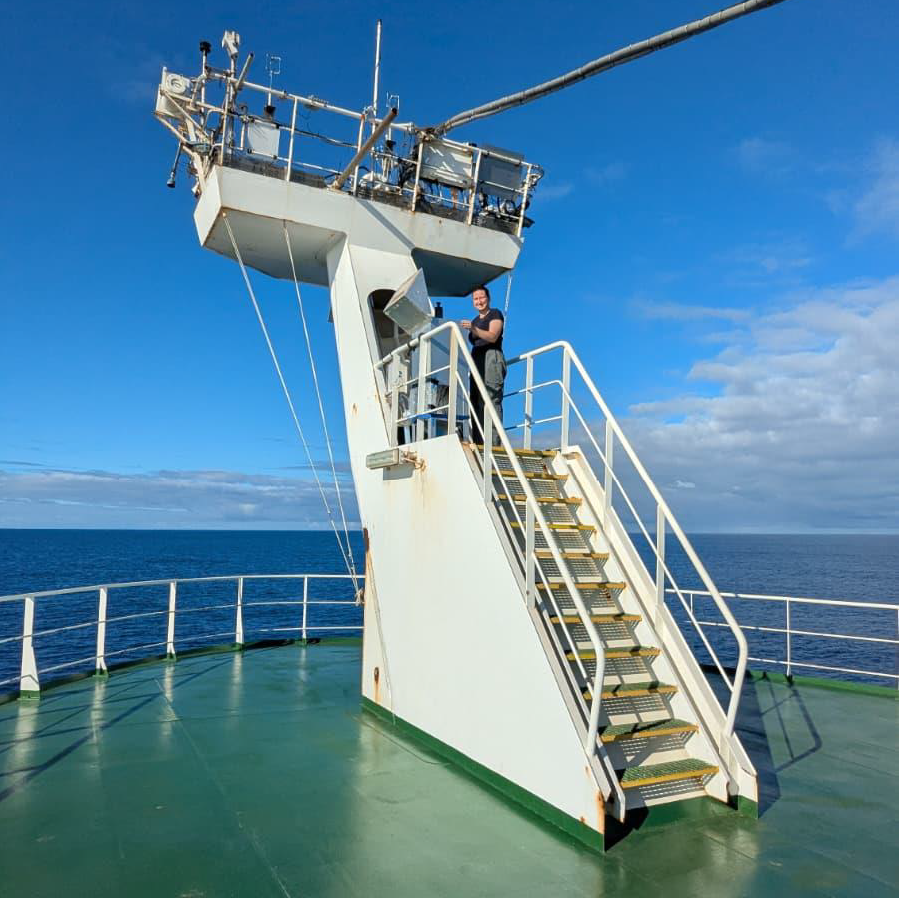
Image: PML doctoral researcher Charis Heaven collecting aerosol samples on the foremast
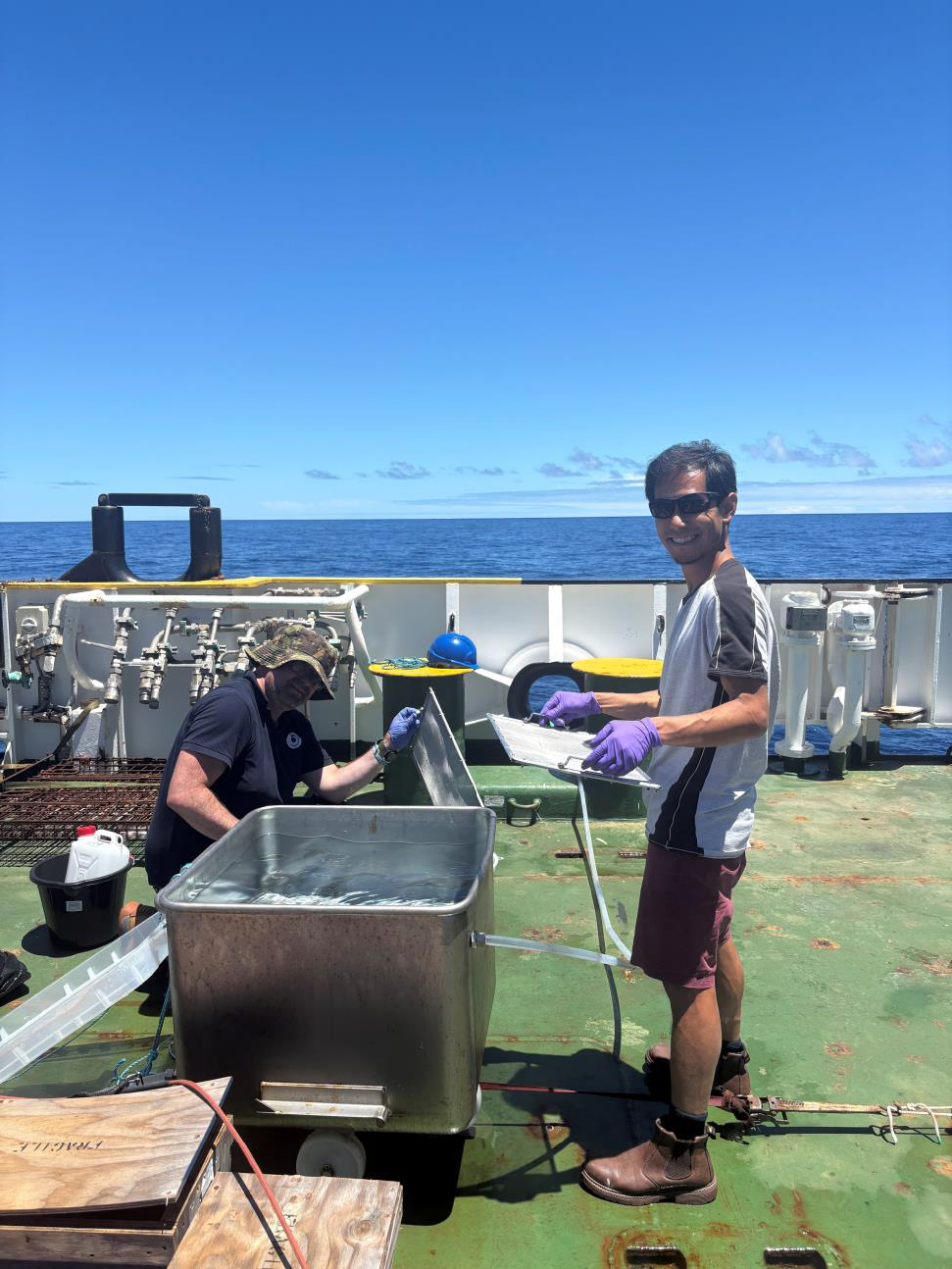
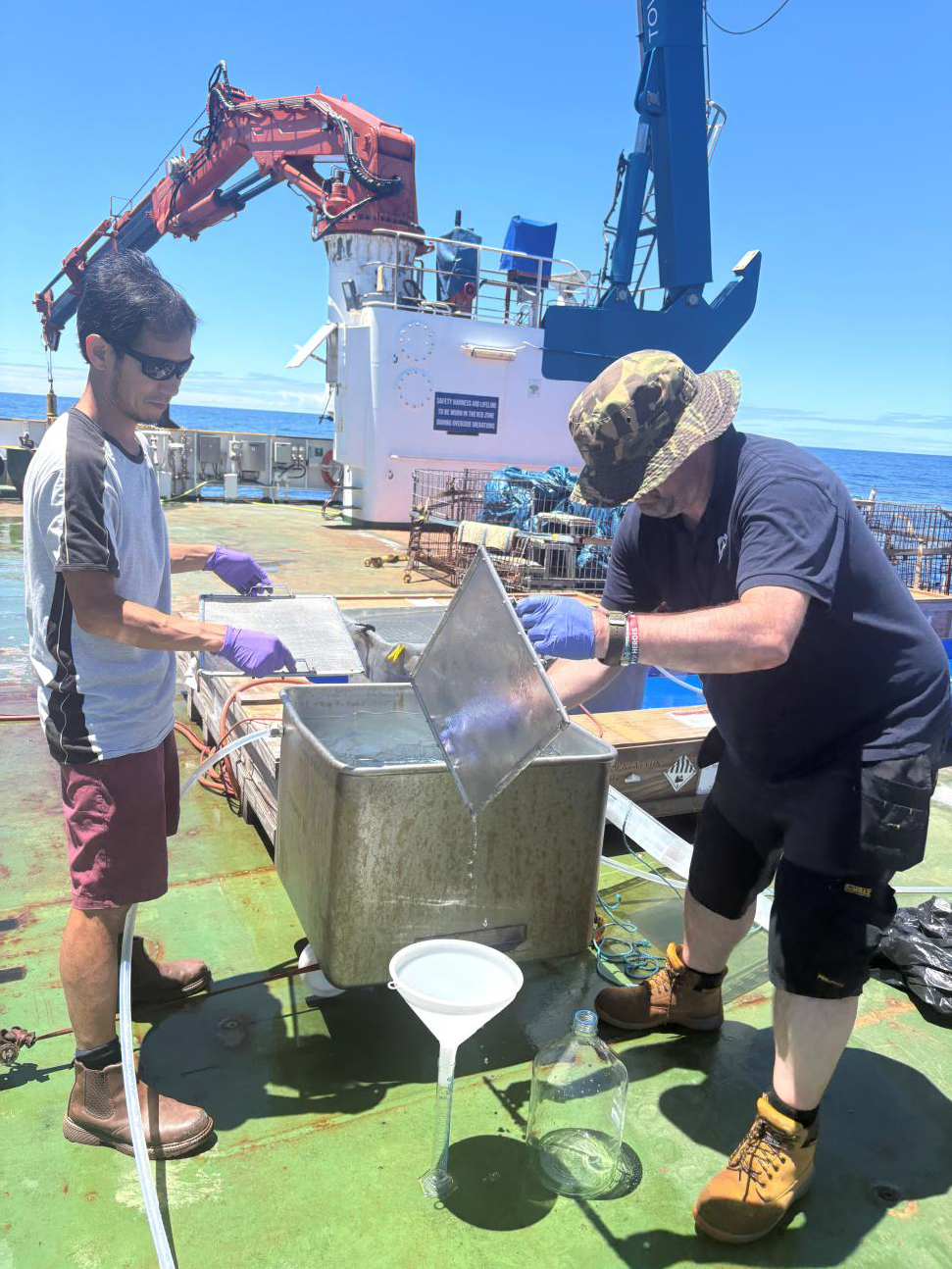
Images: Dr Mingxi Yang and Dr Marvin Shaw (University of York) testing a new method of Garratt screen sampling of the sea surface microlayer.
Dr Yang concluded:
“It’s exciting to be heading into such contrasting environments – from the deep blue waters of the subtropical Atlantic to one of the most productive upwelling regions on Earth. These different conditions give us the opportunity to understand how marine ecosystems influence the gases exchanged between the ocean and atmosphere.”
The expedition represents a major collaboration between researchers from PML, the universities of York, Manchester, Leeds and Essex, University of California Irvine, University of British Columbia, Institut de Ciències del Mar – CSIC and the National Oceanography Centre.
The multidisciplinary team brings together expertise in marine biology, chemistry, atmospheric science and ocean observation – essential for understanding the complex processes connecting the ocean and climate.
As the team continues its journey, the data collected will help scientists answer a fundamental question: how does the ocean influence the atmosphere, and how might these connections change in a warming world?
Watch now: PML’s Dr Frances Hopkins speaks to NERC during last year’s research cruise:
Further information:
Both COCO-VOC and CARES have been funded with thanks to the Natural Environment Research Council (NERC).
CARES – ‘ConstrAining the Role of the marine sulfur cycle in the Earth System’ – website >>