Advanced imaging and analytical technologies supporting long-term monitoring, marine research and innovation
The Flow Imaging Facility at PML is a specialist research resource dedicated to the imaging and analysis of plankton, particles, and microorganisms in aquatic environments. Equipped with flow cytometry, FlowCam and Laser In-Situ Scattering and Transmissometry (LISST) instrumentation, the facility delivers rapid, high-quality data to support scientific research, environmental monitoring, and industry applications. Our expertise enables users to transform complex biological samples into actionable information, advancing understanding of marine ecosystems and helping address key environmental challenges.
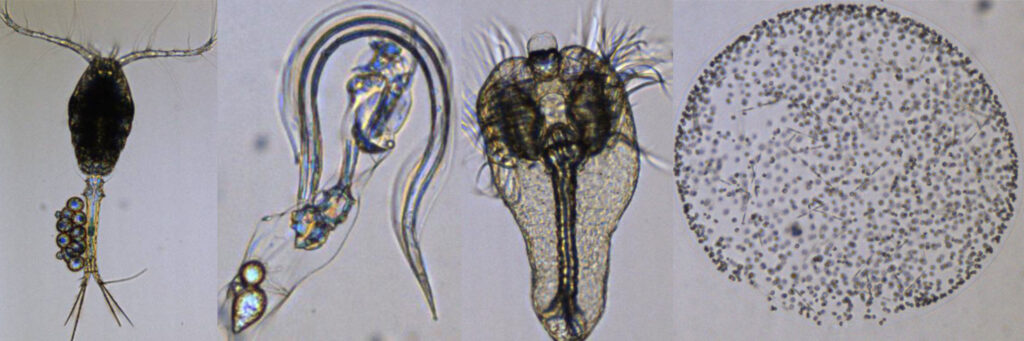
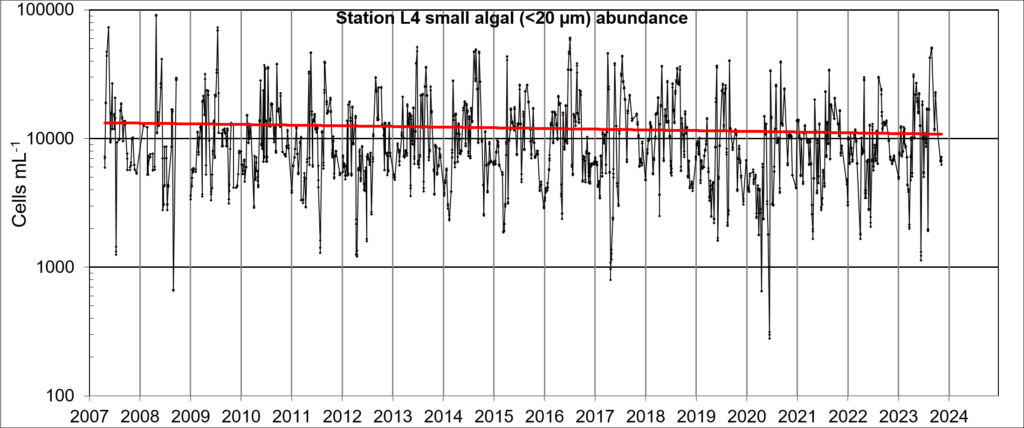
Monitoring plankton abundance and community composition is essential for understanding the health and productivity of aquatic ecosystems. As the foundation of marine food webs, plankton support a vast range of organisms, from commercially important fish species to marine mammals and seabirds. Changes in plankton populations can provide an early indication of environmental shifts, including climate change, ocean warming, nutrient enrichment, and pollution. Long-term monitoring of plankton communities therefore plays a critical role in tracking ecosystem change, forecasting impacts on fisheries and biodiversity, and informing effective marine management and conservation strategies. Plankton community structure has been a core measurement of the UKRI-funded Western Channel Observatory (WCO) time series since 1988. Our facility can measure community abundance from microbes (from 0.1µm) through to Mesozooplankton (up to 2500µm). Through regular observation and analysis, our researchers can identify emerging trends, detect harmful algal blooms, and improve our understanding of the complex interactions that drive marine ecosystem function.
In addition to the long-term monitoring work at the Western Channel Observatory, PML scientists have contributed flow cytometry and plankton imaging instrumentation and expertise to a number of shelf sea and open ocean research expeditions such as the AMT, BIO-Carbon, PICCOLO, COCO-VOC and CARES.
PML’s aspiration is to enhance the flow imaging capability to include a plankton imager that can be installed on our research vessel Plymouth Quest. Combined with existing capabilities, this will allow PML to characterise plankton across a broader size range.
Accessing the Flow Imaging Facility
The PML Flow Imaging Facility is available to researchers, government agencies, environmental consultancies, and industry partners seeking access to advanced plankton and particle imaging capabilities. The facility supports collaborative research projects, long-term monitoring programmes, technology development and bespoke analytical requirements. Our team provides expert guidance in sample collection, processing, image analysis and data interpretation helping users maximise the scientific value of the facility. Access can be provided through collaborative research studentships, contract research, or service provision, with flexible options tailored to individual project needs. To discuss your requirements or explore how the facility can support your work, please contact the team to arrange an initial consultation.