Story | 28 September 2026
Underwater autonomy to determine trawling's hidden carbon cost
PML researchers are deploying autonomous underwater vehicles in the Western English Channel to measure how trawling disturbs carbon stored in the seabed
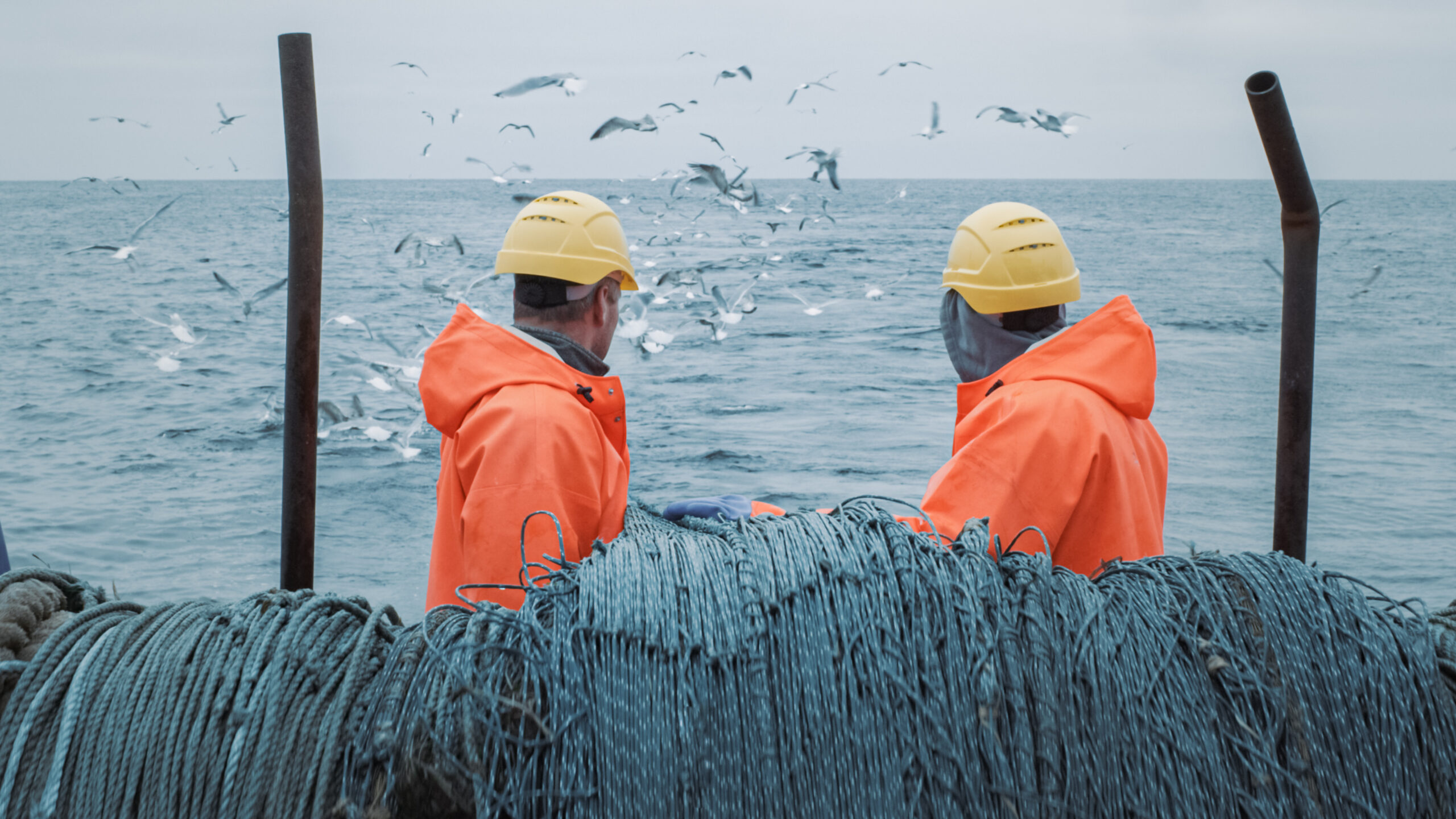
Researchers at Plymouth Marine Laboratory (PML) are using autonomous underwater vehicles to investigate how trawling disturbs carbon locked away in sediment on the ocean floor, in a project that could help to reshape how shelf seas are managed in the years ahead.
The C-FLOOR project is examining the impact of trawling gear on carbon cycling and greenhouse gas emissions in shelf seas – the shallow, biologically-rich waters that fringe the world’s continents. As part of the project, fieldwork is being carried out by PML in the Western Channel Observatory, the long-running time series site in the Western English Channel, using a first-of-its-kind combination of traditional and advanced research methods.
The team is using ecoSUBs, small autonomous underwater vehicles, to gather data before, during and after a simulated trawling rig is towed across the seabed. This is complemented by data captured using the Smart Sound Plymouth infrastructure, which includes an advanced data buoy and integrated communications network.
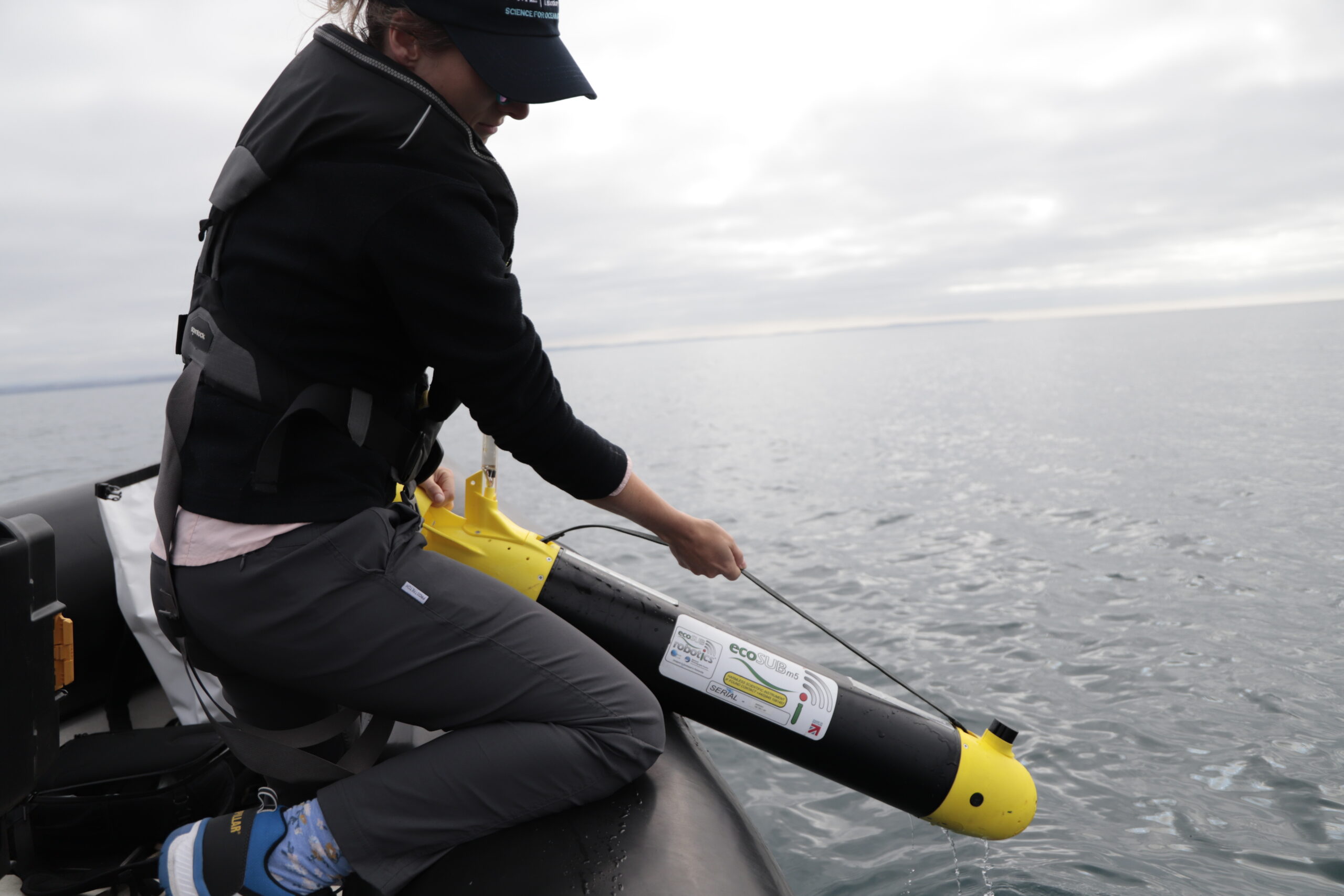
Image: PML’s Dr Juliane Wihsgott lowering an ecoSUB into the water
Shelf seas cover a relatively small fraction of the ocean but play a huge role in both biodiversity and human activity.
“The shelf seas are incredibly biologically rich,” said PML’s Dr Saskia Rühl, a digital marine biologist.
“They have a lot of biodiversity, and more than 80% of the large marine protected areas are situated in shelf seas. But at the same time, they’re heavily used for all kinds of different purposes, including seabed trawling.”
The scientists highlight that different trawling gear interacts with the seabed in different ways – from skimming the surface to digging through the top few centimetres of sediment. While the aim is to catch the fish species living on and above the sediment, the process also disturbs the sediment itself – including the carbon stored within.
Global estimates of carbon released by bottom trawling are highly uncertain, ranging from roughly 0.3 to over 1 Pg per year depending on the study and on whether they count carbon disturbed in sediments or carbon reaching the atmosphere. Trawling may also accelerate organic matter breakdown, potentially weakening the ocean’s role as a carbon sink.
Dr Juliane Wihsgott, a physical oceanographer at PML who led the marine autonomy aspect of the fieldwork, said: “Understanding what happens to the carbon once it is disturbed is central to the project. We’re trying to observe the changes that we see caused by trawling – marine autonomy provides an additional layer of measurements to capture these changes in greater detail and gain new insights.”
The growing availability of autonomous platforms is helping researchers build a more complete picture of how marine processes interact, rather than relying on a single data stream. This demonstration marks the project’s first deployment of this novel integrated approach and shows its potential to be scaled across wider areas and targeted to capture the effects of trawling where and when they occur.
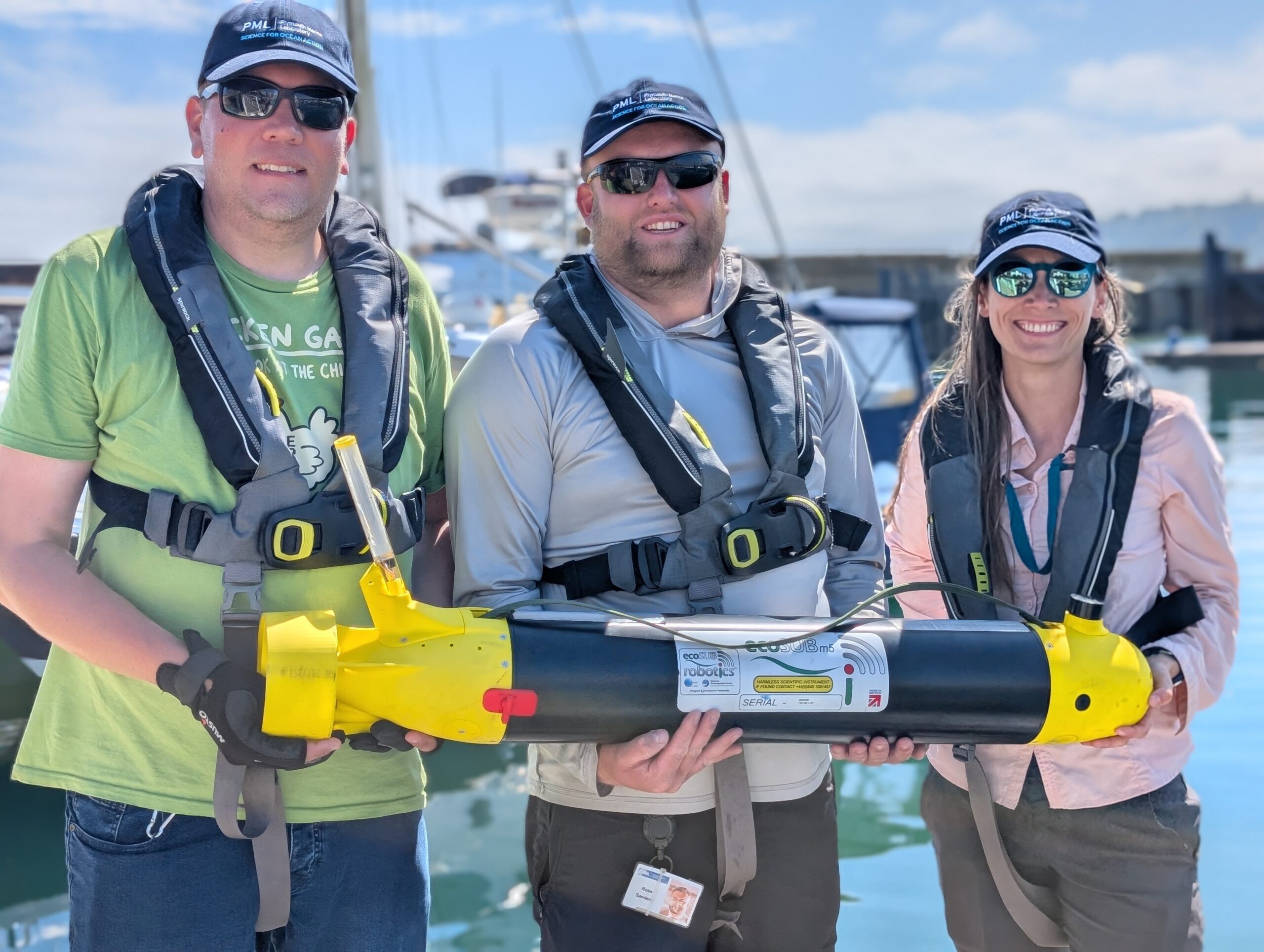
Image: Dr Juliane Wihsgott (far right) holding an ecoSUB with PML colleagues Jani Pewter – Instrument and Data Technician (left) and Ross Sanders – Marine Technologist (middle).
“Combining multiple sources of data is key to understanding how the ecosystem functions as a whole,” added Dr Wihsgott.
“The science we do within C-FLOOR, and within other projects at PML that particularly look at human-induced pressures on our shelf seas, will give us new evidence that will help decision-makers make informed choices to sustainably manage our shelf seas in the future.”
The fieldwork forms part of ongoing efforts at PML to combine long-term ocean observation with emerging autonomous technology to better understand the pressures facing shelf seas.
About C-FLOOR
C-FLOOR (Exploring the Hidden Carbon Cost of Bottom Trawling in UK Shelf Sea) is a University of Southampton-led project, running from November 2023 to October 2027, in which PML is a partner.