Story
Where Science Meets Space Agencies: PML at IOCS 2025
03 December 2025
The International Ocean Colour Science (IOCS) meeting is underway in Germany – one of the most important global gatherings for the ocean-colour and satellite remote-sensing community – with a strong presence from PML scientists.
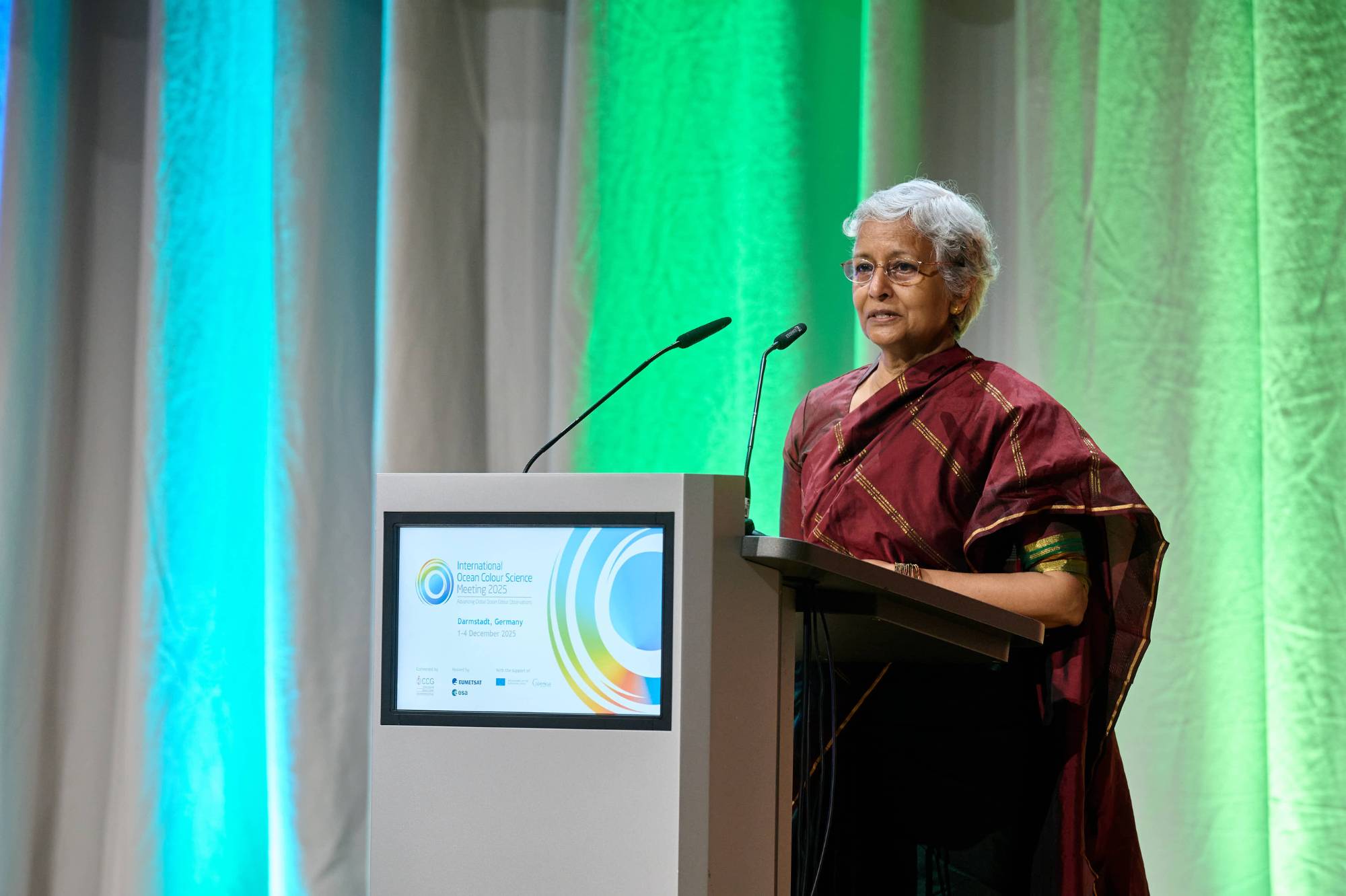
Image: PML’s Professor Shubha Sathyendranath MBE, chair of the International Ocean Colour Coordination Group, opened the meeting with a welcome address. Image credit: EUMETSAT/Kaleidomania Bildproduktion.
The use of advanced satellites to improve understanding and predictions of the marine and inland water environment is being showcased by PML scientists at the International Ocean Colour Science (IOCS), currently taking place in Darmstadt, Germany (1-4 December 2025).
The biannual event, hosted by the European Organisation for the Exploitation of Meteorological Satellites (EUMETSAT) and the European Space Agency (ESA), brings together over 300 specialists from space agencies worldwide, including NASA, ESA, JAXA, and agencies from India, Argentina, and Canada.
IOCS uniquely serves as a direct platform for communication between the scientific community and space agencies, enabling open dialogue on priorities, data needs and mission planning. Its recommendations help shape future satellite missions, programme strategy and the development of new ocean-colour products and applications.
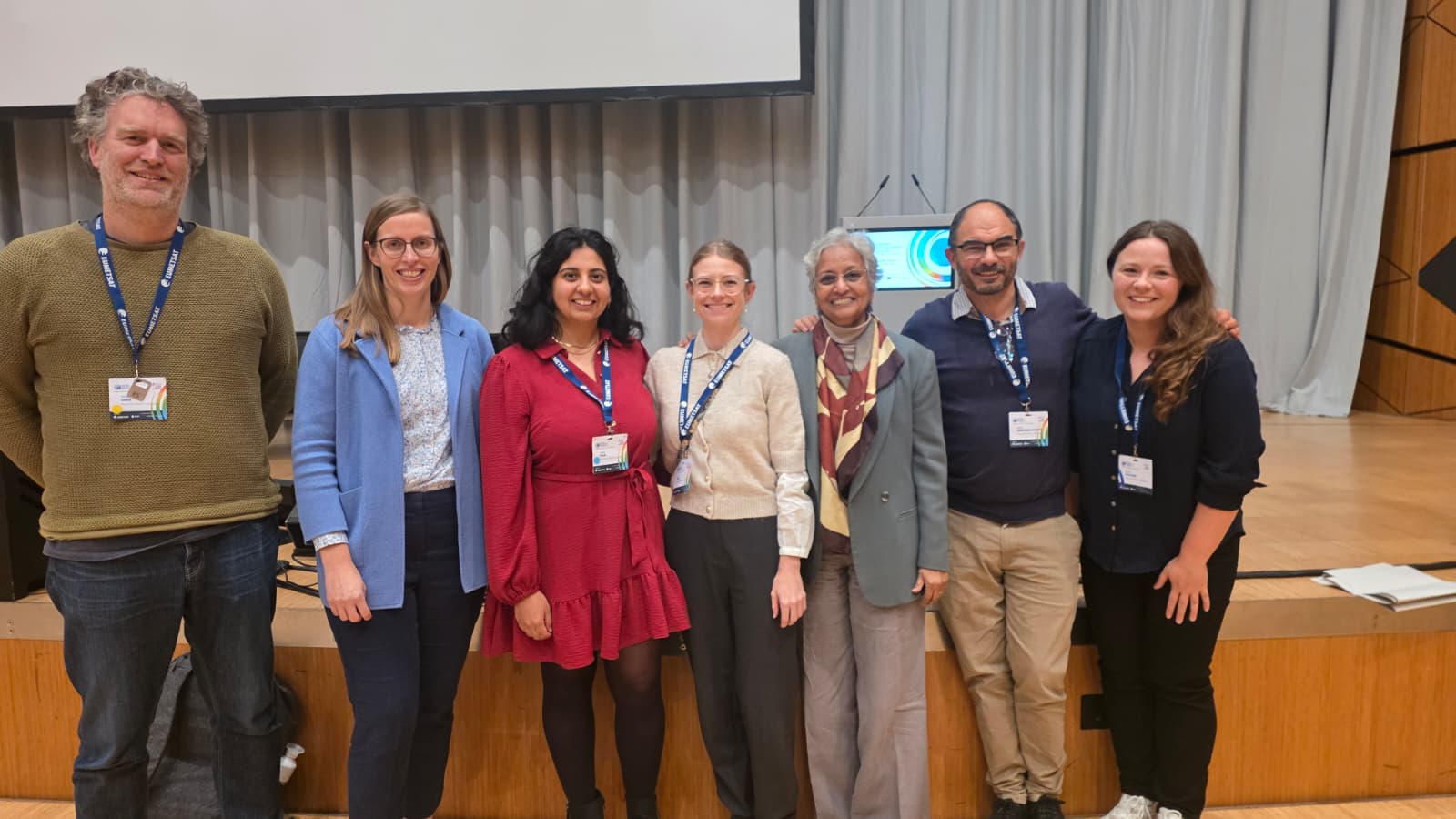
Image: There is a strong presence from PML at the meeting. From left to right: Professor Stefan Simis, Dr Gemma Kulk, Dr Yanna Alexia Fidai, Elin Meek, Professor Shubha Sathyendranath MBE, Dr Victor Martinez Vicente, and Emma Sullivan.
Dr Victor Martinez Vicente from PML will chair and co-chair two breakout sessions that will help shape future priorities for satellite ocean monitoring. These sessions focus on biodiversity products from space and marine litter detection, providing crucial recommendations to guide space agencies’ future work.
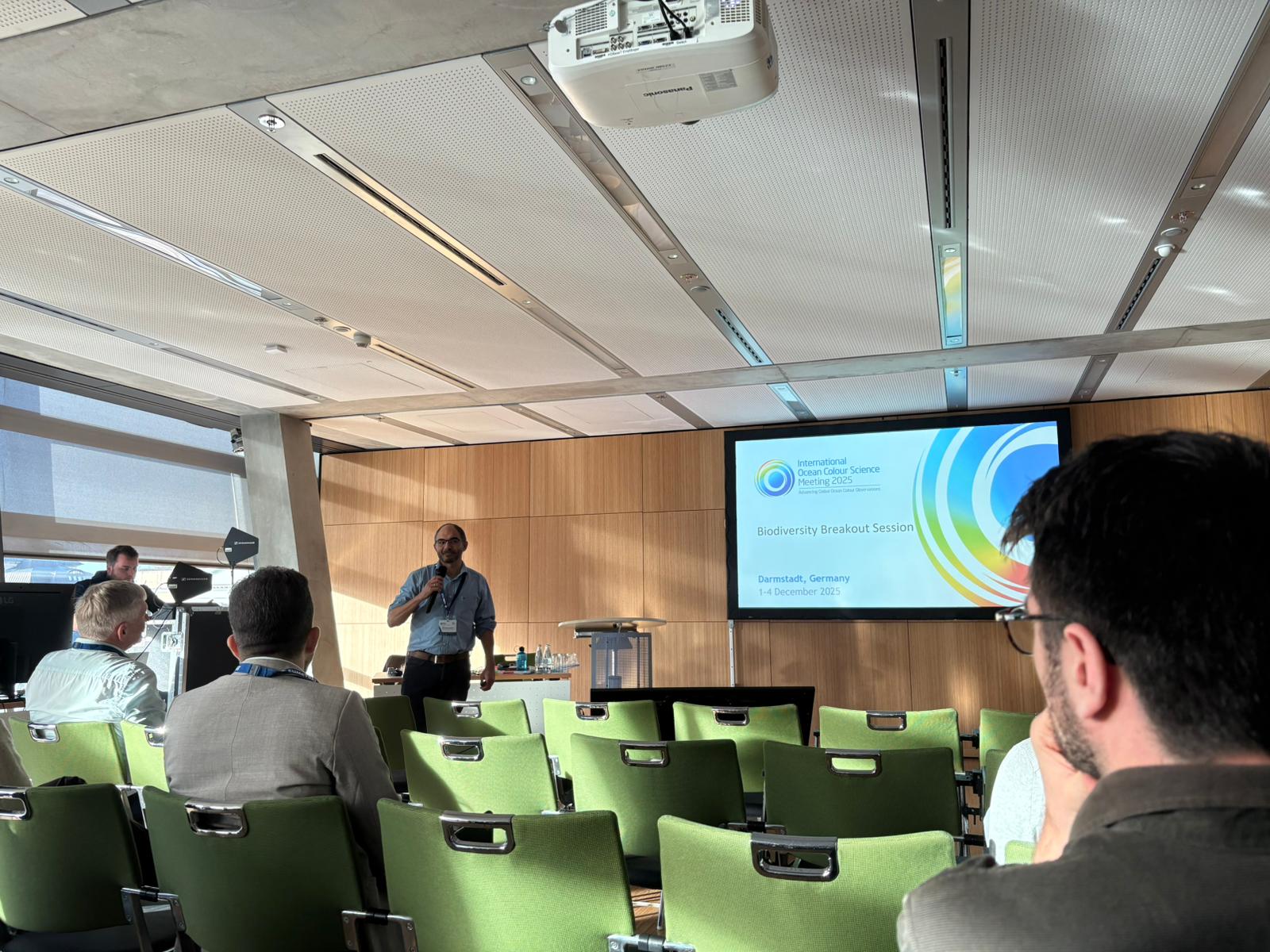
Image: Dr Martinez Vicente speaking in the Biodiversity Breakout Session.
Advancing Climate and Coastal Research
PML will present findings from multiple cutting-edge projects at the conference:
Climate monitoring: The SCOPE project embodies the theme of this year’s IOCS by connecting satellite ocean colour directly to climate services and societal understanding of carbon dynamics. SCOPE developed harmonised datasets of pools and fluxes of carbon in the ocean, that are used to study change in the ocean carbon budget, which could help inform decision-makers to track how the ocean mitigates climate change and how this capacity is evolving. Results will also be presented from the Ocean Colour Climate Change Initiative (OC–CCI) and Phytoplankton Climate Change Initiative (PHYTO–CCI) projects, which produce long-term, merged satellite datasets essential for tracking climate change.
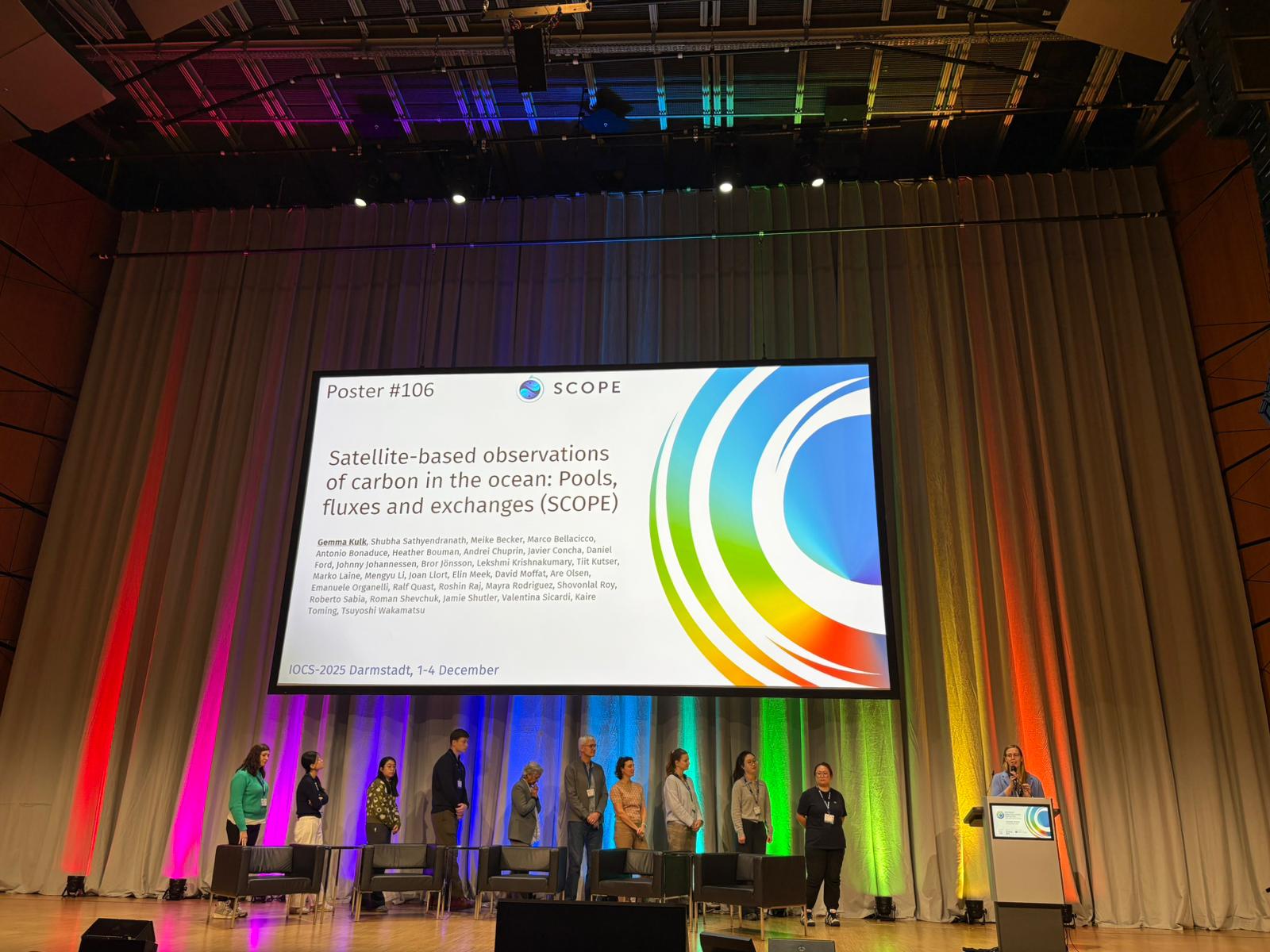
Image: PML’s Dr Gemma Kulk presenting the SCOPE project in a lightning lecture for the poster session.
Coastal carbon cycling: The COOL project, led by Dr Martinez Vicente with colleague Dr Gemma Kulk, is developing harmonised carbon-relevant products including particulate organic carbon, dissolved organic carbon, and primary production measurements for European continental shelf seas. COOL directly serves society by delivering better ocean-colour tools for managing coastal ecosystems, where environmental change most directly affects people, industry and coastal communities. It helps extend ocean-colour science into waters that matter most for livelihoods and climate resilience.
Biodiversity tracking: The newly launched PhytoDiverse project uses next-generation hyperspectral satellites to detect different types of phytoplankton from space, with case studies in the North Atlantic shelf, Adriatic Sea, and Arctic seas. This work is intended to feed into global policy frameworks including the Convention for Biological Diversity (CBD). PhytoDiverse advances ocean colour as a biodiversity monitoring tool, supporting global sustainability goals and marine policy. It demonstrates how next-generation satellites (e.g. PACE) can serve both Earth system science and societal needs for ecosystem stewardship.
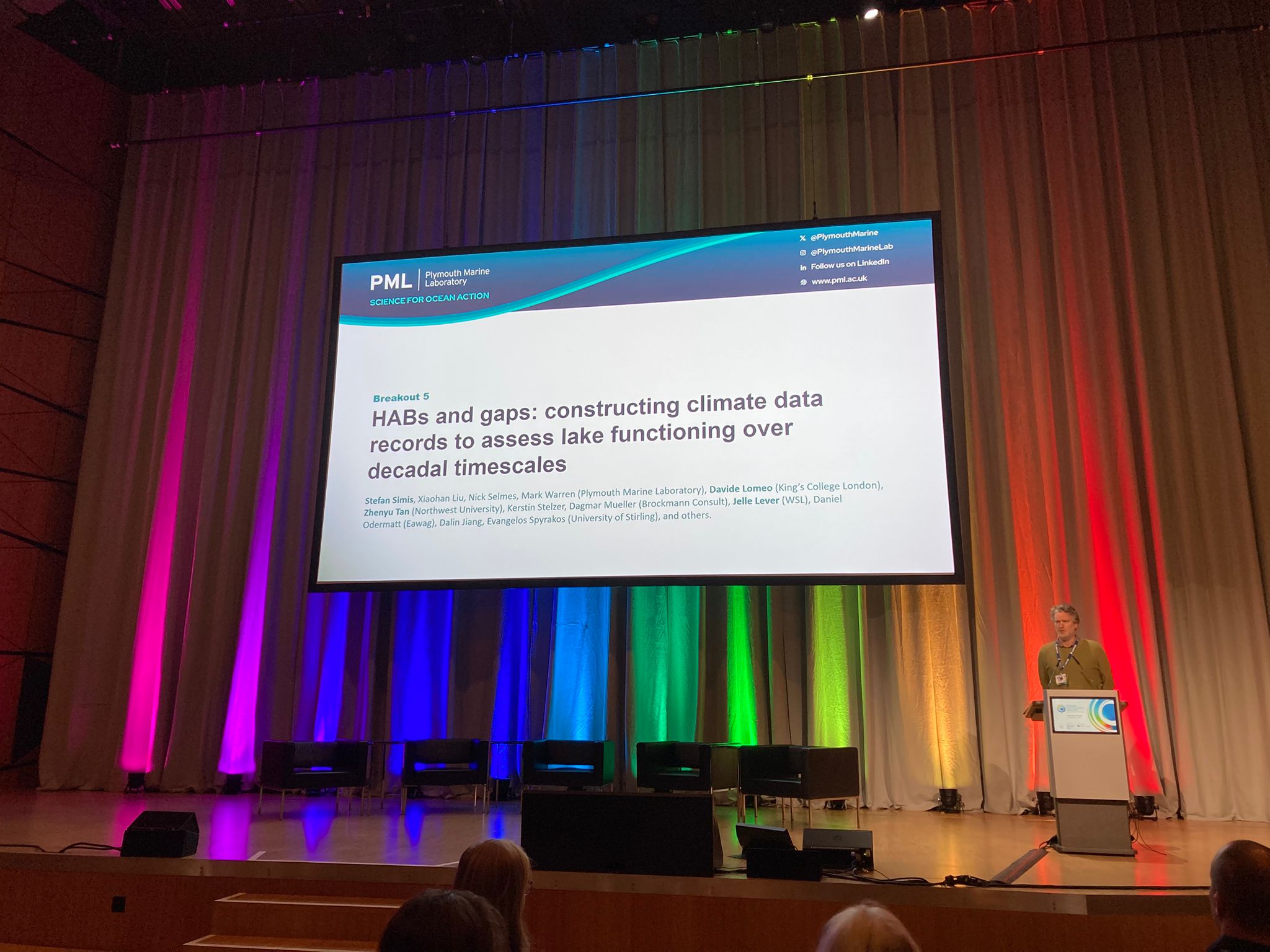
Image: Professor Stefan Simis presented progress on phytoplankton bloom detection from the ESA Lakes_cci project.
Satellite validation: Results from the HyperBoost project, a two-year European Space Agency-funded field campaign collecting in-situ observations to validate remote sensing products.
Preparing for the Next Generation of Satellites: Dr Martinez Vicente will also showcase a newly developed app that predicts satellite overpasses, enabling researchers to collect field data under optimal conditions for satellite-to-ground comparisons. This innovation is part of the Plankto Space project, which aims to collect environmental DNA (eDNA) samples from ships of opportunity to develop novel satellite algorithms linking space observations with genetic information.
PML is also leading the SupaCool project for ESA, preparing algorithms for the next generation of hyperspectral satellites. Following NASA’s launch of the first dedicated ocean colour hyperspectral sensor in 2024, ESA is expected to launch an advanced hyperspectral satellite with much greater spatial resolution between 2028-2030.
“This conference provides a vital opportunity for the scientific community to interact directly with space agencies and discuss where they direct their resources,” said Dr Martinez Vicente. “The format allows us to present cutting-edge science while providing concrete recommendations on future priorities.”
The conference format includes space agency updates, keynote presentations, poster sessions, and specialised breakout workshops.
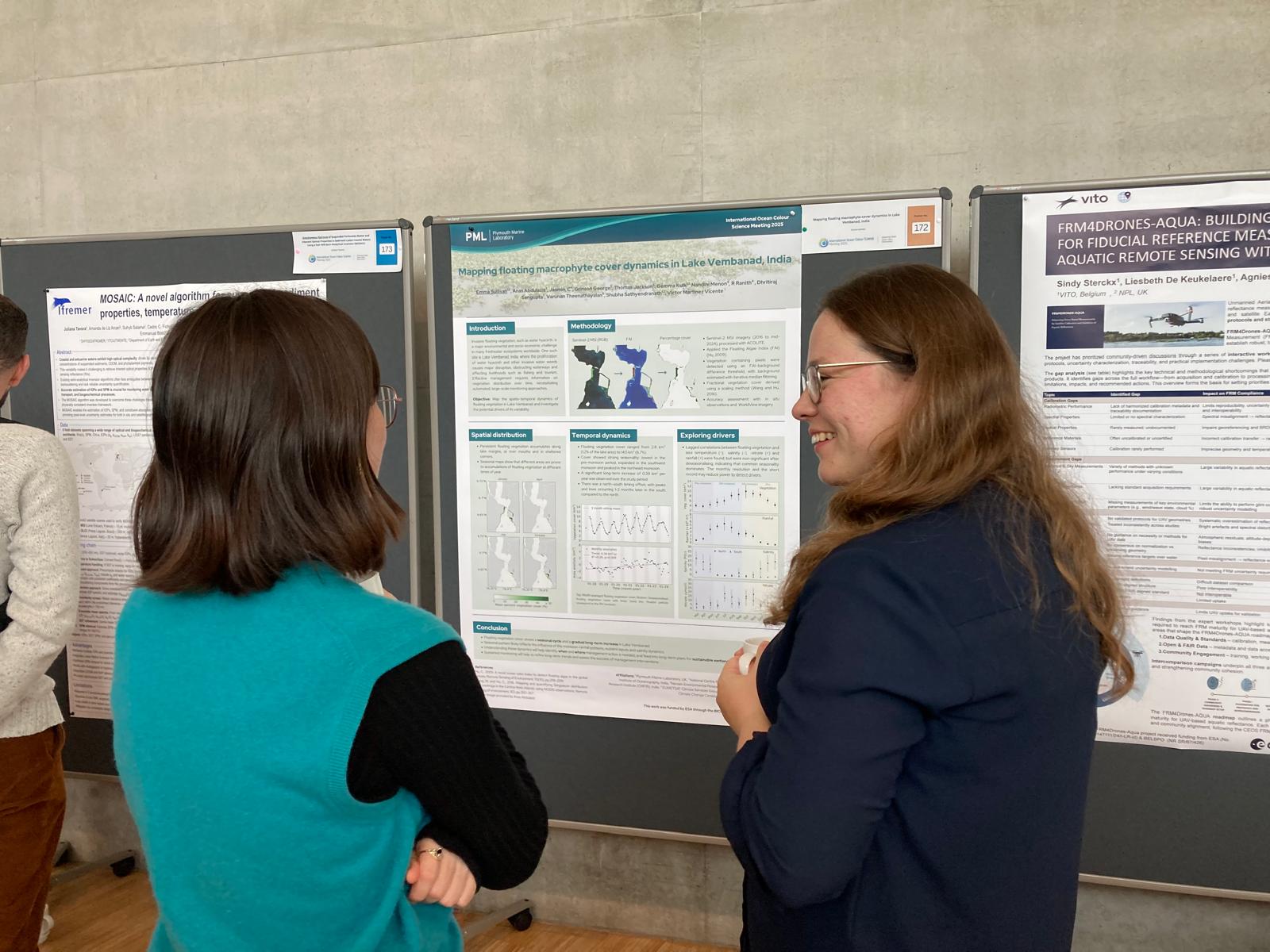
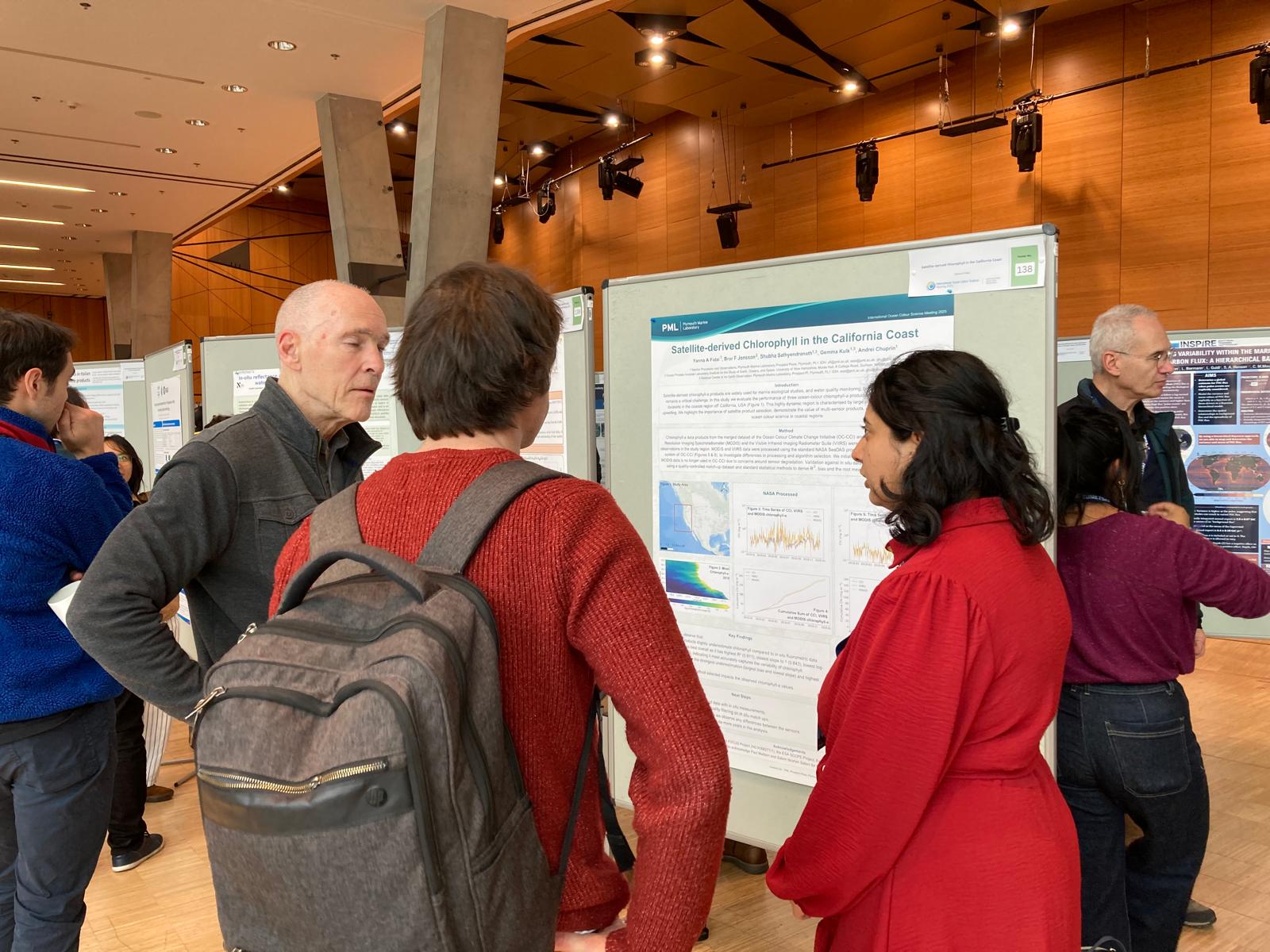
Images above: PML’s Emma Sullivan and Dr Yanna Alexia Fidai delivering poster sessions.
The IOCS meeting represents an important coordination point for international space agencies to report their progress and align their ocean observation strategies with the needs of the scientific community.
For more information: International Ocean Colour Science Meeting