Story | 25 November 2026
MEDIA: The ocean acidification data gap
‘What they found was a much more serious data gap than expected.’
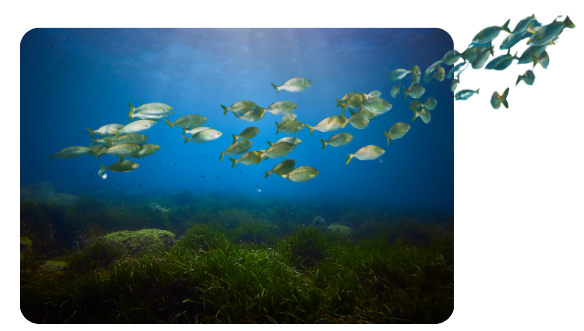
PML’s Professor Helen Findlay features in a new article by Back to Blue, an initiative of Economist Impact, exploring the challenges of observing ocean acidification – particularly with coastal waters, where changing conditions make monitoring and modelling much more complex.
The article draws on Helen’s world-leading in ocean acidification, alongside Professor Steve Widdicombe, PML’s former Director of Science and now an Emeritus Fellow, with whom Helen has collaborated with extensively in this field.
‘The problem is particularly acute in coastal waters, where conditions can vary dramatically over relatively small distances. “Data from the open ocean is very good, but it’s much more complicated in the coastal zone,” says Helen Findlay, biological oceanographer at Plymouth Marine Laboratory and co-lead on the OSPAR Commission’s Ocean Acidification Quality Status Report. Coastal waters are influenced by run-off, rainfall, pollutants and nutrients, as well as highly productive ecosystems such as phytoplankton, kelp forests and seagrasses. Seasonality adds another layer of complexity: whether water is stratified or continually mixing can substantially affect rates of change.
Geology also matters. A river flowing through chalk will interact with seawater differently from one flowing over granite. In regions with olivine-rich geology, freshwater inputs can contribute to much higher alkalinity. “You can see why it’s so difficult to model, but you can also see why it’s so important to be location-specific,” says Professor Findlay. “There’s no one correct way of understanding the processes that are going on.” Ocean acidification occurs alongside climate change, marine heatwaves, erosion, pollution and countless other processes, making it difficult to separate the effects of individual stressors.’
[Extract: The ocean acidification data gap – Back to Blue]
Read the full article, ‘The ocean acidification data gap’, by Back to Blue >>
Just one year ago, in a landmark paper, PML’s Professor Findlay alerted the world to the news that the seventh planetary boundary had already been crossed: ocean acidification.

Above: Professor Findlay led the landmark study “Ocean Acidification: Another Planetary Boundary Crossed”, which attracted global media attention.
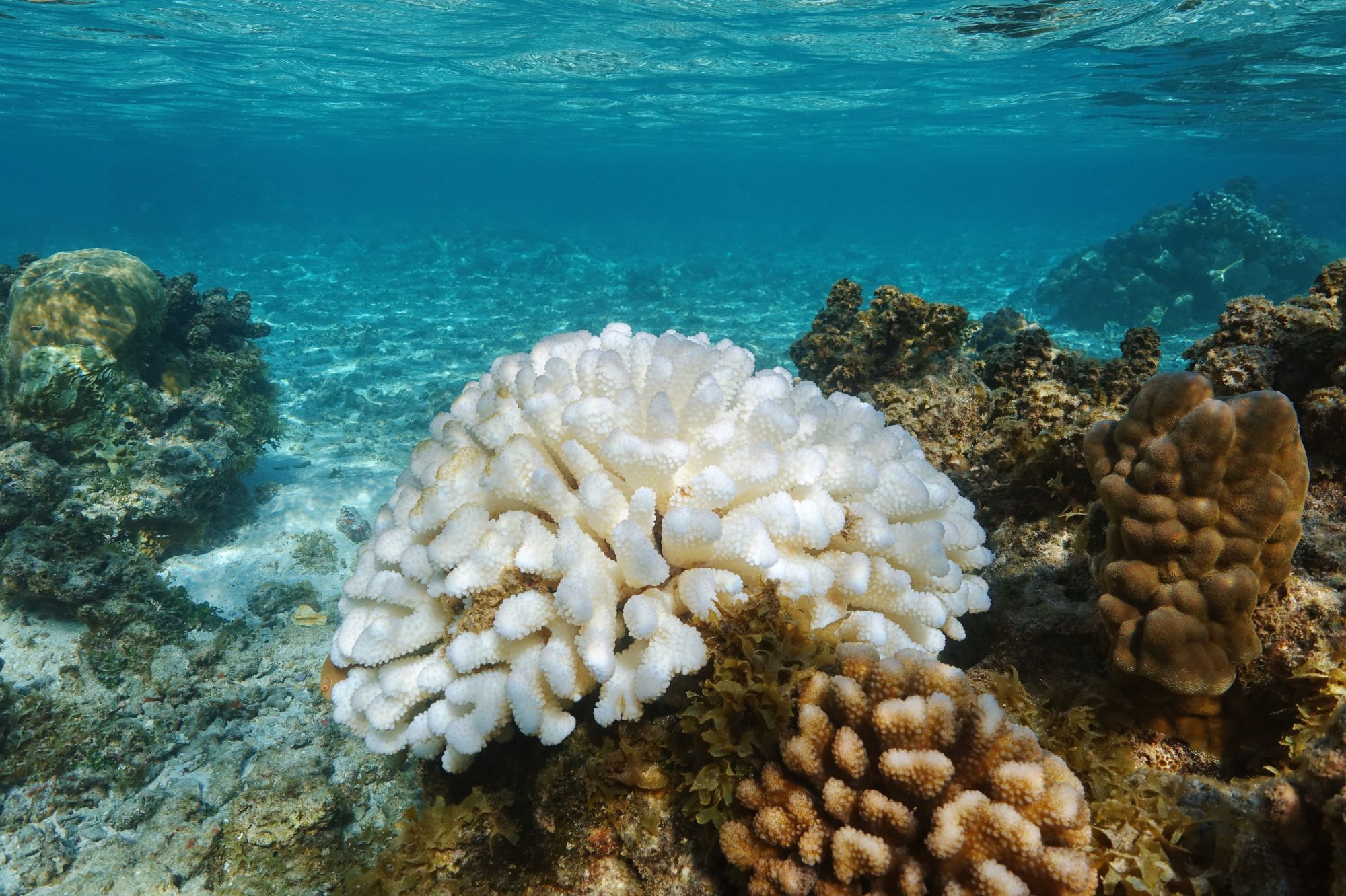
Often described as ‘the other carbon problem’, ocean acidification – like climate change – is driven primarily by carbon dioxide emissions. At least a quarter of the CO2 released into the atmosphere by human activities is absorbed by the ocean, and whilst doing so, changes its carbon chemistry – through an increase in acidity, and reduced availability of carbonate ions.
For this paper, the Frontiers Planet Prize – the world’s largest global science competition dedicated to planetary health – named Helen one of 25 National Champions earlier this year. The award honours scientists from around the globe that are presenting scalable, evidence-based solutions to help humanity live within Earth’s planetary boundaries.