Story | 05 November 2026
Polar oceans pay the price of overshoot
PML’s Prof Helen Findlay contributed to two landmark UN-endorsed reports, showing that even a temporary overshoot of the 1.5°C Paris Agreement target would drive large-scale and, in many cases, irreversible ice loss.
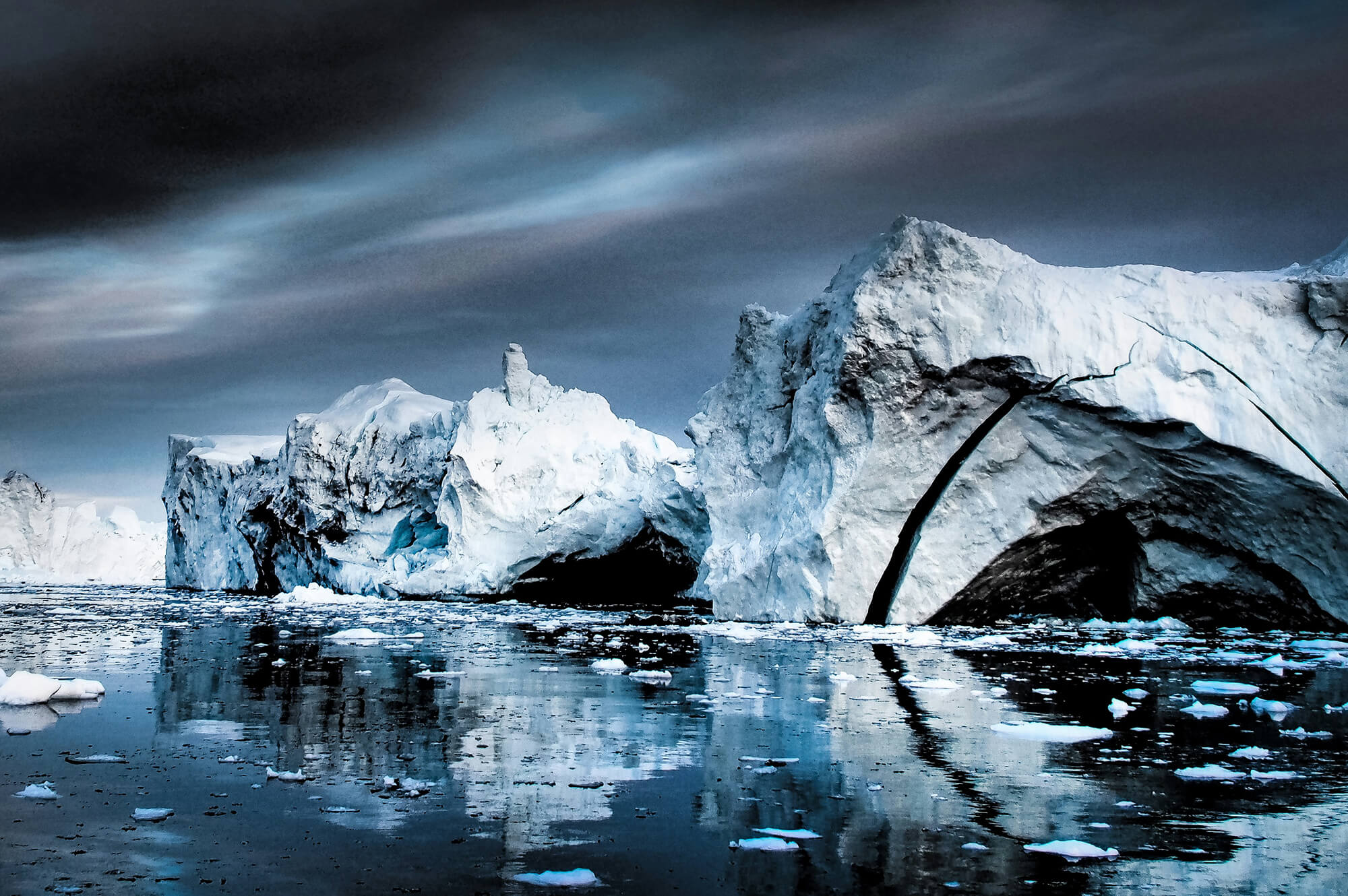
Arctic waters. Jennifer Latuperisa Andresen | Unsplash
Overshoot and the Cryosphere: Averting Global Meltdown and State of the Cryosphere 2026: The Cost of Overshoot were released jointly this week, ahead of COP31 in Türkiye.
Co-produced by the International Cryosphere Climate Initiative (ICCI) and the UN Environment Programme (UNEP), Overshoot and the Cryosphere was prepared by more than 80 polar and mountain scientists. It is a thematic companion to UNEP’s Limiting Overshoot Report, the first of its kind from a UN agency. The annual State of the Cryosphere 2026 was peer reviewed by 60 cryosphere and climate scientists.
The reports find that melting ice sheets, permafrost, glaciers, sea ice and polar oceans respond unforgivingly, even to short-lived overshoot. Several metres of sea-level rise are already locked in for centuries but keeping overshoot to a minimum would slow its rate to a level to which communities can adapt. A return to 1.5°C or below could begin sea ice and glacier regrowth within decades to centuries, although a truly safe level for the world’s ice is now thought to be closer to 1.0°C.
The route back requires: emissions cuts of at least 5% a year starting now; net zero by mid-century; deep cuts to methane and black carbon, and rapid investment in carbon removal. The reports also call for far greater adaptation finance to cope with losses that can no longer be avoided.
Prof Helen Findlay was a co-author on the Polar Oceans chapter of Overshoot and the Cryosphere and reviewed the polar oceans chapter in State of the Cryosphere 2026. Both of these chapters reveal that overshoot would leave warming, freshening, acidification and changes in ocean circulation in the Arctic and Southern Oceans in place for centuries to millennia, with acidification especially persistent in polar waters.
Prof. Helen Findlay, Ocean Challenge Lead for Climate Change at Plymouth Marine Laboratory, Biological Oceanographer and contributor to both reports, commented:
“The polar oceans are one of our planet’s greatest allies, absorbing the heat and carbon that would otherwise drive even faster warming. The issue of warming, changes to salinity and ocean circulation amplify polar water ocean acidification, making these regions the fastest changing on our planet. These reports show that overshoot would leave acidified waters in place for centuries, long after temperature and CO2 levels come back down. Every year spent above 1.5°C is damage to polar marine life that we cannot undo on any meaningful timescale so, keeping overshoot to an absolute minimum is the best protection we have.”
Dr James Kirkham, ICCI Chief Scientist and coordinating lead author of Overshoot and the Cryosphere, said:
“There are no good outcomes in exceeding 1.5°C. Every extra fraction of a degree and every year spent in overshoot means more devastating impacts. To contain the global fallout and damage from ice loss in the world’s polar and mountain regions, overshoot needs to be kept to the absolute minimum.”
Both reports lay out actionable solutions to bring temperatures back down from overshoot. Renewable energy and battery technologies are booming, reliance on coal and oil is slowing and climate policies have cut emissions in many places. Successful policies now need to be scaled up to reduce emissions by at least 5% per year, starting now and reaching net zero greenhouse gas emissions by mid-century. The reports emphasise that there can be no delay in phasing out fossil fuels, to retain the possibility of bringing temperatures down in the future.
Doing so will have tangible benefits for future generations affected by global ice loss including:
- Slowing down the rate of sea-level rise to an ‘adaptable’ level. Even though several metres of sea level rise are already locked in for many centuries due to the long-term retreat of polar ice sheets, how fast it will happen matters greatly to coastal communities on the frontline of climate change today.
- Potentially halting and partially reversing glacier, snowpack and sea ice loss. A return to 1.5°C and below would initiate some sea ice and glacier re-growth within decades to centuries and potentially re-establish healthy snowpack levels.
- Limiting the damage from impacts, such as the destabilisation of permafrost, which can lead to tragic events like that seen in Nepal this year, and also emits carbon as it thaws. This climate feedback loop would leave even more CO2 to be removed from the atmosphere later.
Even current levels of warming are already unsafe for the Arctic, the Antarctic, mountain glaciers and the polar oceans. The 2026 State of the Cryosphere describes new science and observations from the past year, such as Switzerland’s loss of 20% of its glacier ice in the past five years. Other impacts range from accelerating sea-level rise due to rapid ice loss, to increasing water shortages and mountain hazards as glaciers disappear and snow drought conditions spread.
Although returning to 1.5°C will slow ice loss, a truly ‘safe’ temperature target for Earth’s ice is now thought to be closer to 1.0°C or even below over the coming centuries.
Pam Pearson, ICCI Director, said:
“When you miss an exit on the highway, you don’t abandon plans to get to where you really need to be – you take your first chance to turn back. Continuing full speed ahead just makes things worse. The road back to below 1.5°C may be difficult, but science and economics both provide a roadmap to a better future.”