Story | 21 September 2026
7 out of 9 Planetary Boundaries breached: PML joins calls for UN security briefing
With seven out of nine Planetary Boundaries now crossed, “now is the time to act” urges PML’s Professor Helen Findlay, who today joined international scientists and organisations calling for an annual UN security briefing.

‘The Planetary Boundaries represent nine key systems of the Earth that tell us if our planet is able to take the pressure from human activities while still working properly. The Planetary Boundaries are guardrails that help keep the Earth stable and healthy, so that it keeps providing full life support.’ [Source: Planetary Health Check]
In the open letter, delivered today [21st September 2026], Professor Findlay representing Plymouth Marine Laboratory calls for annual planetary science briefings for the United Nations Security Council and UN General Assembly.
The letter states:
‘These boundary transgressions are becoming increasingly severe and continue to move in the wrong direction. We are seeing the impacts of this around the world.
The health of the planet, human health, economic stability, and security are all deeply interconnected. This connection is evident in the growing suffering caused by increasingly horrific natural disasters, air pollution, extreme heat, chemical pollution, food and water scarcity, and other consequences of breached planetary boundaries.
We have the independent planetary science that is critical to help inform your decision-making to avert security, health, and economic risks. We are ready to bring together a group of independent, world class scientists and other experts to prepare and present annual planetary science security briefings.’ [Excerpt from letter]
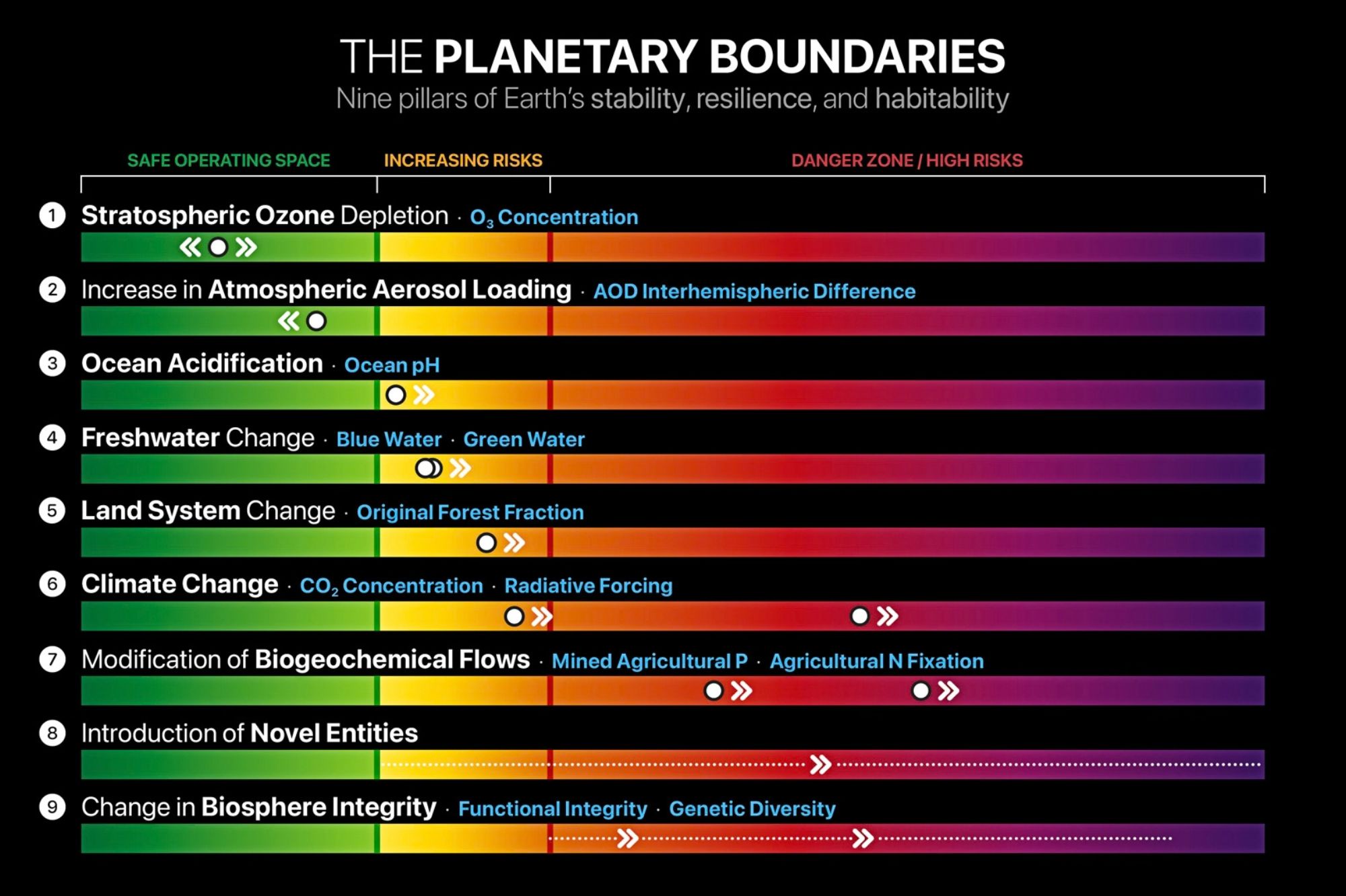
The signatories state that independent planetary science can help decision-makers understand and respond to these interconnected risks – and offer to bring together independent scientists and experts to prepare annual briefings for the UN.
The letter also calls on countries to appoint ‘Chief Planetary Scientists’, creating a global network that could help identify location-specific environmental, health and economic risks and support action to bring Earth systems back towards a safe operating space.
The call accompanies the release of the Planetary Health Check 2026, an assessment led by scientists at the Planetary Boundaries Science Lab, and co-authored by PML’s Professor Helen Findlay.
Access the report: Planetary Health Check 2026 >>
Just one year ago, in a landmark paper, PML’s Professor Findlay alerted the world to the news that the seventh planetary boundary had already been crossed: ocean acidification.

Above: Professor Findlay led the landmark study “Ocean Acidification: Another Planetary Boundary Crossed”, which attracted global media attention.
Often described as ‘the other carbon problem’, ocean acidification – like climate change – is driven primarily by carbon dioxide emissions. At least a quarter of the CO2 released into the atmosphere by human activities is absorbed by the ocean, and whilst doing so, changes its carbon chemistry – through an increase in acidity, and reduced availability of carbonate ions.
Since that paper, Professor Findlay has been collaborating closely with scientists at the Planetary Boundaries Science Lab, part of the Potsdam Institute for Climate Impact Research (PIK), to support efforts in translating this evidence into action. She said:
“Climate change and ocean acidification are here, causing real environmental disasters across the planet. We know enough science to know what action needs to be taken; more science will give us more clarity but now is the time to act.”
Johan Rockström, Director of the Potsdam Institute for Climate Impact Research (PIK), said:
“Accelerating action to return to the safe operating space across all Planetary Boundaries is essential to protect lives and livelihoods, and to deliver on the promise of shared future prosperity.”
The collaboration between PML and PIK is also continuing through SAFESEA, a new PML-led project in which PIK is an associate partner.
The project aims to strengthen collaboration around ocean acidification science and help make the evidence more operational – improving our ability to monitor and understand changes in the ocean, while contributing to the wider assessment of planetary boundaries.
Further information:
Planetary Health Check 2026 report >>