Story | 26 November 2026
Virtual ecosystems could transform how ocean science and climate change is taught
Plymouth Marine Laboratory (PML) scientists propose that simple computer simulations should be part of everyday lessons, to help teach about complex and long-term issues facing our environment.
Tomasz Mikolajczyk | Pixabay
Environmental issues such as harmful algal blooms, ocean acidification and deoxygenation are among the biggest threats facing our planet and society but they are also some of the hardest to teach.
Whether the issue involves microscopic scales, remote areas or processes that unfold over decades, these topics are difficult, if not impossible, to visualise or experience in a classroom.
In a new perspective paper, published in the People and Nature journal, scientists from PML and ARK Dynamics UK say there is a powerful and underused solution: interactive ecosystem simulation models that let students explore how aquatic systems work and what happens when they are pushed too far.
The paper, by PML’s Dr Gennadi Lessin and Professor Kevin Flynn (formerly PML and now ARK Dynamics UK), calls for dynamic simulation modelling to be built into the teaching of Ocean and Water Literacy (OWL) at every level of education.
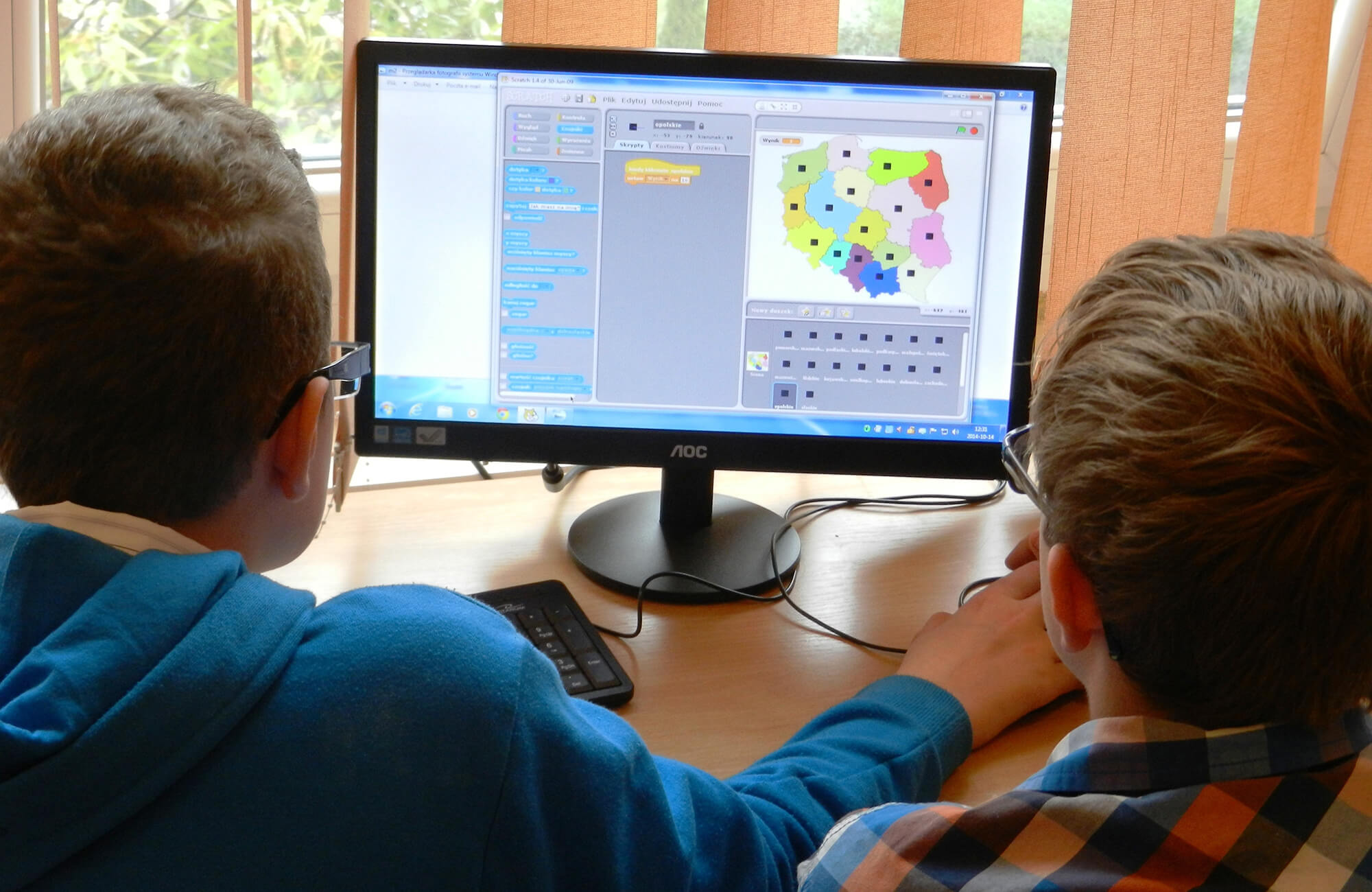
Unlike a static diagram of a food web, a simulation model lets students conduct virtual experiments and change settings, such as the amount of nutrients entering the water, to watch the ecological consequences unfold in front of them in seconds. They can test the system by asking “what if?” questions that would be impossible, unethical or unsafe to test in the real world, like adding vast amounts of fertiliser to a lake.
The authors illustrate the potential of dynamic simulation modelling as a teaching tool with a simple model of microalgae growth under nutrient pollution, which is freely available on Zenodo for anyone who wants to explore it further.
The authors demonstrate that beyond the potential for such tools to advance ecological literacy, simulation models also support the development of critical thinking, decision-making and communications skills.
Despite these benefits, simulation models are rarely used in teaching before university. The authors identify a number of barriers, such as:
- a lack of funding for the development of education-focused simulation tools.
- a shortage of free, education-focused simulation tools built through the collaboration of ecosystem modelling and education experts.
- limited teacher training in ecosystem modelling and the challenge of integrating new approaches into existing curricula
To tackle these challenges, the paper’s authors call for libraries of ready-to-run, customisable models, best-practice guidelines for educators and closer collaboration between researchers, teachers and developers of curricula, policymakers, funders and software developers.
As the foundation for this advancement, the authors have developed educational materials utilising dynamic ecosystem modelling to teach about. These are Powersim files, to be opened using Powersim Studio 10 or Powersim Studio Cockpit (free download).
They also highlight the EU-funded ProBleu platform, which supports community-driven development and sharing of teaching resources. Future funding of this nature can help harness the environmental science knowledge base that can be flexibly repackaged for specific learning goals.
The authors stress that models should complement, not replace, hands-on and field-based learning, and that teachers and students must understand that since the models are simplifications of real systems, exploring model limitations is an important part of the learning process.
Dr Gennadi Lessin, lead author and Marine Systems Modeller at PML, said:
“Although hands-on exploration is one of the most effective methods to learn about our environment, for certain topics, it is often challenging or impossible. Exploring aquatic systems through simple dynamic simulations can be a powerful approach to building understanding, as well as the development of academic, cognitive, social and emotional skills. We are keen to see an increase in the uptake of dynamic simulations to complement existing teaching techniques, facilitate deep advanced learning and help boost OWL across all levels of the education sector”.
To ensure consistent learning quality across simulations, the authors also propose developing best practice guidelines including: educator-targeted topic summaries; descriptions of the models used, notes on simplifications and caveats; user-optimised interface that is grounded in sound science, and a tiered knowledge approach to suit student of all ages and abilities.
Professor Kevin Flynn, co-author, former Plankton Ecologist at PML and now a Director at ARK Dynamics, commented:
“These tools should be free, easy to use and built in collaboration with teachers, not just for them. The guides we’ve published are a starting point, and we’d like to see researchers, educators and funders build on them so that any classroom can explore how aquatic systems really work.”
The paper was supported by the EU’s Horizon Europe programme through the ProBleu project, UK Research and Innovation (UKRI), and a UKRI Natural Environment Research Council grant.