Story | 08 June 2026
PML scientists contribute to UN ocean assessment warning of compounding threats but also pathways towards a sustainable future
This week the third World Ocean Assessment was launched which includes major contributions by PML scientists. This assessment is the only global integrated assessment of the world’s ocean covering environmental, economic and social aspects.
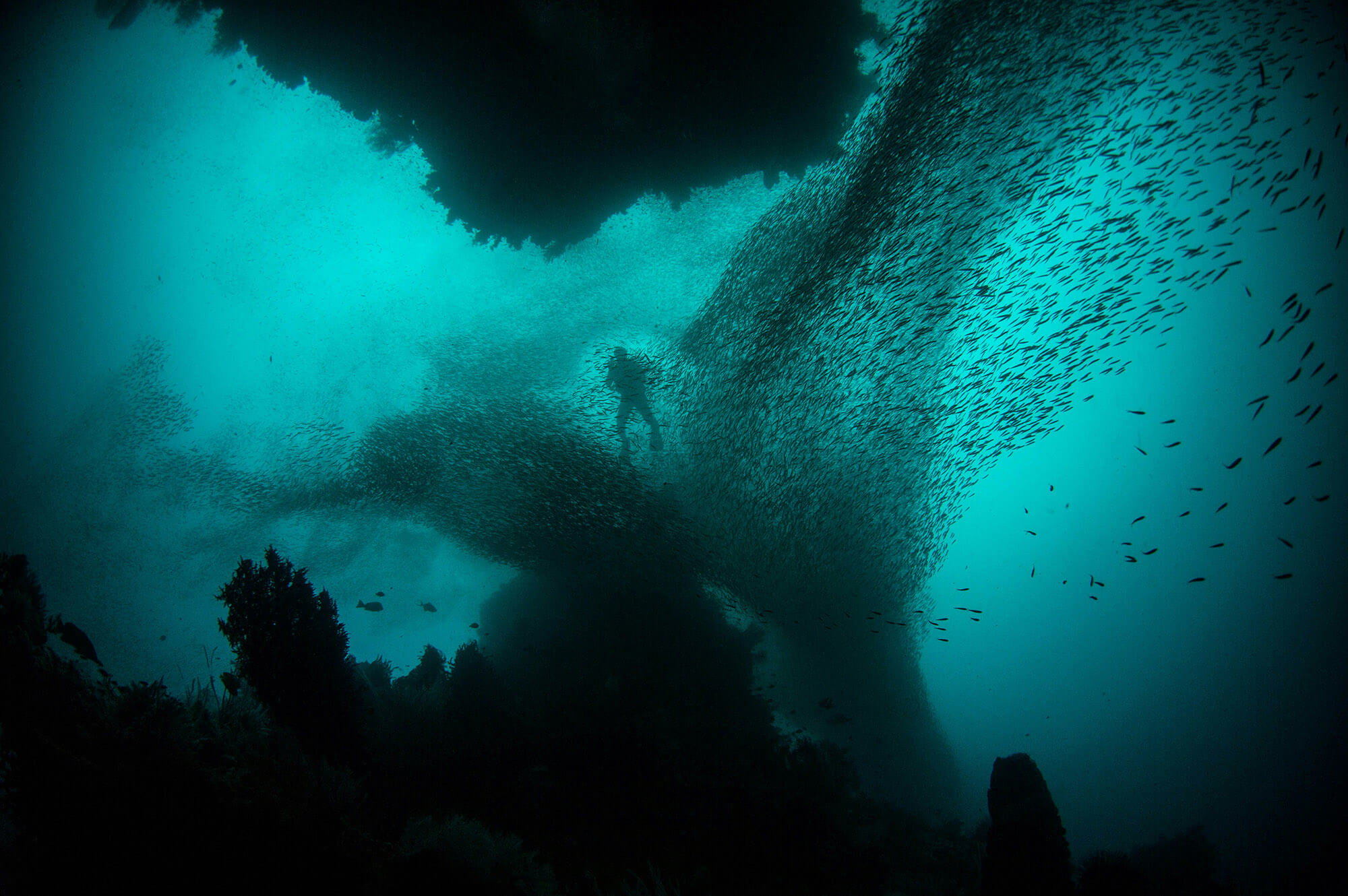
Alex Rose | Unsplash
PML scientists are among the 590-plus experts from 86 countries who contributed to the third World Ocean Assessment (WOA III), launched on World Oceans Day (8 June). The 1,600-page report, the only integrated global assessment covering the environmental, economic and social dimensions of ocean health, delivers an urgent message: the ocean is under severe, accelerating stress yet the solutions exist if the international community acts now.
Five years in the making, the interdisciplinary report intends to inform decision makers on the state of the global marine environment, whilst also coordinating with other relevant assessments (e.g. the Intergovernmental Panel on Climate Change [IPCC] and the Intergovernmental Science-Policy Platform on Biodiversity and Ecosystem Services [IPBES]) and engaging with the UN Ocean Decade and relevant UN bodies.
Access the full report here >>
WOA III offers a detailed overview of the mounting pressures on the ocean and the action needed to safeguard it. The report focuses on the challenges of human-induced pressures on the ocean, emphasises the importance of ocean data, information, and management approaches and presents sustainable pathways for ocean economic resources and for human activities in the ocean, to help promote a sustainable and inclusive ocean economy.
PML researchers served as Coordinating Authors or Writing Team members for sections of the report, spanning the topics of pollution, geoengineering, carbon cycling, ocean and human health and habitat change:
Professor Mike Moore (PML Fellow)
- Coordinating Author of Section 5: Socio-ecological systems.
- Writing Team member for Section 4: Change since the second World Ocean Assessment, Chapter 6: Pressures: Pollution.
- Writing Team member for Section 5B, Chapter 2: The ocean and human health.
- WOA II: Convenor for Chapter 8B: Human health as affected by the ocean.
Professor Jerry Blackford (Principal Scientist)
- Coordinating Author of Section 5A, Chapter 10: Geoengineering.
- “The chapter shows that geoengineering is currently far from being a panacea for climate change. Urgent and robust scientific research is needed to quantify potential benefits.”
Dr Sevrine Sailley (Senior Ecosystem Modeller)
- Writing Team member for Section 5B Chapter 1: The Role of Ecosystems in the Carbon Cycle.
Dr Olivia Rendón (Senior Environmental Economist)
- Writing Team member for Section 5B Chapter 1: The Role of Ecosystems in the Carbon Cycle.
Professor Steve Widdicombe (Director of Science at PML during the production of the assessment. Presently Director of the Sharjah Marine Science Research Centre [SMSRC] at the University of Khorfakkan in the UAE)
- Coordinating Author for Section 5B Chapter 1: The Role of Ecosystems in the Carbon Cycle.
Dr Ricardo Torres (Physical Oceanographer at PML during the production of the assessment)
- Writing Team member on Section 4: Change since the second World Ocean Assessment.
- Writing Team member on Chapter 5: Habitats Sub-chapter 5f: Estuaries and deltas.
Jon White from PML’s Marketing & Communications team also produced graphics for the report:
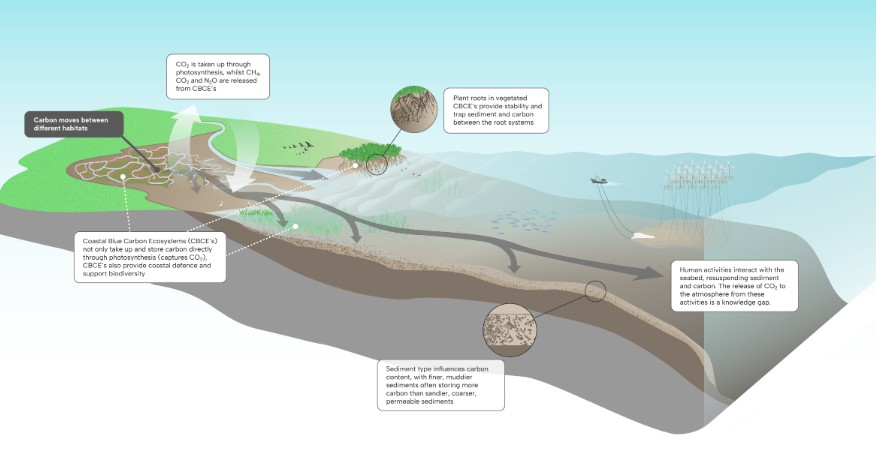
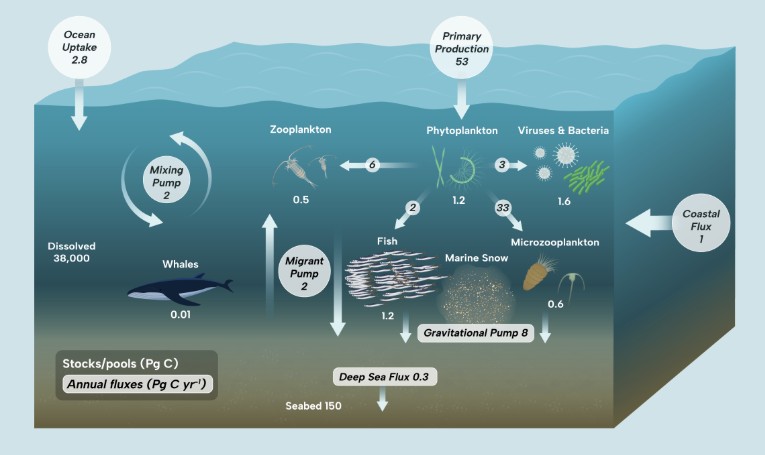
The latest assessment underlines that the ocean is under severe, compounding and accelerating anthropogenic stress yet viable solutions exist. It also states that humanity’s future depends on urgent, science-backed global collaboration to halt ecosystem decline, address inequities and transition to a sustainable ocean economy.
WOA III identifies five interconnected challenges demanding immediate policy attention:
Severe and cumulative stress: Human activities, such as overfishing, shipping and coastal development, are reshaping marine ecosystems, driving biodiversity loss across nearly every habitat and worsening widespread pollution.
Climate change transformations: Dramatic shifts from ocean warming and sea-level rise are significantly altering marine conditions, food systems and coastal safety.
Deep inequalities in risk & benefit: Ocean-related risks and economic benefits are highly unevenly distributed. Vulnerable coastal, island and Indigenous communities face the greatest exposure to environmental changes, highlighting a critical need for social equity.
Fragmented governance: While international cooperation is growing, the existence of 57 separate global treaties for ocean protection has led to a fragmented approach and calls for better integration.
Solutions are available: Despite these mounting pressures, the report highlights that pathways forward exist. These solutions centre on emission reductions, nature-based approaches, expanded marine protected areas and the inclusion of Indigenous/traditional owner/local community knowledge.
WOA III was produced through the UN’s Regular Process for Global Reporting and Assessment of the State of the Marine Environment. The Regular Process is an intergovernmental process guided by international law, including the United Nations Convention on the Law of the Sea and other applicable international instruments. It is accountable to the United Nations General Assembly.
The assessment’s findings reinforce the scientific direction that PML’s research, from ecosystem modelling to environmental economics, continues to provide in support of evidence-based ocean governance.