Story | 27 November 2026
"Science isn't just something you learn at school. It's something that you can do." 1000s of students 'POP' into PML
PML welcomed in thousands of students across the UK into the laboratory last week as it hosted ESERO-UK’s Protecting Our Planet Day (POP26) – a livestreamed event inspiring the next generation to explore how science, technology and STEM careers can help protect our planet.
Whilst PML has been involved in previous years of POP – showcasing research using satellite technology to detect marine plastic pollution, and how PML scientists use ‘ocean colour’ to monitor ocean health from space – this is the first time the event has been hosted here, and this year, the event saw a record-breaking 270,000 registrations for POP26.
With the theme for POP26 centred around the ocean, and in addition to the leading satellite Earth Observation taking place at PML, the laboratory made an ideal location – described as “the perfect place” by Tom Lyons, ESERO-UK Manager at STEM Learning UK.
But hosting aside, PML scientists were involved in multiple sessions throughout the day, demonstrating the breadth of careers available for young people to consider.
PML’s Director of Science, Professor Tim Smyth, kicked off proceedings in the morning with an inspiring and heartfelt message to young people:
“…And that’s perhaps the most important thing I’d like you to take away from today. Science isn’t just something you learn at school. It’s something that you can do. The people you’re going to meet today were once sitting in classrooms just like you, wondering what they might do when they grew up.
So ask questions. Be curious. And if something you see today makes you think, I’d like to do that, remember that thought. Perhaps one day some of you will be the scientists helping us understand and protect our planet.”
Read the full special message prepared by Professor Smyth >>
Images: PML’s Director of Science Professor Tim Smyth welcomes students to POP26
(click images to enlarge)
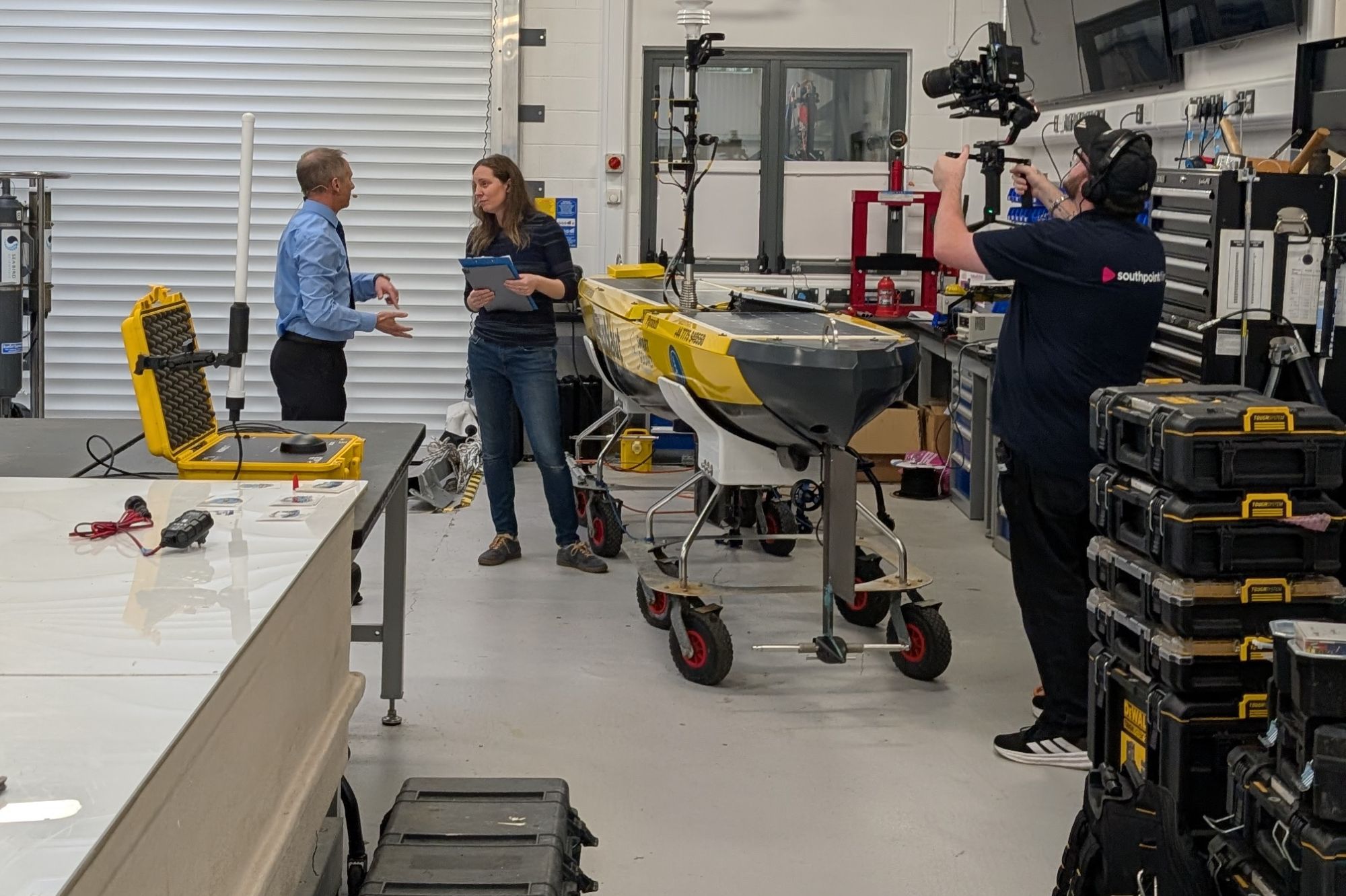
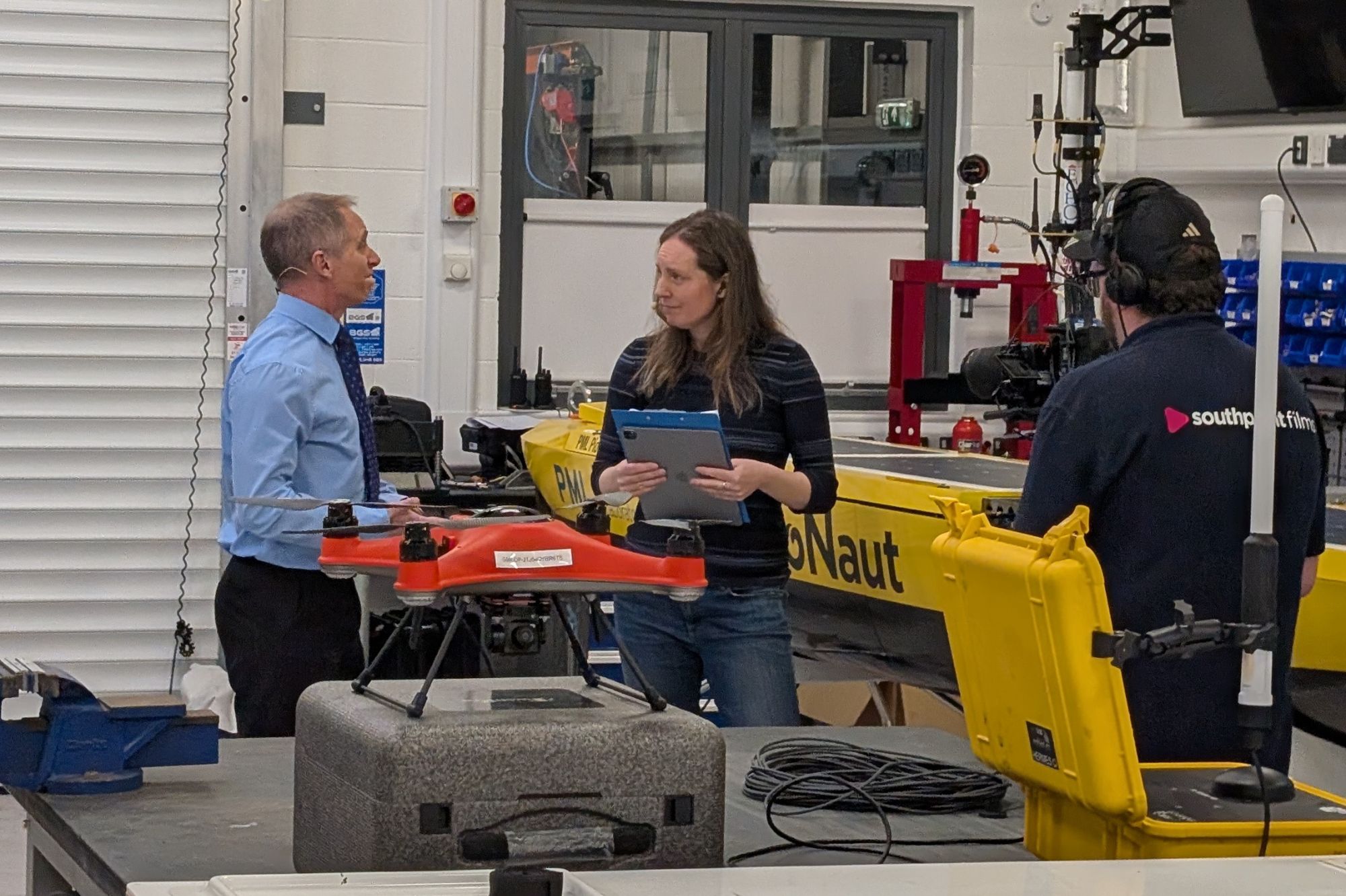
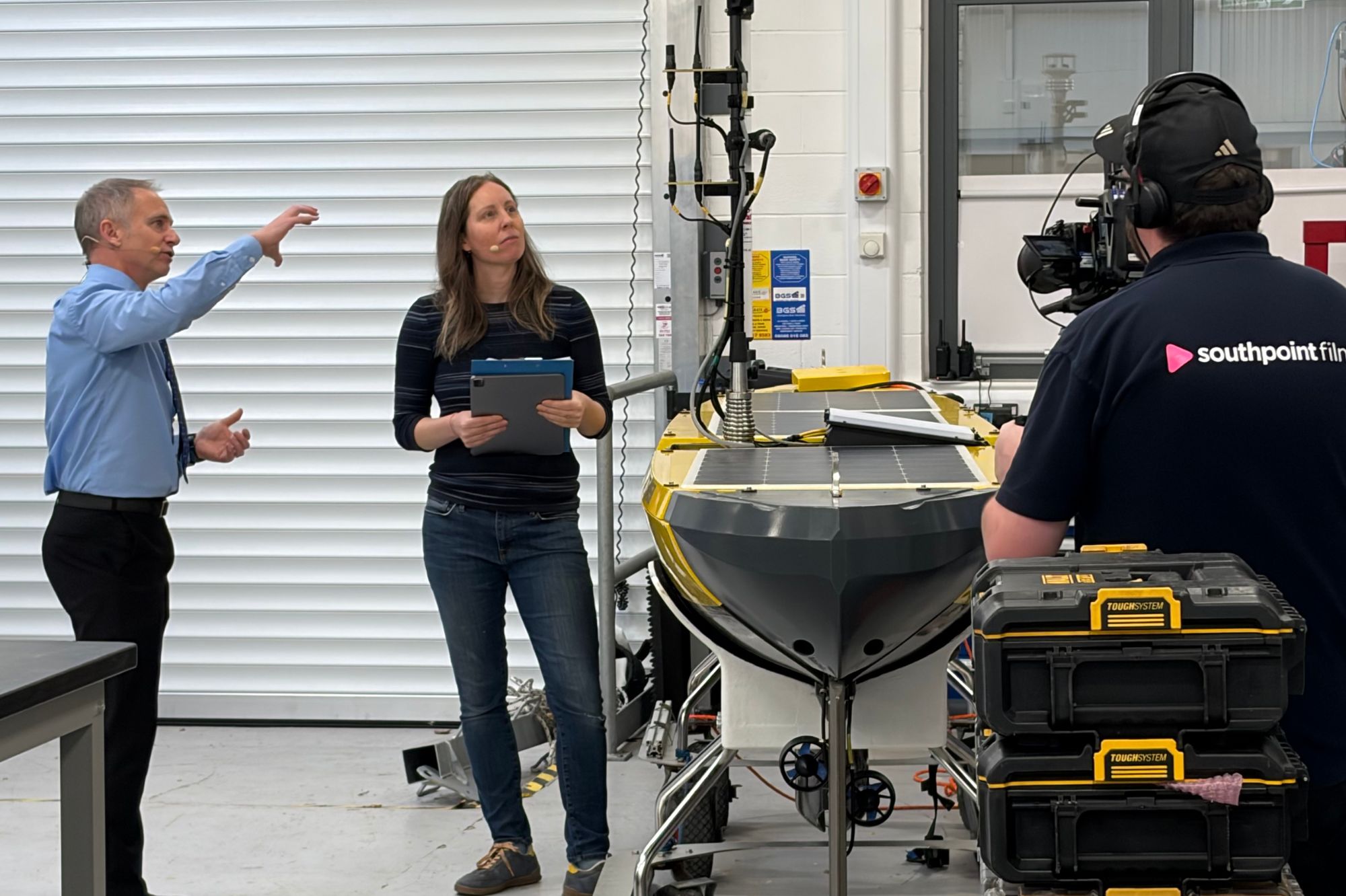
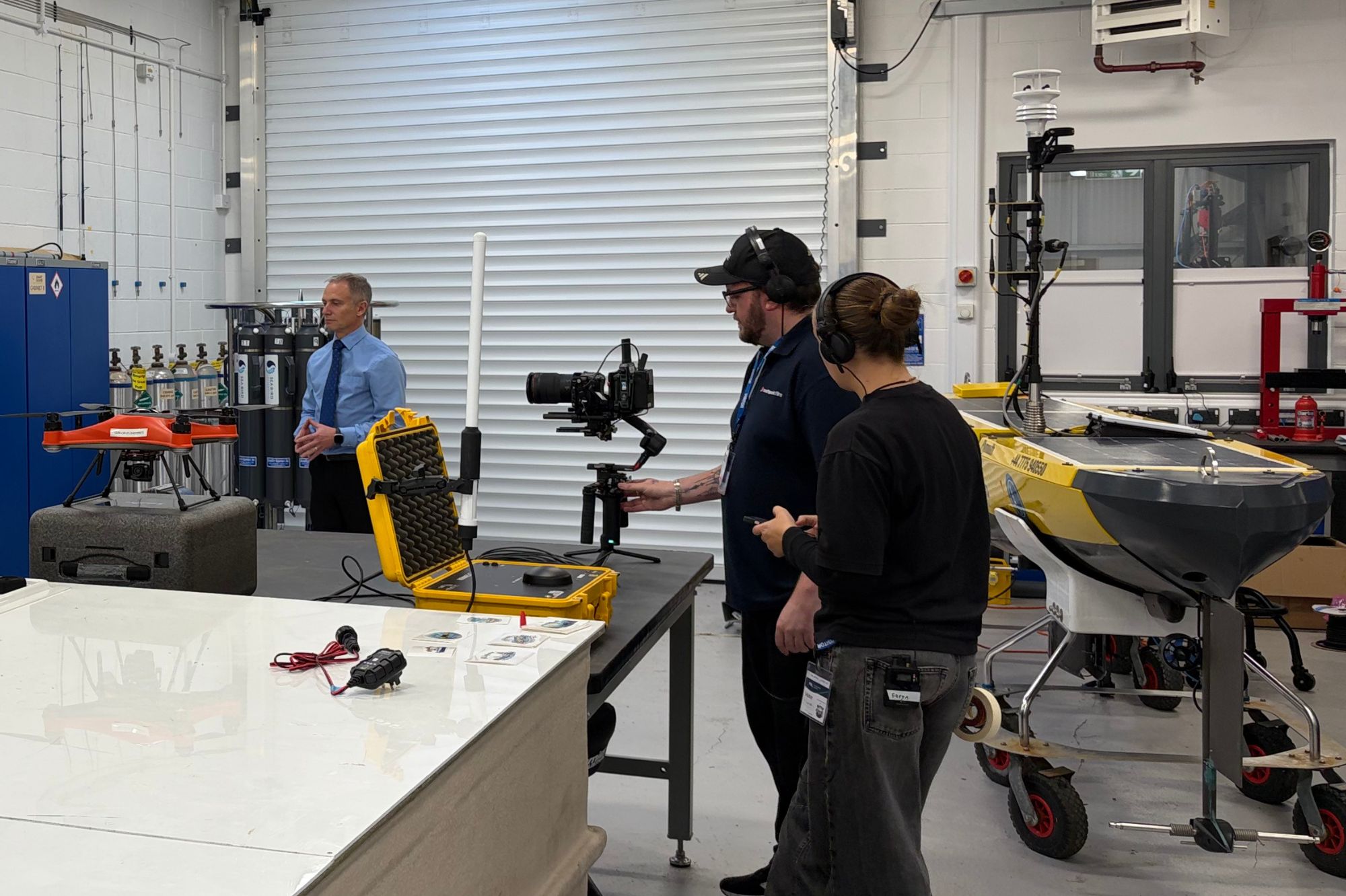
Image: Prof Smyth in the Smart Sound Plymouth laboratory with the POP26 production team. In his speech to viewers, he said: “Here at PML, our job is to understand the ocean, how it is changing, why that matters for all of us, and, most importantly, what we can do to protect it. And we study it at almost every possible scale. We look at some of the smallest living things on Earth, microscopic phytoplankton, which you can’t see individually with your eyes. But we also look down on the whole planet from hundreds of kilometres above us, using satellites orbiting in space.”
A big focus was the ‘Protecting our Ocean’ session, where PML scientists revealed how the ocean is one of our greatest allies in the fight against climate change, and how they’re using science and technology to monitor – and protect it – in return.
In the 13-minute video, PML’s Rose Coggins – who is an Analytical Chemist at PML – played the role of presenter, taking students on a fascinating journey to explain the ocean’s vital role in regulating our climate, including how it produces around half of the oxygen we breathe, absorbs carbon dioxide and helps lock carbon away.
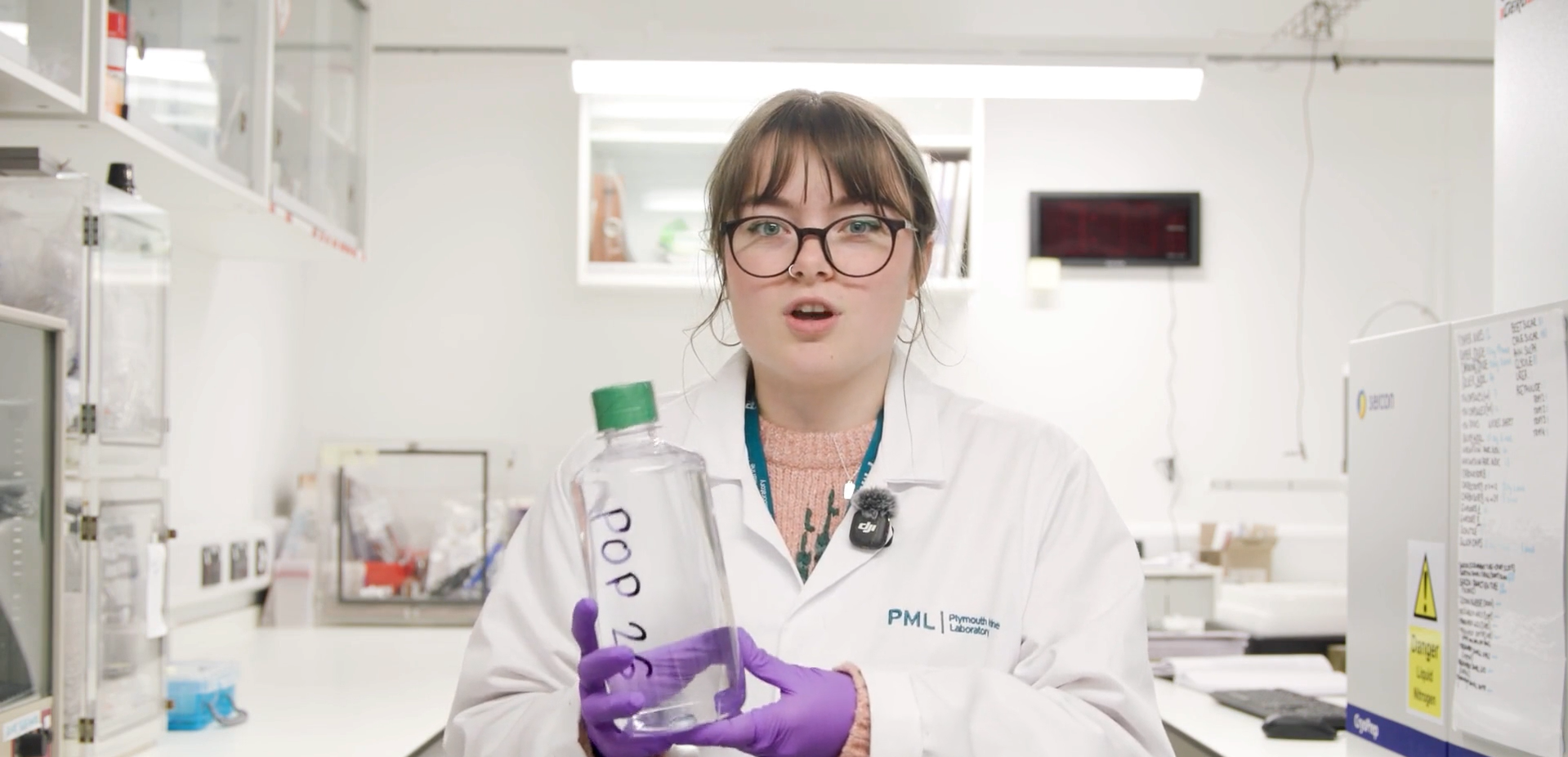
Image: PML’s Analytical Chemist Rose Coggins. Rose is studying a full-time degree at the University of Plymouth whilst also working full time here at Plymouth Marine Laboratory.
The session, aimed at secondary schools, made clear links between science taught in the curriculum with the science taking place here at the laboratory:
“Now we all know that trees and forests are important for us to live. Through a process called photosynthesis, plants absorb carbon dioxide and release oxygen, the oxygen that me and you need to breathe. But, did you know? The ocean is also full of life that can photosynthesise, just like plants on land taking in carbon dioxide and giving us oxygen. And, that bit about carbon is important. Carbon dioxide is the greenhouse gas that we’re most worried about in terms of driving global warming and climate change.”
The video followed Rose (and her ‘POP26’ bottle of seawater!) alongside PML’s Dr Dan Clewley, lead research software engineer at PML and head of service for NEODAAS, in a scientific journey exploring the ocean and its role in the carbon cycle.
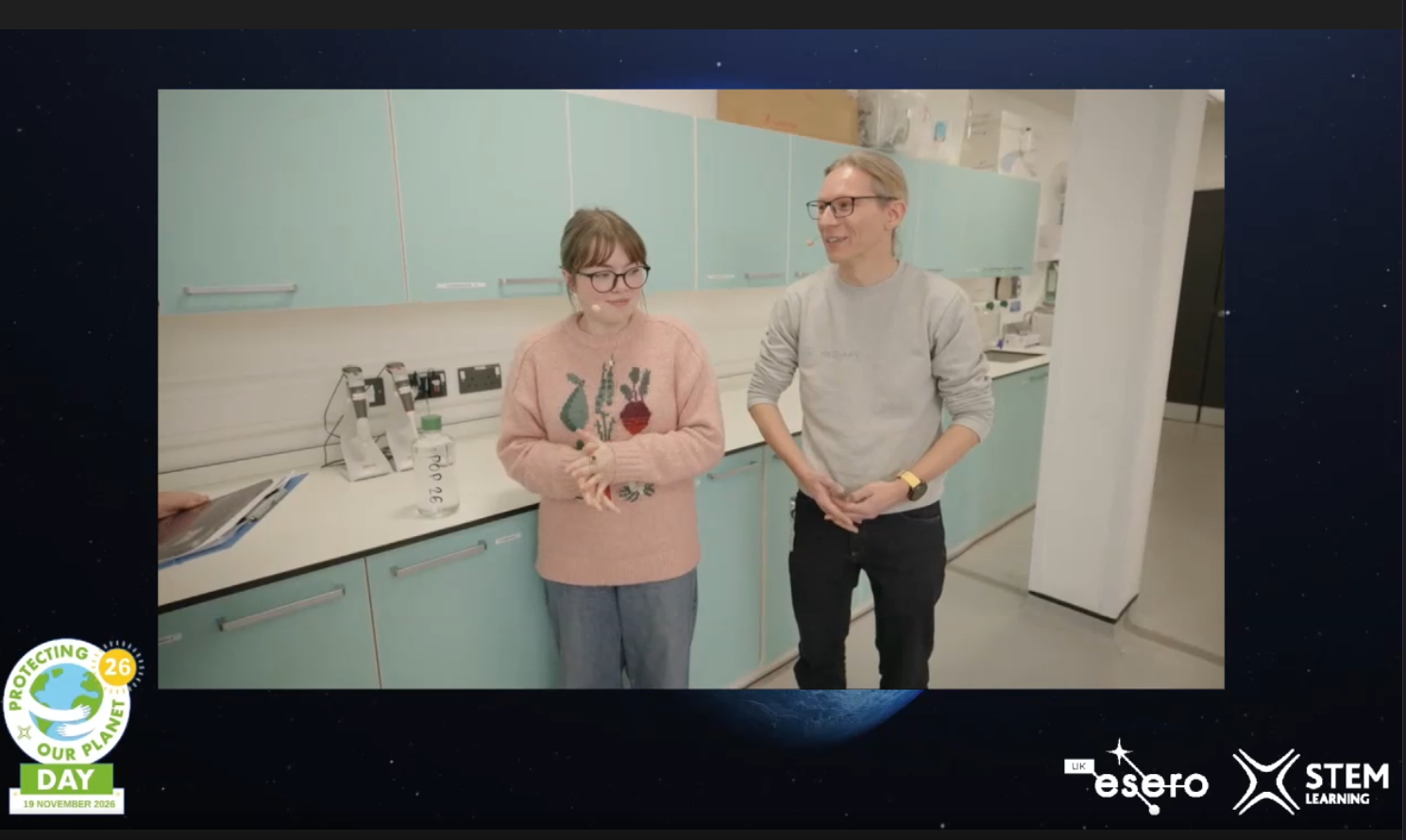
Image: Rose Coggins with Dr Dan Clewley, during the live introduction to the ‘Protecting the Ocean’ session for POP26, before transitioning to the pre-recorded video: ‘How does the ocean help in our fight against climate change?”
WATCH NOW: How does the ocean help in our fight against climate change?
The narrative followed a journey of discovery: from collecting in situ samples at sea, to analysing seawater in the laboratory and exploring the microscopic life within it, before zooming out to the bigger picture – using satellite data to monitor the health of our ocean from space.
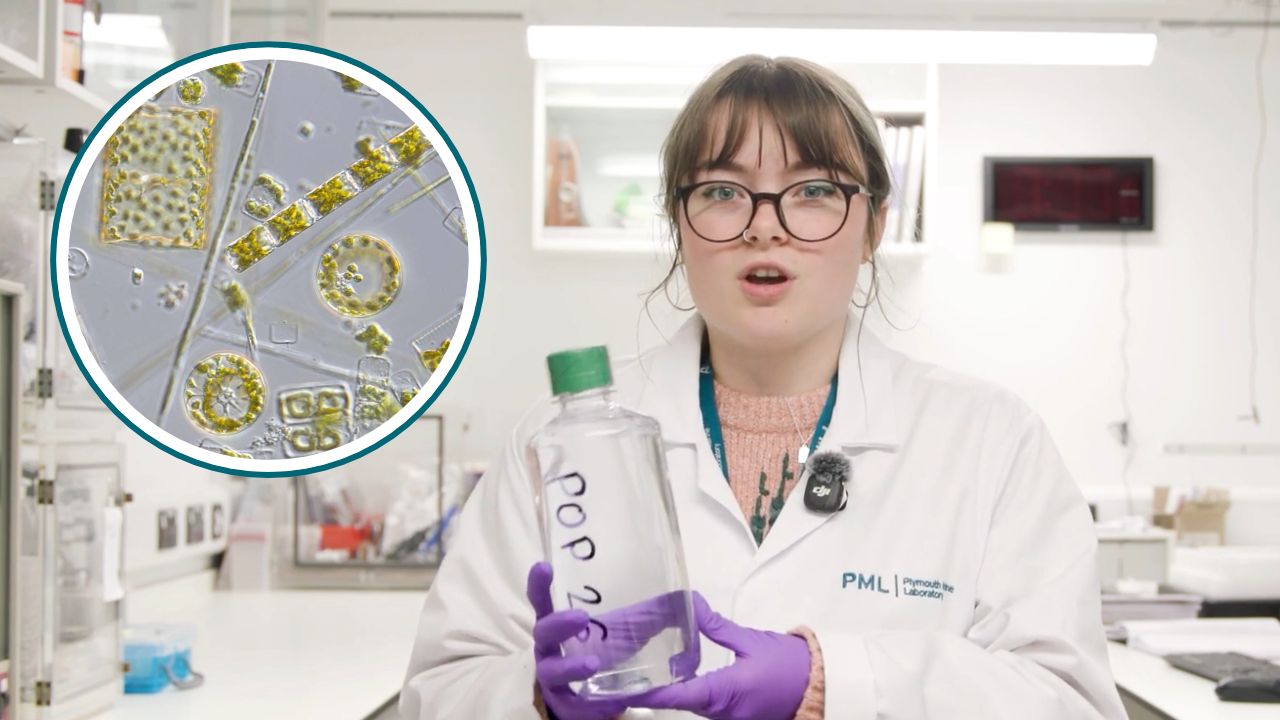
Students followed Rose taking in situ seawater samples onboard PML’s RV Plymouth Quest, before they were taken back to the lab, where PML’s Phytoplankton Apprentice Bryony Squires revealed the microscopic world of photosynthesising life in just a drop of seawater.
Images: Bryony reveals the ‘invisible’ photosynthesising life in just a drop of seawater
(click images to enlarge)
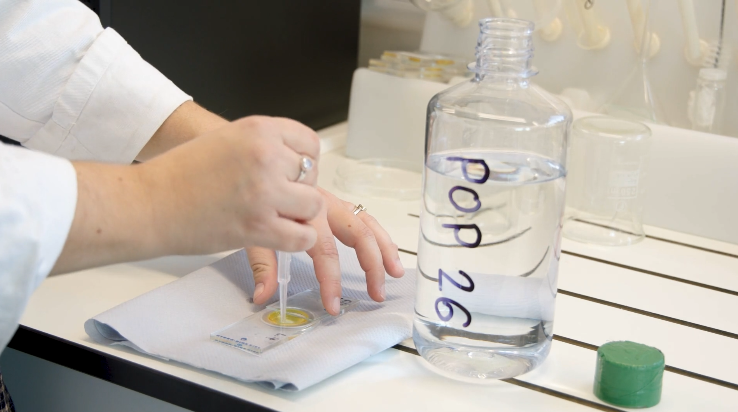
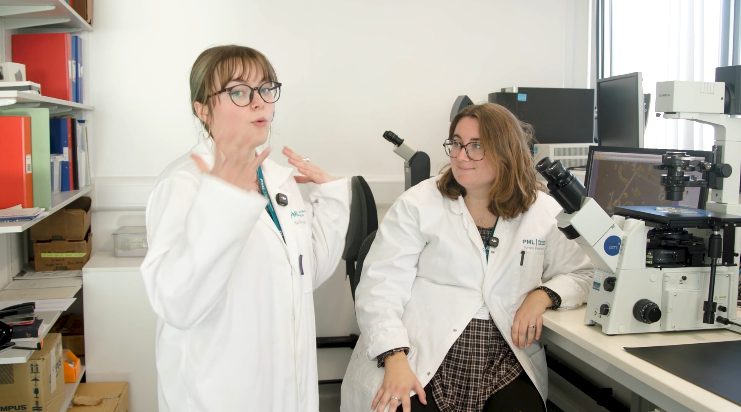
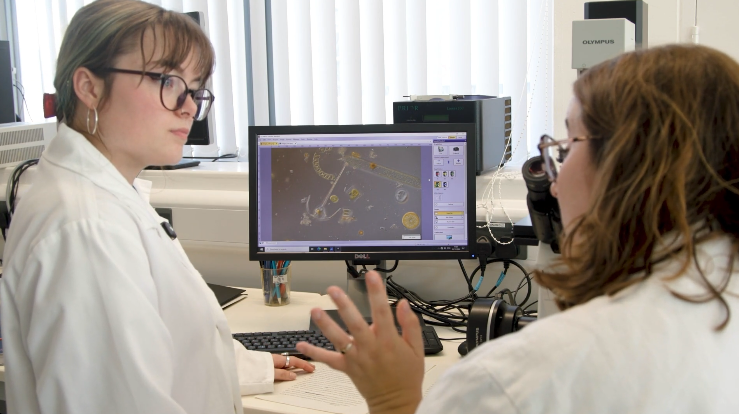
Bryony explains to viewers that around 50% of the oxygen on Earth comes from the ocean, and that the majority of this production is from oceanic plankton — drifting plants, algae, and some bacteria that can photosynthesize – and that these microscopic organisms play a vital role in removing carbon from our atmosphere and locking it away.
Images: Bryony’s phytoplankton images
(click images to enlarge)
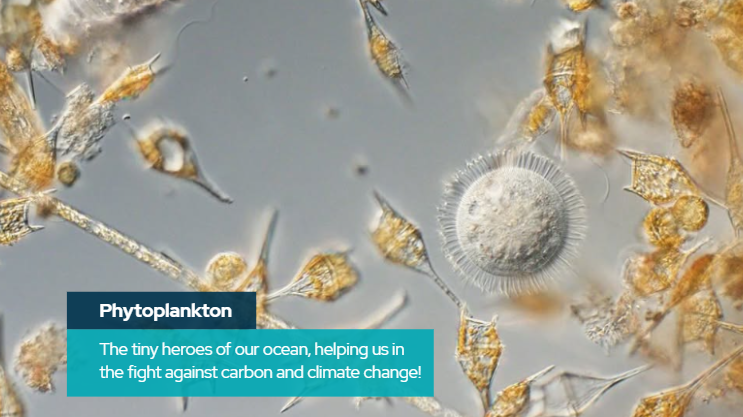
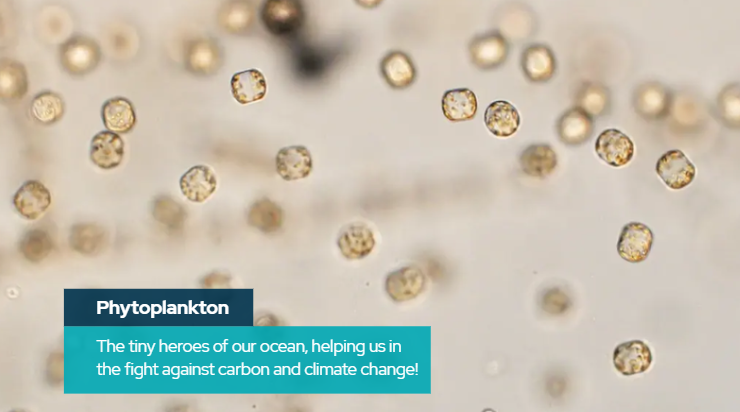
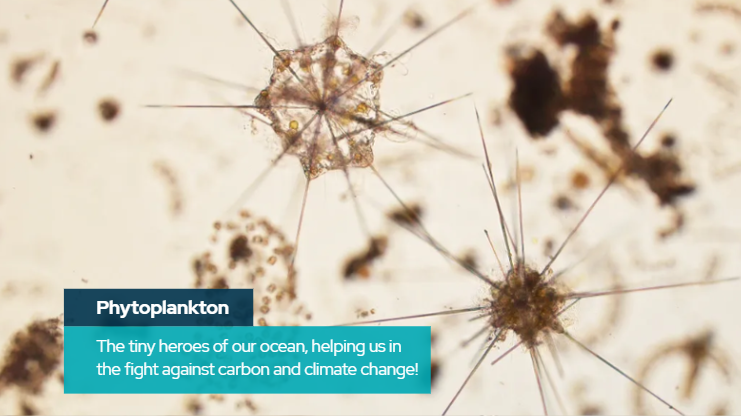
Images above: Beautiful photos of phytoplankton captured underneath the microscope by Bryony Squires.
Rose then took viewers along to her own lab, where she showcased some of the technology she uses to measure levels of carbon in the seawater – and introduced key scientific facts such as the different types of carbon: organic and inorganic and their sources. “Did you know? All living things on Earth are made of carbon, me and you included!”
She then met back up with Dr Clewley to look at the ‘bigger picture’, and how he and his colleagues work with space agencies, using satellites to monitor the health of the ocean on a much greater scale. Dr Clewley introduced how satellites measure the light reflected from the ocean, and how the variations in colour can teach us about the contents of the water, allowing us to monitor changes over time.
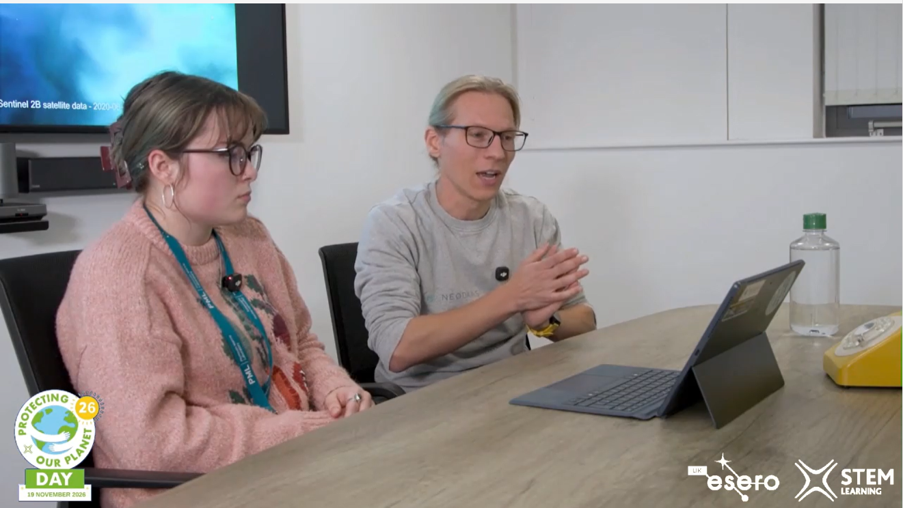
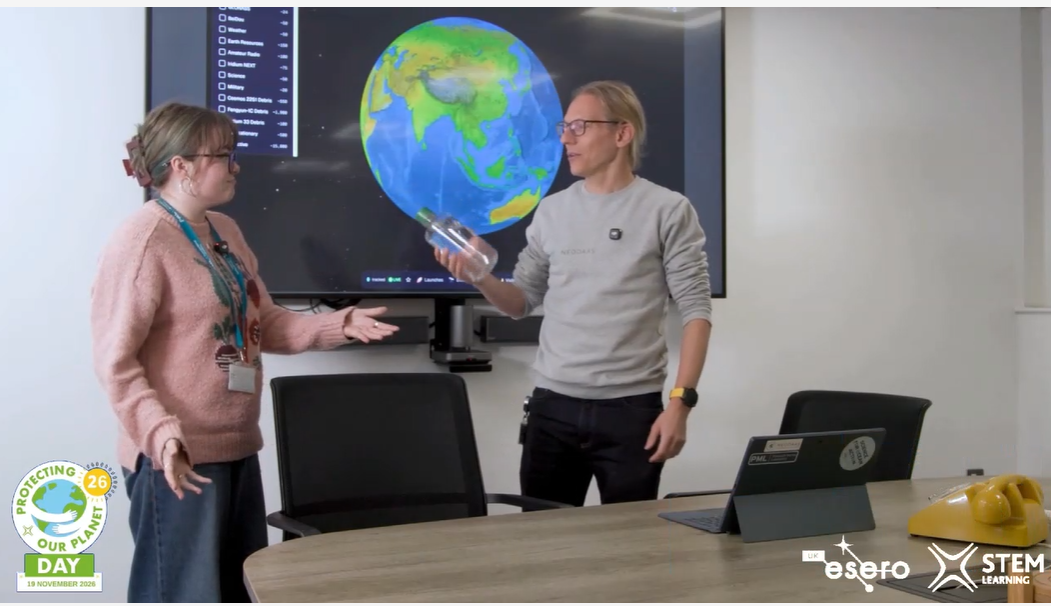
Images above: Rose and Dan in his ‘lab’, which is mostly behind a screen and office-based so as to analyse satellite imagery.
Dr Clewley also shows viewers incredible plankton blooms observed from space and how satellite data are used to estimate chlorophyll concentration of phytoplankton through projects such as ESA Climate Change Initiative CCI, and because of their role producing oxygen and sinking carbon, how this relates to the carbon cycle and ocean health.
Rose then speaks to PML’s Dr Victor Martinez–Vicente, where he explains how the in situ data she collected earlier that day on RV Plymouth Quest is actually helping to prepare for the next-generation of satellite missions for the European Space Agency (ESA), through the SUPaCOOL project.
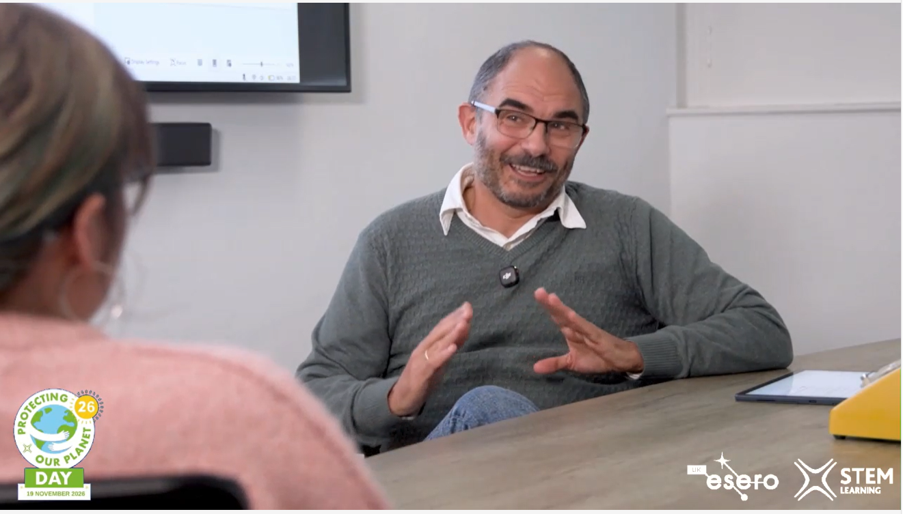
Image: Dr Victor Martinez-Vicente, Bio-optical oceanographer at PML, Principal Investigator of the SUPaCOOL project, which is funded by the European Space Agency.
He explains how this work will ultimately give us a better idea of what our future holds and it will give us the data we need to protect our ocean, and planet. He said:
“It is very important that we really understand the marine ecosystem, and by having the most reliable information and data that we can get from many sources – be it from in situ, from a satellite, from a drone, or from an autonomous vessel – we really need all of this information to understand what is going on, so that we can be prepared and be doing whatever we can to protect the water.
In a similar way that we need programmes like Blue Planet, which talk about bigger things that you can see, like a very nice whale or a seal, to raise awareness, we are doing our bit by looking at the things that you really cannot see with your eye, but that are really, really important for life in the ocean.”
Victor linked the story to the next part nicely, as we shared our ‘Protecting the Ocean’ session with the producers of BBC’s Blue Planet III. The producers gave students a glimpse behind the scenes, sharing unreleased snippets from the current series and highlighting the important role that film, storytelling and creative communication can play in raising awareness of the natural world and inspiring ocean advocacy.
WATCH NOW: How does the ocean help in our fight against climate change?
Dr Dan Clewley, who led PML’s involvement in this year’s POP26, said:
“When I was at school, anything related to science and technology immediately caught my attention, and that sense of curiosity and excitement has never really gone away. ESERO-UK’s Protecting Our Planet Day is a fantastic opportunity to share that excitement with the next generation while showing how science and technology are helping us understand and protect our planet.”
“With more than 270,000 registrations, Protecting our Planet reaches an incredible number of young people. Hosting at Plymouth Marine Laboratory this year gave us the chance to showcase some of the work I’m involved in using satellite data, as well as the work of colleagues. We really wanted to highlight the breadth of opportunities in marine science. We had great fun finding engaging ways to present our work, and I hope it inspired some young people to think about where their own interests and curiosity could take them.”
Rose, who is passionate about scientific communication, commented on her involvement in the film:
“I had such an incredible time filming and presenting the POP 2026 for PML. It was so amazing to be able to share our science from sample to lab to satellite. As someone who grew up obsessed with biology and chemistry at school, I loved to see passionate people just like me being scientists. I feel so honoured to have taken part in inspiring so many budding scientists and engineers who will go on to protect our ocean and our planet.”
Beyond the ‘Protecting our ocean’ session, PML colleagues also helped students discover the some slightly different STEM careers, with PML’s Marine Robotics Technologist Ross Sanders chairing a careers session to share how his background in technology and engineering have led to a career tackling real-world environmental challenges.
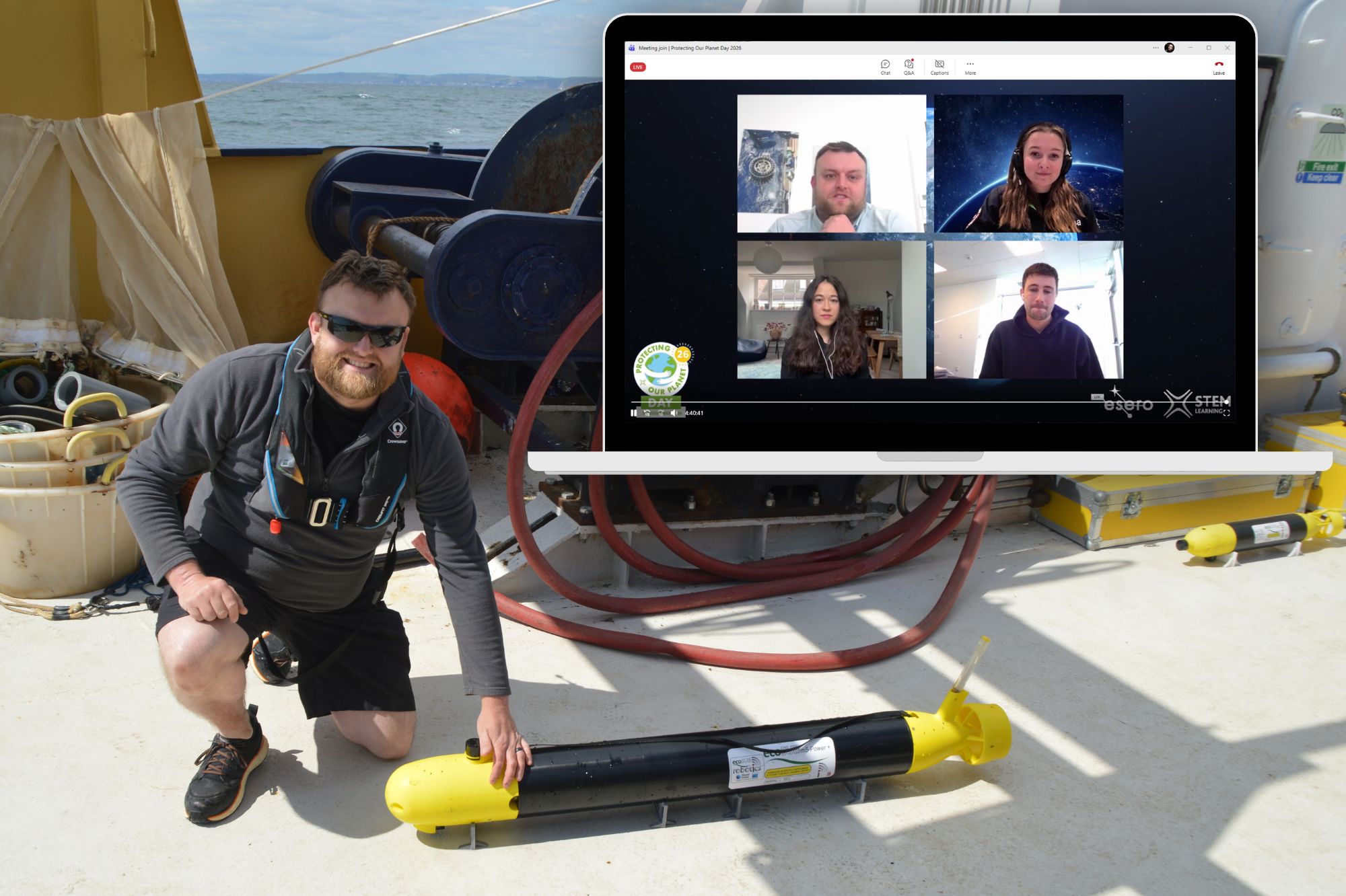
Image: PML’s Ross Sanders chairing the ‘Protecting with Engineering’ careers session, it is the second year running he has supported POP sharing his career journey and tips. Ross is responsible for the operation and development of automated marine systems such as data buoys, autonomous underwater vehicles and uncrewed surface vehicles at PML and Smart Sound Plymouth.
By opening a window into the science happening at PML, POP26 offered students an opportunity to see how different skills, disciplines and technologies come together to better understand and protect our planet.
Tom Lyons, STEM Enrichment Lead at ESERO-UK, said: “We’ve been impressed by the engagement and support the ESERO-UK team received from PML staff, and hope that PML will be involved in many POPs to come!”
Find out more about Protecting our Planet Day via the STEM Learning UK website here >>
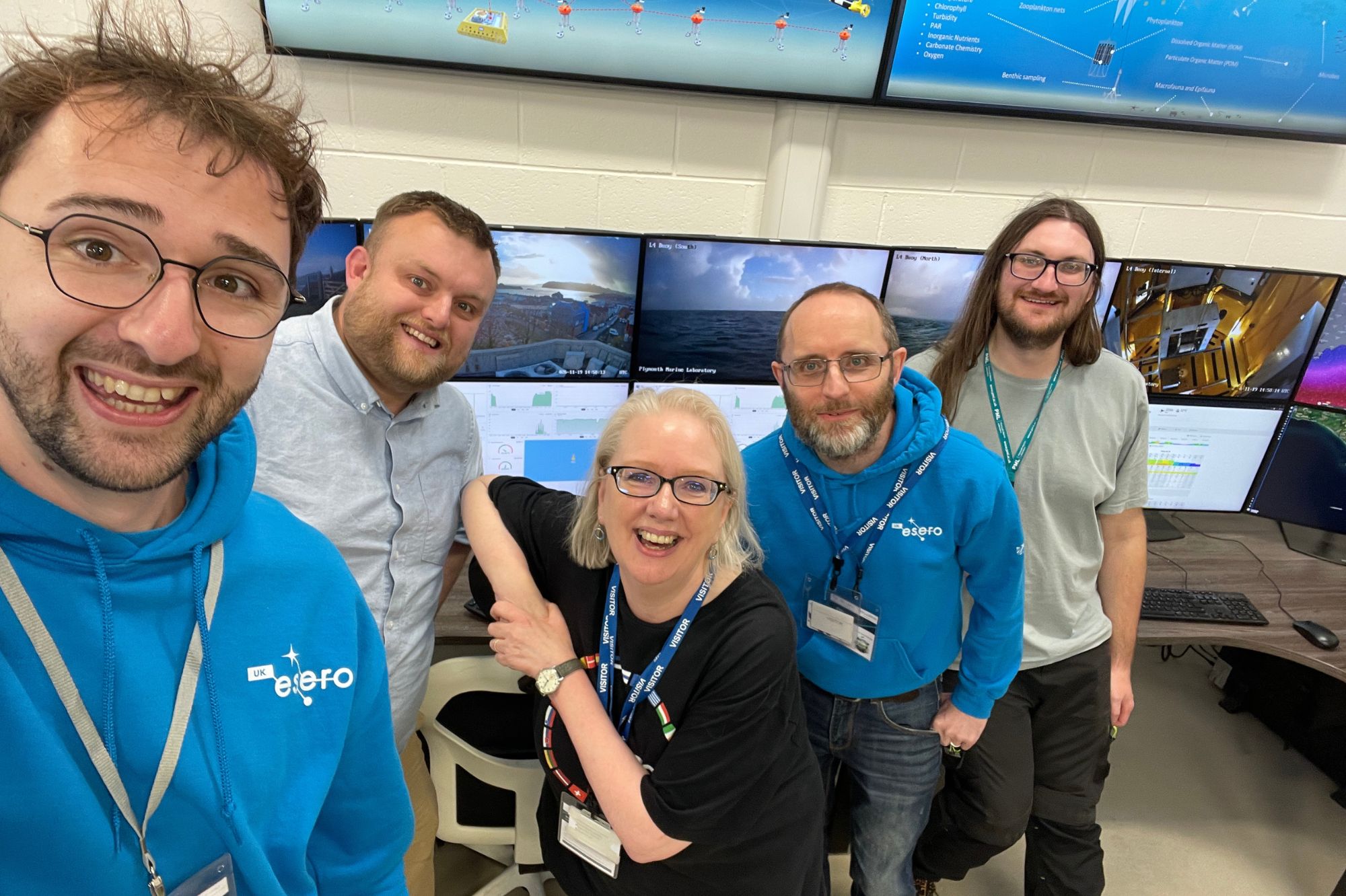
Image caption: This vital day of outreach was made possible thanks to the efforts of organisers Tom Lyons STEM Enrichment Lead at ESERO-UK – STEM Learning UK and Angie Watson. From left to right: Ben Rule (ESERO-UK), Ross Sanders (PML), Angie Watson (ESERO-UK), Tom Lyons (ESERO-UK), Kieran Piechelski (PML).
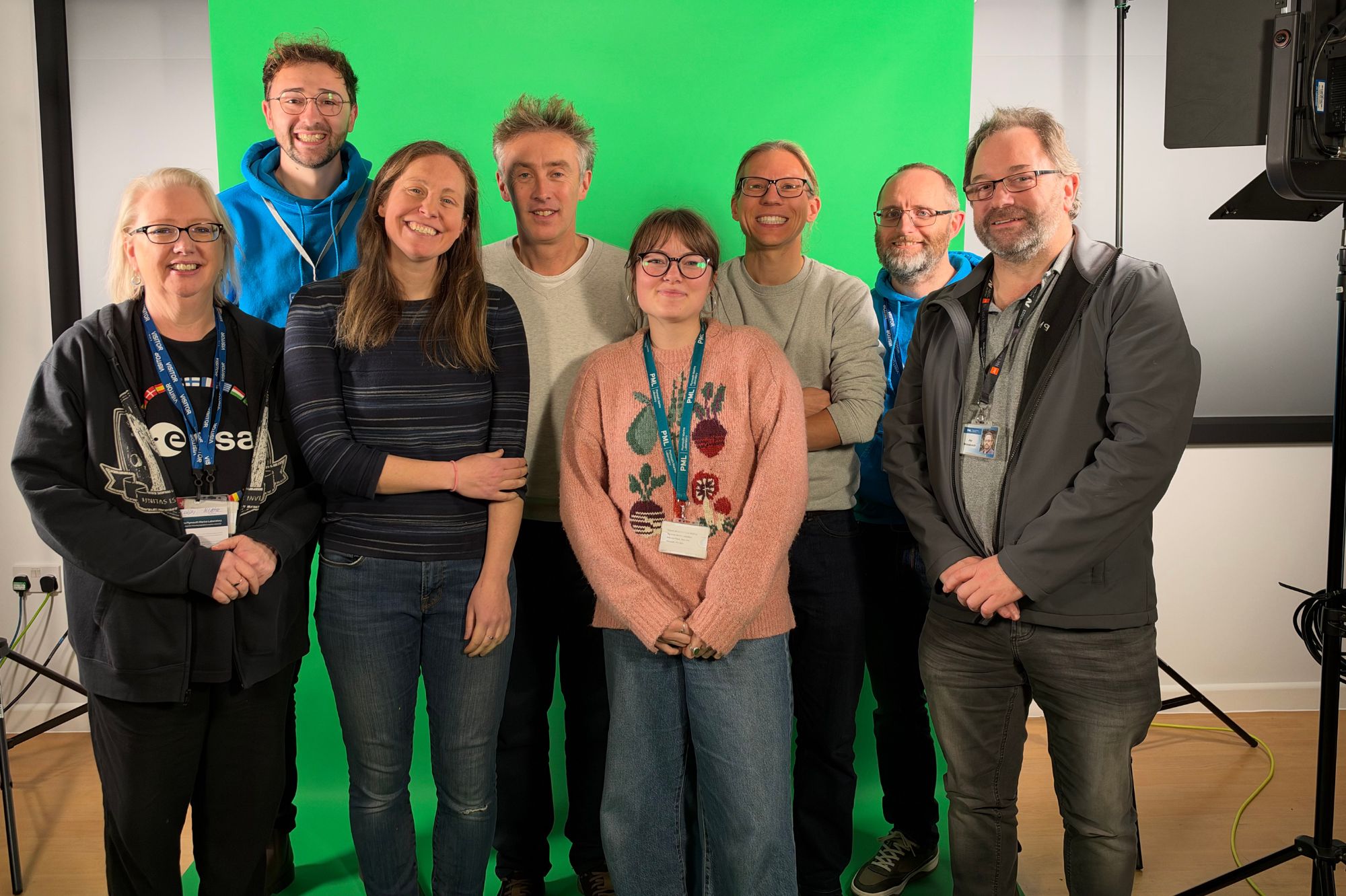
Image: The POP26 production team and PML colleagues.