Story | 03 July 2026
Hundreds of jellyfish wash ashore Southwest beaches - what is causing such large blooms?
Following a mass jellyfish stranding witnessed yesterday [2nd July 2026] in Cornwall, PML scientists explain why jellyfish blooms happen, what brings them ashore, and whether warming seas could make these events more common.
![Image: A mound of jellyfish piled beside the Bude Sea Pool wall at Summerleaze Beach, Bude, Cornwall. The photo and video below were taken yesterday [2nd July 2026] by PML’s Ari Winfield “rather unexpectedly” on her lunchtime walk. The types of jellyfish in the mound included mostly Moon Jellyfish, but also some Blue Jellyfish and Mauve Stingers.](https://pml.ac.uk/wp-content/uploads/2026/07/Untitled-design-4.png)
Image: A mound of jellyfish piled beside the Bude Sea Pool wall at Summerleaze Beach, Bude, Cornwall. The photo and video below were taken yesterday [2nd July 2026] by PML’s Ari Winfield “rather unexpectedly” on her lunchtime walk. The types of jellyfish in the mound included mostly Moon Jellyfish, but also some Blue Jellyfish and Mauve Stingers.
Beachgoers at Summerleaze Beach in Bude, Cornwall, were greeted by an unusual sight yesterday, after hundreds of jellyfish became stranded beneath the town’s iconic sea pool wall.
Watch now: Mass Jellyfish Strandings on Cornish beach
The striking purple carpet of jellyfish quickly drew crowds of visitors, with many wondering what could have caused so many animals to appear at once.
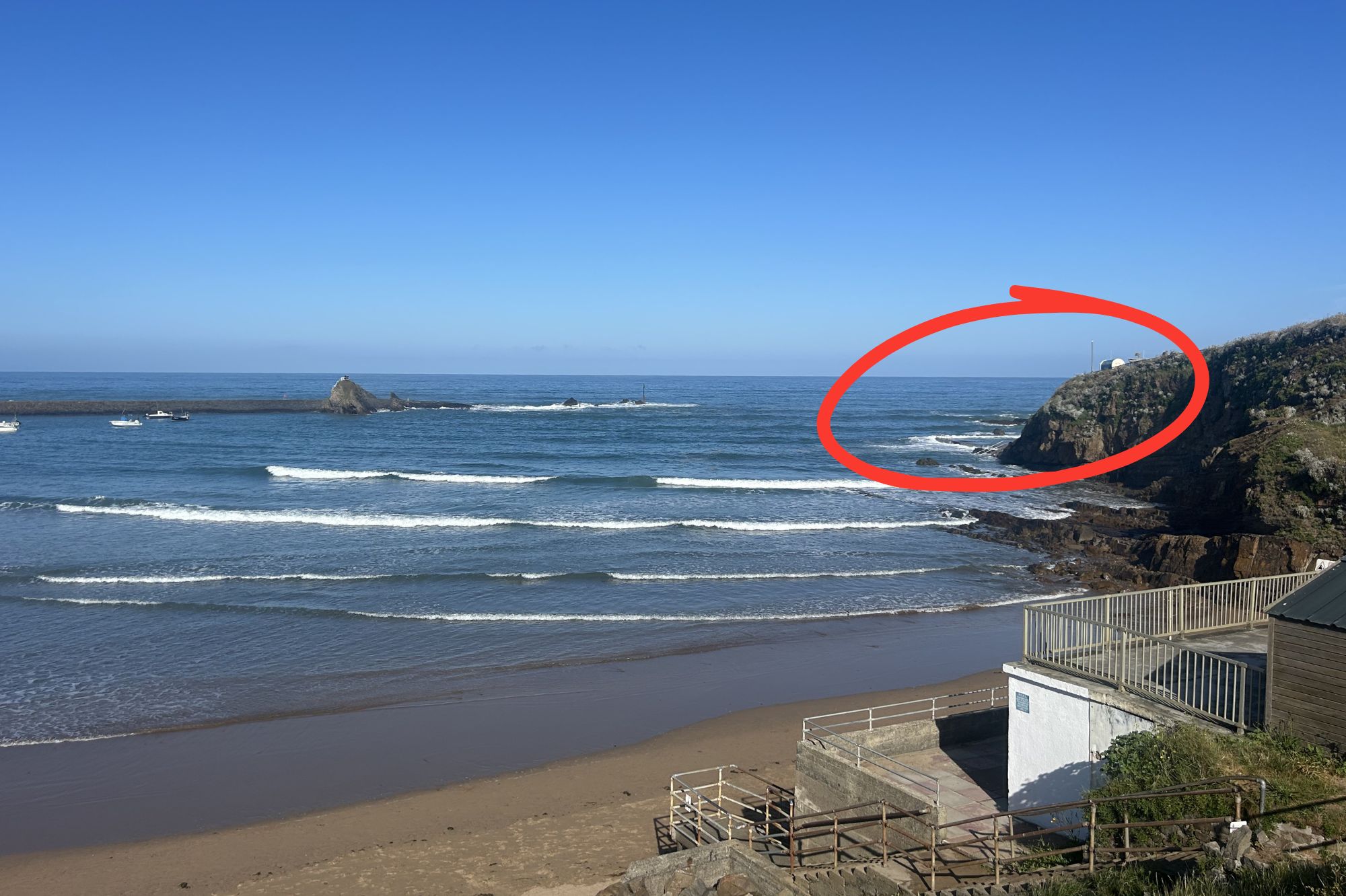
Image: Summerleaze beach at high tide, Bude, Cornwall. The large numbers of jellyfish were spotted beside the wall of the sea pool when the tide was out.
What causes jellyfish to bloom?
As parts of the UK experienced record-breaking temperatures across both May and June, we asked our scientists about whether such conditions could have driven such a large number of jellyfish.
PML’s Senior Marine Ecologist, Professor Angus Atkinson MBE, said:
“While the exact cause of these most recent blooms isn’t yet known, large jellyfish aggregations can be a natural phenomenon that can be influenced by a combination of weather, ocean currents, prey availability and, increasingly, changing ocean conditions. Some years produce enormous blooms, while others see relatively few individuals.”
“Warmer seas don’t necessarily cause jellyfish blooms, but they can favour some species by accelerating their life cycles and extending the season during which they reproduce.”
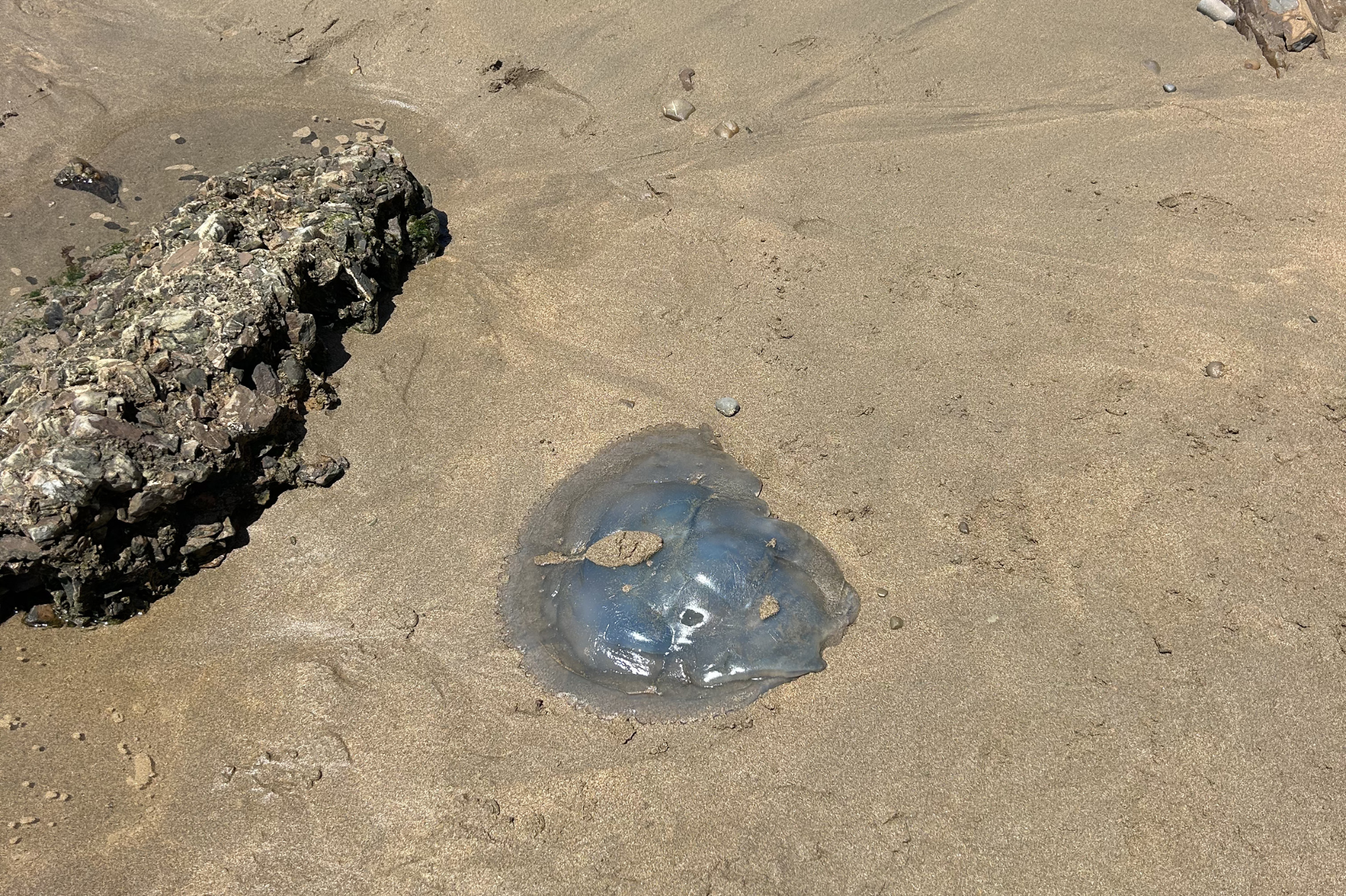
Image: A large Blue Jellyfish – “the size of a football” – was also spotted on the beach yesterday in Bude. The blue jellyfish is a common UK species found along all coastlines between May and October, it has a dome-shaped bell that can grow up to 30cm across. Young individuals may appear pale or almost colourless, developing a more vivid blue to purple colouring as they mature. Image credit: Ari Winfield – PML.
There are several factors that can combine to create the perfect conditions for jellyfish to bloom, including:
- Warmer seawater, which speeds up growth and reproduction.
- Abundant plankton, providing plenty of food for jellyfish.
- Favourable ocean conditions, including currents that retain jellyfish in productive feeding areas rather than dispersing them.
- Reduced numbers of predators or competitors, which can allow jellyfish populations to increase (although this varies by species and location).
- Successful reproduction in previous seasons, as many jellyfish have complex life cycles and blooms often reflect conditions over months or even years, not just the current weather.
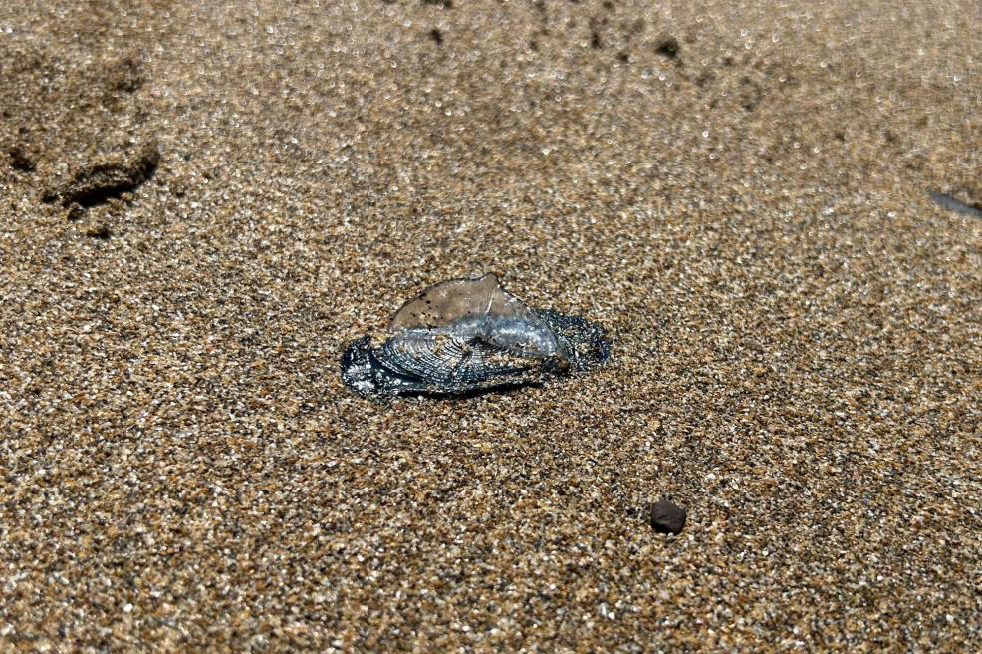
Image: Alongside the stranded jellyfish yesterday were numerous ‘by-the-wind sailors’ (Velella velella). Despite their appearance, these are not jellyfish. Instead, each Velella is a floating colony of tiny, specialised animals, similar to the Portuguese man o’ war. They are recognised by their striking blue-purple oval float, topped with a thin, transparent sail that catches the wind and helps carry them across the ocean’s surface. Beneath the float hang short tentacles, which trail through the water to capture tiny plankton.
From the perspective of jellyfish ‘food’ – being plankton – PML’s Bryony Squires, Phytoplankton Apprentice, commented on the abundance and type of plankton they have been seeing appear in their weekly seawater samples – taken about six nautical miles south of Plymouth:
“The Western Channel Observatory phytoplankton time-series’ involve weekly and twice monthly sampling at L4 and E1 monitoring stations respectively. Sampling with this frequency provides us with vital long-term monitoring data, allowing us to track changes in community composition and biodiversity. Included in the regular sampling at L4 and E1 are net samples. These net samples are analysed as soon as they arrive back at the lab- fresh from Plymouth Quest, giving us a useful overview of the general community.
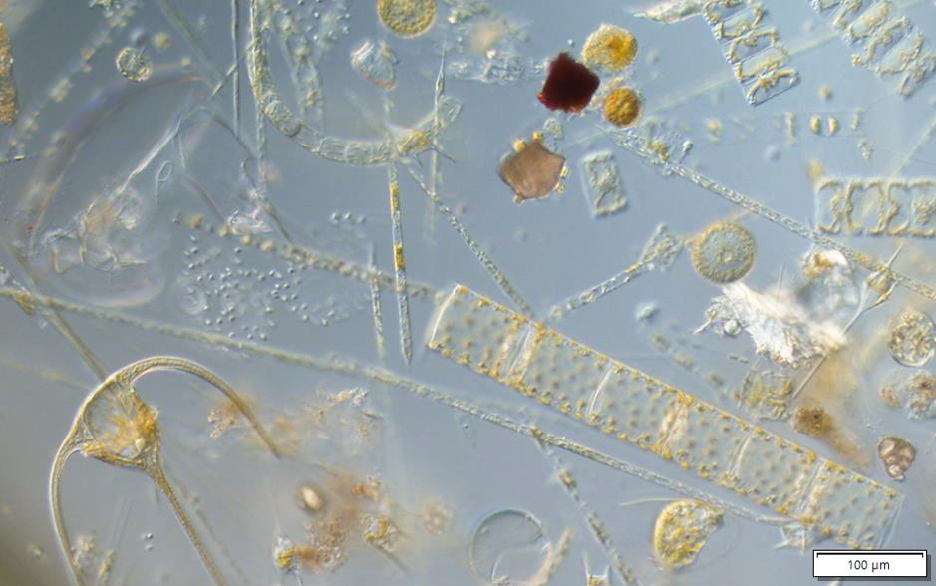
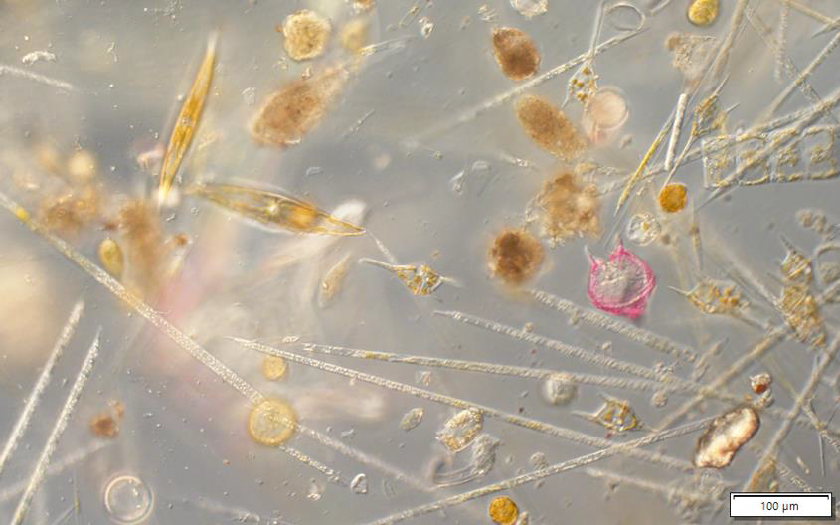
Recent L4 and E1 net samples have been packed with a wide range of Diatoms, Dinoflagellates, Ciliates and Flagellates. This can provide a rich and valuable source of food for organisms such as jellyfish in their smaller larval stages.”
Bryony shared the images below from a recent sample in June, revealing a world of microscopic planktonic life in just a single drop of seawater.
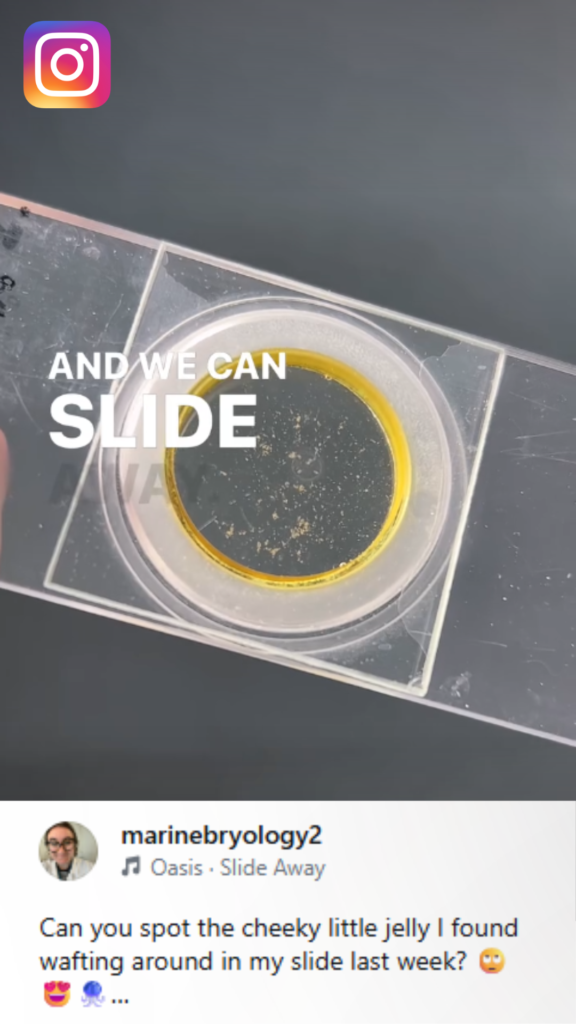
Bryony also sometimes finds very smalh jellyfish appearing in her samples, seen in her Instagram video below:
It’s not just jellyfish blooming…
The warmer waters in the UK are also benefitting other species.
The octopus bloom in the Southwest UK, which really accelerated from January 2025 – and is still continuing over one year on – is having significant effects on both fisheries and marine ecosystems.
Watch now: Octopus invades lobster pot
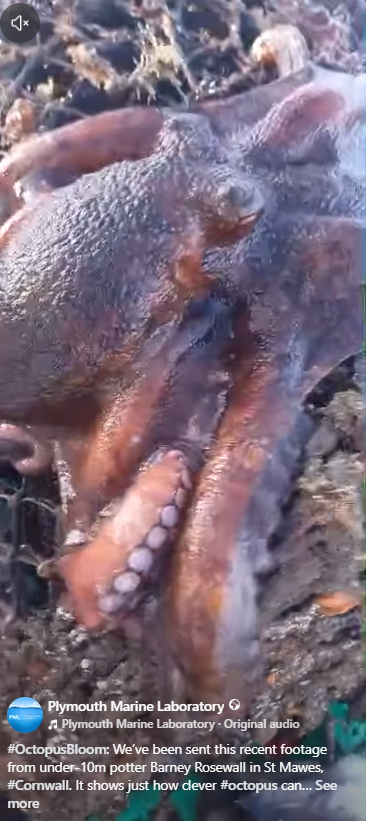
The Common octopus (Octopus vulgaris) is native to UK waters but is typically rare, favouring warmer seas further south in Europe and the Mediterranean.
Jack West of Anne-Louise Fishing, who was originally a scallop fisherman, but now fishes for octopus since “scallops are now almost non-existent in some bays”, spoke to us today about the numbers of octopus.
“The octopus bloom is still going strong here in Mevagissey, we’re catching anywhere between 800kg and 1.5 ton a day”.
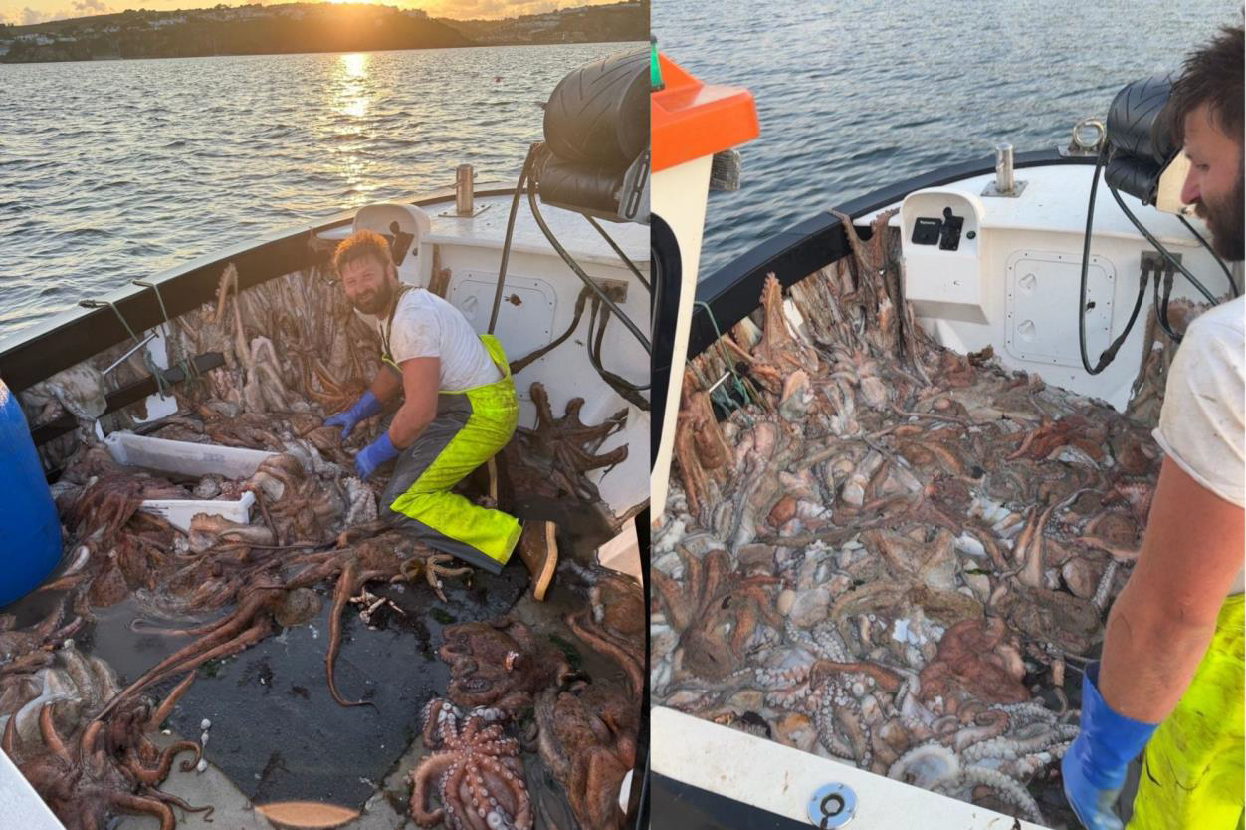
Image: Jack West of Ann Louise fishing pictured in a boat brimming with octopus, July 2025. Image credits: Jack West.
Although jellyfish can be frustrating for swimmers and beachgoers, they are an important part of marine food webs. Species including leatherback turtles, sunfish and some seabirds rely on jellyfish as food, while jellyfish themselves feed on plankton and fish larvae.
While spectacular strandings like the one seen at Bude can seem unusual, they provide scientists with valuable clues about how marine ecosystems are changing.
By combining long-term monitoring with observations from members of the public, researchers are building a clearer picture of how warming seas, changing ocean conditions and natural variability are shaping life in our coastal waters.
Our data from the Western Channel Observatory – the longest, near-continuous marine dataset in the world – is publicly available and free to use. Find out more: