Story | 22 May 2026
Food and drink litter dominates global plastic pollution
A new study reveals the most common types of marine litter worldwide.
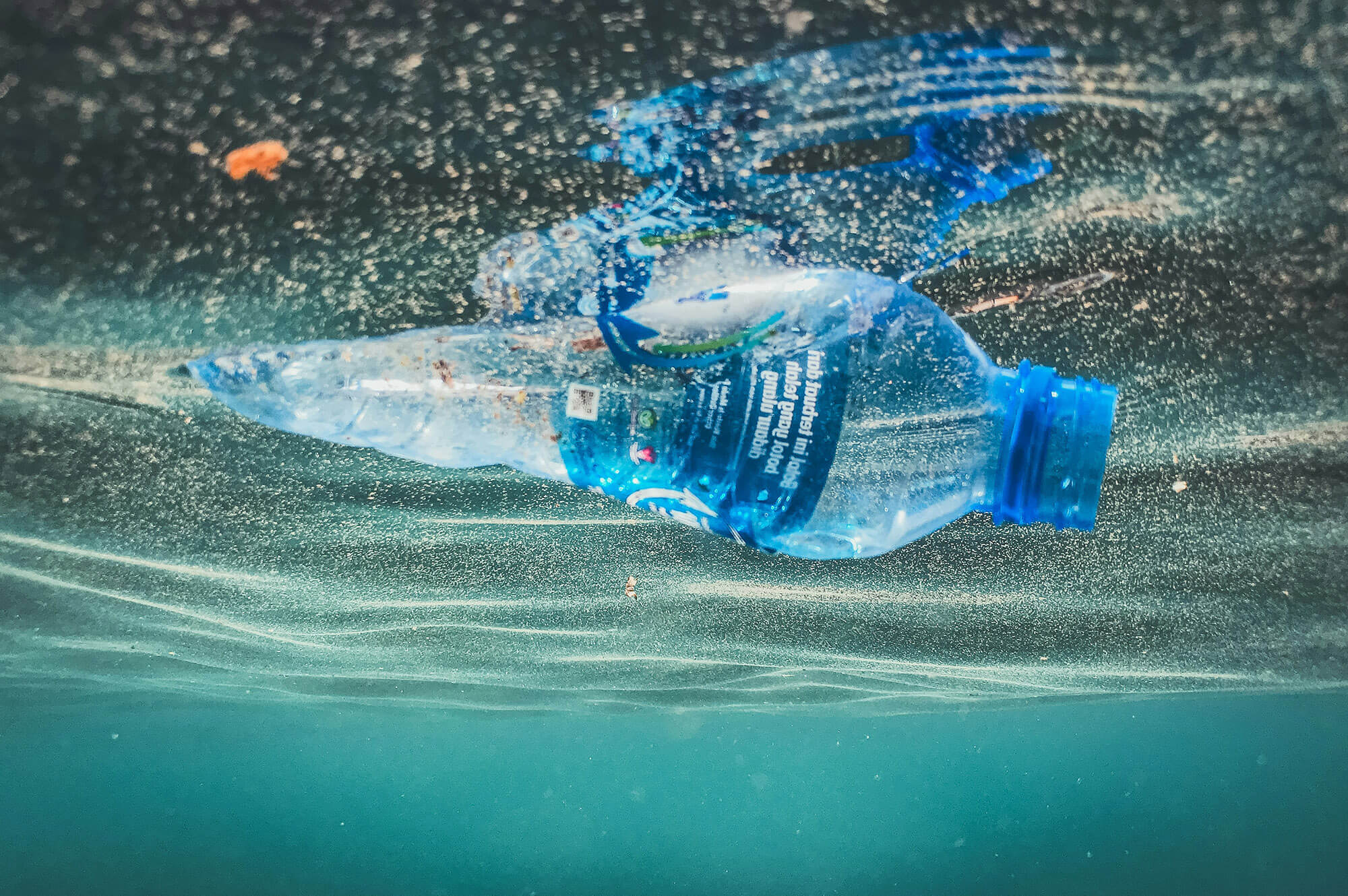
Single use water bottle in the ocean. Naja Bertolt Jensen | Unsplash
Plastic food packaging, caps and lids, and plastic bottles are the planet’s predominant items of marine litter, according to the world’s first overview of marine litter by usage type.
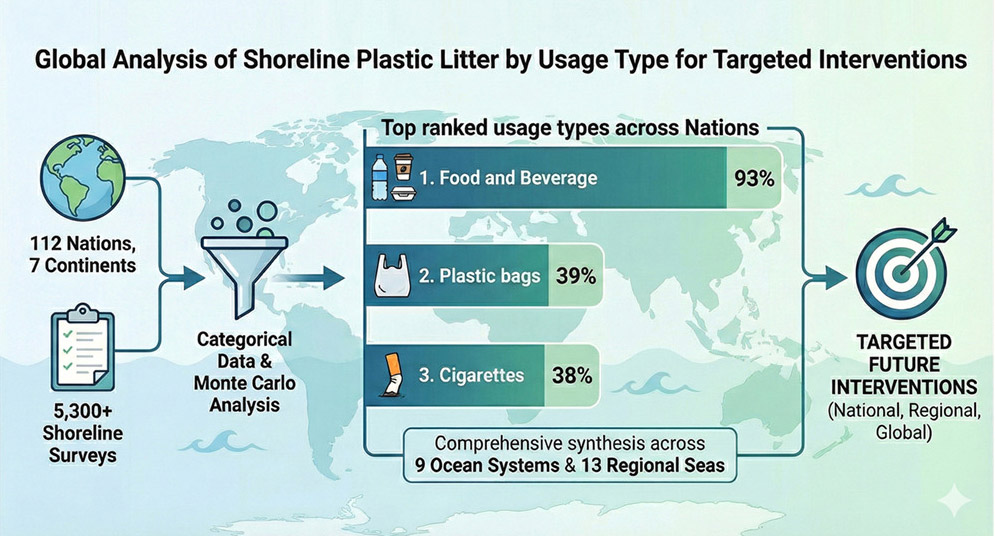
The new research brought together and evaluated more than 5,000 beach litter surveys to reveal the dominant items of marine litter across all seven continents, nine ocean systems, 13 regional seas and 112 nations, a combined area representing 86% of the global population.
The analysis shows that food and beverage related plastics dominate shoreline debris globally, with them ranking among the top three most abundant usage types in 93% of countries, including the UK and the world’s top five most populated nations – India, China, the USA, Indonesia, and Pakistan.
Specifically, plastic food packaging, caps/lids, and plastic bottles were among the top-ranked individual items in more than half of all nations, followed by plastic bags and cigarette butts as the next most prevalent items.
The late Professor Paul Somerfield of Plymouth Marine Laboratory (PML) contributed to the study, which was led by researchers from the University of Plymouth alongside colleagues from Indonesia’s National Research and Innovation Agency (BRIN), and Brunel University of London.
Professor Somerfield was listed as a co-author on the paper, after helping to develop the statistical approach used in the research, before he passed away in 2023.
In a note published within the study, the authors stated:
“Paul Somerfield made important contributions to the development of the statistical approach used. Sadly, Paul passed away before the publication of this work. The authors, and in particular Professor Richard Thompson, who had worked with Paul for over 25 years, acknowledge his immense contribution to the field of marine science, his friendship, and his collegiality. He is very much missed.”
Professor Tim Smyth, Director of Science at Plymouth Marine Laboratory, commented:
“Paul’s contribution to marine science continues to be felt across the global research community through the people he mentored, the collaborations he helped build, and the statistical approaches and ecological understanding he brought to so many areas of marine research. His work leaves a lasting legacy, not only through the science itself, but through the generosity, curiosity and collegiality for which he was so widely respected.”
Find out more about Paul and his incredible contributions to marine science >>
The study comes as estimates suggest 20 million tonnes of plastic waste enters the environment each year, with the study’s authors saying it is now clear that waste management alone is unable to address the challenge of plastic pollution, and urgent measures are needed to reduce the quantities of plastics produced.
Those measures could, for example, include ensuring that only plastics which bring essential benefit to society are produced.
Professor Richard Thompson OBE FRS, founder and Head of the University of Plymouth’s International Marine Litter Unit and the study’s senior author, said:
“Plastic pollution is a global environmental problem that has major detrimental impacts on the environment, economies and human health. This study identifies for the first time the most abundant categories of debris at national, regional, and global scales, indicating not only where to prioritise interventions, but also which specific types of items to focus on.
“The research provides critical evidence to guide industry and policy on specific points of focus needed to address plastic pollution. For example, our research indicates actions on food and beverage related plastics are a key priority across 93 percent of nations worldwide.”
Dr Max Kelly, a Post-Doctoral Research Fellow and the study’s lead author, added:
“Compiling a marine litter dataset at this scale was a complex undertaking, but it has allowed us for the first time to map the most abundant items across shorelines worldwide. This paper provides undeniable evidence that single-use food and drink packaging is the major contributor to plastic pollution in our oceans globally and that actions to reduce consumption of these items will be a key step towards tackling this global environmental challenge.”
The new research is part of the £3.8 million PISCES project, an international initiative led by Brunel University – and funded by the Natural Environment Research Council – that aims to create ‘hope spots’ in Indonesia’s battle against plastic waste.
The project’s director Professor Susan Jobling, Director of the Institute of Environment, Health, and Societies at Brunel University of London and a co-author on the new study, said:
“This study shows why plastic pollution cannot be solved by waste management alone. Across very different national contexts, including Indonesia, the same short-lived food and beverage plastics repeatedly dominate shoreline pollution.
“Through our project Plastics in Indonesian Societies (PISCES), UK Global Challenges Research Fund support has helped turn place-based research into globally relevant evidence, showing that upstream solutions — reduction, reuse, better packaging design and stronger policy — are essential if we are to prevent plastic pollution at source.”