Story | 28 October 2026
MEDIA: PML scientists feature on ITV News report investigating water quality and sewage pollution
PML scientists Dr Gavin Tilstone and Dr Rachel Coppock feature in a dedicated ITV News report exploring water quality around Plymouth Sound, the impact of sewage and pollution on the marine environment, and the importance of monitoring and protecting our waterways.
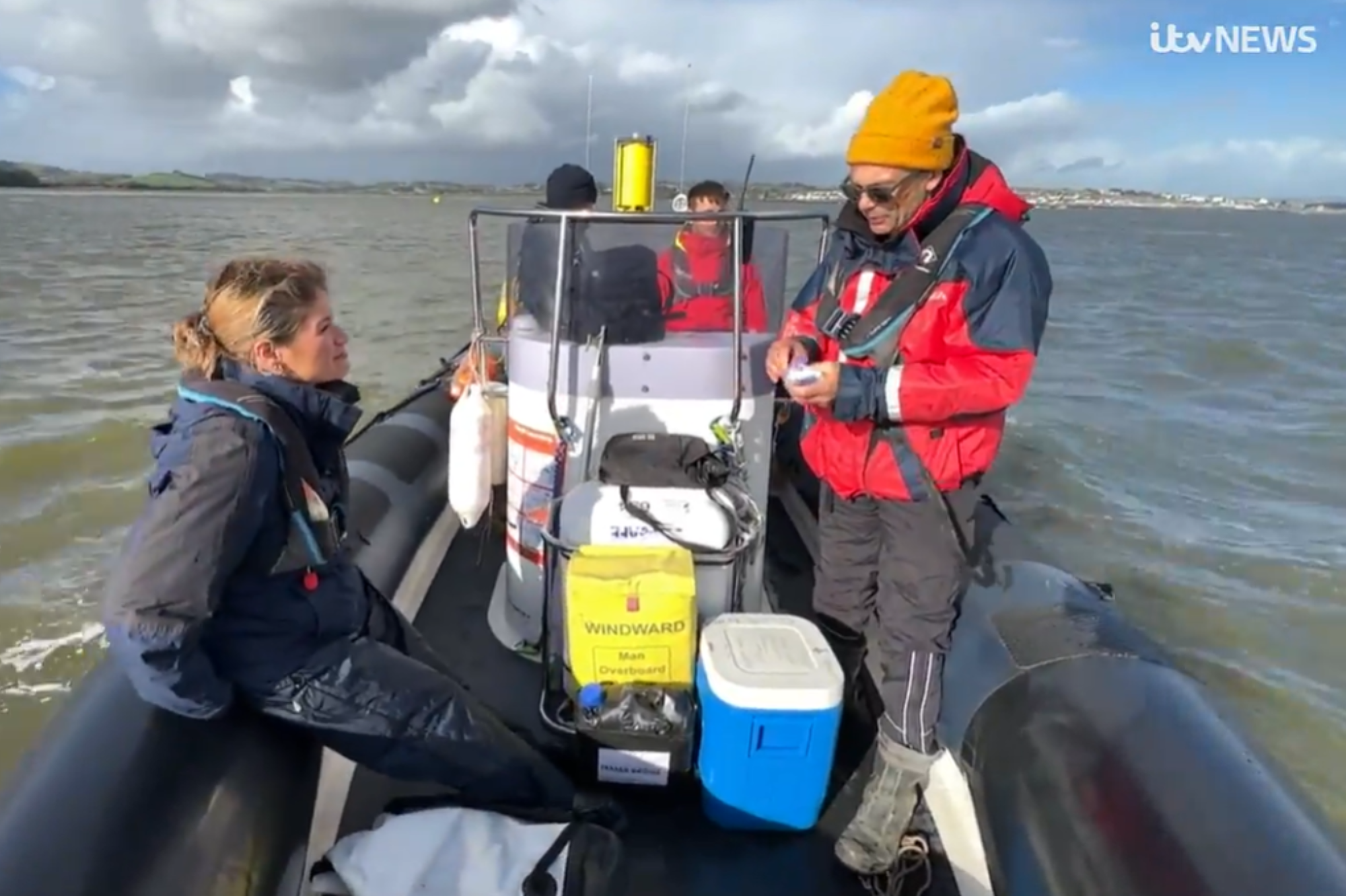
Image: Dr Gavin Tilstone with ITV News reporter Marina Jenkins on the PML Explorer RIB, with Plymouth seen in the background.
“I’ve been testing the water out here for the last 25 years,” said Dr Gavin Tilstone.
“The environment is changing. We’re getting higher rainfall, higher temperatures, marine heatwaves. So, the marine environment is under more and more stress.”
Dr Tilstone, who is a Bio-optical oceanographer at PML, took ITV reporter Marina Jenkins to test water quality in the Plymouth Sound – where he, and many other PML scientists, test for indicators of pollution, in addition to the nearby rivers and estuaries.
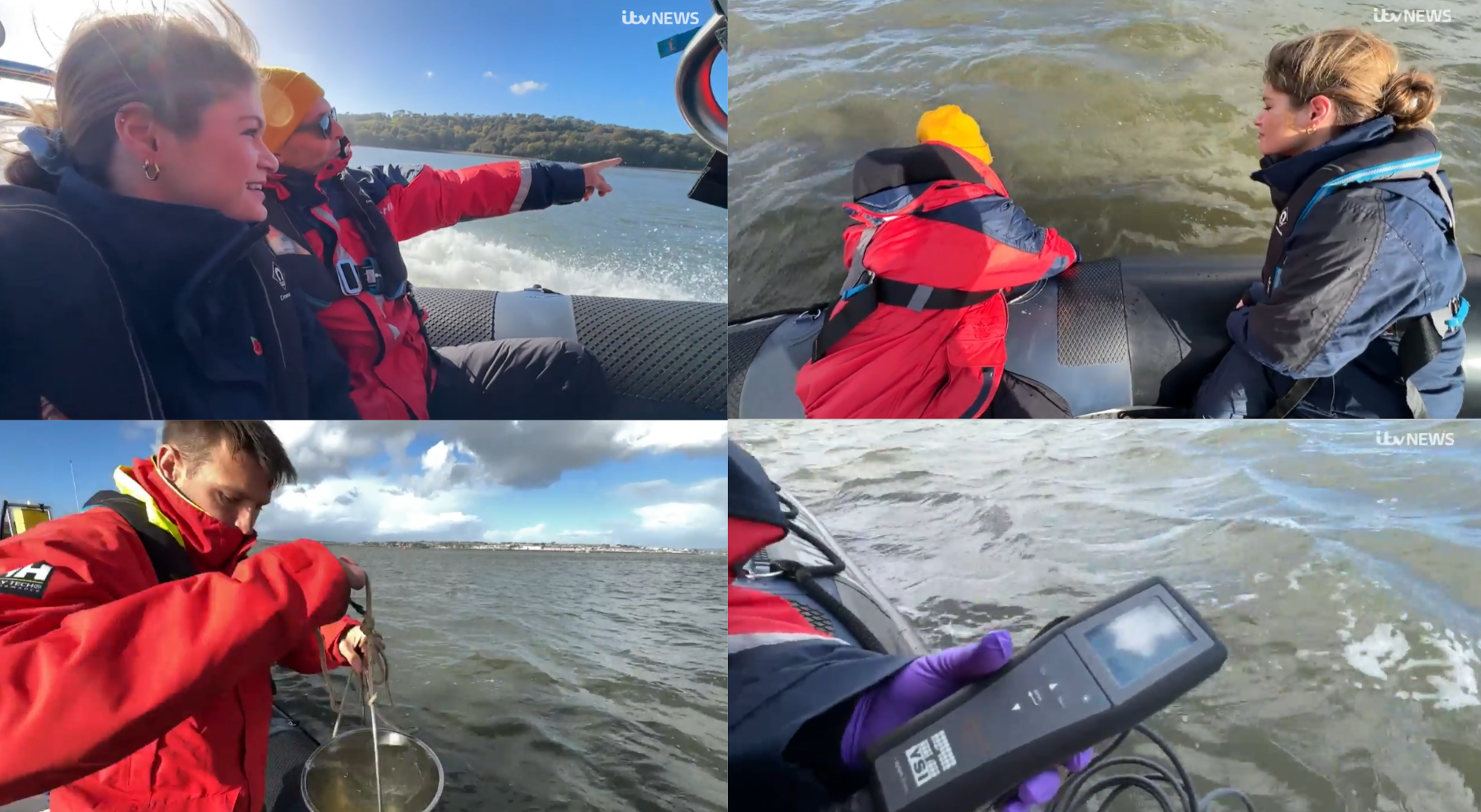
Image: Dr Gavin Tilstone – alongside PML’s Relief Skipper Joel Dunn and Marine Engineer Tristan Jaycock – with ITV reporter Marina Jenkins, measuring water quality and pollution levels in the Plymouth Sound onboard the PML Explorer RIB.
During the feature, Gavin showed viewers how to take some common measurements used to monitor water quality.
“So, the salinity of the water in this location is measuring at 26; which means that we’ve got quite a lot of fresh water.”
Salinity is a useful indicator of how much freshwater is entering the marine environment, with lower levels of salinity showing increasing freshwater influence – whether from rain and land run-off or other influences.
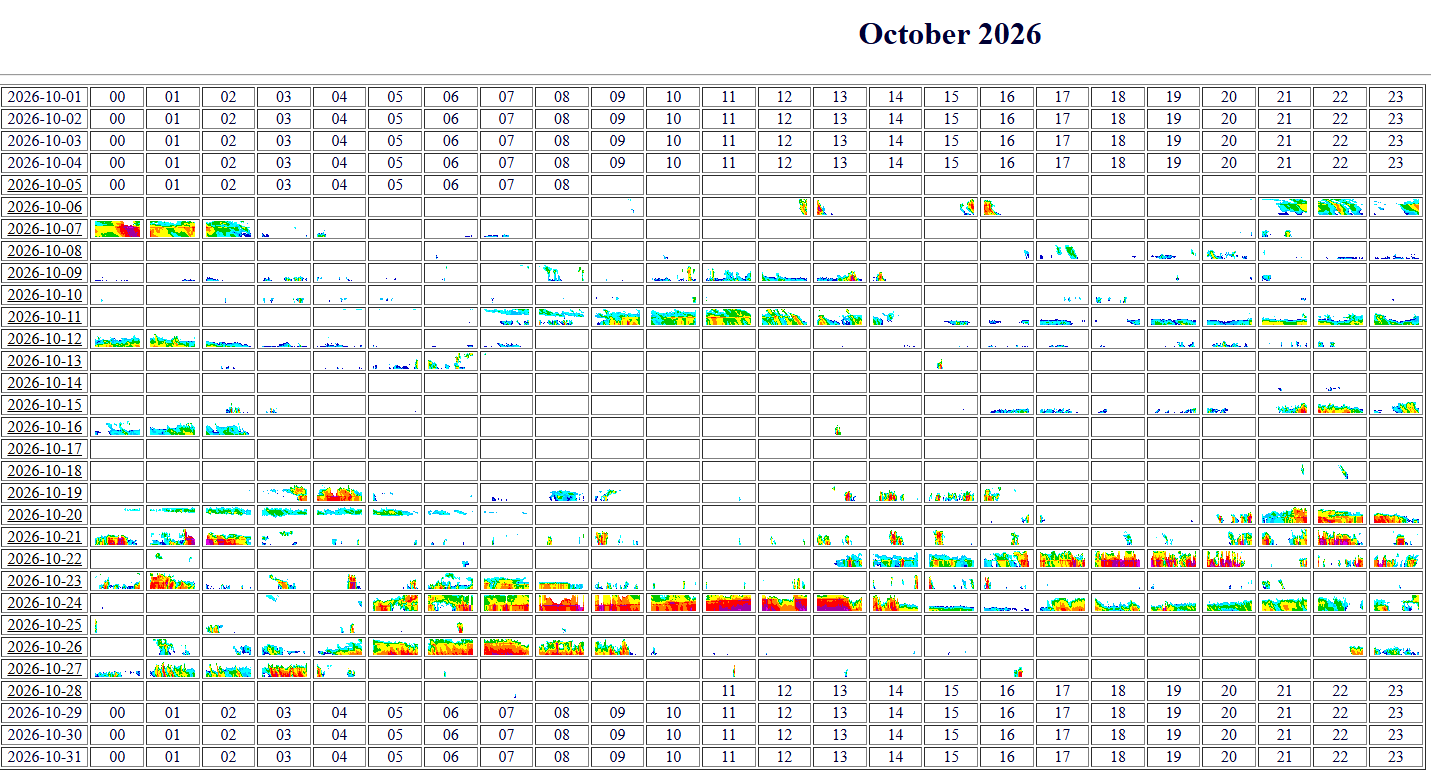
Indeed, Plymouth saw high levels of rainfall on Saturday, and fairly high on Monday this week, too. This, and the tides, determine the salinity of the seawater.
Below: Rainfall records in Plymouth across October 2026, showing heavy rainfall on Saturday 24 October, particularly between 8am and 1pm. The data is collected by a rainfall radar installed on the roof of Plymouth Marine Laboratory as part of ongoing data collection for NASA.
Issues surrounding local flooding, agricultural run-off, sewage effluent and heavy metal contamination all have an impact on water quality, and are affecting the fragile marine ecosystems in the area. These include seagrass beds and mud flats, which are important for local biodiversity, also providing habitats that capture carbon.
Gavin explained how regular water sampling helps scientists assess water quality, including testing for Escherichia coli (E.coli) bacteria, which can pose a risk to human health.
Back at the lab, Dr Tilstone analysed some of the samples collected during filming.
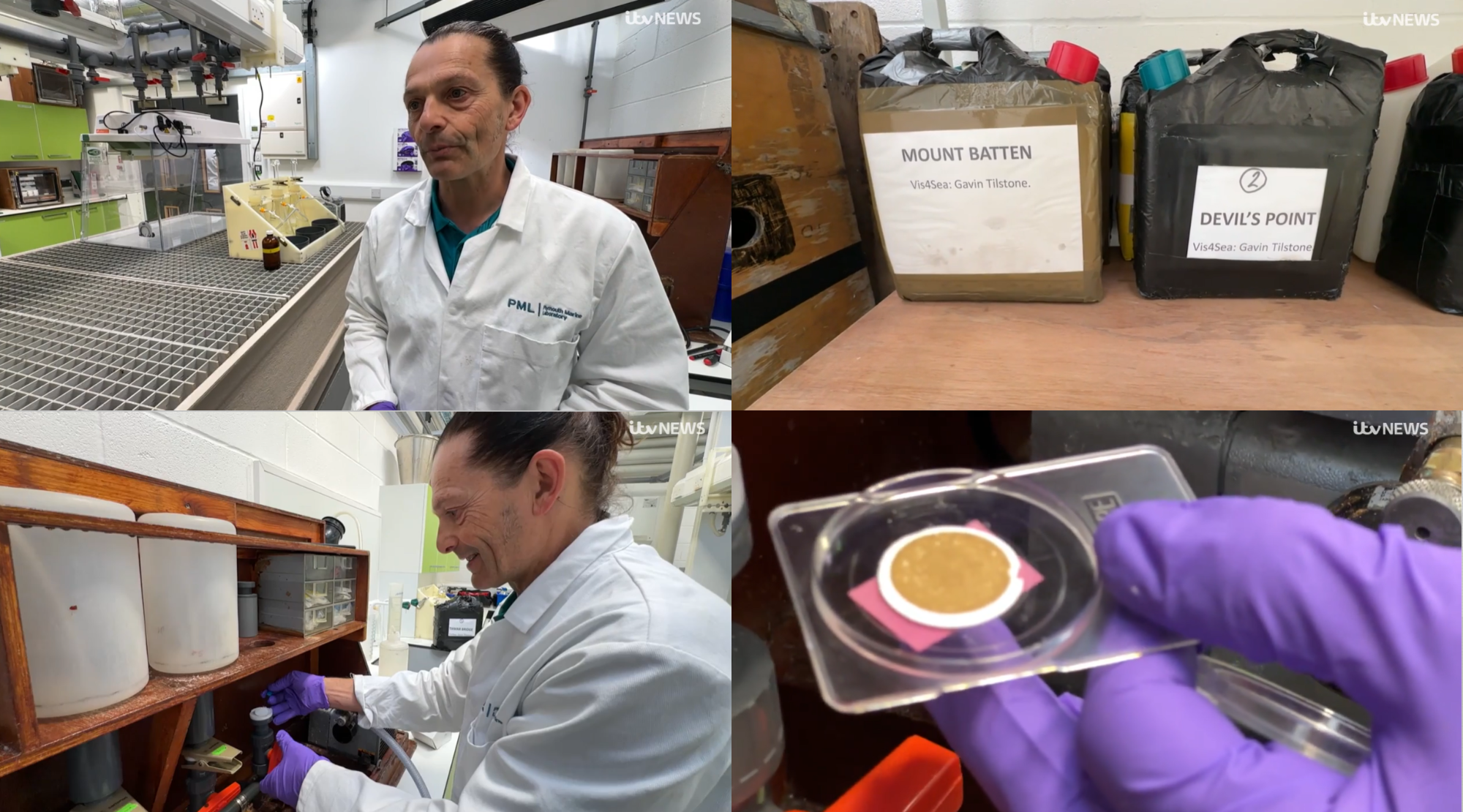
Image: Dr Tilstone processing the seawater samples, finding they were high in sediments, which can be linked to poor water quality.
He said:
“So, what we found was high sediment – you could see on the filter, it was very brown. Now, sediments can absorb different pollutants, so that would have to be further analysed.”
He explained that with heavy rainfall, sediments from land can be washed off into the marine environment, and that sediments themselves can be problematic in terms of absorbing and carrying different pollutants.
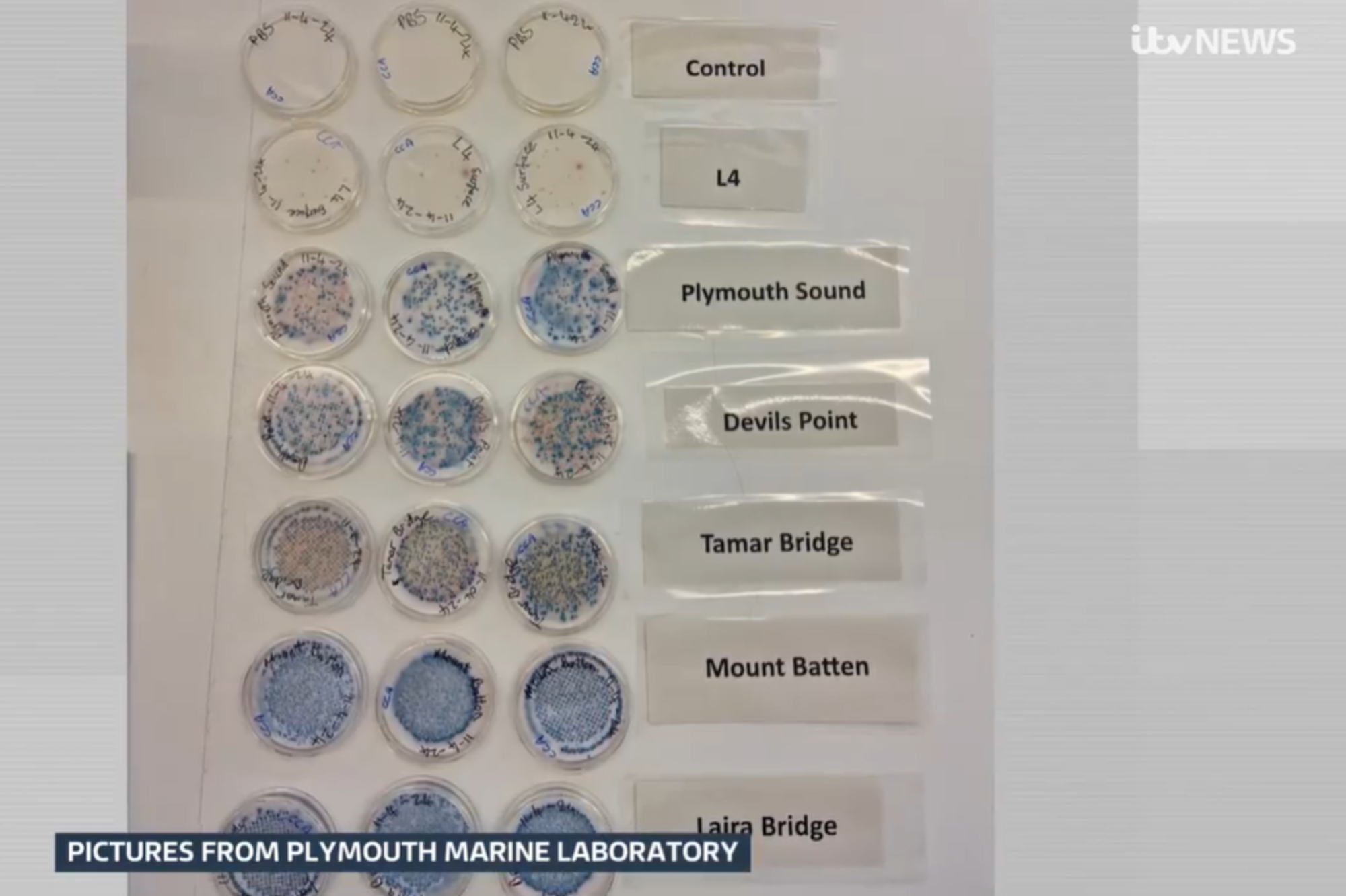
Image: The feature showed previous samples from around Plymouth Sound and surrounding areas, showing the different levels of the bacteria Escherichia coli found in those environments. Many of these samples were taken for the Vis4Sea project, led by Dr Tilstone, which combined traditional and innovative water monitoring techniques, such as remote sensing and hydrographic modelling, to help understand the sources of, and full extent of pollution, and developing recommendations for improving water quality.
The feature comes as, just last month, Dr Tilstone published a study tracking E.coli from source to sea in Plymouth Sound and Lyme Bay (Devon, UK).
The report also included an interview with PML’s Marine Ecologist Dr Rachel Coppock, who spoke about the wider range of contaminants that can enter the marine environment.
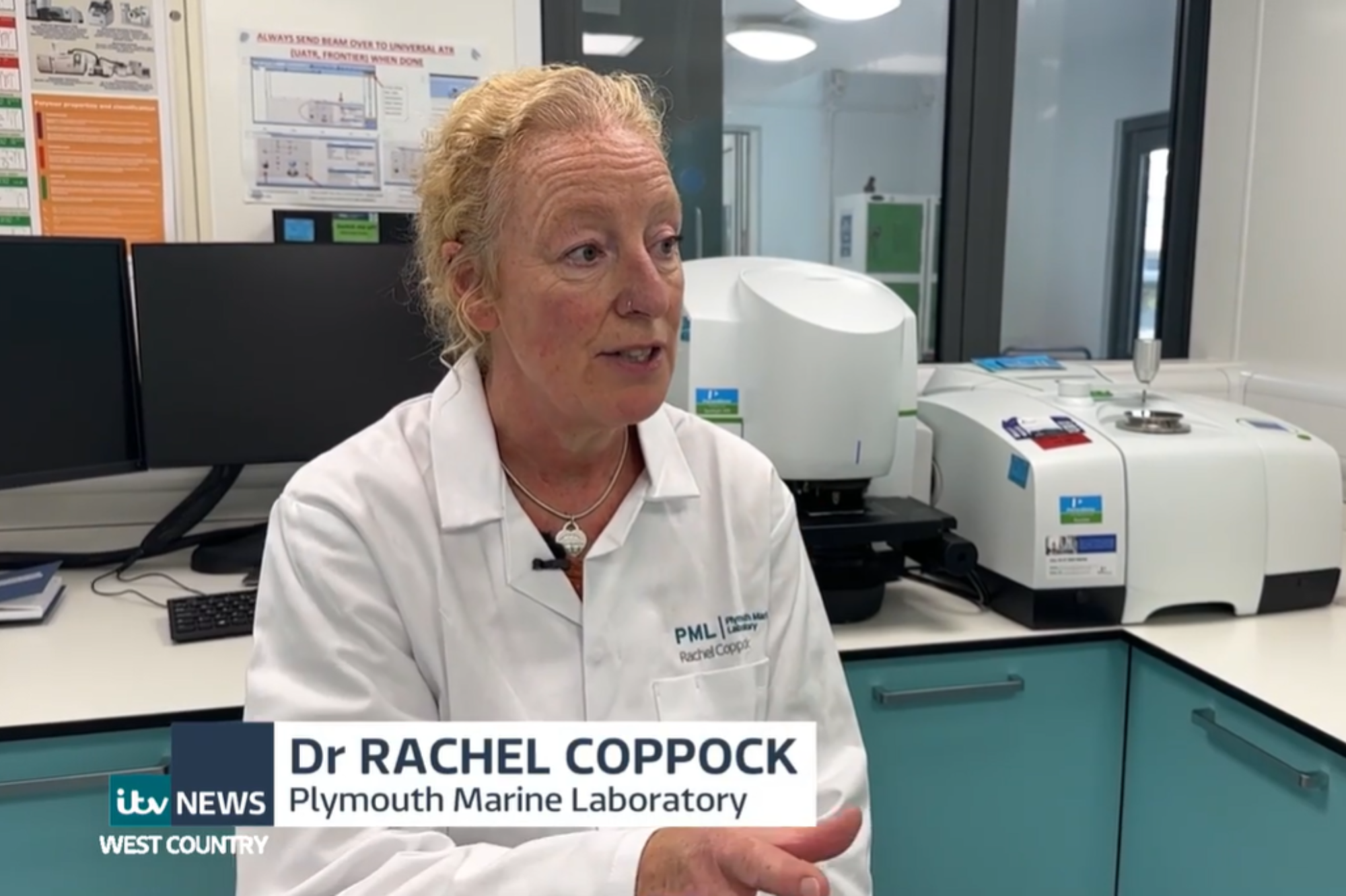
Image: Dr Coppock is an expert on the impact and fate of plastics in the marine environment. Her recent research has focused on the impact of ‘biodegradable’ plastics on marine organisms and ecosystems – and whether biodegradable materials truly do break down in the natural environment.
Dr Coppock explained that sewage discharges can carry plastics, and land run-off can include microplastics from agricultural sites.
“We know that when sewage outflow drains get discharged into the ocean, they also bring with it not just the sewage, but also plastics, including microplastics, metals and agricultural pollutants. So, there are a whole host of different contaminants there that will combine along with the sewage.”
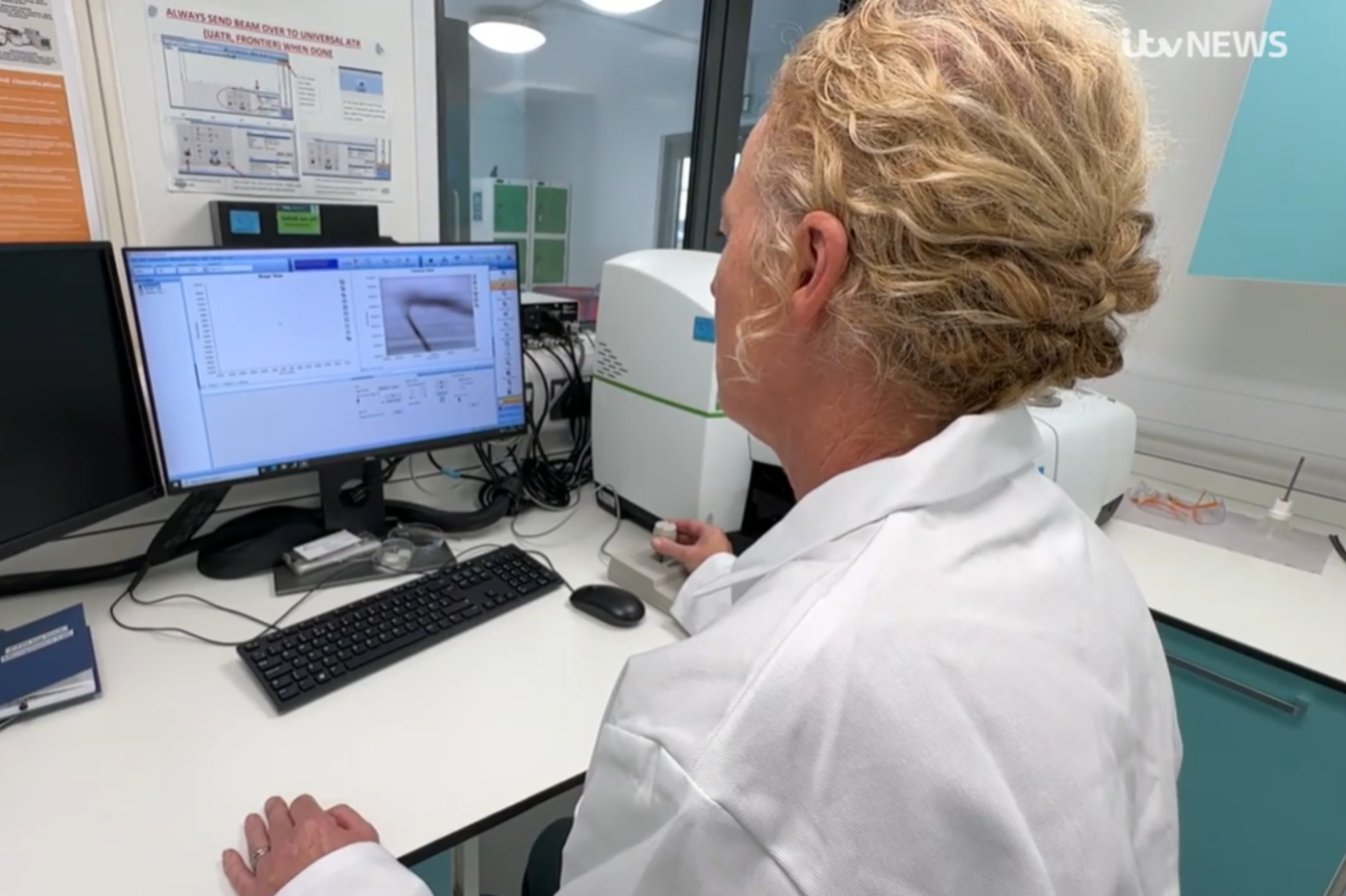
Image: Dr Rachel Coppock spoke to ITV News in PML’s Microplastics Laboratory, a dedicated laboratory equipped with powerful technology that can identify the components that make up even the smallest particle of microplastic.
PML research has previously found that marine plastic pollution can serve as a platform for the selective growth of bacterial communities responsible for diseases in both humans and animals.
Dr Coppock’s research focuses on developing solutions to the plastics crisis, including the exploration of nature-based solutions, and even a new project set to ‘outdesign’ plastic from single-use coffee cups, providing vital evidence to guide the future of sustainable packaging.
Dr Coppock concluded:
“We now want to know what harm are these plastics causing. And what can we do about it? What are the solutions that can help resolve these contaminants that are here?”
” Bathing-water testing is essential for assessing human health risks, but it doesn’t tell us everything about the cocktail of pollutants such as microplastics, metals, chemicals or the long-term ecological impacts.”
“Understanding the potential harm these contaminants cause, and identifying effective solutions, remains an important area of research.”
The issue of land-based pollution entering waterways and the marine environment is one of the priority areas of research at PML, with the ‘Catchment to Coast’ science challenge area entirely focused on delivering solutions to monitor and protect water quality, natural capital, and ecosystem services across the catchment-to-coast continuum.
Watch the full feature on ITV here >>
Further information:
PML scientists deploy innovative plastics experiment in the Arctic