Story | 08 July 2026
Heatwave forecast to bring UK seas up to 5°C above average - as octopus bloom highlights changing oceans
“The sheer abundance of octopus is enormous.” As sea temperatures around parts of the UK expected to climb to as much as 5°C above average, PML experts speak to national television outlets about what these unprecedented marine heatwave conditions could mean for marine life – and the communities that depend upon it.
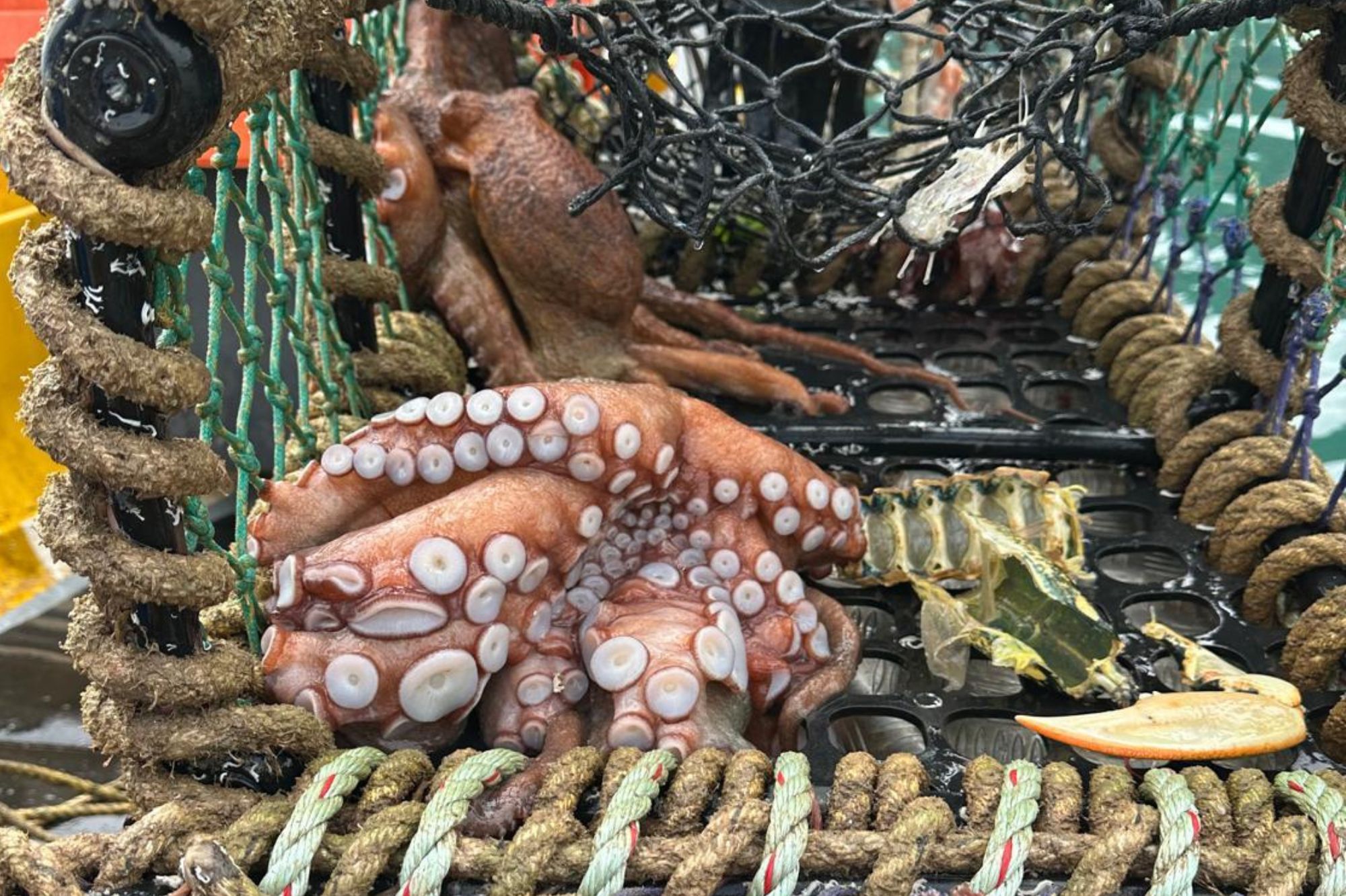
Image: Two Common octopus and the remains of a lobster hauled in from a lobster pot. Image credit: South Devon and Channel Shellfishermen Ltd.
With more than 100 years of marine observations from the western English Channel, PML scientists continue to provide the evidence needed to understand how climate change is reshaping UK seas – and what those changes could mean for people, wildlife and the marine industries that rely upon them.
BBC Breakfast joined PML experts this week aboard our research vessel Plymouth Quest, where long-term monitoring of the Western English Channel is helping researchers understand how our seas are changing in response to a warming climate and ocean.
WATCH NOW: Octopus outbreaks and marine heatwaves: PML on BBC Breakfast
The full episode of BBC Breakfast can be watched here via BBC iPlayer – available until 9:29am 08/07/26.
An exceptionally strong marine heatwave has developed around parts of England and Wales. While short-lived marine heatwaves have always occurred naturally, PML scientists say climate change is making them more frequent, more intense and longer lasting.
PML has been monitoring the waters in the western English Channel for decades, providing one of the world’s longest continuous marine observation records. These long-term datasets allow researchers to distinguish between natural variability and long-term climate trends, revealing a clear pattern of warming over recent decades.
One of the most striking examples of these changing conditions has been the recent explosion in numbers of Common octopus in UK waters. The Common octopus is actually native to UK waters, but is typically rare, favouring warmer seas further south in Europe and the Mediterranean.
However, populations have ‘exploded’ across southwest UK, and PML have been monitoring what is being termed as an octopus ‘bloom’ – which really accelerated from January 2025, but is still continuing well over one year on today.
Speaking aboard Plymouth Quest, PML’s Professor Matt Frost explained that while octopus blooms have occurred before, today’s conditions are different.
“We maintain one of the longest marine time series in the world, going back to 1903, and this has been unprecedented in the 125-year cycle.”
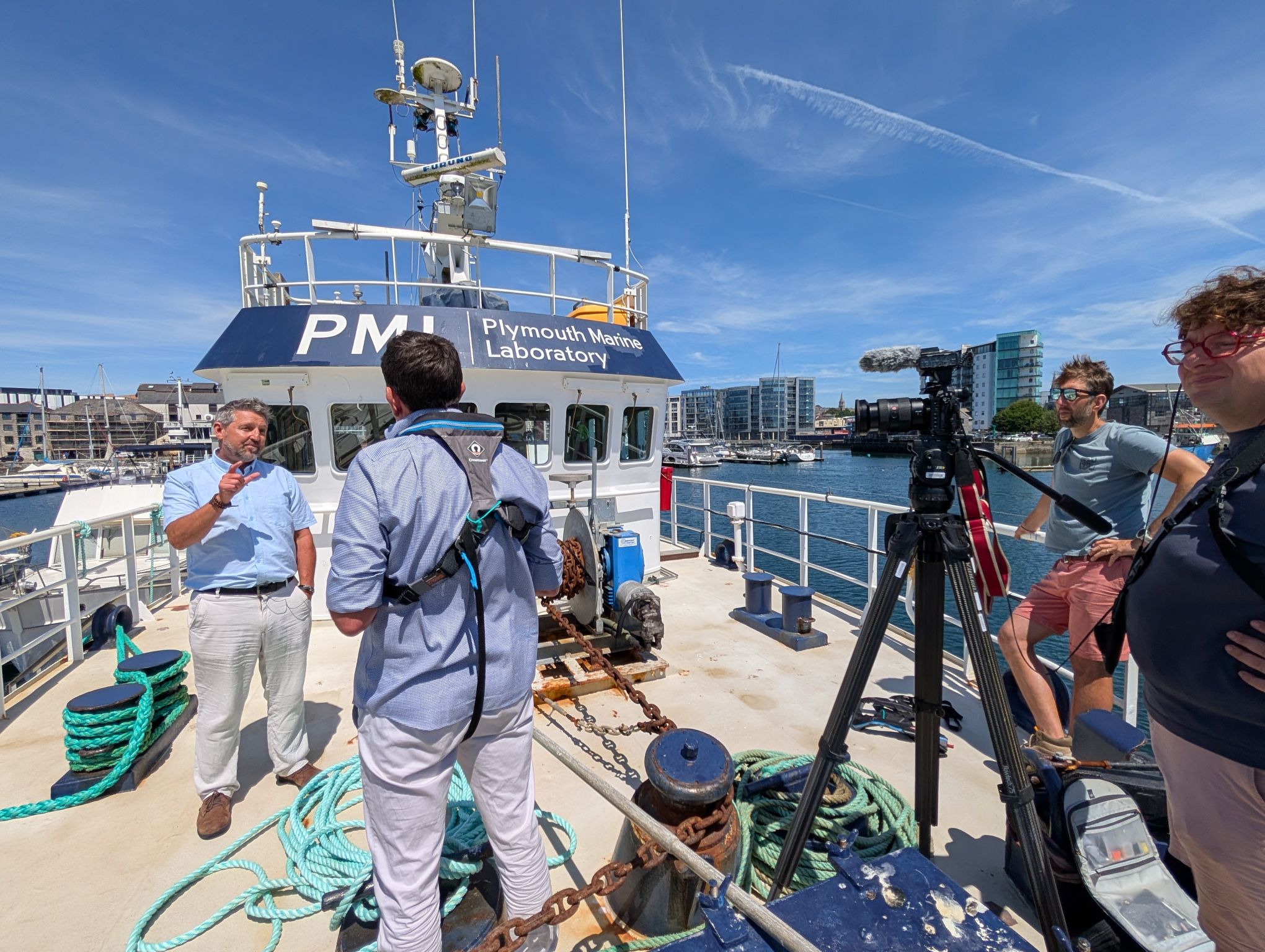
Image: PML’s Professor Matt Frost speaking to Justin Rowlatt for BBC Breakfast.
“Previous octopus blooms have coincided with unusually warm conditions. But what we’re seeing now – because these marine heatwaves are becoming more frequent and lasting longer – it has benefitted certain species, and the sheer abundance of octopus we’re seeing is enormous.”
The BBC Breakfast feature – broadcast this morning [08/07/26] – highlighted how fishermen in Brixham have experienced record catches of Common octopus, with more than 100 tonnes sold through the fish market in a single day.
While the arrival of this species may appear exciting, scientists warn that the wider ecological – and economic- consequences are far more complex.
Common octopus are highly effective predators, feeding on shellfish such as crab, lobster and scallops. Fishermen have already reported significant declines in catches of these species during the current bloom, illustrating how warming seas can rapidly reshape marine ecosystems.
PML has previously reported on the significant effects of the bloom on both fisheries and marine ecosystems.
Earlier this year, Beshlie Pool, Executive Officer of the South Devon and Channel Shellfishermen Ltd, explained the impacts on local livelihoods:
“2025 and 2026 have brought huge changes to traditional fisheries across the Southwest. In our area, Common octopus began appearing in huge numbers from late February 2025, leaving a trail of destruction behind, with crab and lobster pots filled with the remains of eaten shellfish.”
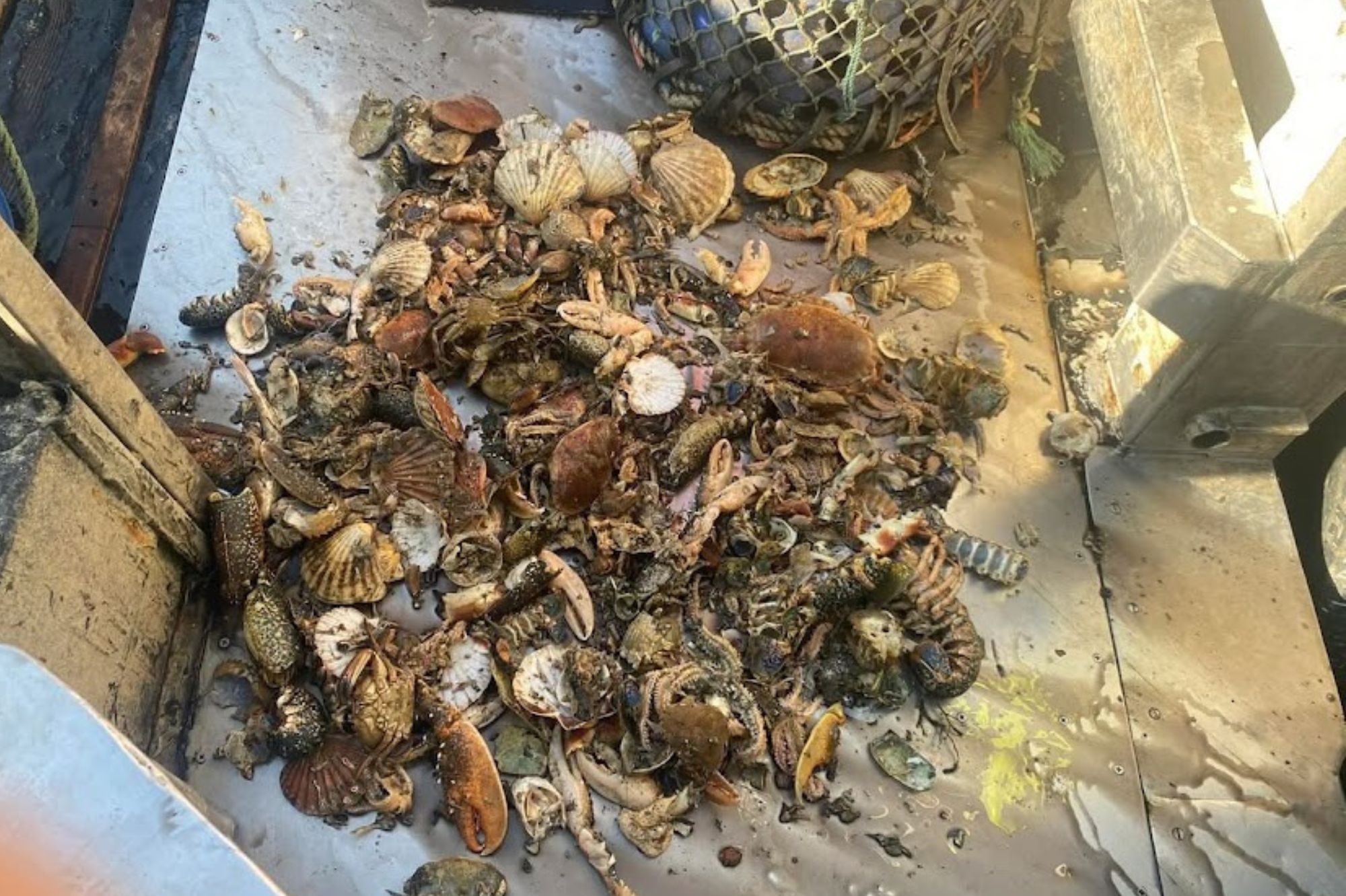
Image: Fishermen from Plymouth haul up pots full of empty shellfish, crab and lobster shells. Image credit: South Devon and Channel Shellfishermen Ltd.
Beshlie continues:
“As a community of crab fishermen, for whom crab and lobster is our heritage and regional identity, the influx of Common octopus has been incredibly concerning. Whilst there are some who have been able to catch octopus – because of where they fish – others have not, and instead have only seen the remains of what has been eaten. It is a very difficult time for our community.”
Jack West of Anne-Louise Fishing, who was originally a scallop fisherman, but now fishes for octopus since the bloom, also spoke to us earlier this year:
“I’m a scallop fisherman, and since the octopus bloom we’ve seen a major impact on the scallop population – scallops are now almost non-existent in some bays. While it’s created an opportunity for some of us to target octopus, and in the short term that’s been financially beneficial as they return good prices, the longer-term picture is a real concern. Fishing has already been very poor over the past couple of years, and there are worries about what this means for future stocks and breeding populations.”
“Although I’ve personally been able to build a market for octopus and adapt – building a good client base with pubs and restaurants to buy octopus catches – the situation is so severe for scallops that, this year, I won’t be fishing for scallops at all.”
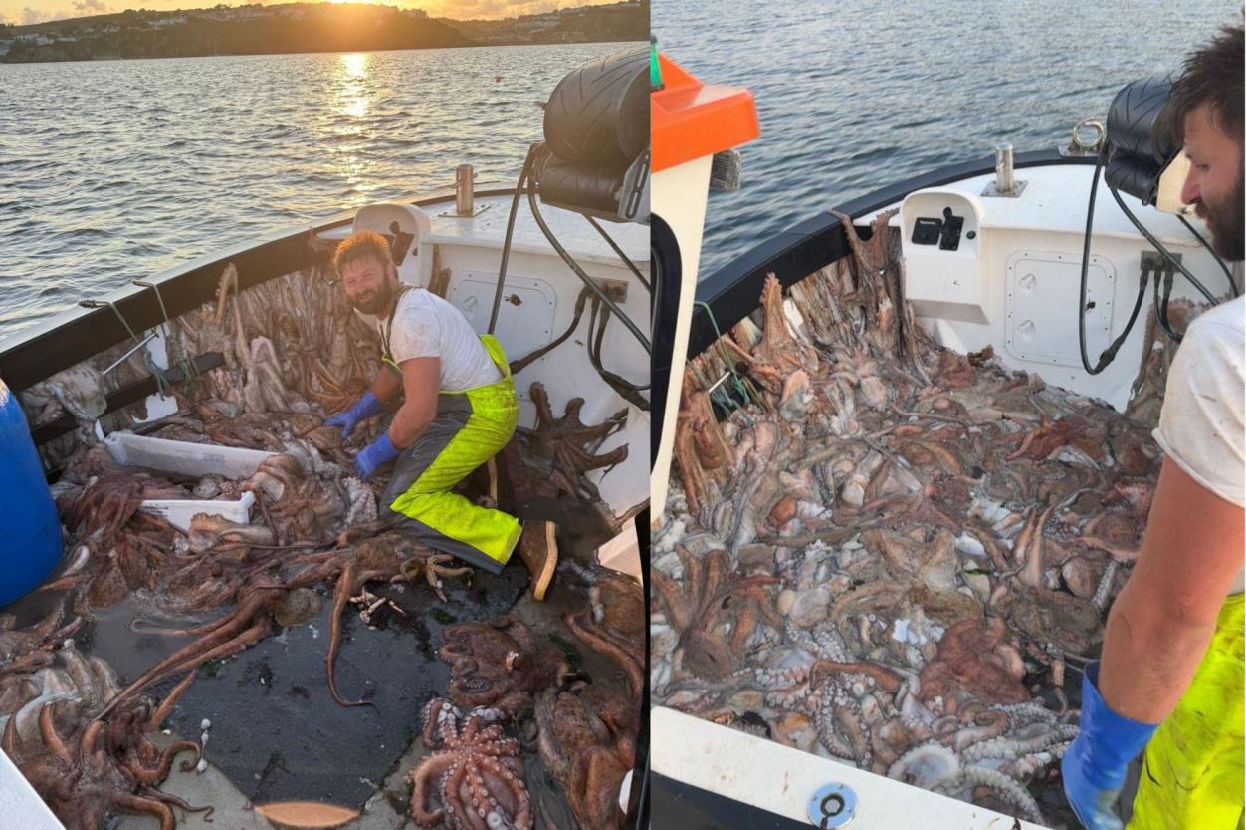
Image: Jack West of Ann Louise fishing pictured in a boat brimming with octopus, July 2025. Image credits: Jack West.
Providing an update to PML last week, Jack West said:
“The octopus bloom is still going strong here in Mevagissey, we’re catching anywhere between 800kg and 1.5 ton a day”.
Professor Frost explained that the arrival of new species is only one part of a much bigger picture.
“It can be exciting with these changing conditions to see new species arrive. The problem is we don’t get to choose what comes in on the back of those heatwaves. We can’t choose just the good bits and not the bad.”
Marine heatwaves can also place significant stress on habitats such as seagrass meadows and kelp forests, which form the foundation of healthy coastal ecosystems. Unlike mobile species, these habitats cannot simply move to cooler waters, making them particularly vulnerable to prolonged periods of unusually high temperatures.
PML’s Dr Robert Wilson spoke to BBC Radio Ulster today about how rising temperatures and marine heatwaves are redistributing marine species.
Listen now – from 42 minutes in – on BBC Radio Ulster >>
In the interview today, Dr Wilson said:
“In terms of this marine heatwave next week, we can’t be very clear on what’s going to happen as it’s over one week from now, but, what we can be very confident about is that climate change itself – and bear in mind, this is one of the warmest years on record – is very much changing how the ocean actually works.”
“Marine life today looks very different than how it looked 5, 10, 20 years ago. If you look at temperature changes today in the UK, its something like 0.8 degrees warmer than it was in the 1980s.”
“So, a lot of the species that were doing well in the 1980s, when it was that temperature, today it’s too warm for them. And they’re moving north. And so, we’re already seeing impacts on the kinds of fish being caught across UK waters.”
“And then the very building blocks of marine life – things like seagrass and seaweeds, that maybe people don’t think too much about – they’re very much changing and beginning to look very different to what they looked like in the past.”
“Also, from work we’ve done at here at Plymouth Marine Laboratory, we think overall, certainly next 40-70 years, the marine ecosystem will look much worse than it does today, as a result of climate change.”
Last year, Dr Wilson led a landmark study last year that found the heatwaves at the ocean seafloor will surpass the extremes at the surface – a concerning prospect for bottom-dwelling species, who, unlike fish who can swim away, cannot escape the rising temperatures. These species – and the people who depend on them – could be hit hardest by the changes.
Through its long-term monitoring of the western English Channel – as part of the Western Channel Observatory – PML has reported almost continuous marine heatwave conditions since mid-2023, highlighting the increasing persistence of unusually warm seas around the UK.
The observations as part of the Western Channel Observatory contribute to an internationally significant long-term record, helping researchers track changes in ocean temperature, marine biodiversity and ecosystem health. Together, these data provide the evidence needed to better understand how climate change is reshaping our seas and to help society prepare for its impacts.
The data collected as part of the Western Channel Observatory (WCO) is free and open-access. Find out more via the WCO website >>