Story | 06 May 2026
MEDIA: PML’s research on ‘Mighty mangroves’ in Asia Research News 2026
Plymouth Marine Laboratory’s research on mangrove ecosystems has been featured in Asia Research News 2026, highlighting ongoing collaborations between the UK and Malaysia.
The magazine is distributed across major research, innovation and higher education events across Asia, reaching university leaders, policymakers, funders and scientific communities, and is available in print and online here >>
Andrew-Edwards Jones, Social Scientist at PML, contributed to the ‘Mighty mangroves’ feature using references from the NetComFish project – which highlighted the importance of the dynamic and productive mangrove habitats, but also how working together across sectors and industries can boost sustainable mangrove management for the benefit of all.

Image: PML’s Andrew Edwards-Jones reading the Asia Research News magazine.
What’s special about Mangroves?
Here are just a few of their benefits:
1. Biodiversity Hotspots
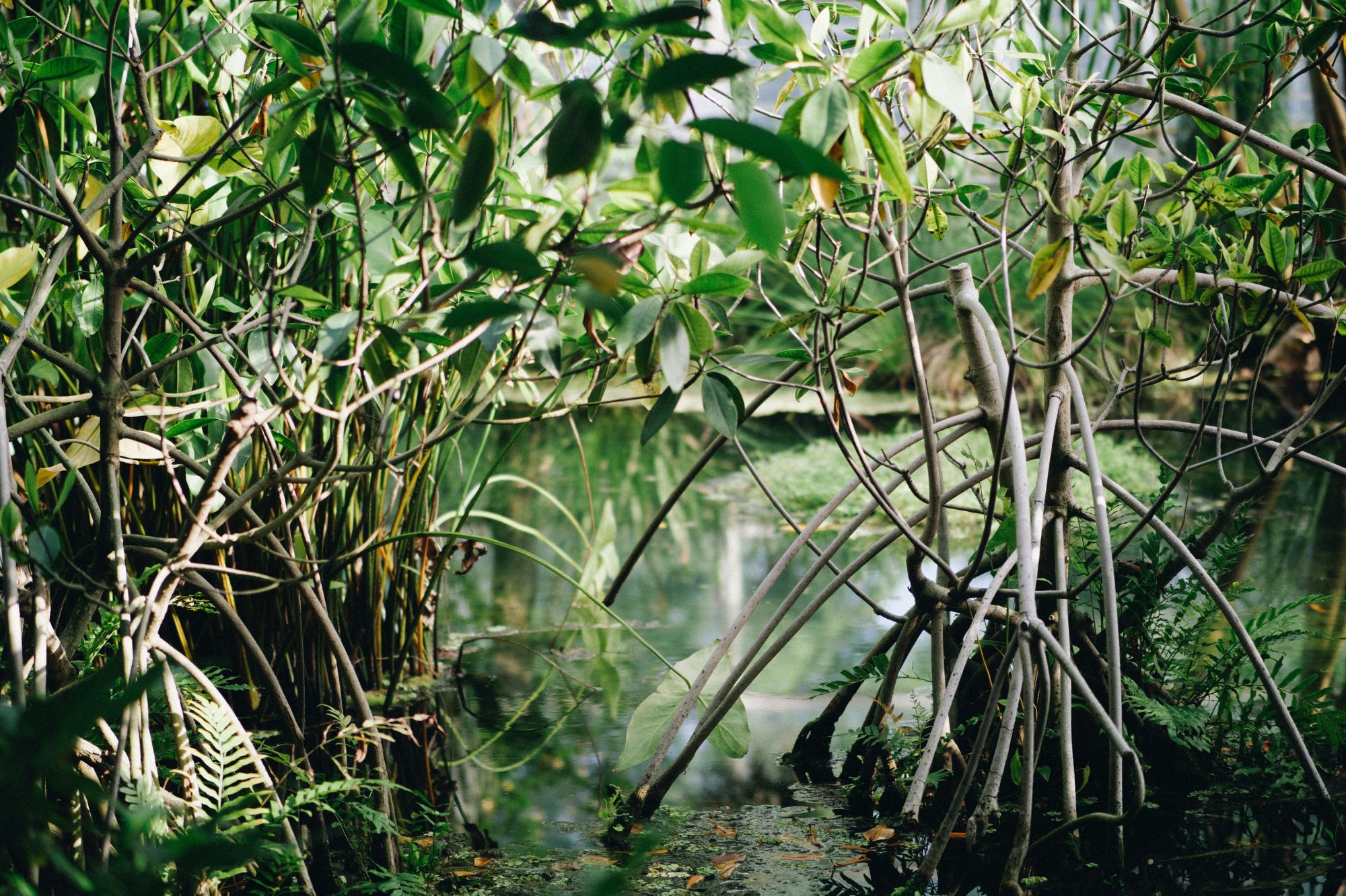
Mangroves act as thriving hubs of biodiversity. These complex ecosystems provide safe havens for a diverse array of plant and animal species. They serve as nursery grounds for numerous marine organisms, such as fish and crustaceans, which find shelter in the labyrinth of mangrove root systems. The intertwining roots create a rich food source too, for various bird species, as well as monkeys, deer, and even kangaroos. Plus, a source of nectar for honeybees. Protecting mangroves means safeguarding countless forms of life that are integral to the ecological balance of coastal regions.
2. Coastal Protection
Mangroves play a crucial role in shielding coastlines. Their dense root systems act as a natural barrier against storm surges, tsunamis, and erosion.
“A 500-meter mangrove strip reduces wave height by 50-99%” [Source: UNESCO website]
With climate change and the intensifying frequency of extreme weather events, the conservation of mangrove ecosystems has taken on heightened significance. Coastal communities, particularly in vulnerable regions, depend on the protective shields provided by mangroves to mitigate the devastating impact of storms and rising sea levels.
3. Storing and trapping carbon
Mangroves possess a remarkable capacity to trap and store carbon dioxide from the atmosphere, also known as “carbon sequestration’.
“One hectare of mangrove can store 3,754 tons of carbon, the equivalent of taking 2,650+ cars off the road for one year.” [Source: UNESCO website]
Andrew Edwards-Jones said:
“Mangroves give us so much – from protecting our coastlines to supporting entire communities and ecosystems – yet they remain incredibly vulnerable. They deserve far more attention and care than they currently get. Protecting them isn’t just good conservation, it’s common sense.”
The mangrove feature in the Asia Research News magazine builds on further promotion in the region, where PML was part of an exhibition with the British Council Malaysia showcasing research between UK and Malaysia.
At the four-day event at Sunway Pyramid Shopping Mall in Kuala Lumpur – one of the largest shopping centres in Malaysia – visitors were introduced to PML’s work on mangrove conservation and satellite-based monitoring of marine pollution. This provided a unique opportunity to highlight how UK science is supporting sustainability and environmental protection thousands of miles from home.
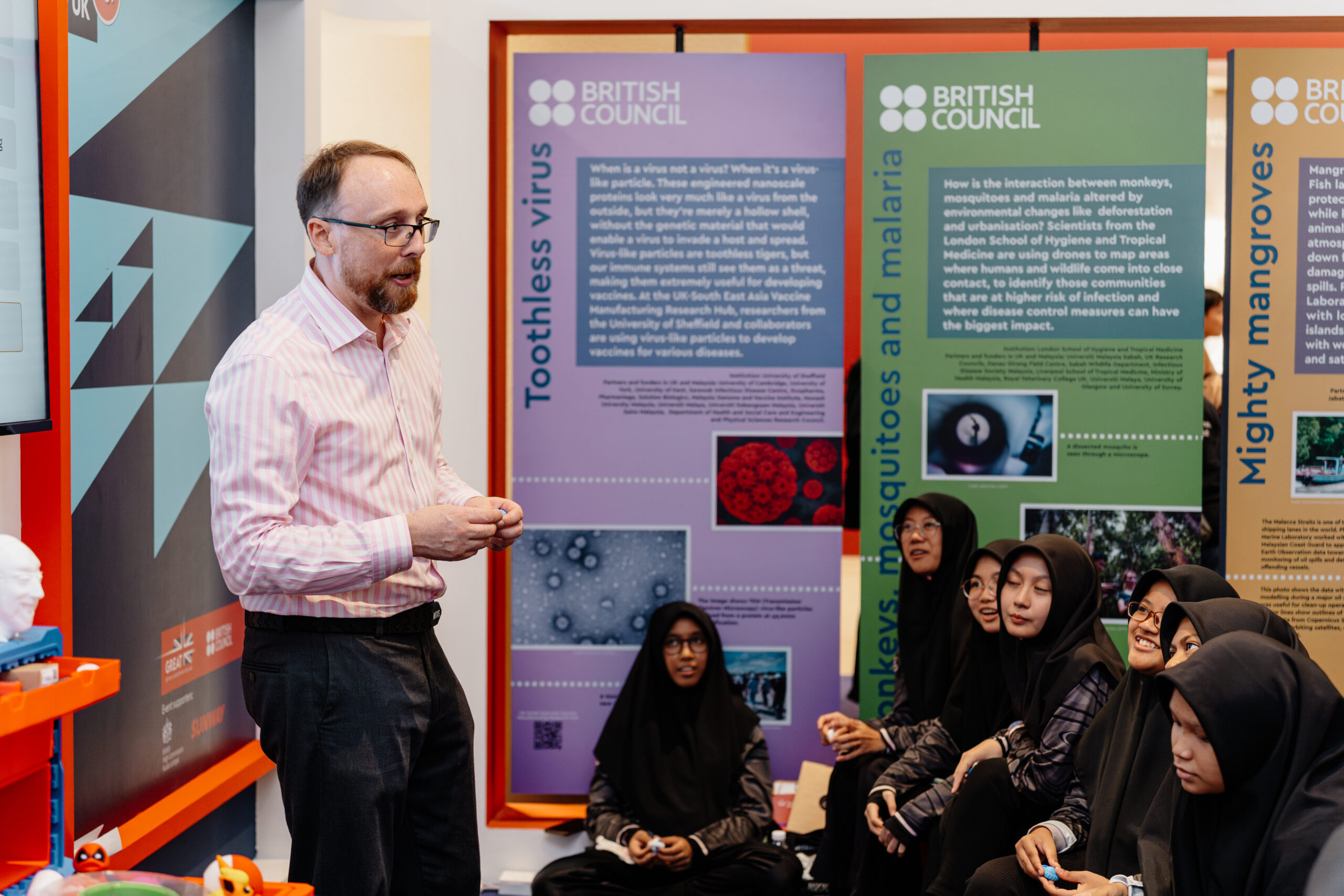
Image: Visitors to the shopping centre were introduced to PML’s environmental research.
Alongside mangrove research, the exhibition also highlighted PML’s innovative work on oil spill detection using satellite Earth Observation (EO) – a critical tool in one of the world’s busiest shipping regions.
Why this matters
The Malacca Strait is a major global shipping route, and illegal bilge discharge and accidental spills pose serious risks to marine ecosystems, local fisheries and coastal communities.
Previously, monitoring by the Malaysian Coastguard was carried out only occasionally and across limited areas. To strengthen these capabilities, PML applied EO data to:
- detect oil spill events in near-real time
- identify potential offender vessels
- estimate spill location and movement
These data, combined with hydrodynamic modelling, feed into the RiskAware system – a decision-support tool used during incidents such as the Putri Sea tanker spill. The Malaysian Marine Department reported that RiskAware provided extremely useful insights for planning clean-up operations and minimising environmental damage.
Watch now: Oil Spill Detection Using Satellite Technology
This work showcases how advanced satellite technologies can support national agencies, protect vulnerable marine environments, and complement community-focused mangrove conservation efforts – creating a joined-up approach to coastal resilience.