Story | 11 July 2026
Record-breaking marine heatwave highlights the importance of long-term monitoring
UK sea temperatures have exceeded 20°C in the past few days
Over the past few days surface ocean temperatures around the UK have reached record highs, raising concern about the impact of ocean warming on marine life and highlighting the importance of long-term monitoring to ensure high-quality data is available to inform our understanding of the changes taking place now and into the future.
The current UK marine heatwave has been fuelled by “heat domes” that brought record-breaking air temperatures in May and June, layered on top of long-term ocean warming driven by climate change. Air temperatures of 35°C or higher have now been recorded in May, June and July of the same year for the first time in the UK weather record.
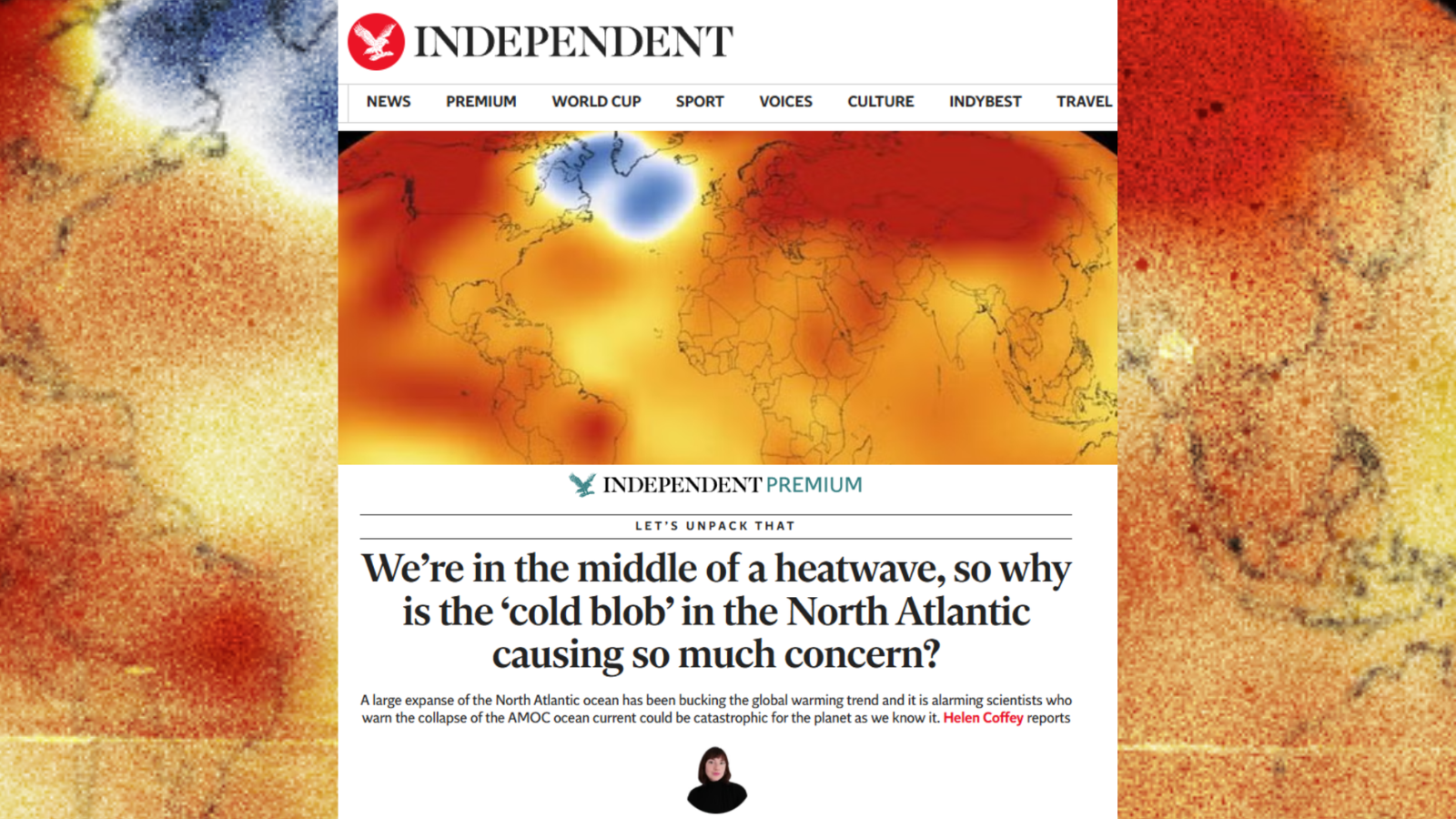
Did you know? The “cold blob” in the North Atlantic is helping shape the weather behind the UK’s current heat dome. PML’s Dr Lee de Mora featured in The Independent this week, explaining how ocean conditions hundreds of miles away – like the “cold blob” and AMOC can influence the weather we experience here. Discover what’s exacerbating the UK heatwave >>
This UK heatwave sits within a wider global pattern: the Copernicus Climate Change Service and the Copernicus Marine Service confirmed that global sea surface temperatures have surpassed the previous records for this time of year, which were set in 2023 and 2024.
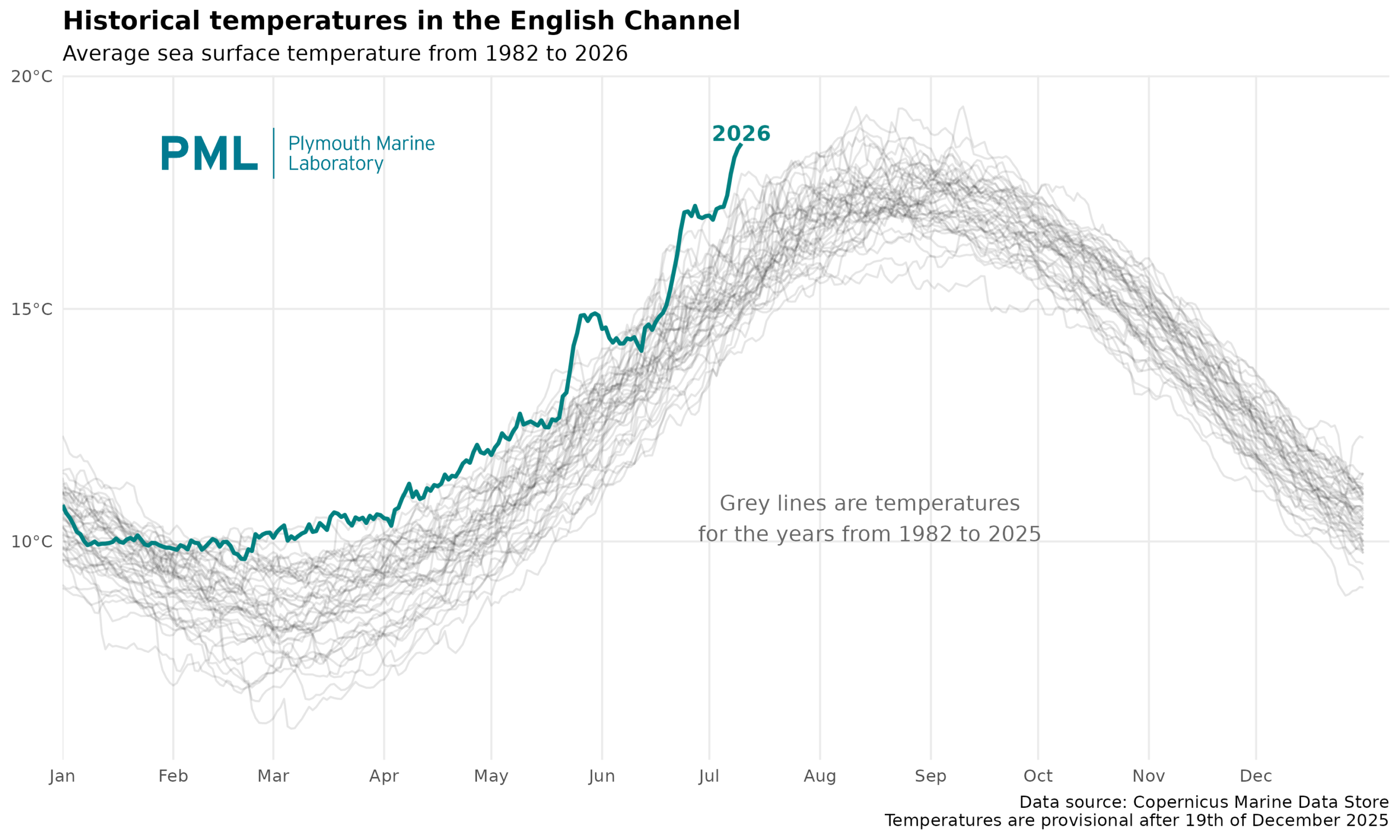
Marine Heatwaves are defined as a period of extremely high ocean temperatures for a specific location and time of year and usually lasting more than five days. Surface waters around north-west Europe are now seeing temperatures usually expected in August, running on average 2°C warmer than usual, and more than 4-5°C warmer locally in some offshore parts of the English and Welsh coasts. The English Channel has experienced marine heatwave conditions for much of 2026, leaving it especially vulnerable to further warming.
“These record temperatures are expected to have wide-ranging impacts on weather patterns, the global climate, and marine ecosystems”
– UK MET OFFICE
Monitoring long-term trends
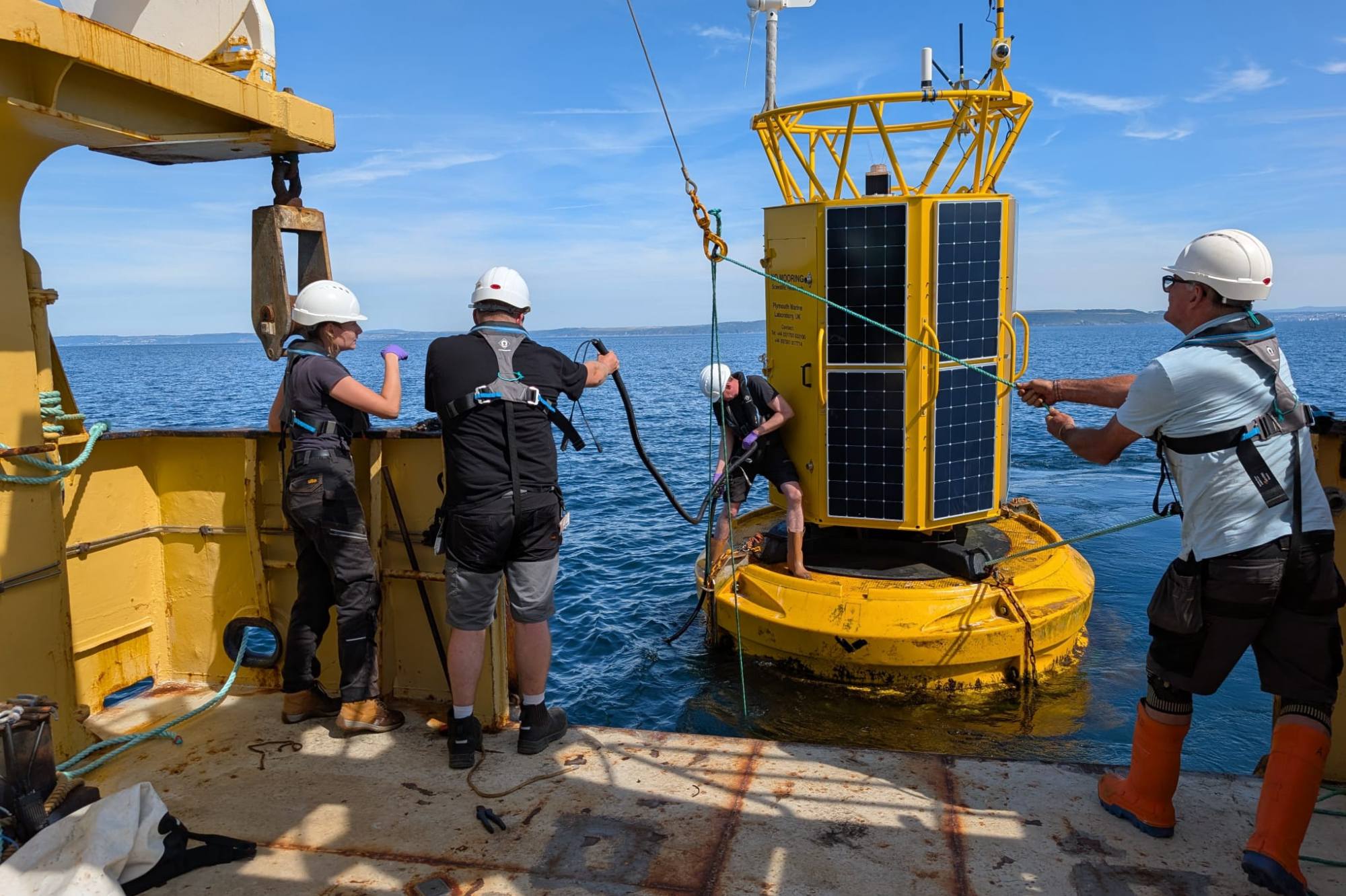
PML takes regular temperature readings as part of the monitoring for the PML-led Western Channel Observatory (WCO), which is one of the longest-running marine data time series in the world. Data at the WCO has been collected for over a century, dating back to 1903, making it one of the most studied areas of ocean on the planet, and supporting huge amounts of academic research, policy and innovation around the world.
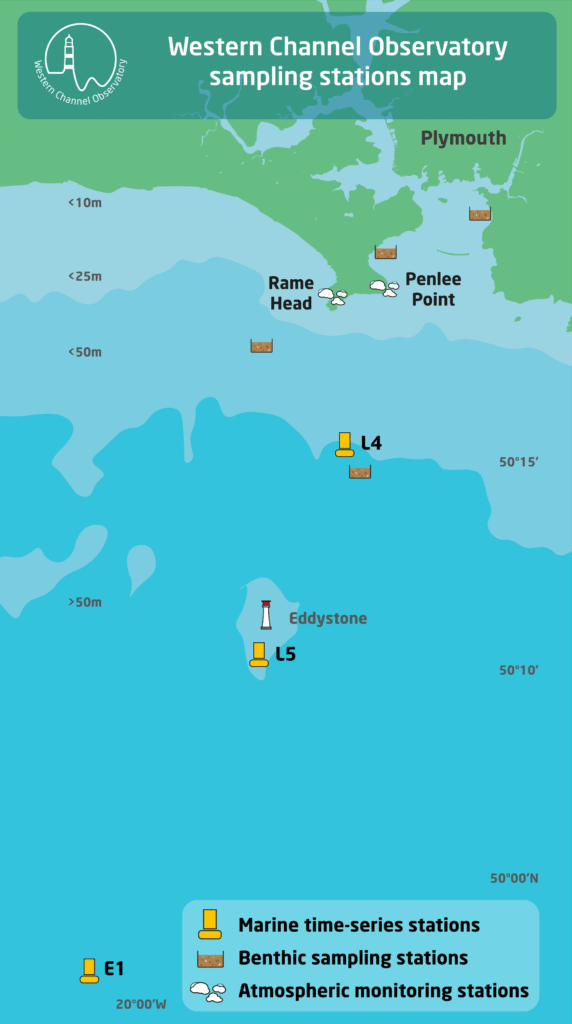
Within the WCO, located at multiple sites in the Western English Channel just south of Plymouth (UK), high-frequency data is gathered on the biological, chemical and physical conditions, capturing plankton communities, nutrients, carbonate chemistry and physical oceanography that underpins world-leading research into climate change, ocean acidification and ecosystem shifts.
How severe is the UK marine heatwave?
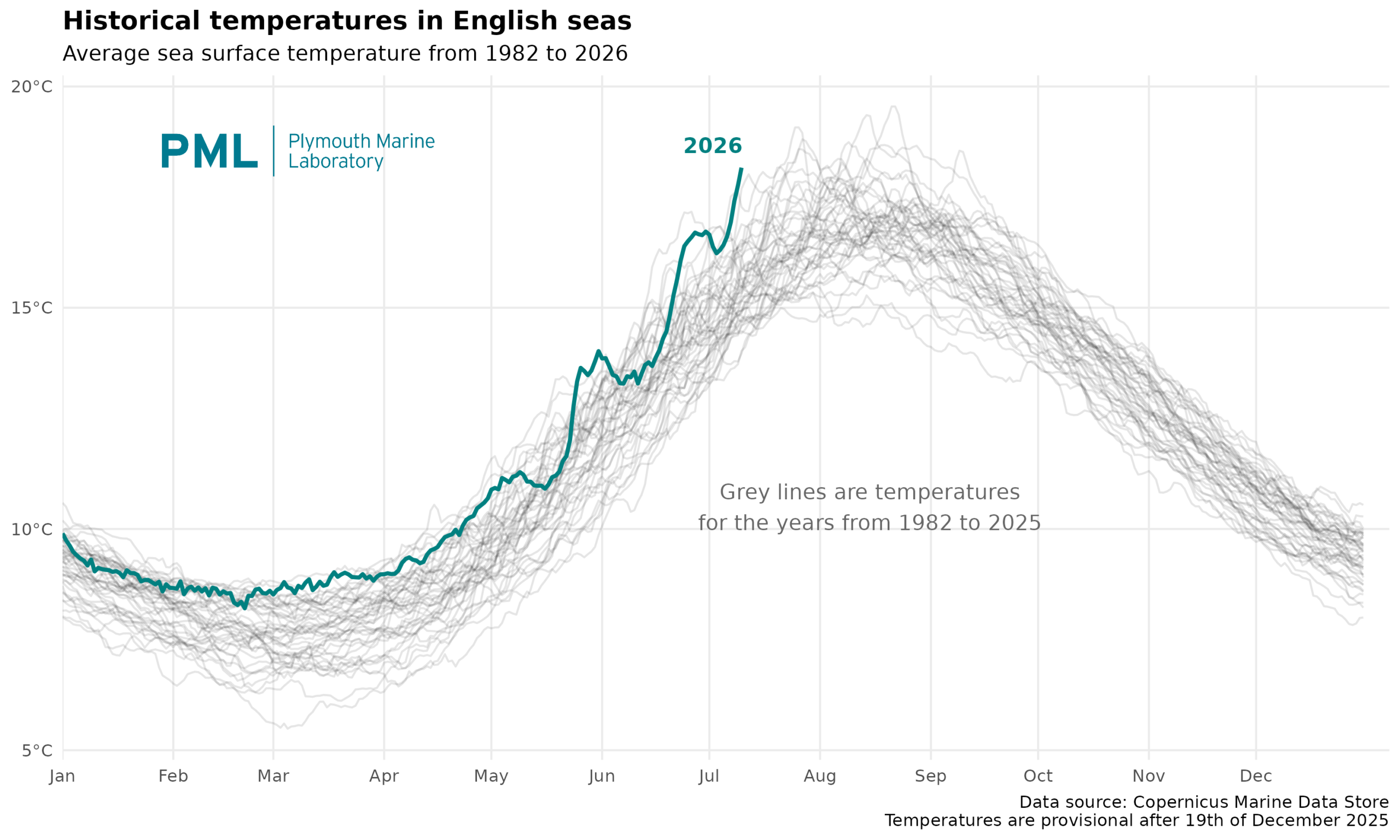
From this data, combined with data from the Met Office and the Copernicus marine Data Store, PML scientists have established that the English Channel is breaking temperature records for July.
Dr Robert Wilson, Ecosystem Modeller at PML, said:
“A record run of air temperatures is resulting in record high temperatures for this time of year based on provisional PML analysis.”
“On the 10th July, it was the hottest temperature ever recorded for that day of the year [as seen in the graph below]. English waters are about 2.2 C warmer than average conditions over the previous 40 years.”
Dr Wilson added:
“Some may read that and think, well, 2.2 degrees doesn’t sound like much. For everyday people, that increase doesn’t sound that dramatic until you think about your own body. A temperature rise of just a couple of degrees is enough to cause a fever, because our bodies are adapted to operate within a very narrow range.”
“Just like us – much of marine life can only exist within a specific temperature range, and this marine heatwave has the potential to move species beyond their limits. Luckily, temperatures in the middle of July are typically colder than peaks in August, which might limit the consequences of this event. Unluckily, it is now almost inevitable that a marine heatwave of this magnitude will occur at some point in the middle of August when temperatures are highest, and the harmful consequences should of significant concern”.
At the WCO’s deep-water monitoring station (E1), a staggering sea surface temperature of 22 degrees was recorded.
Dr Wilson shared the below record sea surface temperatures observed in the English Channel.
And it’s not just the sea surface that is warming up.
A world-first study led by PML’s Dr Wilson revealed that marine heatwaves on the seafloor of the northwestern European shelf could be more than 50% more frequent in future than at the surface of the ocean, during hot summer months.
This is important because many marine species that live on the seafloor cannot easily move to cooler areas and these species, as well as the people who depend on them, could be hit hardest by rising temperatures.
What does it mean for marine life?
Many UK marine species and habitats are sensitive to even slight changes in sea temperature.
The impacts of ocean warming, which are exacerbated by marine heatwaves, can be particularly damaging for those species less able to relocate to cooler climes while also affecting predation and breeding. At the same time, the warmer waters can increase the potential for invasive species from warmer waters and the introduction of new types of bacteria. Negative impacts on seaweeds, seabirds, coral reefs, crustaceans, fish and plankton, among others, have all been recorded.
As the ecosystem and food chains are altered, this raises challenges for fisheries and marine management, while also posing the risk of ecosystem collapse once thresholds are reached.
PML’s Professor Matt Frost, who is Chair of Marine Climate Change Impacts Partnership (MCCIP) (the primary independent source of marine climate change impacts evidence and adaptation advice to the UK government) says:
“We’re seeing shifts in where species occur that are driven by climate change, and now marine heatwaves – which are becoming more frequent and severe – are an additional stress on the system. In recent years we’ve seen mass mortality events across the globe in response to marine heatwaves with some also occurring in the UK and our non-mobile habitats, species and industry (such as aquaculture) are especially vulnerable.
The key point is that we need to understand more about the resilience of that ecosystem – it is already having to adapt to gradual warming from climate change, but when you layer marine heatwave events on top of that and add potential impacts from events like El Niño and other stressors, it adds up to a marine environment that may no longer be able to adapt.”
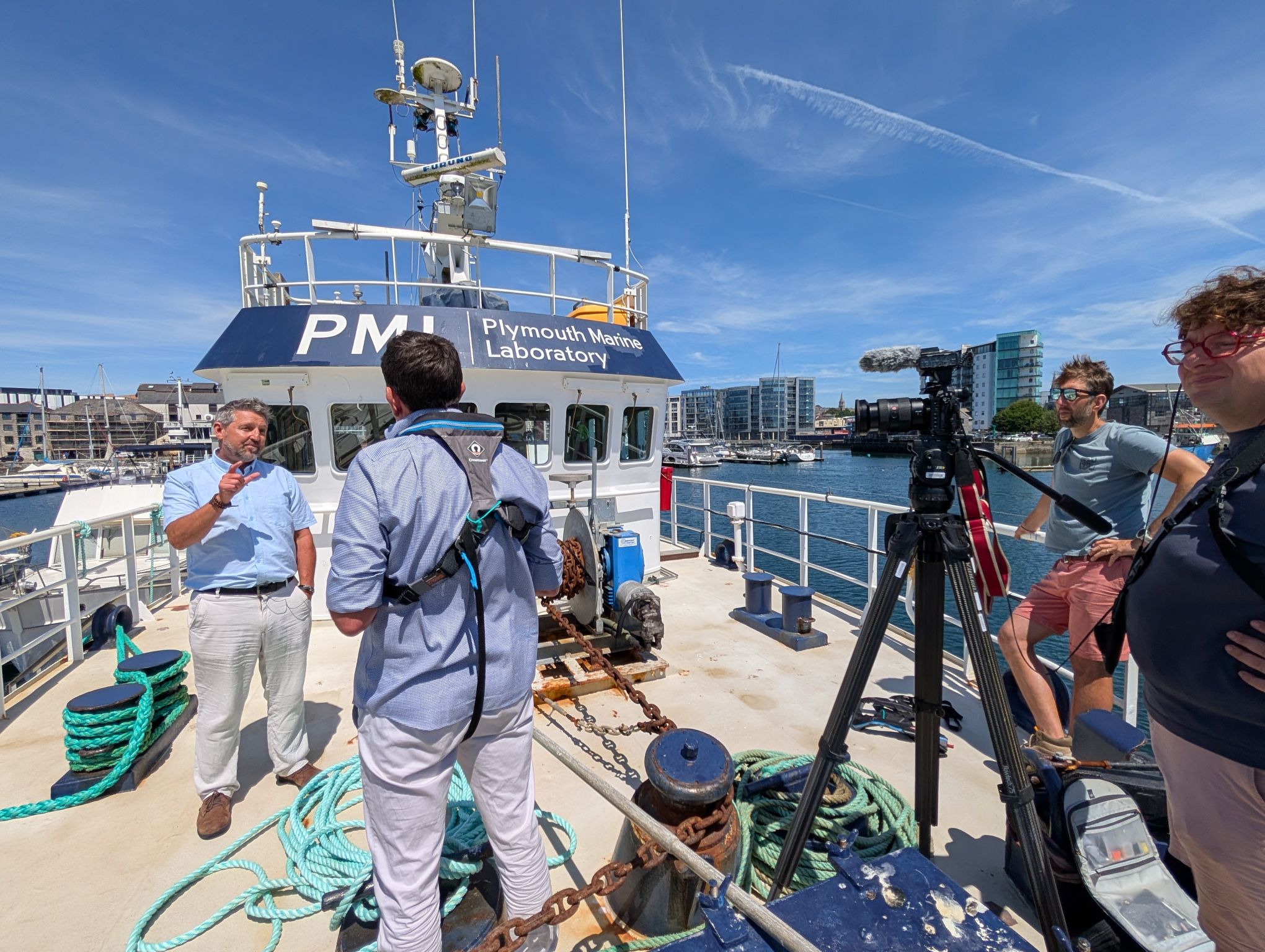
Image: Prof Matt Frost spoke to BBC Breakfast’s Climate Editor Justin Rowlatt this week, about the huge changes marine heatwaves and rising ocean temperatures are having to marine ecosystems – shifting species and affecting native biodiversity.
Discover the latest data on the impacts to marine life – published just this week:
The Southwest Marine Ecosystems (SWME) network brings together more than 300 professionals and citizen scientists to build the most comprehensive picture yet of the health of Southwest seas. Its latest report, published this week (8 July), provides a detailed overview of the changes observed across marine ecosystems during 2025 – a year of record-breaking temperatures.
Among its findings, which are contributed to with PML data and by PML scientists, are striking examples of how warmer ocean conditions are reshaping marine life, creating both winners and losers.
The ‘year of the octopus’…
The SWME report named 2025 “the year of the octopus”, following an unprecedented increase in Common Octopus (Octopus vulgaris).
Although native to UK seas, Common Octopus are typically rare here, with populations more commonly associated with warmer waters further south in Europe and the Mediterranean. However, 2025 saw widespread evidence of octopus breeding in UK waters, alongside reports of juvenile octopus appearing in catches.
Last year, PML scientists co-authored research investigating this remarkable bloom, identifying a climate-driven pattern: major octopus increases have coincided with unusually warm conditions, which are becoming more frequent as the climate changes.
The rapid increase in octopus numbers has had significant impacts across the ecosystem, including declines in shellfish including as lobster, crab and scallops – affecting both biodiversity and the livelihoods of fishing communities.
Photos: Octopus breed and bloom in SW UK: affecting UK fisheries
(click photos to enlarge)
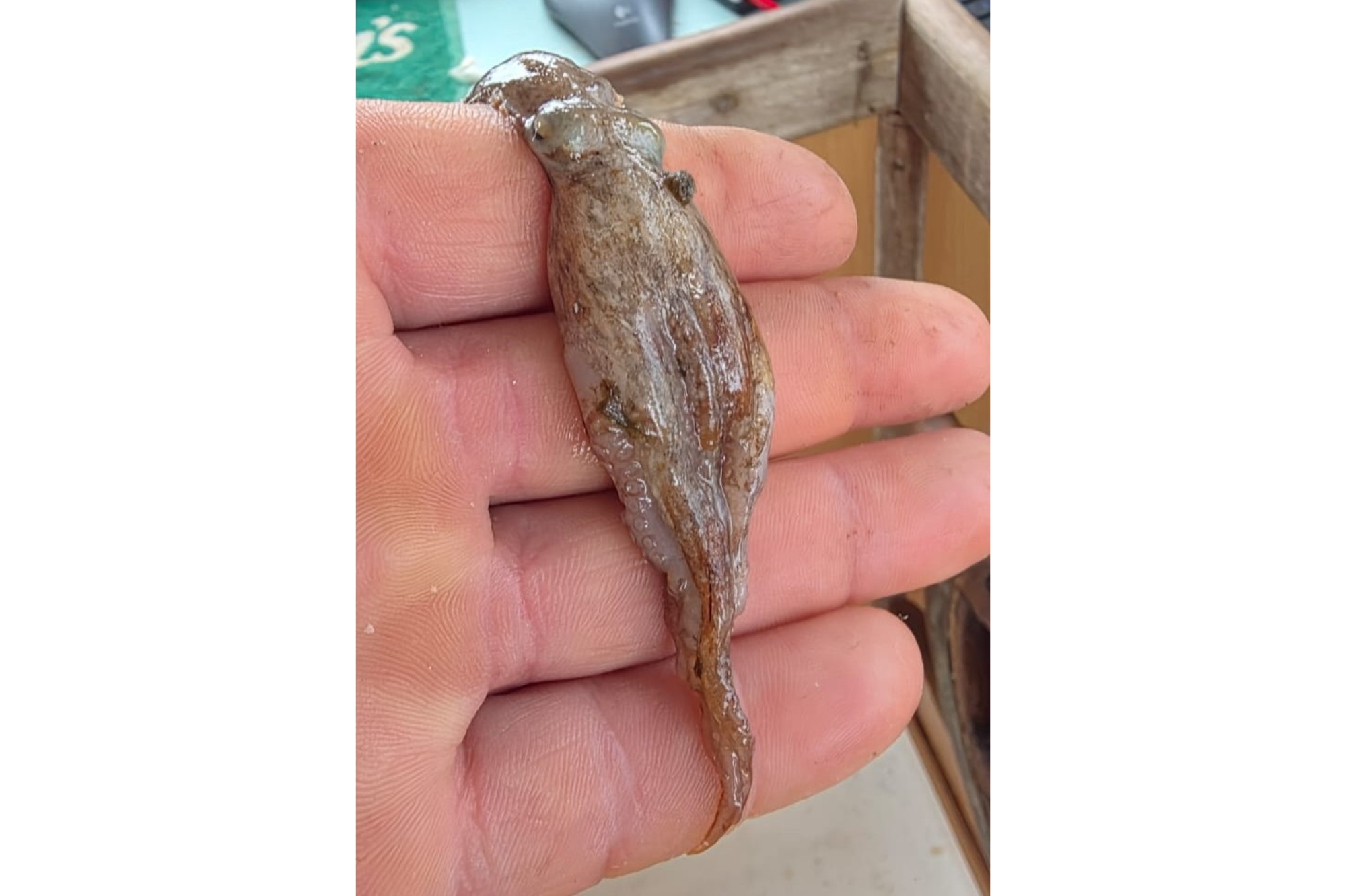
Image: A juvenile octopus caught in the Southwest – July 2025. Common octopus breeding in UK waters – previously very rare – was found to have been widespread in 2025, alongside reports of juvenile octopus in catches. Image credit: South Devon and Channel Shellfishermen Ltd.
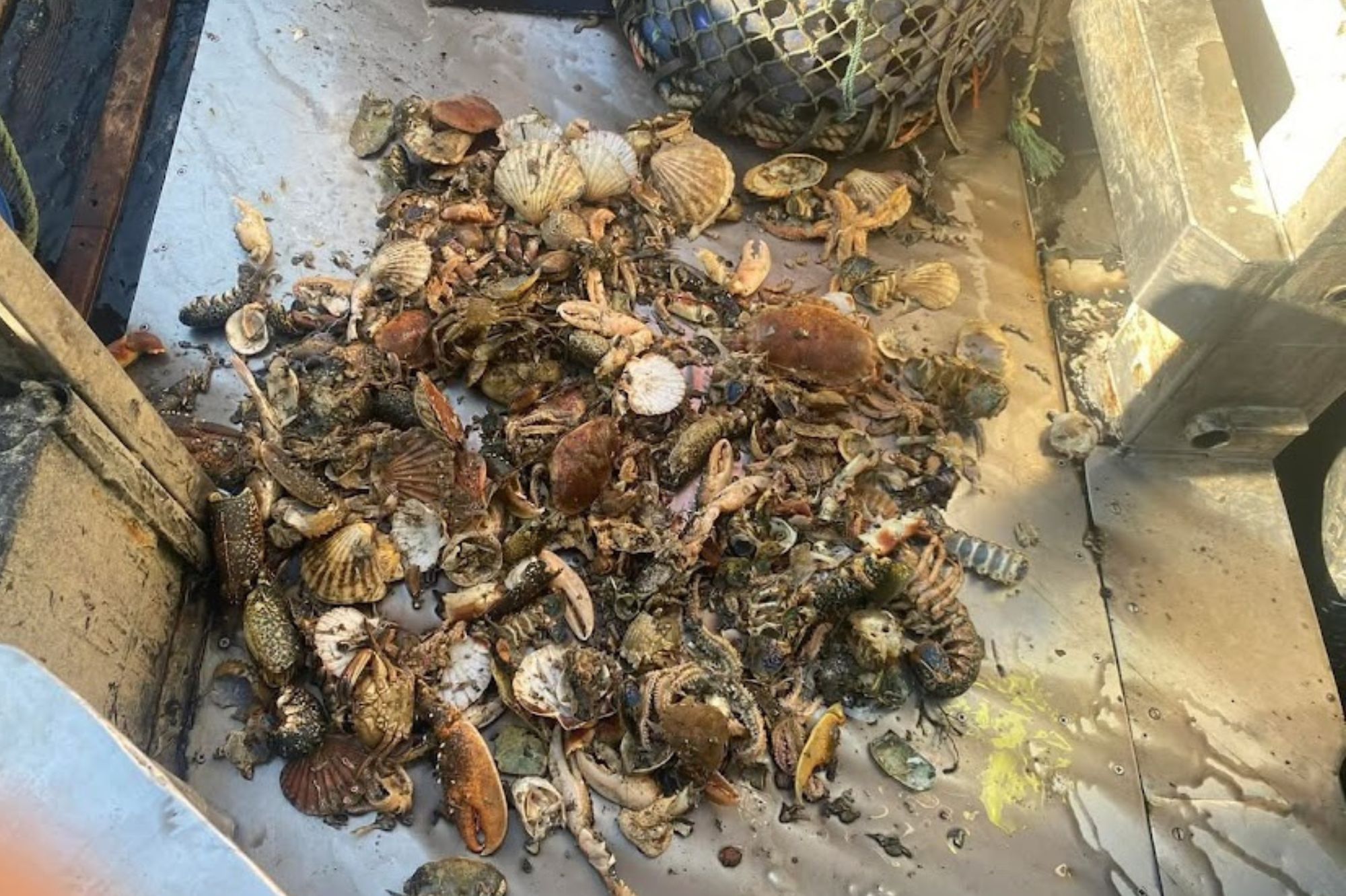
Image: Fishermen from Plymouth haul up pots full of empty shellfish, crab and lobster shells. Image credit: South Devon and Channel Shellfishermen Ltd.
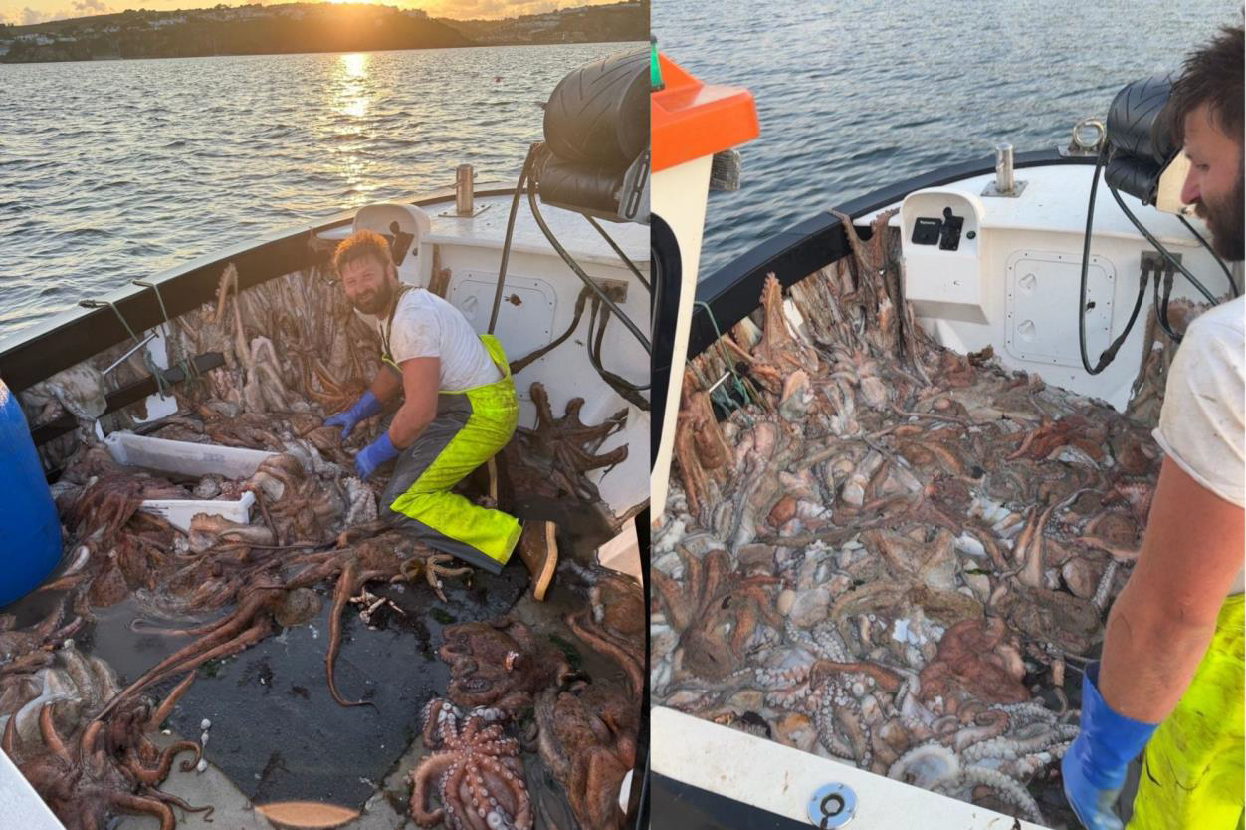
Image: Jack West of Ann Louise fishing pictured in a boat brimming with octopus, July 2025. Jack was originally a scallop fisherman, but now fishes for octopus since “scallops are now almost non-existent in some bays” Image credit: Jack West.
This week, PML’s Professor Matt Frost spoke to BBC Breakfast about marine heatwaves and the explosion in octopus numbers, he said:
“It can be exciting with these changing conditions to see new species arrive. The problem is we don’t get to choose what comes in on the back of those heatwaves. We can’t choose just the good bits and not the bad.”
Watch now: Octopus outbreaks and marine heatwaves: PML’s Matt Frost on BBC Breakfast
And, as with climate change, there are both winners and losers, and as referenced in the SWME report, these octopus have become a key food source for some climate change ‘winners’, which include seals, Risso’s dolphins, Blue Shark and Conger Eels. All of which have been reported to have increased in numbers – likely as a result of increased food availability.
Plankton – the base of the marine food web – also respond to the heat…
Plankton – which ultimately support all life in our ocean, and even produce 50% of the oxygen on Earth – are also responding to a warming ocean.
PML has co-authored two recent reports that have found widespread declines in plankton, both of which are thought to be linked to climate change.
Discover the studies:
Detected from space: 20 years of data shows declining photosynthesis in UK and surrounding waters >>
Decline in plankton across North East Atlantic sends stark warning for ocean health >>
But focusing solely on marine heatwaves, our research shows that plankton seem to be impacted by the stratification. What is stratification?
Dr Gavin Tilstone, Bio-optical oceanographer at PML, explains:
“While the ocean may appear to be one giant body of water, it is often divided into layers based on temperature. As the ocean warms, these layers become stronger and less likely to vertically mix – a process known as thermal stratification.”
“This matters because the mixing of ocean waters helps transport nutrients from the depths to the surface, where phytoplankton can use them to grow. When that supply is reduced, microalgae productivity can decline.”
PML’s Prof Tim Smyth added:
“The impacted exchange of nutrients in the water column then directly impacts on the phytoplankton – their concentration and possibly species – favouring those which can vertically migrate, such as dinoflagellates.
Their depth in the water column dictates the amount of light they receive which in turn drives their productivity.”
But our warmer waters also means we’re also seeing new species of plankton here in UK that we’ve never seen here before.
As part of sampling for the WCO, PML scientists discovered warmer water dinoflagellates – Scaphodinium mirabile – from L4 last year.
Jellyfish and other larger zooplankton:
This week, ITV News visited the laboratory to discuss the recent jellyfish blooms witnessed across the UK, and to find out whether these jellyfish blooms – like the octopus bloom – have been driven by the heatwave.
Watch now: Hundreds of jellyfish wash ashore Southwest beaches – what is causing such large blooms?
ITV’s national science correspondent Martin Stew spoke to PML’s plankton expert Bryony Squires, who said:
“There isn’t a single factor that causes a jellyfish bloom. Instead, it’s usually a combination of conditions coming together. Warmer seawater can speed up growth and reproduction, abundant plankton provides plenty of food, and favourable ocean currents can keep jellyfish in productive feeding areas rather than dispersing them.”
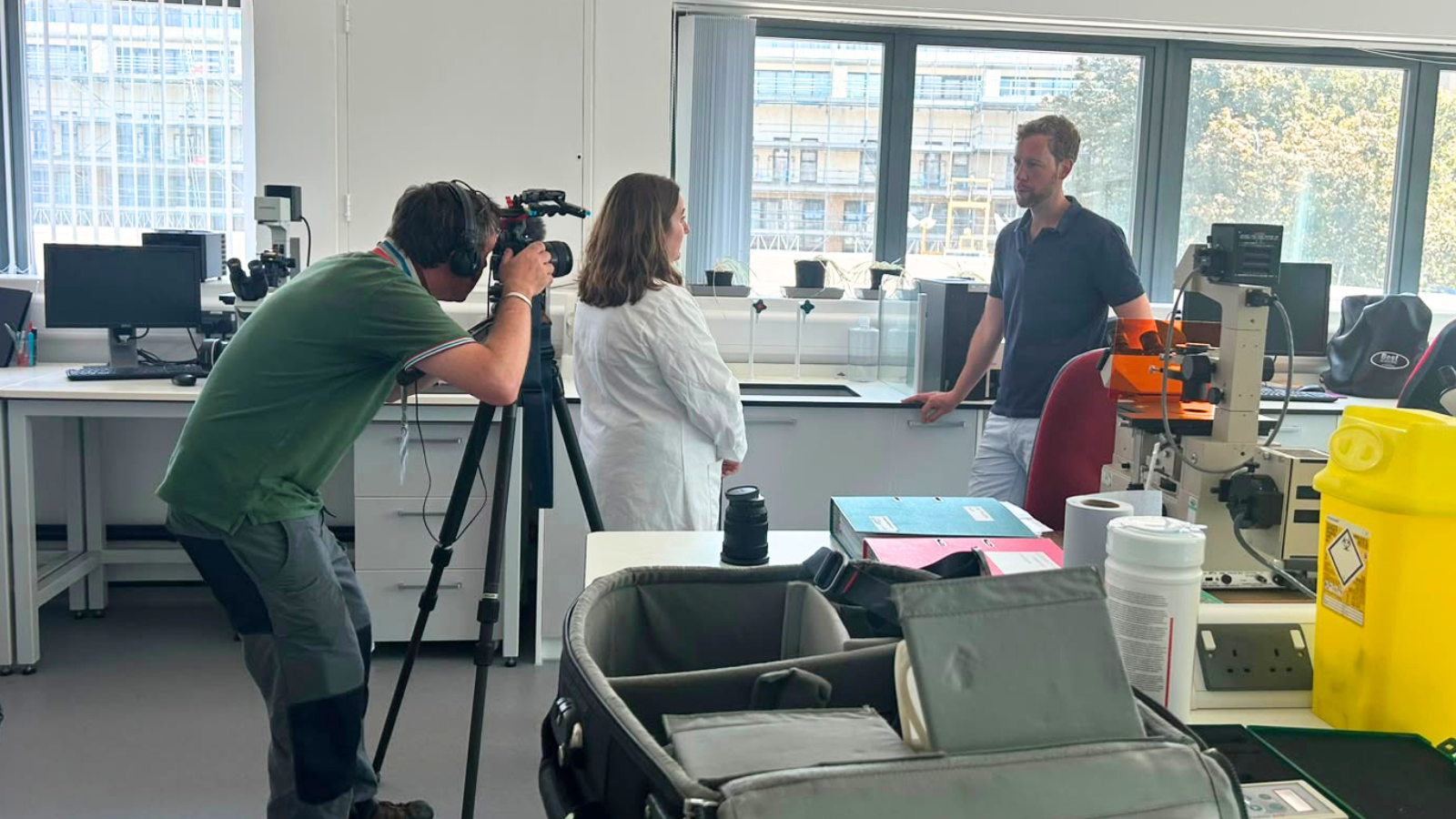
Image: PML’s plankton expert Bryony Squires speaking to ITV’s Martin Stew yesterday [Thursday 9th July]
She continued:
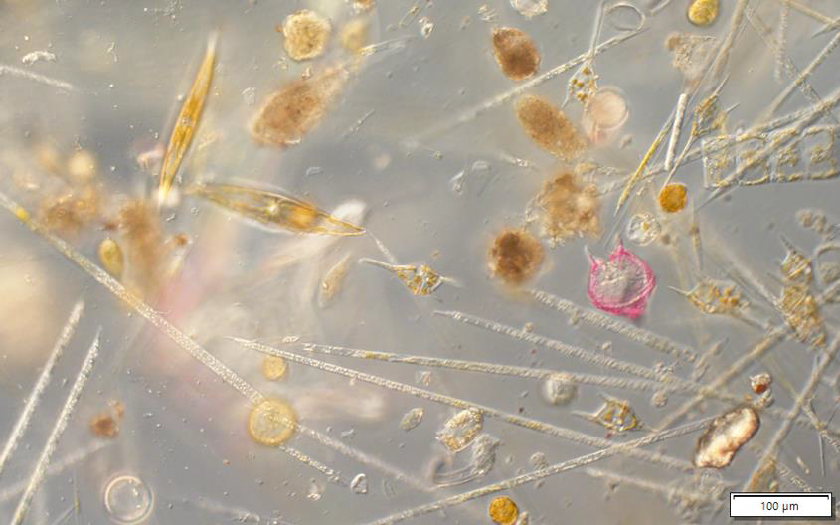
“Right now though, we are seeing fairly high plankton productivity. Recent L4 and E1 net samples have been packed with a wide range of Diatoms, Dinoflagellates, Ciliates and Flagellates. This can provide a rich and valuable source of food for organisms such as jellyfish in their smaller larval stages.”
Bryony shared the image below from a recent sample from L4 in June, revealing a world of microscopic planktonic life in just a single drop of seawater.
In addition, through her microscope analysis, Bryony has even discovered some very young, and very small, jellyfish in her samples, seen below.
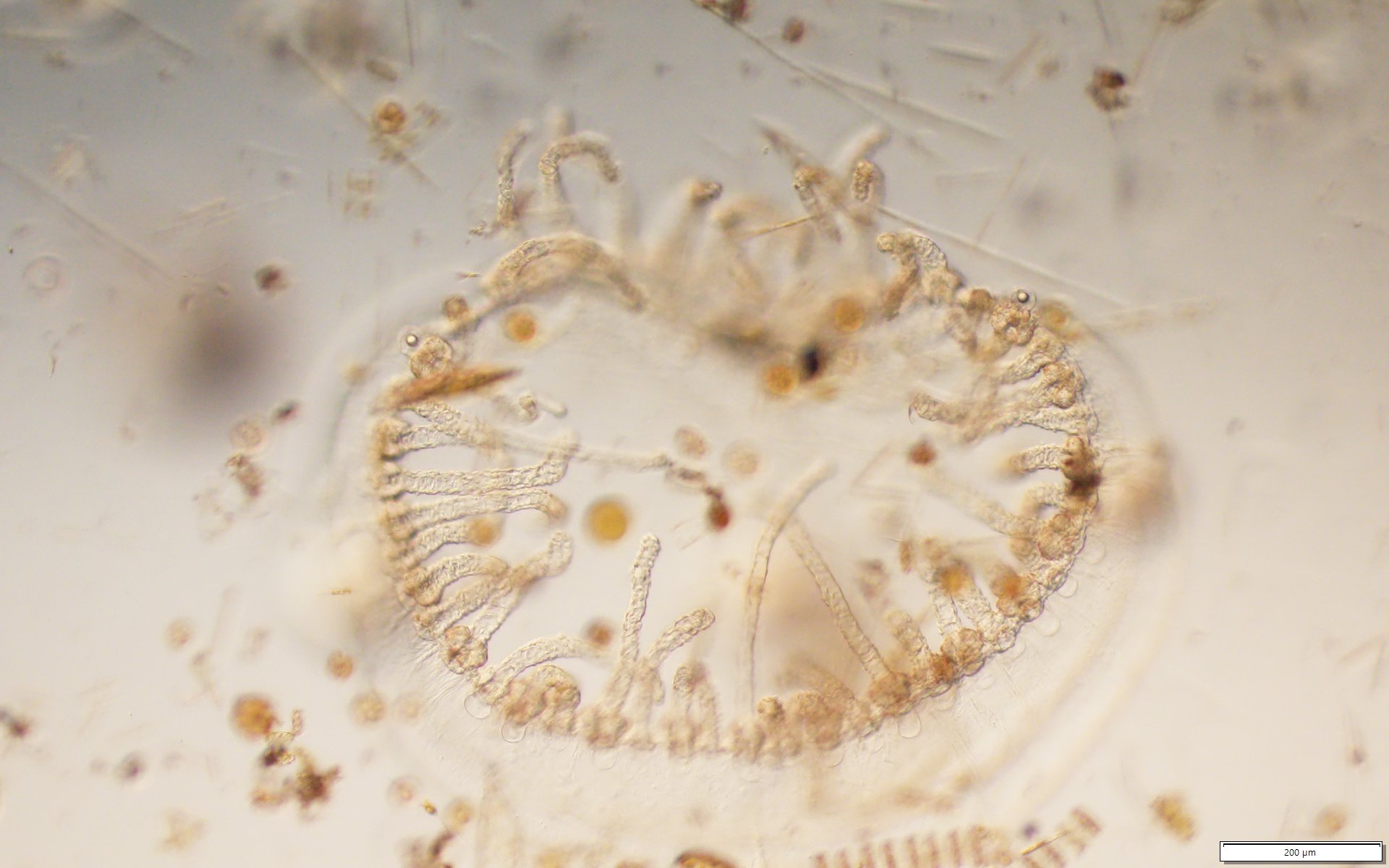
Image: A tiny jellyfish seen under the microscope, taken from our L4 monitoring site last July [2025]. Image credit: Bryony Squires – PML.
2025 was not only an impactful year for UK and Northern Hemisphere waters. Earlier this week (July 7th) the World Meteorological Association published its State of the Climate in the South-West Pacific 2025 report, highlighting that 2025 was the 2nd warmest year on record for the South-West Pacific region with marine heatwaves disrupting ecosystems and fisheries.
An uncertain future
For scientists at PML, the need for an increased understanding of the changes taking place as a result of climate change – and the efforts that can be made to mitigate these impacts – remains clear.
As PML’s Director of Science, Professor Tim Smyth acknowledges:
“These events should be read as a warning: we need to understand not only what is happening in UK waters now, but what the impacts could look like if these trends continue.
The fundamental risks to marine life from abrupt ecosystem shifts (and in turn, food security and the economy), such as those already being witnessed in the southwest of the UK, reinforce the importance of having high-quality data and modelling and investment in scientific infrastructure for long-term monitoring.”
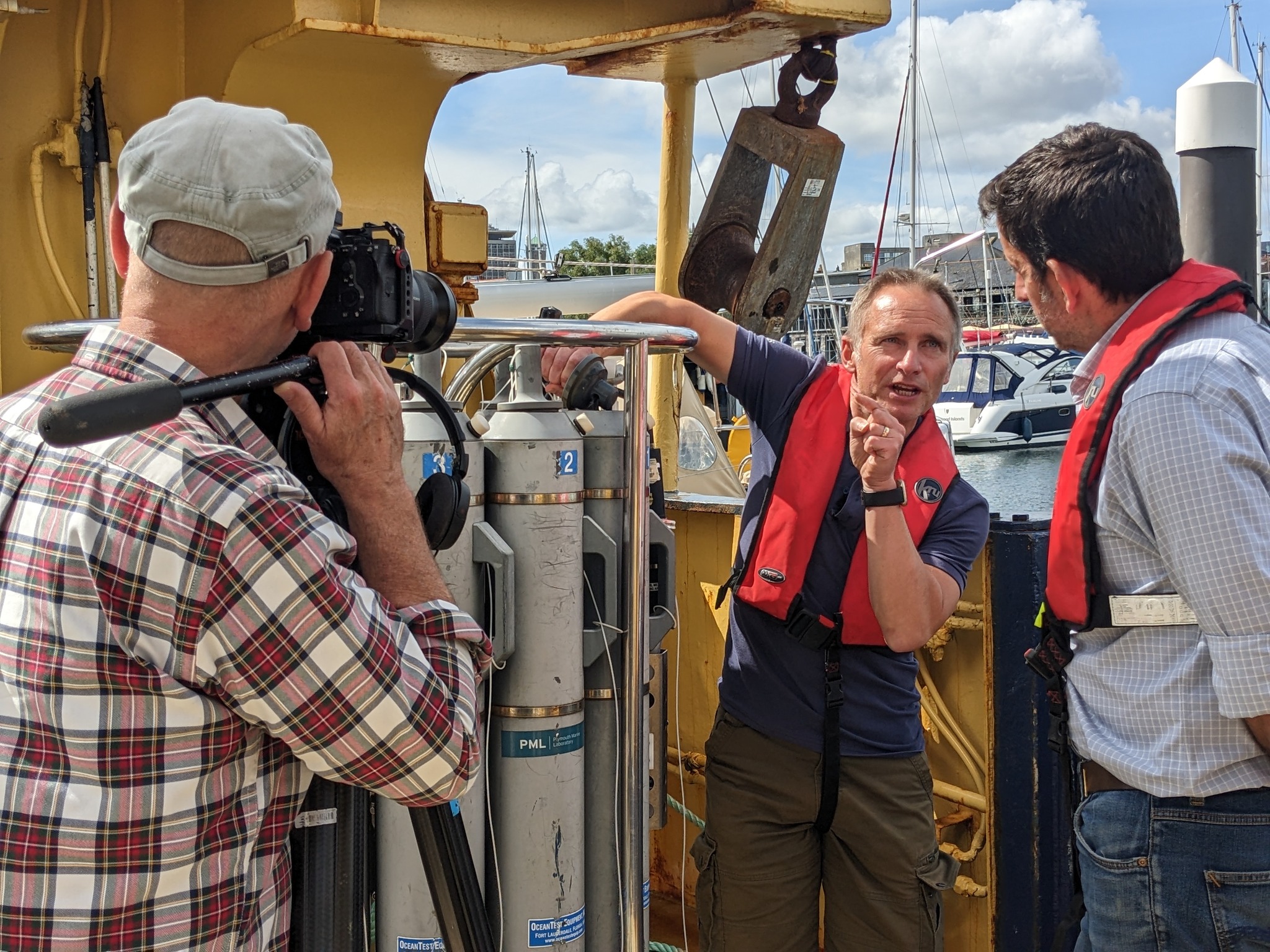
Image: Professor Smyth onboard PML’s research vessel Plymouth Quest, speaking to BBC Breakfast Climate Editor Justin Rowlatt about rising ocean temperatures and “almost continuous marine heatwave conditions” seen in the western English Channel
Further information
Latest PML news about the heatwave:
Hundreds of jellyfish wash ashore Southwest beaches – what is causing such large blooms? >>
Deep trouble – future seafloor marine heatwaves will surpass surface extremes >>
Access PML data:
Western Channel Observatory >>
Helpful links: