Story | 03 October 2025
PML team celebrates win at Blue-Cloud Hackathon 2025!
We’re delighted to announce that, yesterday, a multidisciplinary team of researchers from Plymouth Marine Laboratory (PML) were selected as one of three winning teams of the Blue-Cloud Hackathon 2025, securing €25,000 to develop their innovative project further.
The hackathon challenge brought together teams of scientists, data experts and developers from across the globe, all challenged to design creative solutions that harness marine data to tackle pressing environmental challenges through Blue-Cloud – an Open Science platform for collaborative marine research.
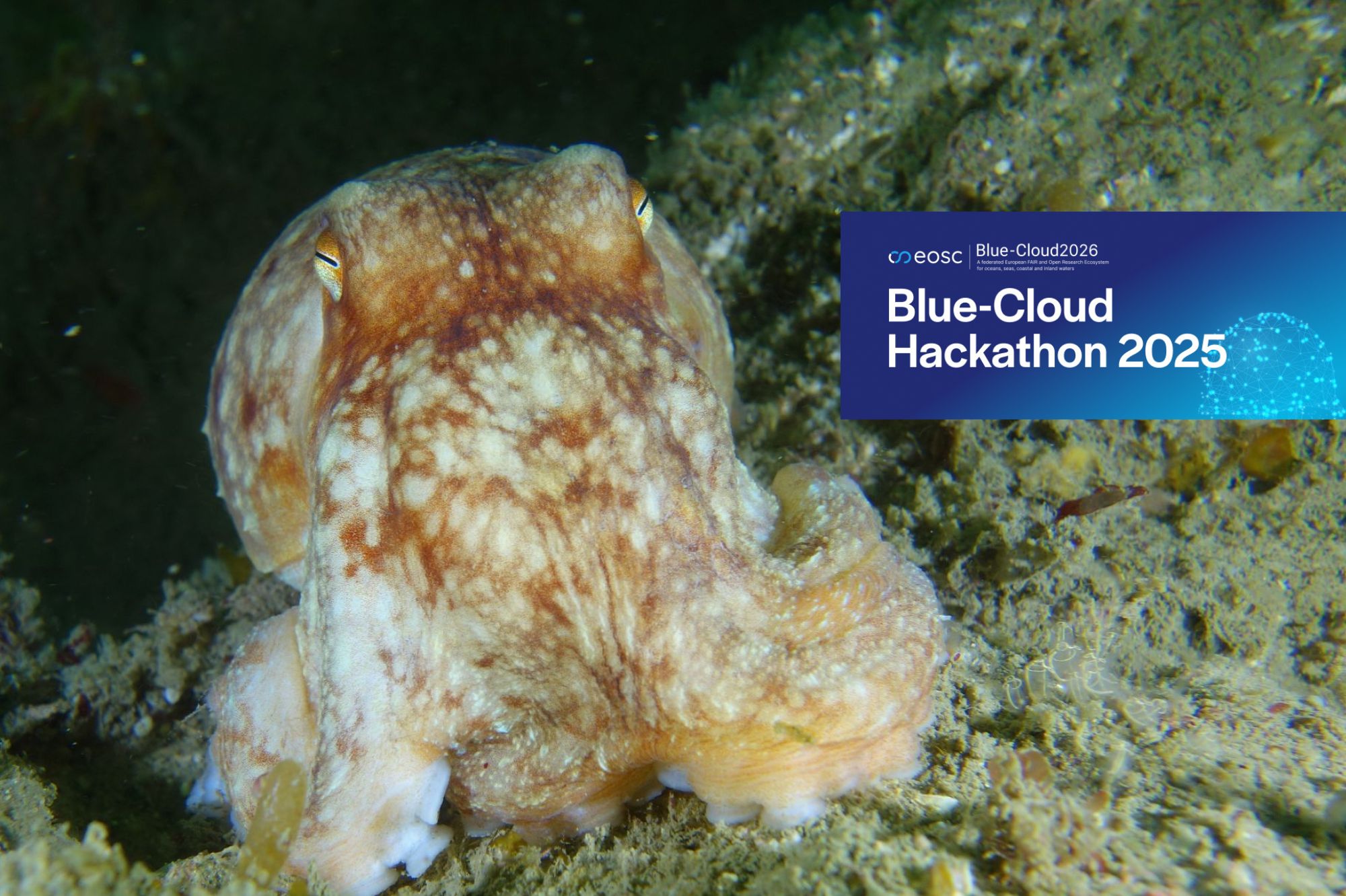
PML’s winning team – known as ‘Kraken the Code’ – impressed the judges with their cross-disciplinary approach that blended expertise in Earth observation, data modelling, research software engineering and digital infrastructure into a collaborative science tool that they called ‘OctoPulse’. Their project investigated the role of cloud computing platforms to bring together marine experts from all backgrounds in the analysis of historical and real-time Western Channel Observatory, satellite, and model data to predict the conditions that allow octopi to boom.
What set the team apart was not only the scientific value of their solution, but also the way it integrated multiple disciplines to deliver real-world impact. The judges praised the project’s potential to support future marine research and data-driven decision-making.
Team members included:
- Mohammad Shafiul Azam Khan
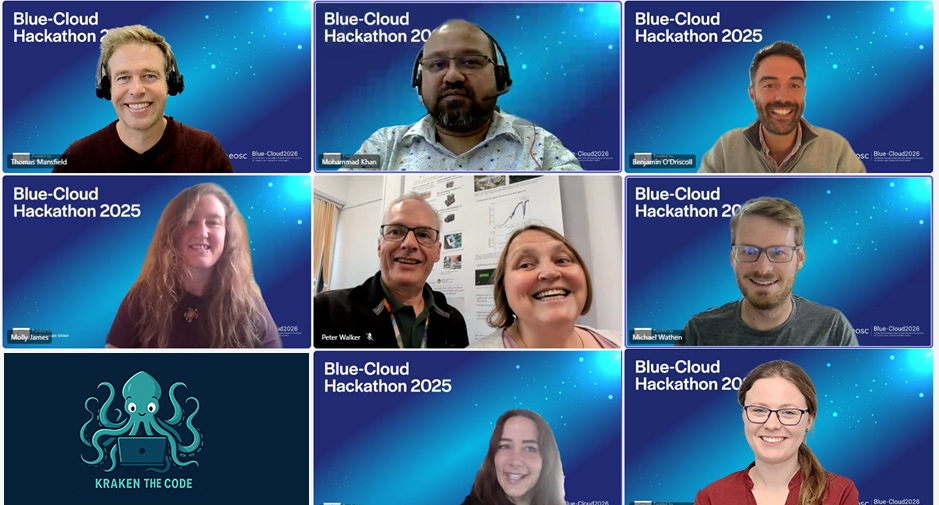
Image: PML team ‘OctoPulse’ – winners of the Blue-Cloud Hackathon 2025
Team leader Dr Tom Mansfield commented:
“We’re thrilled to have won the Blue-Cloud Hackathon. The event was an amazing opportunity to collaborate across disciplines, and we’re really excited to use this prize to push our project to the next stage. We hope our project will support resilience for local fishers – helping them to anticipate changes to their catches.”
This success highlights PML’s commitment to innovation, collaboration and digital solutions for ocean science. With support from the €25,000 prize, the team will now continue to develop their idea, with updates to follow in the coming months.